Bicycle Alarm Systems: How They Work and How to Choose One
Bicycle alarm systems pair a sensor with a siren, and some add GPS. Here is how each type works, how it fits next to a lock, and how to match one to where you park.
The Kesslund Team
November 10, 2026 · 6 min read
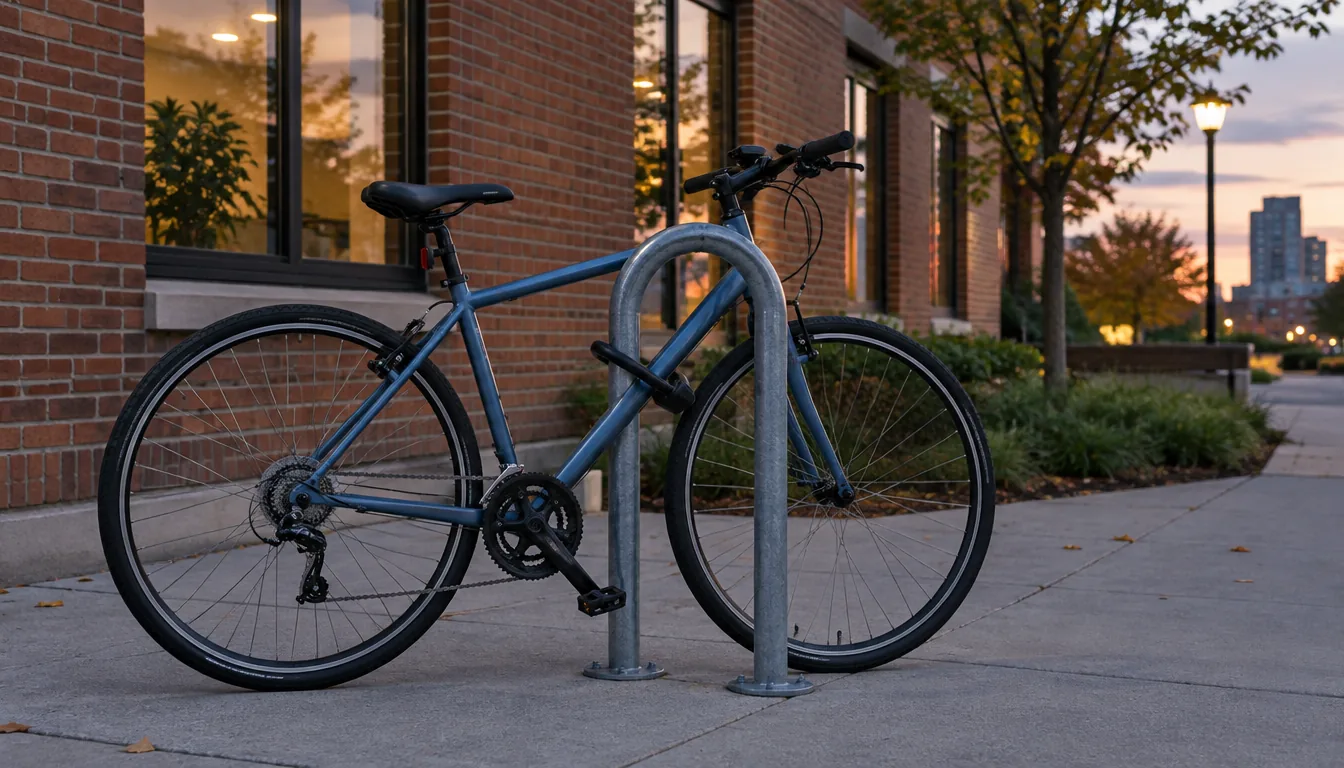
Bicycle alarm systems combine a sensor that notices disturbance, a siren that makes noise, and a way to arm and disarm the unit. Some add GPS or a smartphone link so you get an alert or a location. An alarm adds attention to a parked bike, but it works alongside a lock, not instead of one.
This guide explains each part, compares the main types, and gives a decision table by parking situation so you can choose without guessing.
How bicycle alarm systems work
Every alarm has three jobs: detect, announce and switch on or off. How a model handles each job tells you what it suits.
Sensors
A motion sensor reacts when the bike is moved, lifted or knocked. A vibration sensor reacts to shaking, such as someone working on a lock. Some units let you set sensitivity levels so wind or a passing cyclist does not set them off. Check the product page or manual to see which sensing a model has.
Sirens and alert modes
The siren is the part that draws attention. Loudness is measured in decibels (dB), and a loud alarm only helps if people are near enough to hear it. Some alarms offer several alert modes, from a short warning sound to a continuous alarm.
Arming and disarming
You arm the alarm when you park. Arming can be a button on the unit, a wireless remote, a code, or a smartphone app over a wireless connection. Pick a method you will use at every stop, since an unarmed alarm does nothing.
GPS and phone alerts
A tracker with GPS reports where the bike is, and some send a message to your phone when the bike moves. These need a battery and may need a data plan or app. A tracker helps you find a bike; a siren tries to stop the attempt. They do different jobs.
Types of bicycle alarm systems compared
The choice comes down to where the alarm lives and what it does when triggered.
| Type | How it mounts | What it does | Things to check |
|---|---|---|---|
| Lock with built-in alarm | Is the lock itself | Sounds when the lock is tampered with | Lock type, weight, how it carries |
| External siren alarm | Straps, bolts or bottle cage mount | Sounds a siren on disturbance or when you trigger it | Sound level, mount style, charging |
| GPS tracker | Inside the handlebar, seat post or a frame-mounted holder | Reports location | Battery, app, any subscription |
| Alarm with tracker | Frame or bottle cage mount | Siren plus location or phone alert | Both battery needs, app setup |
| E-bike alarm | Wired to or paired with the bike | Responds to movement or removal of the battery | Compatibility with your e-bike |
An external alarm can be added to a bike you already own, and you can move it between bikes. A bicycle lock with alarm replaces your lock, so it changes what you carry. If you want a bike alarm and tracker in one, check that the unit lists both a siren and location features, and look at what each needs for power.
Where an alarm fits next to a lock
A lock is the physical barrier. An alarm adds noise and attention. Using both covers more situations than either one.
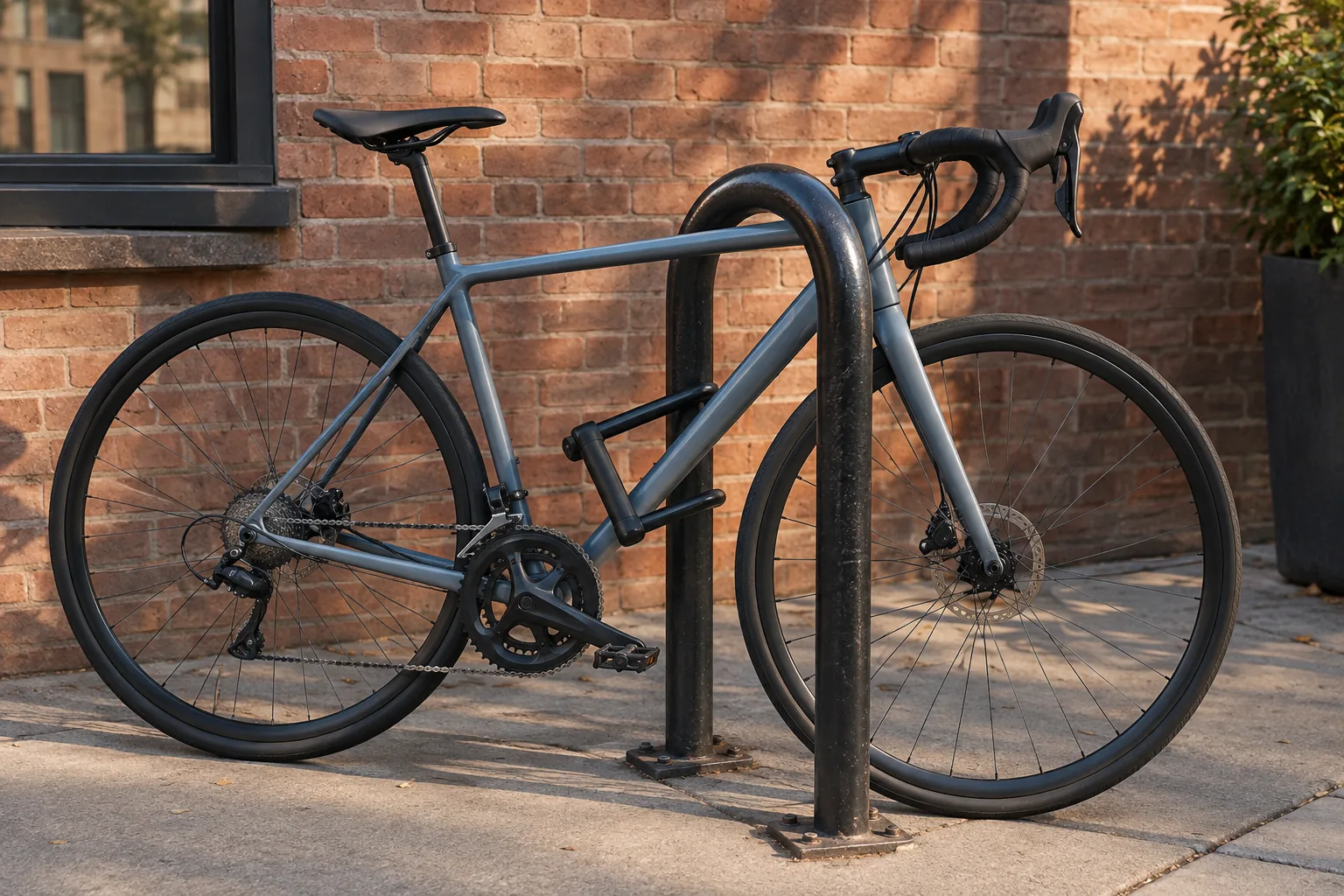
- Lock the frame and a wheel to a fixed rack or post, with the lock off the ground.
- Arm the alarm after locking, so the bike is already secured when the siren is live.
- Record your serial number and keep photos of the bike. Those help if it is ever reported missing.
- Add a tracker if the bike is costly to replace or parked in the same risky spot often.
An alarm on its own leaves the bike open to being rolled away. A noisy bike that is not locked can still be carried to a vehicle.
Choosing an alarm by parking situation
Match the setup to where the bike sits and for how long.
| Parking situation | Setup to consider | Why it fits |
|---|---|---|
| Short stop outside a shop | Lock plus an external siren alarm | Noise draws attention from people nearby |
| Busy street or rack at work | Lock plus alarm, and photos and serial number on file | People are nearby to hear a siren |
| Apartment hallway or shared storage | Lock plus alarm | Noise carries in enclosed spaces |
| Garage or shed at home | Fixed anchor, lock, alarm | The anchor holds the bike in place |
| Overnight in an unattended spot | Lock, alarm and a GPS tracker | Nobody may hear the siren, so location matters |
| E-bike with a costly battery | Lock, alarm sized for e-bike handlebars, and battery removal when parked | Covers both frame and battery |
| Bike on a car rack | Rack lock plus alarm | A rack lock holds the bike to the car; the alarm adds noise at a stop |
In a quiet spot with no one around, a siren has few listeners. That is where a tracker, a fixed anchor point or a different parking place matters.
A handlebar alarm to consider: ClaxonRide
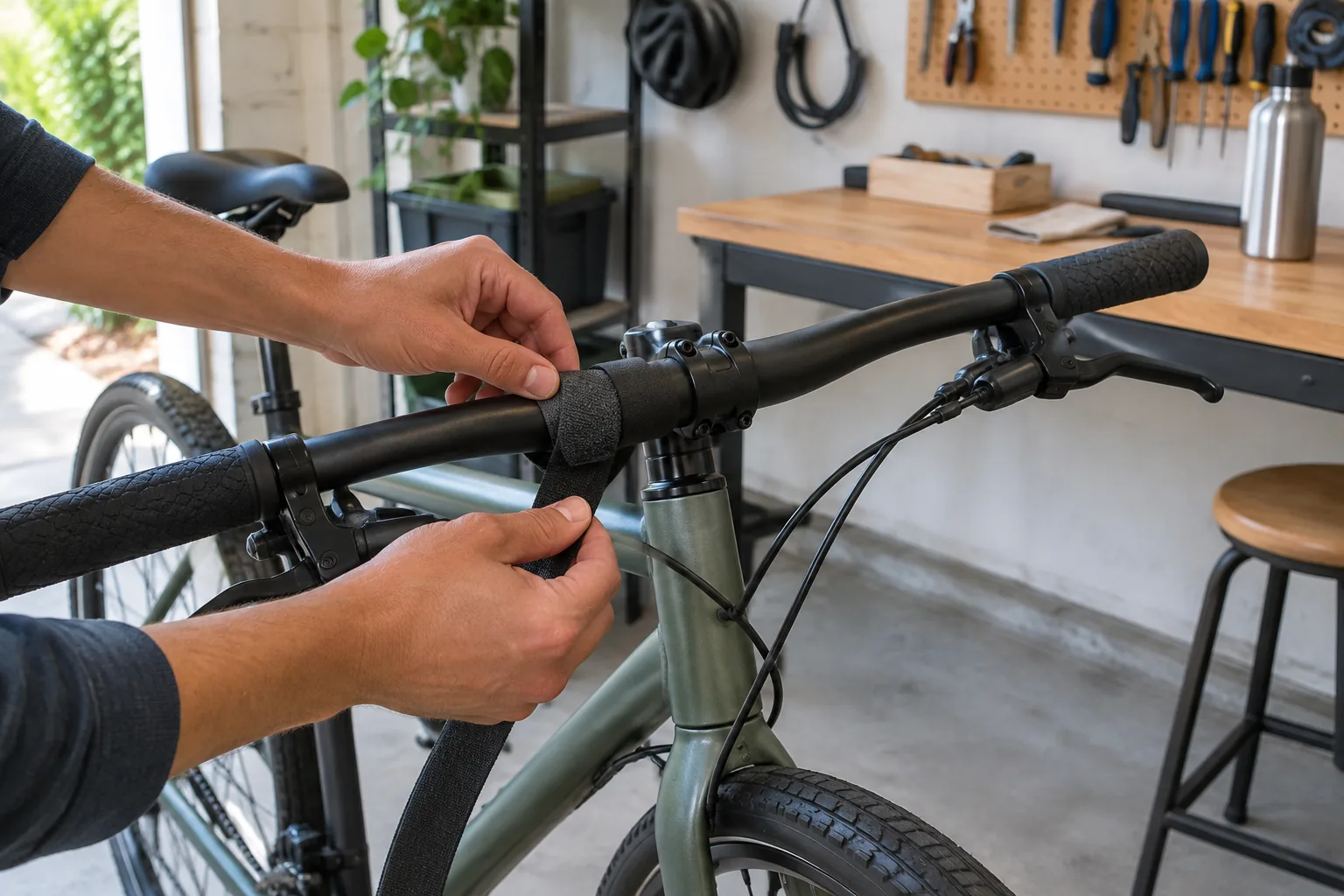
If you want an external alarm you can move between bikes, the ClaxonRide is a bicycle alarm that straps to the handlebar with silicone straps. No tools or drilling are needed, and nothing is fixed to the frame. The straps adjust to suit bicycle and e-bike handlebars.
It produces a 120dB sound, and you press the button to cycle through five alert modes, from a short warning beep to a continuous alarm. The built-in battery charges over USB-C, and the box includes a USB-C charging cable and a user manual.
The housing is splash-resistant for light rain and road spray, but it is not made for heavy downpours or submersion, so wipe it dry after a wet ride. Pair it with a lock and, if you want location tracking, a separate GPS tracker.
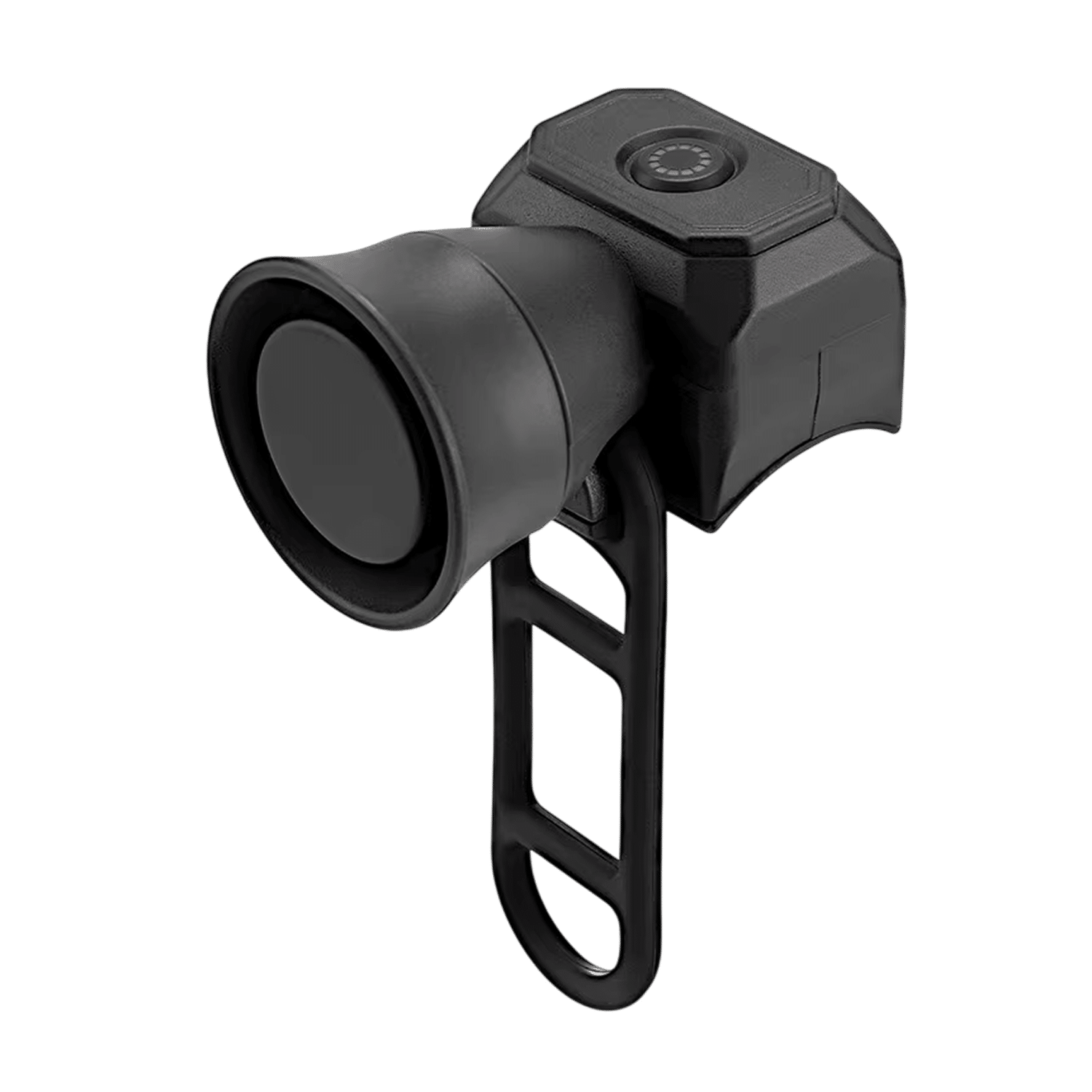 In this guideClaxonRide$59.99View
Setup checklist and common mistakes
Work through this list the first time you fit an alarm.
- Charge the battery fully before the first use, following the manual.
- Mount it on the handlebar so the straps sit snug and the unit does not slide.
- Cycle through the alert modes at home so you know each sound.
- Practice arming it a few times before you rely on it.
- Lock the bike first, then arm the alarm.
- Check the battery on a regular schedule, such as before each week of commuting.
Forgetting to arm the alarm, leaving the battery flat, leaving the straps loose and forgetting to check the alarm is still fitted when you return are mistakes to avoid. Skipping the lock is the biggest.
While you are checking the bike, look at the rest of it too. Our guide to tightening bike brakes covers rim, cable disc and hydraulic fixes.
Field note
Strap the alarm on snugly, check it is still fitted when you come back to the bike, and charge it on a set day each week.
Are bicycle alarms worth it?
An alarm is worth considering when you park in places where people are nearby to hear it, or when you want a moveable anti-theft layer on top of a lock. It does little in an empty location, and it does not replace a lock. A tracker adds a way to find a bike, and a lock supplies the barrier.
When you compare models, use this checklist:
- Sound output and available alert modes
- Mount style and whether it fits your handlebar or e-bike
- Charging method and battery type
- How you arm it: button, remote or app
- Weather resistance as described on the product page
- Whether it includes tracking, or needs a separate device
For more gear to add to your bike, browse the Bike Electronics & Navigation collection.