Budget Adjustable Dumbbell: What to Check Before You Buy
A budget adjustable dumbbell is worth buying when its weight range, increments, lock and footprint fit your training. Use this checklist before you commit.
The Kesslund Team
November 12, 2026 · 8 min read
A budget adjustable dumbbell is a good buy when four things match your training: a weight range that covers your lightest and heaviest lifts, increments small enough to progress, a lock you can check by eye, and a footprint that fits your space. If one of those fails, you may end up needing a second set.
This guide gives you a checklist in that order, then shows common mistakes, a worked example of building loads, and a setup routine for the first week.
The budget adjustable dumbbell checklist
Run through this table before you add any set to a cart. Each row is a question you can answer from the product page.
| Check | What to look for | Red flag |
|---|---|---|
| Weight range | A starting load light enough for isolation moves and a top load you will not outgrow soon | Only one total figure, with no per-hand maximum |
| Increment size | Small steps between settings, so each jump is a small change | Large jumps between settings at the light end |
| Locking mechanism | A lock you can see and confirm is closed before each set | Parts that rattle or sit loose when locked |
| Grip and handle | A textured, non-slip grip surface with a handle diameter you can hold | Smooth plastic handles |
| Footprint | Dimensions for storage and for the cradle or bin, if one is included | No dimensions listed |
| Versatility | Other uses for the same parts, such as barbell or kettlebell modes | Single-purpose parts with no other use |
| Care | Materials you can wipe down and dry | Exposed parts that trap sweat |
Weight range: cover your lightest and heaviest lifts
Start by listing the moves you plan to do. Lateral raises and curls need a small load, while presses, rows and goblet squats need a larger one. A set that only starts heavy leaves your small muscle work without a fit.
Look for two numbers on the listing: the lowest setting and the maximum. A total figure for the whole set is not the same as the load per hand, so check how the maker counts it. Some systems split the load between two handles, while others pool all the plates into one bar.
How much range do you need?
If you are new to lifting, a modest top end can serve you for a while. If you already press heavy loads, a set with a low ceiling will cap your progress and become a dead end. Pick the top end for the lifts you plan to do in a year, not only the lifts you do today.
Write your moves in two columns, light and heavy, and put the load you would pick for each. If the set cannot reach both columns, keep looking.
Increment size: small steps keep progress moving
Increments are the gaps between one setting and the next. A jump that looks small on a squat can be large on a shoulder raise. Check the gap at the light end of the range, where it matters most.
Two designs set the increment:
- Dial or selector systems offer fixed steps that the maker chose.
- Plate-and-rod systems let you build the load plate by plate, so the step equals the plate you add.
For a plate-based set, read the plate weights. A set with stackable plates from 2.5 lb to 5.5 lb gives you small and mid-size steps, and you can mix them to land between settings.
Worked example: building light and heavier loads from plates
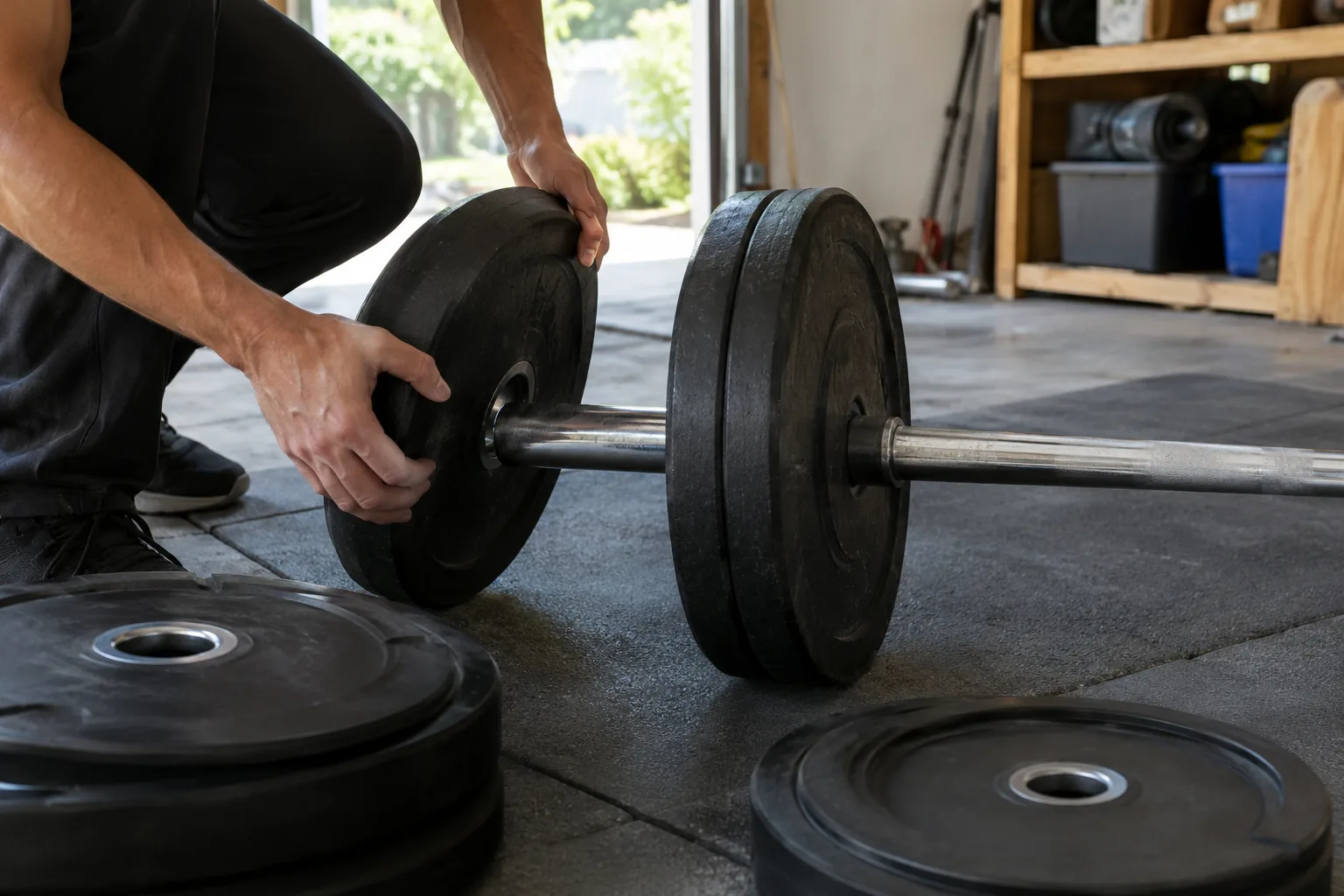
Plate sizes show how a plate-based set handles progression. Take the plate sizes in the MorphBell box: 2.5 lb, 3.5 lb, 4.5 lb and 5.5 lb. Each plate you add changes the load by exactly that plate's weight.
| Move | Plates to start with | How to progress |
|---|---|---|
| Lateral raise | The 2.5 lb plates | Swap to the 3.5 lb plates once the last reps feel controlled |
| Curl | The 3.5 lb or 4.5 lb plates | Add one more plate of the same size to each side |
| Row or press | The 5.5 lb plates | Add plates one at a time, matching both sides |
Keep the plates on both sides matched so the handle stays balanced. Because the steps are as small as 2.5 lb at the light end, you can raise a shoulder exercise without the large jump a fixed pair would force. Count the plates in your set before you plan: the box lists four plates each at 2.5 lb, 3.5 lb and 4.5 lb, and eight at 5.5 lb, so the number of plates limits how many you can stack.
Locking mechanism: what holds the weight on the handle
The lock is the part of a budget set that deserves the most attention, because it keeps the load attached while you move. Dial systems use a selector, pin systems use a pin you line up, and plate systems use clips or collars.
Before you buy, ask three things. Can you see that the lock is closed? Does it need tools? Does it stay put when you set the dumbbell down on a mat? Follow the manual for the exact locking steps, and check every lock before each set.
Circlip, pin and dial compared
| Lock type | How it works | Check before buying |
|---|---|---|
| Circlip | A clip fastens each plate onto the rod | Count the clips in the box |
| Pin | A pin slides into a slot at the chosen weight | Whether the pin lines up each time |
| Dial | Turning a dial picks the plates that lift with the handle | Whether the dial shows the weight clearly |
Inspect locks for wear, replace damaged parts and stop using any set whose lock does not close fully.
Field note
Before the first set, hold the loaded dumbbell a few inches above a padded mat and give it a gentle shake. Rattling means a lock or plate is not seated, so reset it before you lift.
Footprint, grip and care
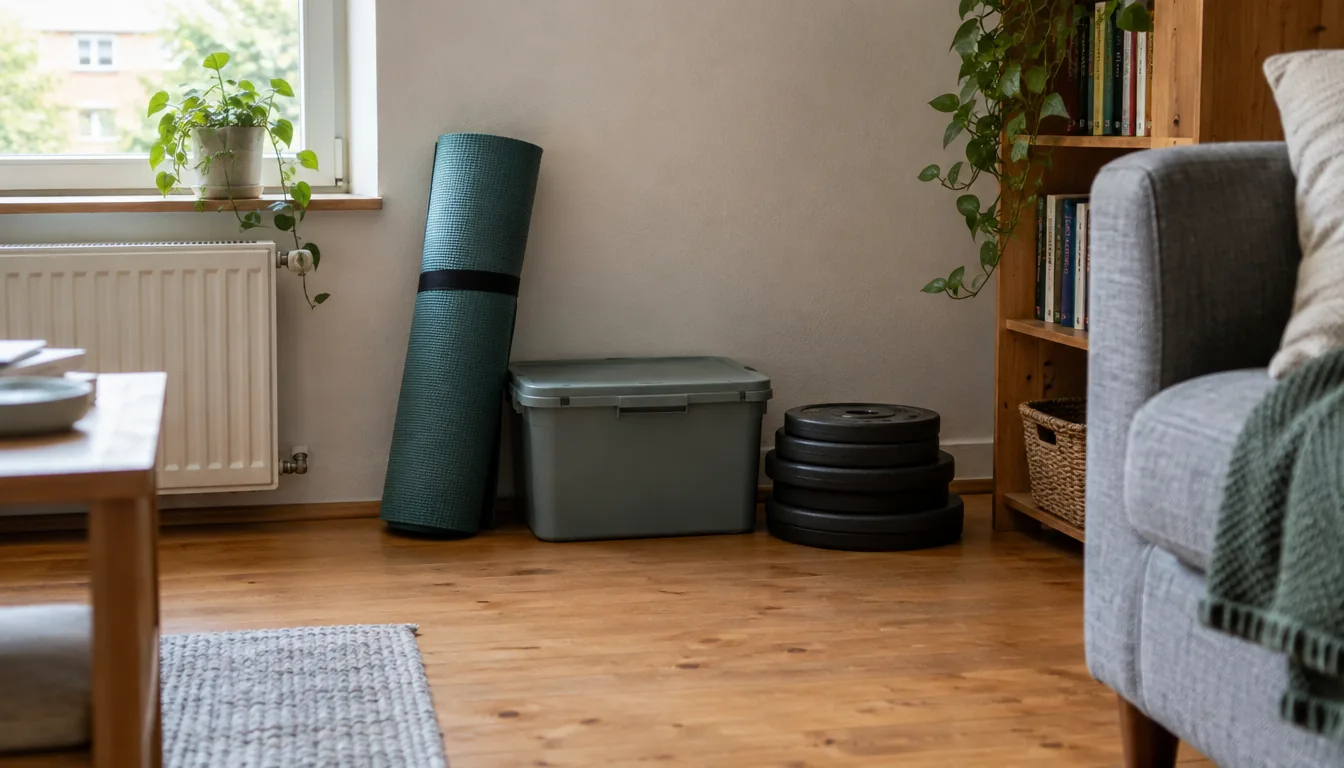
The main reason to buy an adjustable set is to replace a rack of fixed dumbbells. If the set arrives with a large tray or stand, that reason weakens. Read the dimensions of every piece, including any cradle, and measure the spot where you plan to keep it.
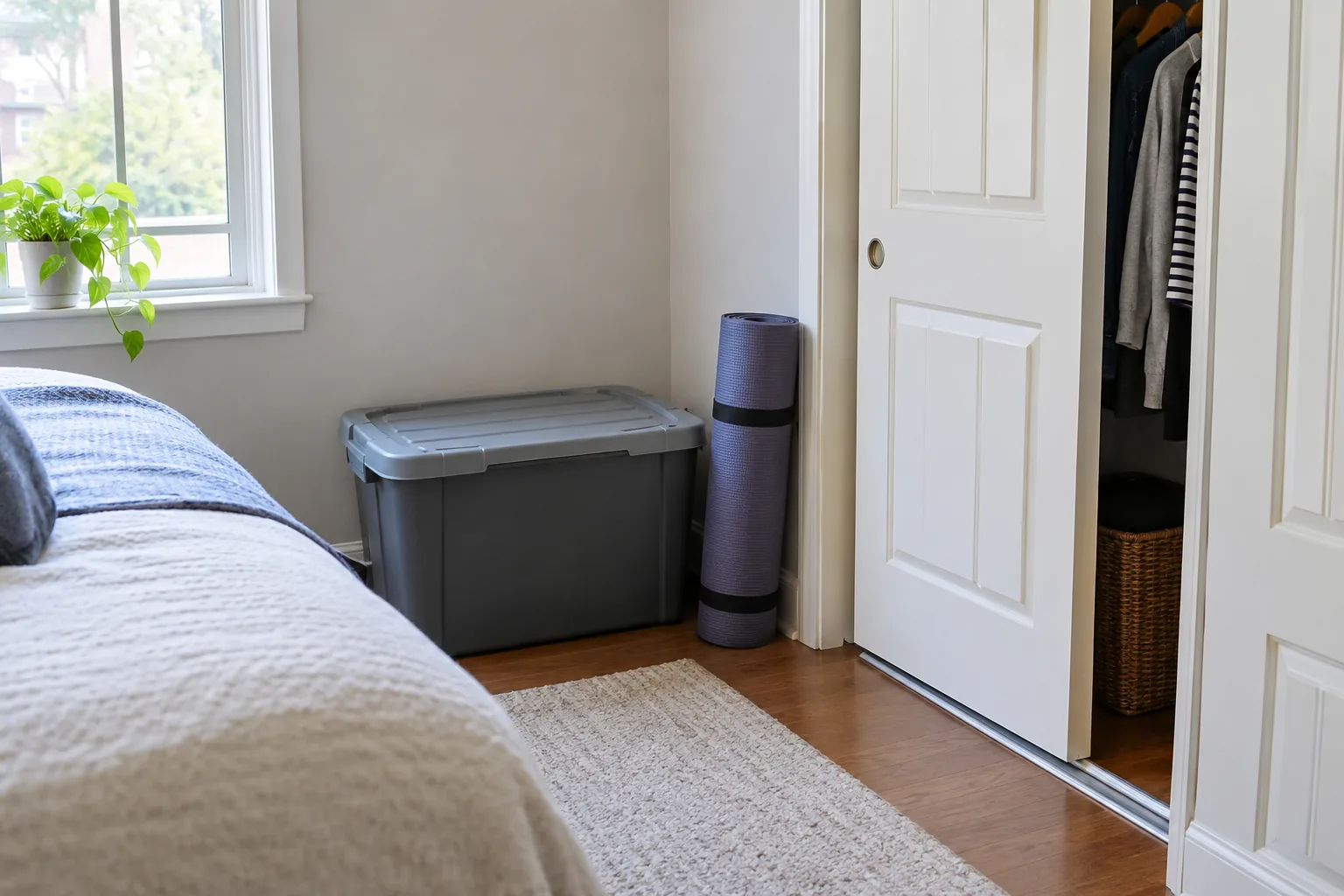
A set of loose plates and bars can be stored in a bin, under a bed or in a closet. A dial set stays on its tray, so measure the tray. A rubber mat under the lifting area covers the floor in either case.
If floor space is the real question in your home, our comparison of walking pads and treadmills applies the same space-first thinking to cardio equipment.
Grip and materials
Cheap handles can feel slick once your hands are sweaty. Look for a textured or cushioned grip surface, and check whether the handle is a separate bar or part of a fixed piece. Shell material matters for care: plastic shells and sealed fills can be wiped with a damp cloth, while bare metal parts need drying to stay clean.
After each session, wipe the parts down and let them dry before you put them in a bag or bin. Do not leave damp plates stacked in a closed container.
A plate-and-rod option to compare
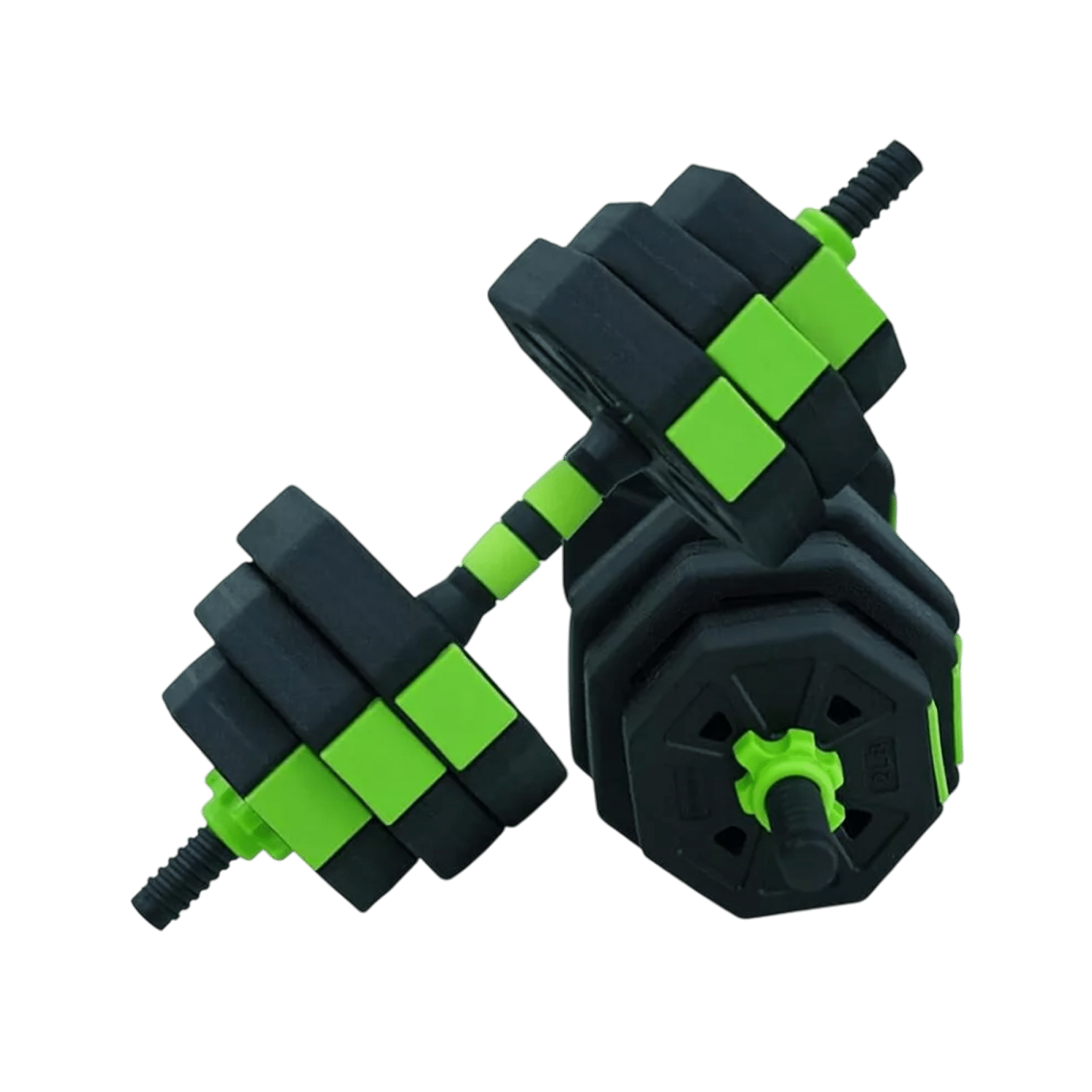
MorphBell is an adjustable dumbbell set built around a connecting rod and stackable counterweight plates. You load the plates you want and lock them with circlips, with no tools needed. The plates run from 2.5 lb to 5.5 lb, and the grip surfaces are cushioned and non-slip.
Apply the checklist to it. For range, the system reaches a maximum of 88 pounds total, or 44 pounds per side in barbell mode. For footprint, the same parts form dumbbells, a barbell, a kettlebell or push-up handles, so one group of parts replaces several separate pieces. For care, the counterweights have ABS shells filled with iron sand, so wipe them down after a session and let them dry.
The box holds 4 x 2.5 lb, 4 x 3.5 lb, 4 x 4.5 lb and 8 x 5.5 lb counterweights, 2 dumbbell bars, 1 barbell connector, 1 kettlebell rod, 2 push-up handles and 6 locking circlips. To work out the load per hand for your lifts, add up the plate weights you plan to put on each bar and compare that with your list of light and heavy moves.
 In this guideMorphBell$164.99View
Common mistakes with a cheaper set
- Buying for today's strength, not next year's. Check the top end first.
- Ignoring the light end. If you cannot load a small amount, small muscle work stalls.
- Skipping the lock check. A closed lock is a habit, not an assumption.
- Forgetting storage. Measure the spot before the box arrives.
- Choosing a single-use set when you also want swings or push-ups.
Fixed dumbbells can still make sense if you only use one or two weights. An adjustable set fits better when you vary your loads across many moves.
First-week setup routine
- Unbox the set and count every part against the packing list.
- Read the manual for the locking steps.
- Clear a lifting area and lay down a mat.
- Build a light load and practice locking and unlocking it.
- Do the shake check described above before each set.
- Wipe and dry the parts after your workout, then store them.
Warm up with a light load, and begin each move with a load you can control. If you have a health condition, ask a qualified professional before starting a strength routine. For a lower-impact day between lifting sessions, our guide to brisk walking pace and cadence pairs with a home strength plan, and you can browse more gear in the Home & Trail Fitness collection.