Walking Pad vs Treadmill: Space, Speed and Use Compared
A walking pad suits walking at a desk in a small space. A full-size treadmill suits running and a larger footprint. Here is the table and checklist to decide.
The Kesslund Team
October 27, 2026 · 7 min read · Updated October 30, 2026
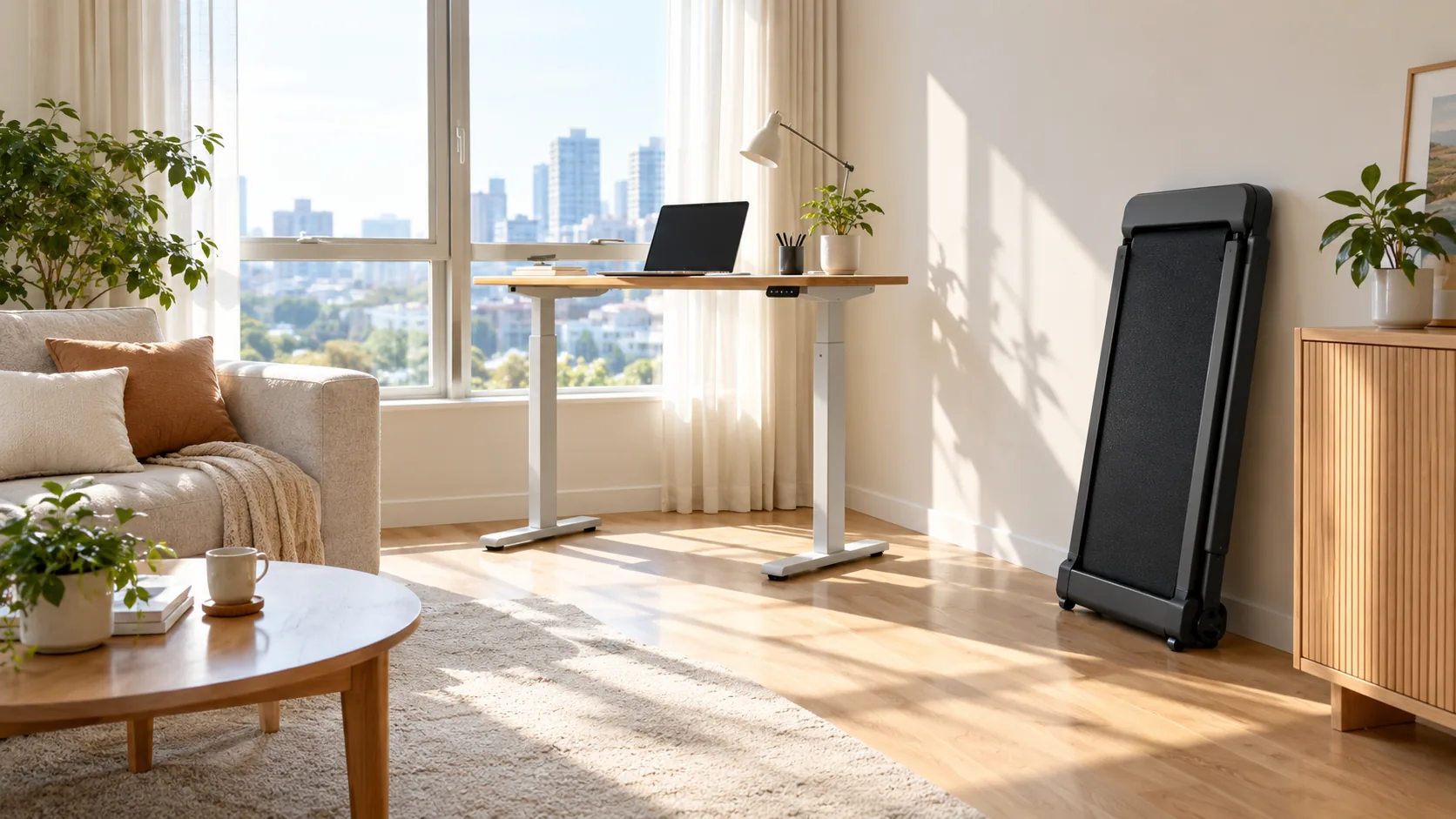
The walking pad vs treadmill choice comes down to what you will do on it and where it has to live. A walking pad is a compact, low-profile belt machine built for walking speeds, and some models fold or slide away. A full-size treadmill has a longer deck, a console and a speed range that allows running, but it needs a permanent spot in a room.
This guide compares footprint, speed, weight limit, lifespan and noise side by side, then gives you a checklist to settle the decision. It also covers a compact option for readers who want cardio without a belt machine.
Walking pad vs treadmill at a glance
Both machines move a belt under your feet so you can cover distance indoors. The differences are in the frame, the motor and the speed range. The table shows how the two types compare, and what to check on any specific model.
| Factor | Walking pad | Full-size treadmill |
|---|---|---|
| Footprint | Low-profile deck; some fold flat and slide under a desk or bed | Long frame with a console; plan a dedicated floor space |
| Top speed | Walking pace; check the manual for the maximum | Wider range that can include running; check the spec sheet |
| Weight limit | Varies by model; listed on the product page | Varies by model; listed on the spec sheet |
| Incline | Some models have it; many do not | Some models have an adjustable incline; check the range |
| Lifespan | Depends on motor, belt, load and care | Depends on motor, belt, load and care |
| Storage | Slides under furniture or leans against a wall on some models | Stays in place; some models fold up |
| Suited to | Walking while you work or watch TV | Walking, jogging and running sessions |
Use the table as a starting frame. Every model lists its own deck size, speed range and user weight capacity, so read the product page before you decide.
What is a walking pad treadmill?
A walking pad treadmill is a slim belt machine designed for walking at a steady pace, often beside a desk or sofa. It usually has no tall console, and controls may sit on a remote or a small display. A traditional treadmill is built around a larger frame, so it is the option to look at if jogging or running is the goal.
Space and speed: where each machine lives and how fast it goes
Space is the first filter. Measure the spot where you plan to use the machine, then measure the spot where it will sit between sessions.
Walking pad footprint
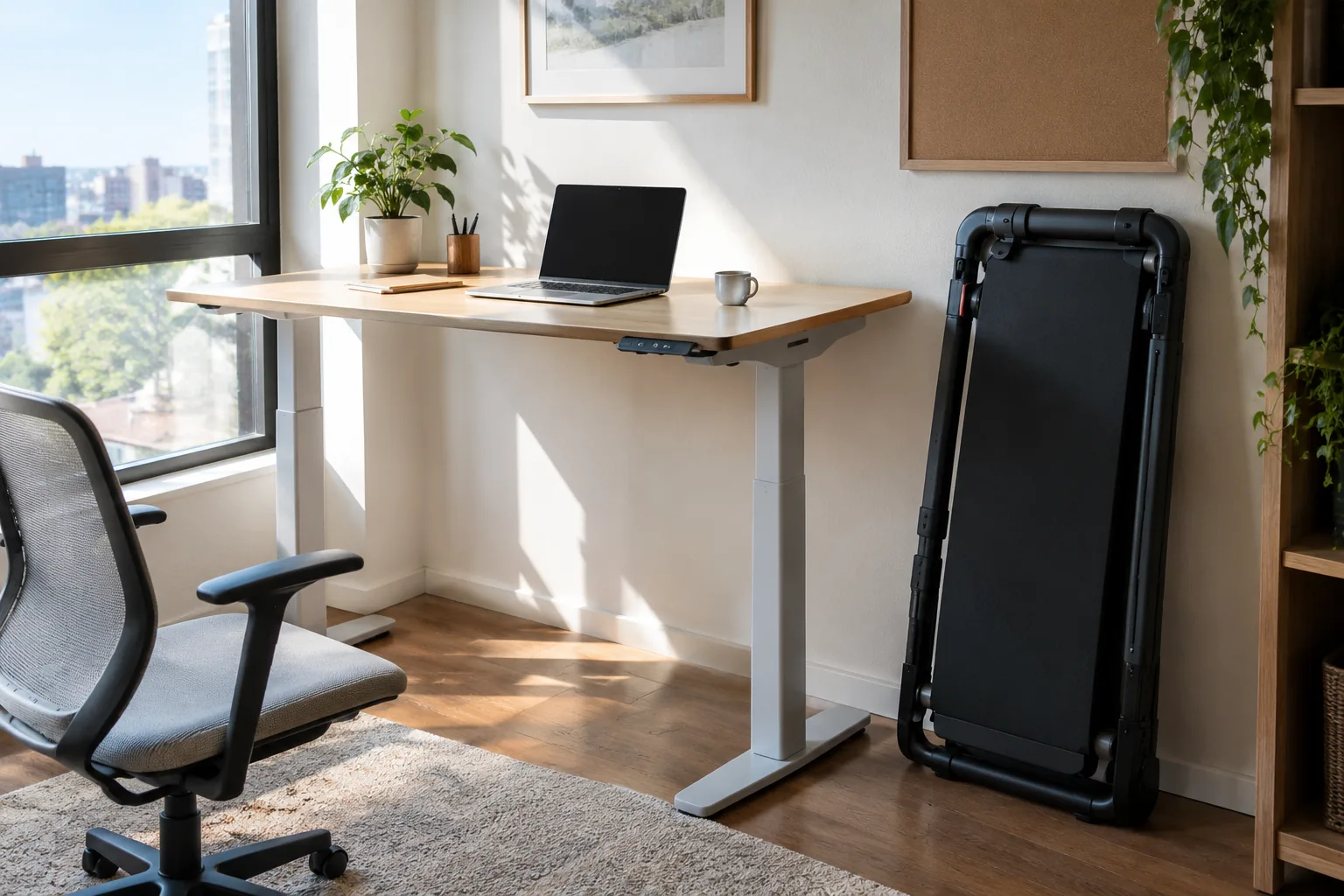
A walking pad has a low deck and no tall console, though some add a front handrail. That suits an apartment, a spare corner or the floor beside a standing desk. Some fold flat, and some have wheels so you can move them without lifting.
Treadmill footprint
A full-size treadmill has a longer deck and a console with handrails. Plan for the machine plus clearance behind it, and check ceiling height if you want to use an incline. In a shared room, a machine that stays out takes floor space from everything else.
Walking pace or running pace
Speed is the clearest dividing line. A walking pad is designed around walking strides, with a top speed set for walking. A full-size treadmill offers a wider range, which is what a jog or a run needs.
So, can you run on a walking pad? Only if the manual says the model supports it. Some walking pads are built for walking only. If running is part of your plan, look at treadmills whose spec sheet lists running speeds and a motor to match.
Weight limit, motor and lifespan
Check the user weight capacity first. It is listed per model, and it applies to the person on the belt, not the box weight. Stay within it, and within the speed range in the manual.
Lifespan has no single answer for either type. It depends on the motor, the belt and deck build, how many hours the machine runs, and how well you care for it. You can influence the last part with a care routine:
- Keep the belt and the area around the motor clear of dust and pet hair.
- Follow the manual for belt lubrication and alignment.
- Stay within the listed user weight capacity and speed range.
- Unplug the machine before cleaning or adjusting anything.
- Store it on a flat, dry surface.
When you compare models, look at belt width, frame build and the motor description on the product page, since these are the parts that carry daily use.
A compact option if a belt machine will not fit
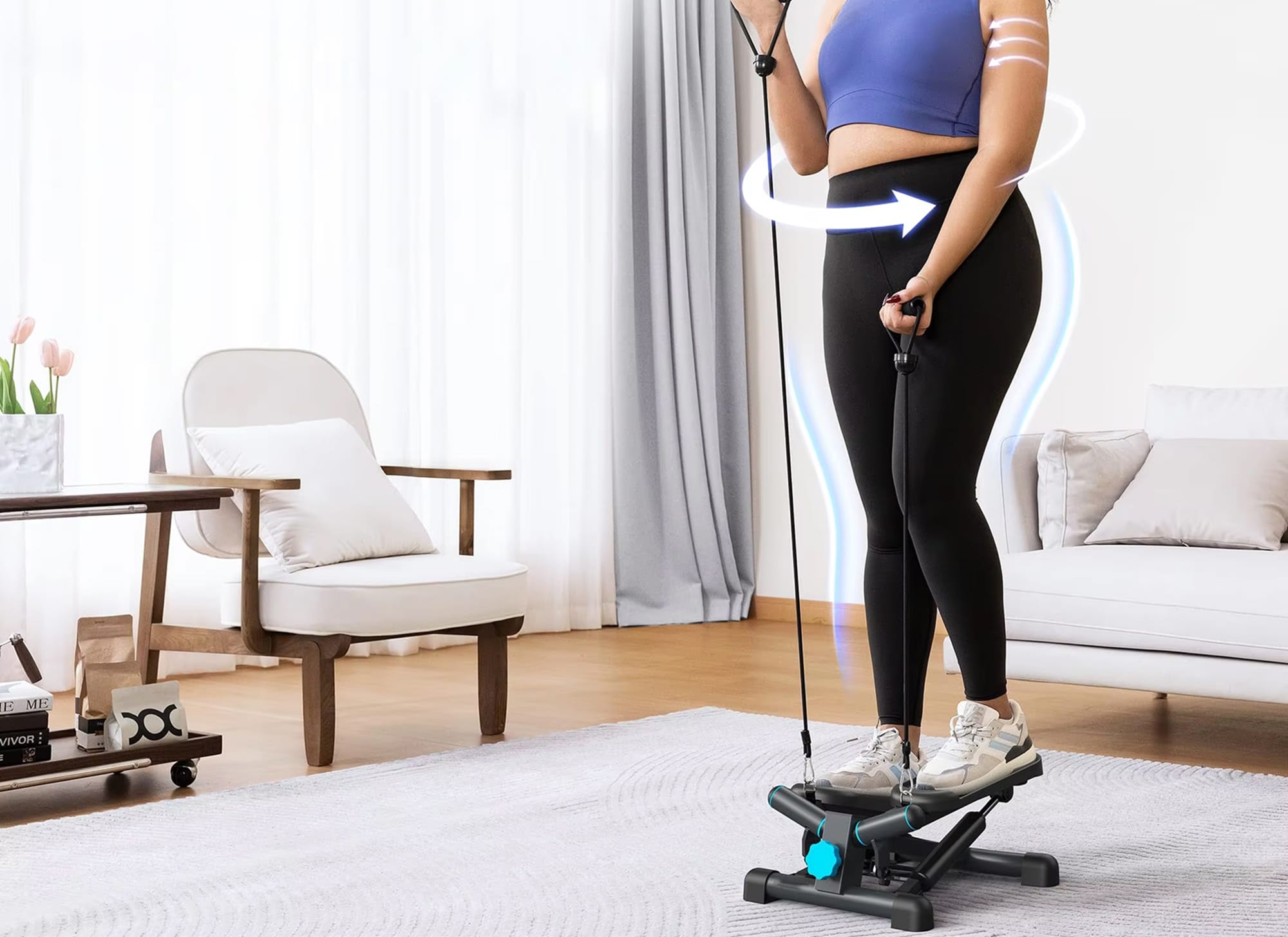
Sometimes the real limit is floor space, not speed. If you want a cardio routine and no room for a deck, the StepFlow Pro is a different kind of machine: a compact stair stepper, not a walking pad. It measures 16.1 x 13.7 x 6.9 inches, so you can store it in a corner, under a desk or under a bed when you are not using it.
The frame is thickened steel with a 330 lb weight capacity. Hydraulic cylinders control the stepping motion at a 38° stepping angle, and the twisting step design adds side-to-side movement. A built-in LCD monitor shows reps, time and calories, and two resistance bands are included for upper-body movements.
The box holds the main frame, an adjustment knob, two resistance bands, four foot covers and a user manual. Because it is a stepper, it does not replace a belt machine for walking or running; it suits a stepping routine in a small footprint.
 In this guideStepFlow Pro$199.99View
Use cases, noise and incline
Walking pad versus treadmill is partly a question of routine, so match the machine to the sessions you will actually do.
Walking while you work
A walking pad pairs with a standing desk. You keep a steady, low pace and keep typing. Because the speed range is set for walking, the pad suits calls, reading and email. A full-size treadmill can do this too, but it needs a room set up around it.
Structured workouts
If you want intervals, jogging or long runs, a full-size treadmill has the speed range and the frame for it. Larger models add incline adjustments and a console to program sessions. This is the area where a walking pad is not the right tool.
Walking in front of the TV
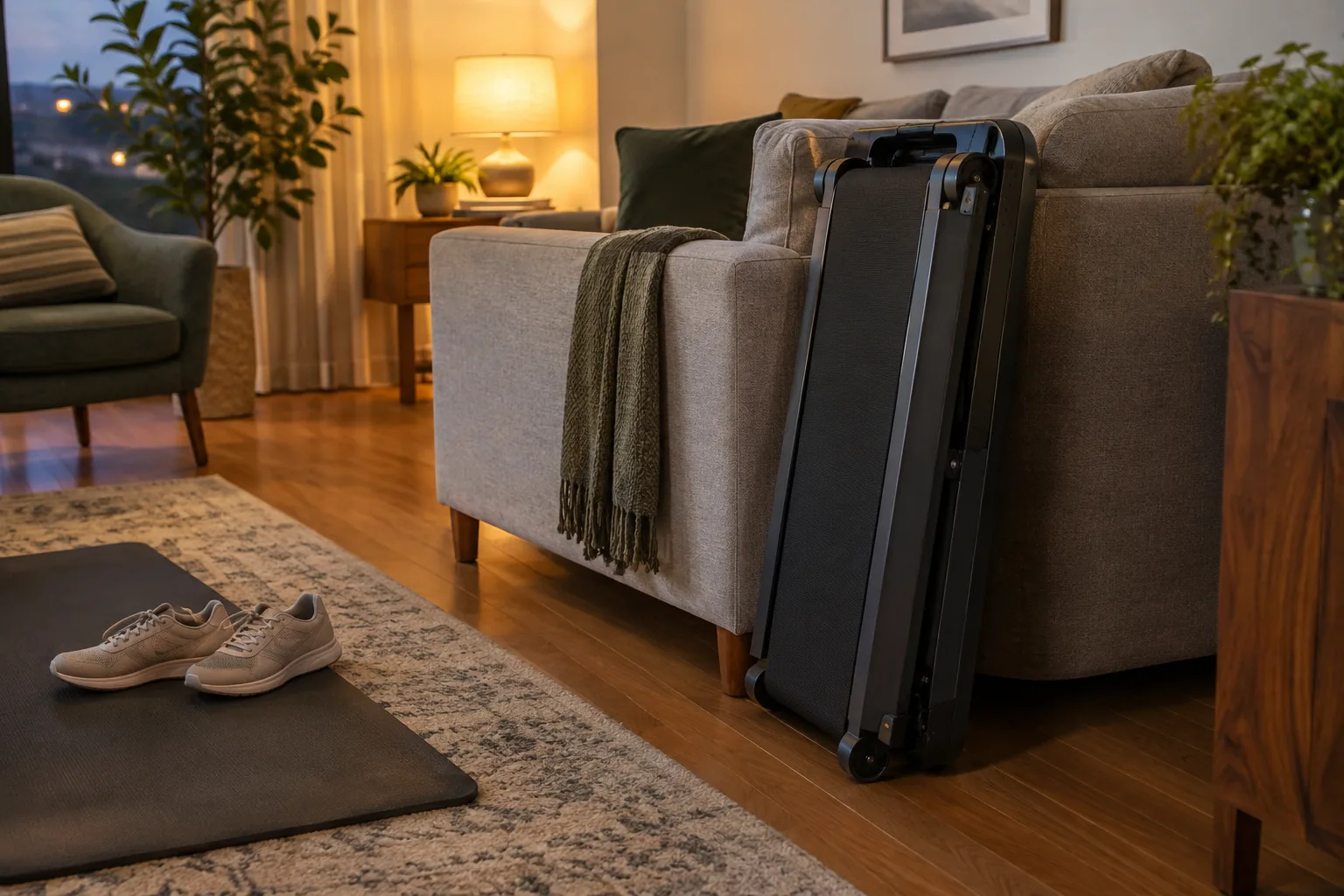
Either machine works. A pad can be put away when the show ends, which matters in a living room. Pair it with supportive footwear; our walking shoe fit checklist covers what to check.
Walking outdoors or on a machine
Outdoor walking and treadmill walking are different settings, not rivals. A treadmill or pad gives you a set pace indoors regardless of weather, while outdoor walking gives you terrain and fresh air. You can use both, and the choice depends on your schedule and goals.
Noise and placement
Noise depends on the motor, the belt and the floor under the machine. These placement steps apply to either type:
- Set the machine on a level surface.
- Use a mat on hard floors, and check the manual before placing it on thick carpet.
- Keep the deck away from walls and furniture, following the manual's clearance guidance.
- If a neighbor lives below, check the manual for placement advice.
Incline
Some walking pads offer a sloped deck, while some treadmills offer an adjustable range. Consoles on larger machines add programs and displays. A pad with a remote or app puts the key controls in your hand instead.
Decision checklist
Use this list to settle the walking pad vs treadmill question for your home. Answer in order.
- Will you run? If yes, choose a treadmill whose spec sheet lists running speeds.
- Is floor space shared? If the machine has to disappear after use, choose a folding walking pad, or a compact stepper if a belt does not fit.
- Is it for desk use? A walking pad with a low-profile deck matches a standing desk setup.
- Does your weight fall within the listed user capacity? Check the model, not the category.
- Do you want incline? Look at whether it is a single setting or an adjustable range.
- Can you keep up the care routine? Both types need a clean belt and the lubrication steps in the manual.
- Is your floor hard or shared with neighbors below? Plan a mat and placement.
Field note
Tape out the machine's footprint on the floor with painter's tape before you buy. Walk the length of it, then check where you would store it.
Common mistakes and what to compare on cost
- Buying a walking pad for running. Check the speed range and the manual first.
- Ignoring the storage spot. A machine that does not fit where it must live will sit unused.
- Skipping belt care. Follow the manual's lubrication and alignment steps.
- Choosing by deck length alone. Belt width, frame build and user weight capacity matter as well.
- Placing it on thick carpet without checking the manual for guidance.
Cost varies widely in both categories, so when you weigh a walking pad vs treadmill purchase, compare what each model includes instead of the type alone. Look at the motor type, the belt width, the user weight capacity, the speed range and what ships in the box.
If you are building out a home setup beyond one machine, browse the Home & Trail Fitness collection for more gear.