Comfortable Shoes for Walking for Women: A Fit Checklist
Comfortable shoes for walking for women come down to toe box width, steady cushioning, a secure heel and a light build. Use this checklist to judge any pair.
The Kesslund Team
October 21, 2026 · 7 min read
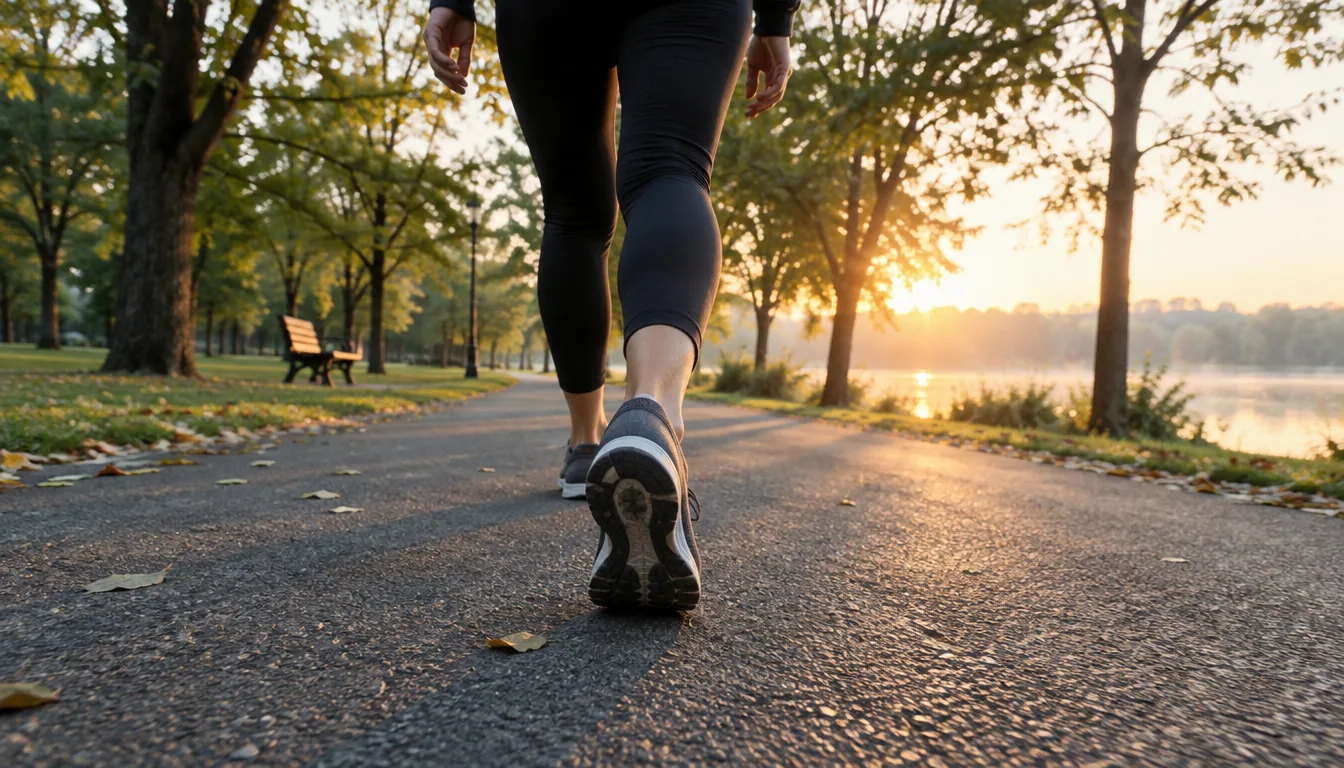
Comfortable shoes for walking for women share a few traits you can check in the store or at home: a toe box that lets your toes spread, cushioning that suits the surface you walk on, a heel that sits still, and a weight you stop noticing after the first mile. Brand matters less than how the shoe fits your foot shape. Use the checklist below to judge any pair before you commit.
This guide skips brand rankings. It walks through toe box width, midsole, drop, upper material and water resistance, then gives a try-on routine and a care schedule.
The walking shoe fit checklist at a glance
Run every pair through these checks. If a shoe fails the first two, no amount of cushioning fixes it.
| Check | What to look for | How to test it |
|---|---|---|
| Toe box | Room for toes to spread flat | Stand up and press near the front; leave about a thumb's width past your longest toe |
| Heel hold | Heel stays seated without rubbing | Walk a few steps and listen for slipping |
| Cushioning | Midsole that feels steady, not mushy | Walk on a hard floor, not carpet |
| Sole shape | Smooth heel-to-toe roll | Step forward and feel for an abrupt landing |
| Weight | Light enough to forget | Hold one shoe in each hand and compare |
| Upper | Breathable mesh or knit, no stiff seams | Flex your toes and check for pressure points |
| Water resistance | Only if you walk in damp weather | Check the product description for the exact wording |
Toe box width: why it comes first
Your foot widens as you push off and land. A narrow front end squeezes the toes together at exactly that moment, which is why walking shoes for women with a wide toe box are worth looking for if your forefoot is broad or your toes feel crowded.
A wide toe box is about the shape of the front of the shoe, not only the size. Going up a half size in a tapered shoe adds length but not width, so your toes can still be pinched while your heel slides.
A quick width test
- Take out the insole and stand on it.
- Check whether your toes and the ball of your foot stay inside its outline.
- If they spill over the edges, the shoe's footbed is narrower than your foot.
Many shoes come in standard and wide widths. A wide-fit sizing guide, like the one included with some pairs, helps you pick between sizes.
Cushioning, midsole and heel-to-toe drop
The midsole is the layer between your foot and the outsole. It sets how the shoe feels underfoot, and the right feel depends on where you walk.
Cushioning feel
Soft foam feels plush at the store, but an overly plush midsole can feel unsteady over a long walk. Firmer foam feels more stable and less bouncy. On concrete, tile or gym floors, look for a midsole that compresses but still gives you a stable base.
Stack height and drop
Stack height is how much material sits between your foot and the ground. Heel-to-toe drop is the height difference between the heel and forefoot. A higher drop tilts you slightly forward; a lower drop leaves your foot flatter. Neither suits everyone, so pick the one that feels natural when you walk at your usual pace.
Sole shape
A curved sole rocks your foot forward from heel to toe as you step. If you walk long distances on flat pavement, try shoes with a rocker-style profile and see how the roll feels over a few minutes.
Arch and stability
Arch support should match your arch. If a built-in arch feels like a bump under your foot, try a shoe with a flatter footbed. If you overpronate, meaning your ankle rolls inward as you step, ask a podiatrist or a fitting specialist what kind of stability you need.
Upper, breathability and water-resistant walking shoes for women
The upper holds your foot in place. A breathable mesh or knit upper lets air move and flexes with your foot, which suits warm weather and long walks. Look for soft seams near the toes and ankle, since those are where rubbing starts.
If you walk in drizzle, dew or damp grass, water-resistant walking shoes for women add a coated or tightly woven upper. Water resistance is not the same as being sealed against water, and a resistant shoe can still get wet through the collar. Check the exact wording on the product page, and have a dry pair to rotate in.
Breathability and water resistance pull in opposite directions, so choose by climate. Dry, warm routes favor mesh. Wet, cool routes favor a coated upper.
Comfortable shoes for walking for women: match the shoe to your day
Good walking tennis shoes for women look like athletic sneakers, but what you need depends on how you use them. Use this table to narrow the field.
| Your walking | Prioritize | Watch out for |
|---|---|---|
| Daily errands | Slip-on fit, light weight | Stiff heel counters that rub |
| Hard floors through a work shift | Cushioning that stays stable, wide toe box | Foam that feels too soft |
| Long fitness walks | Breathable upper, smooth roll | Seams over the toes |
| Damp mornings | Water-resistant upper, grippy outsole | Trapped heat in warm weather |
| Travel days | Light build, wipe-clean upper | Narrow toe area after hours of sitting |
Running shoes can work for walking, and some are built with the same cushioning. Choose them by the same checklist, not by the label.
A pair built around these checks
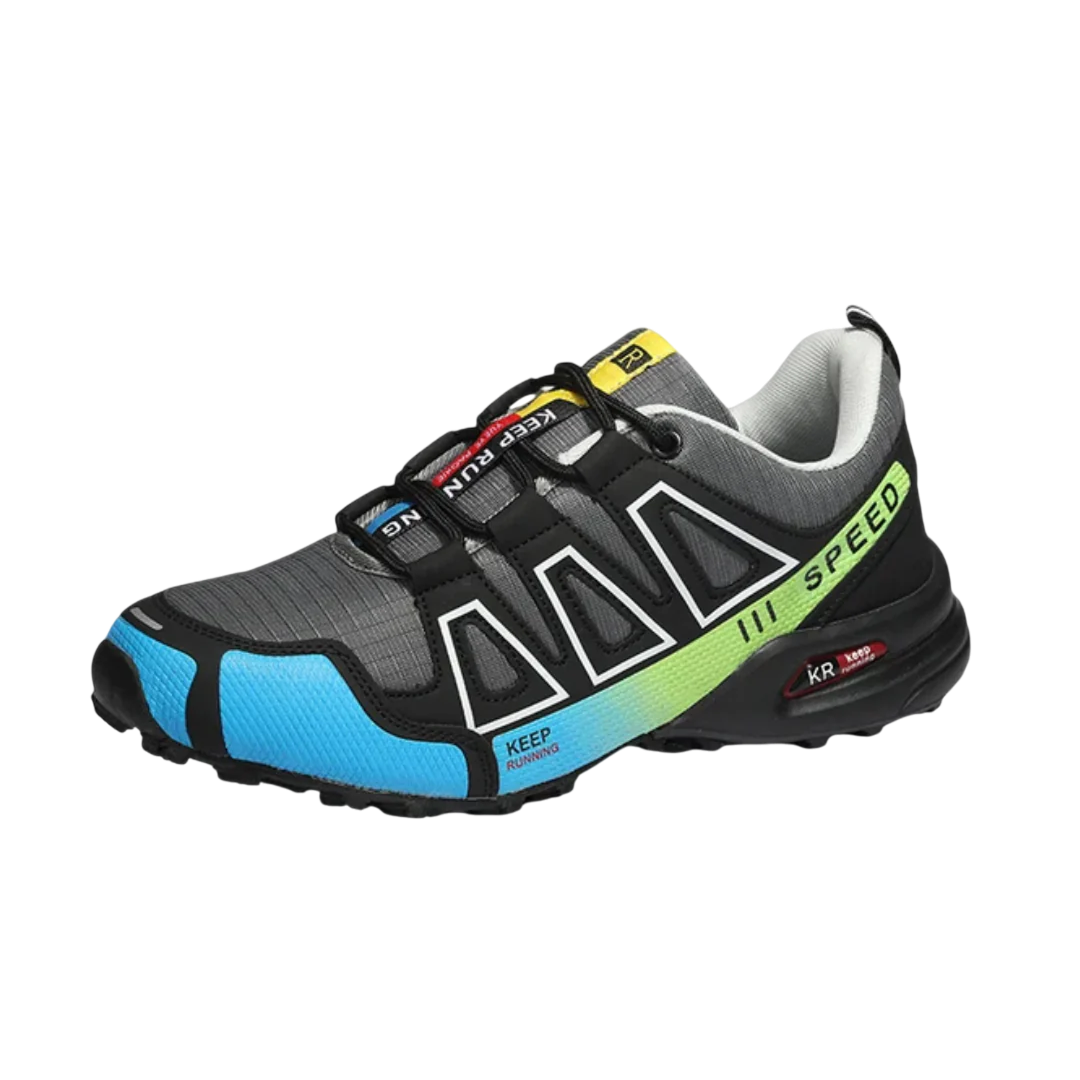
If you want comfortable shoes for walking for women with a wide toe area, zoned cushioning and a rolling stride, GaitCloud Walking Shoes are women's walking shoes designed around those points. Individual cushioning zones sit under the heel and forefoot, so each zone compresses where your foot lands instead of one continuous slab of foam spanning the whole sole.
The toe area is anatomical and wide, and a wide-fit sizing guide comes with the shoes to help you choose a size. The sole is curved so your foot rolls from heel to toe as you step, and the build is lightweight. They suit walks, errands and days on hard floors, such as teachers and shift workers spend. The box also includes shoe care instructions.
 In this guideGaitCloud$139.99View
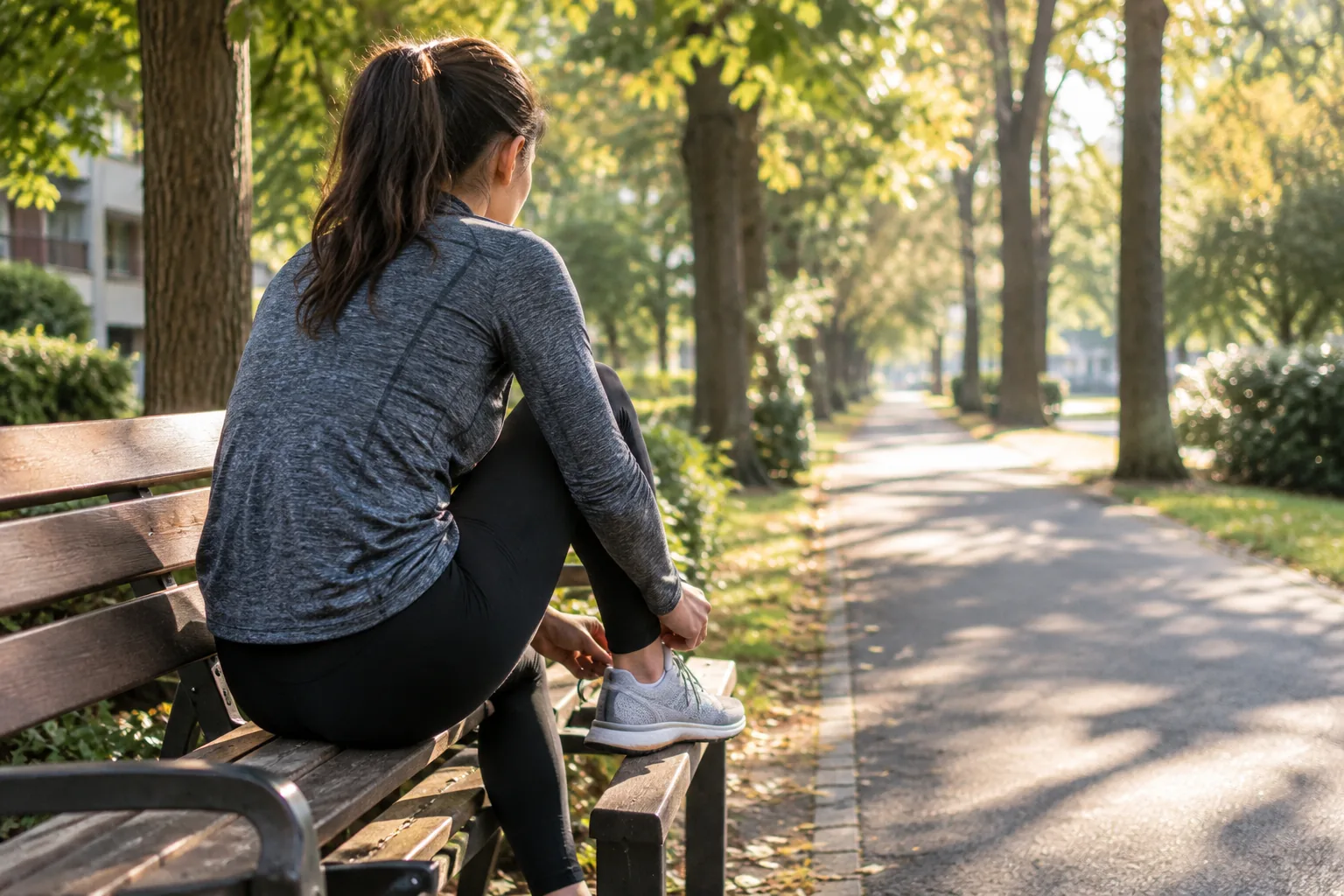
How to try on walking shoes
Use the same routine for every pair, so you compare shoes under equal conditions.
- Shop in the afternoon or evening, when feet are at their largest.
- Wear the socks you walk in.
- Fit the larger foot first.
- Check for a thumb's width in front of the longest toe.
- Walk on a hard surface for several minutes, including a few turns and a short incline if you can.
- Notice hot spots at the heel, ball of the foot and little toe.
- Check that your toes can lift and spread inside the shoe.
Some brands run small, so size by the fit, not the number on the box. If you are between sizes, the wider and slightly longer pair is the one to test first.
Field note
Stand on a sheet of paper and trace each foot, then place a shoe's insole over the tracing. The outline shows quickly whether the shoe is narrower than your foot.
Common mistakes when choosing walking shoes
- Buying for length only and ignoring width.
- Choosing the softest foam in the store, then finding it feels unsteady by mile three.
- Trying shoes on in the morning, before feet have settled.
- Skipping a hard-surface test and walking only on carpet.
- Expecting water resistance to work like a rain boot.
- Keeping worn shoes because the upper still looks fine while the midsole has flattened.
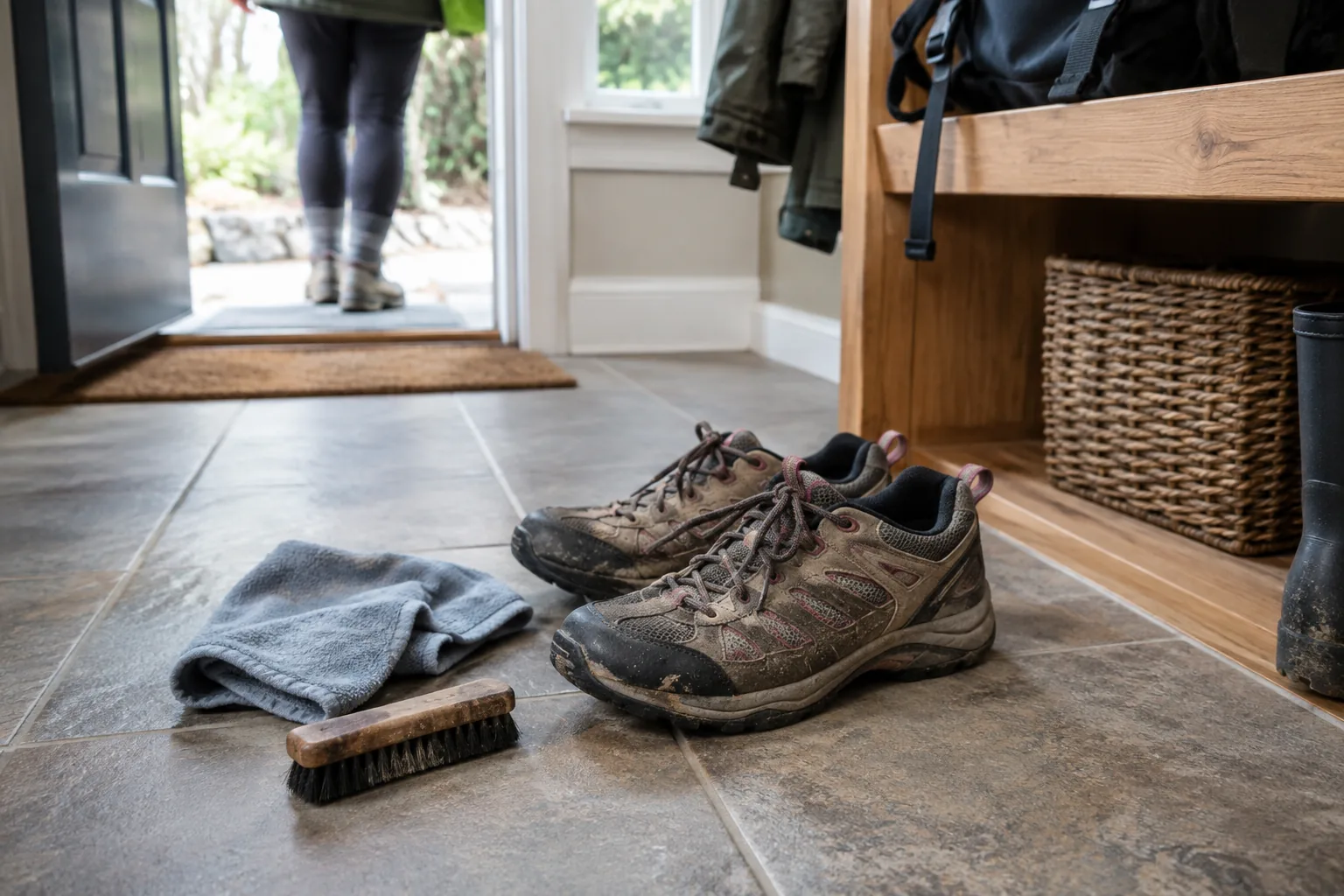
Care schedule for comfortable shoes for walking
| When | What to do |
|---|---|
| After each walk | Loosen the laces, pull the insole if it is removable, and let the shoes air out |
| Weekly | Brush dirt from the outsole and wipe the upper with a damp cloth |
| Monthly | Check the tread and look for creases in the midsole |
| Every few months of regular use | Compare the shoe's feel against a newer pair and consider replacing it if it feels flat |
Follow the care instructions that come with your shoes, and rotate two pairs if you walk daily. For more gear for time on foot and on the trail, browse the Home & Trail Fitness collection.