How to Wash Sneakers in a Washing Machine Without Ruining Them
Remove laces and insoles, bag the shoes, use a cold gentle cycle with low spin, then air-dry. Here is which pairs can go in the machine and which to skip.
The Kesslund Team
November 2, 2026 · 6 min read
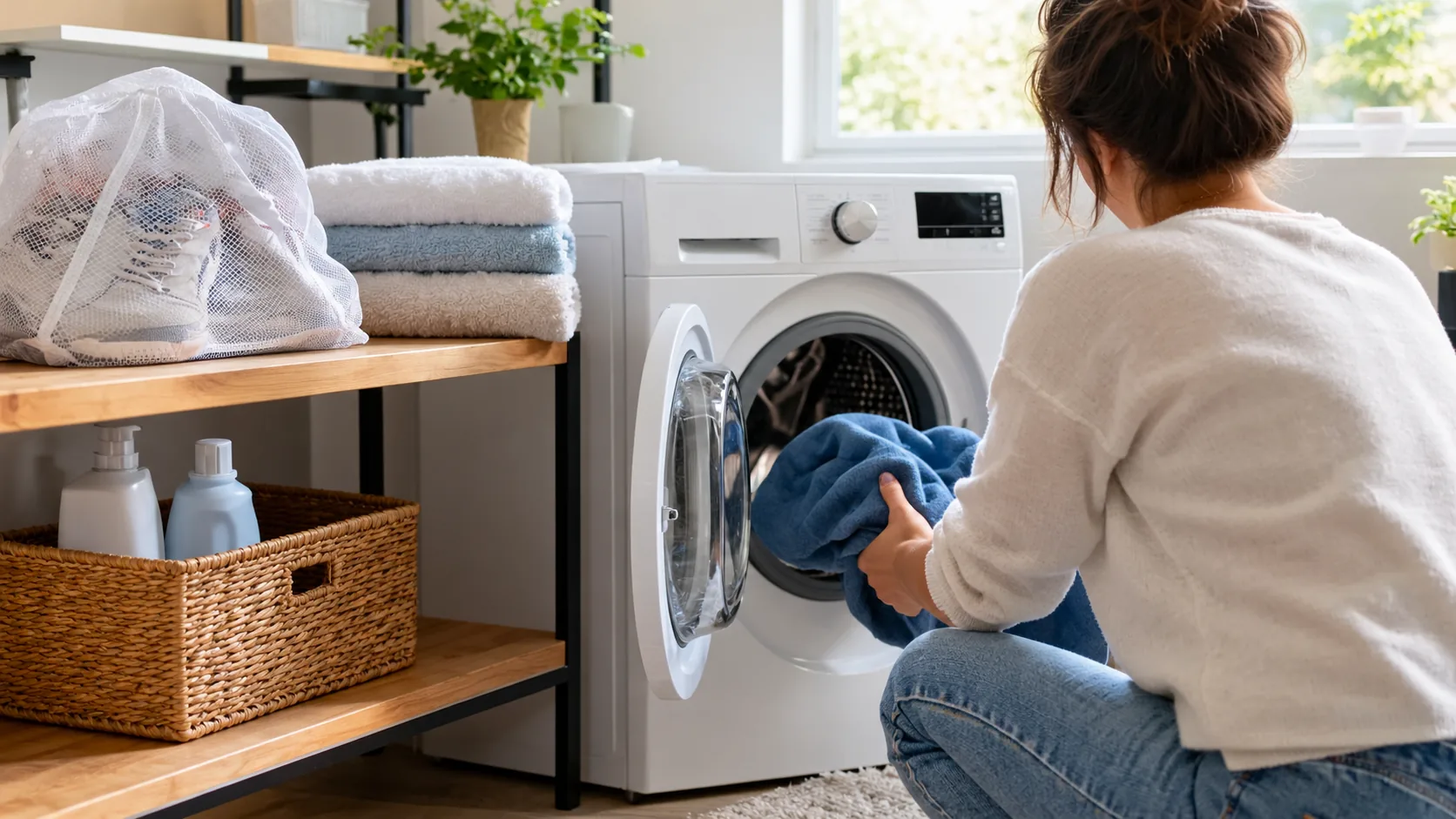
Here is how to wash sneakers in a washing machine without damage: remove the laces and insoles, knock off loose dirt, put the shoes in a mesh bag or pillowcase with a few towels, and run a cold, gentle cycle with a low spin. Then air-dry them away from heat. Check the care label first, because shoes with peeling or separating soles, leather and suede do not belong in the drum.
This guide covers which shoes qualify, a settings checklist for top-load and front-load machines, and how to dry shoes without a tumble dryer.
Can you wash shoes in the washing machine? A decision check
Some sneakers can go in the drum and some cannot. To decide whether you can wash shoes in the washing machine at all, start with the care label inside the tongue or the manufacturer's instructions, then match the shoe to the table below. If the label says hand wash only, follow it.
| Shoe type | Machine wash? | Why |
|---|---|---|
| Canvas sneakers | Yes, if the label allows | Fabric uppers handle water and tumbling |
| Knit or mesh running shoes | Yes, in a bag, if the label allows | Thin mesh can snag; a bag cushions rubbing |
| Leather or faux leather | No | Soaking can stiffen and crack the surface |
| Suede or nubuck | No | Water leaves marks and flattens the nap |
| Shoes with visible glue gaps or peeling soles | No | Agitation can widen the gaps |
| Boots with insulation or liners | No | Liners hold water and take long to dry |
Can you machine wash mesh sneakers? Yes, when the label permits it. Use a closed mesh bag, a gentle cycle and a low spin, and check the toe area for loose threads before you start.
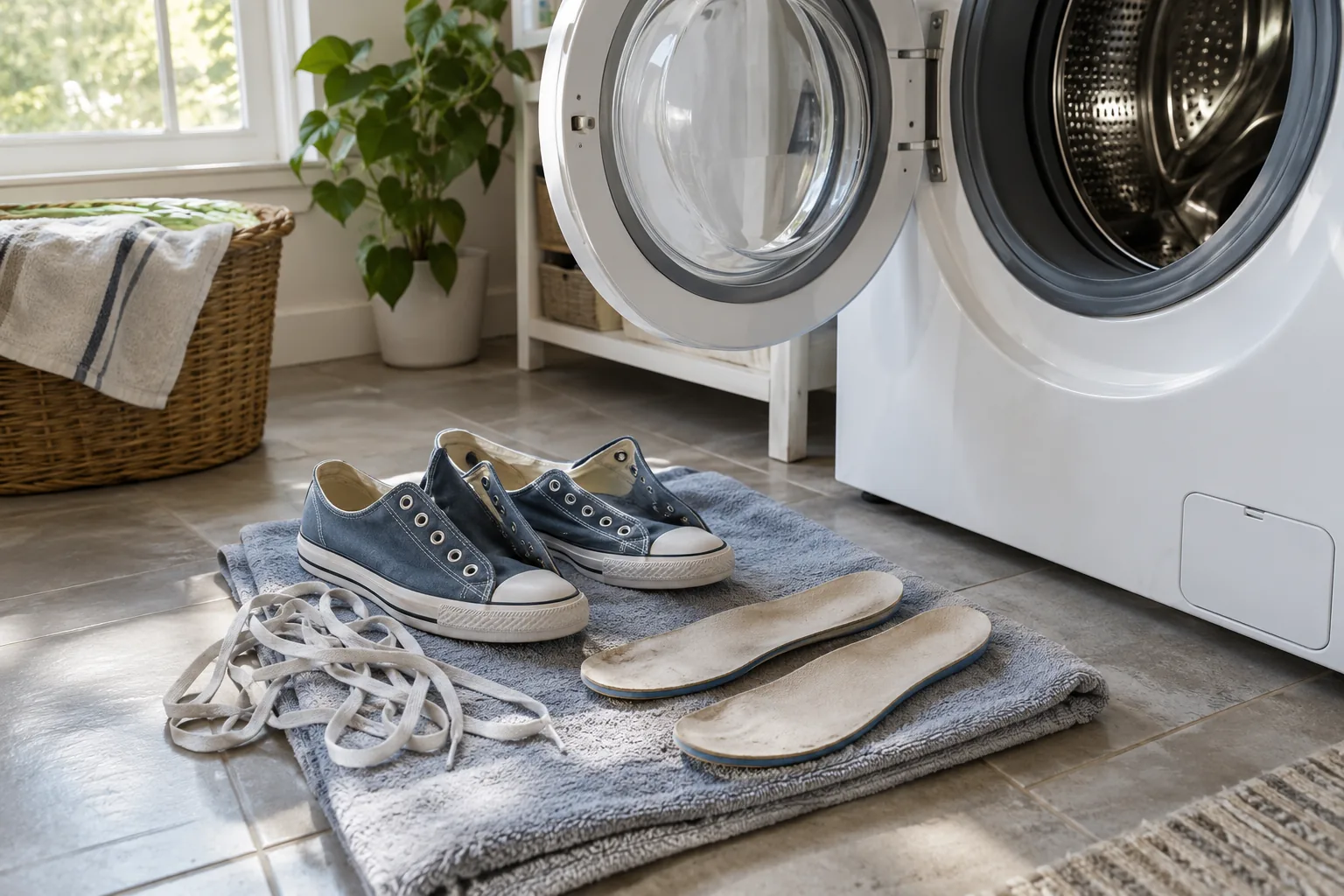
Prep checklist before washing
Preparation matters for both the shoes and the machine. Work through these steps in order.
- Read the care label and any shoe care instructions that came with the pair.
- Remove the laces and insoles. Wash laces in the same bag or by hand.
- Bang the soles together outdoors to knock out gravel and dried mud.
- Brush off caked dirt with a dry brush, and pre-wipe stains with a damp cloth and a drop of mild detergent.
- Place the shoes in a zippered mesh bag or a knotted pillowcase. This cushions the drum and keeps laces from tangling.
- Add two or three towels to balance the load and cushion the thumping.
If you do not have a mesh bag, a pillowcase closed with a knot cushions the shoes against the drum and the door.
Care instructions differ from pair to pair. The GaitCloud walking shoes come with shoe care instructions in the box, and that document is the one to follow for that pair rather than a general rule.
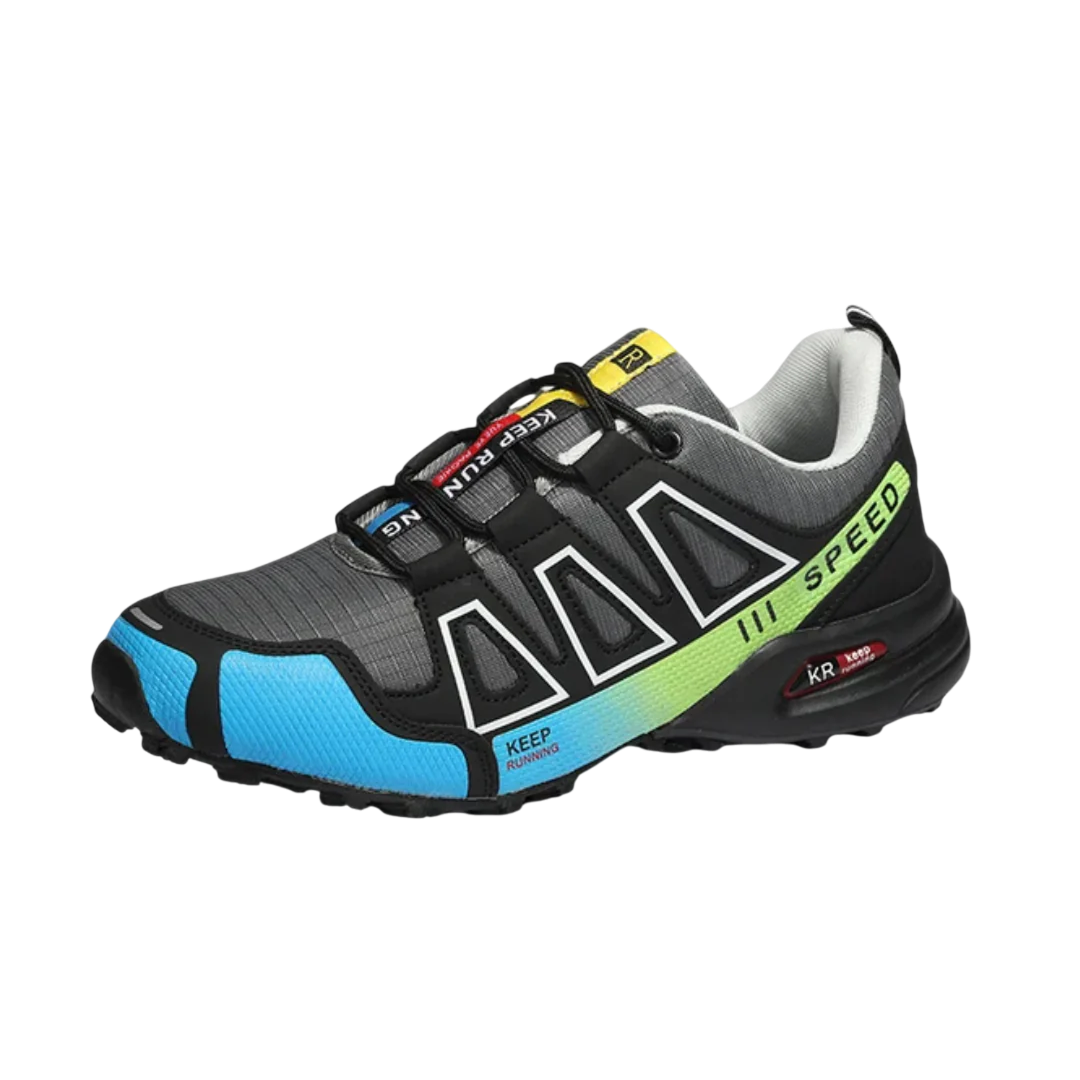 In this guideGaitCloud$139.99View
How to wash sneakers in a washing machine: settings checklist
The goal is gentle movement, cool water and little spin. Use this table as a starting point and defer to your washer's manual.
| Setting | Choose | Reason |
|---|---|---|
| Cycle | Delicate or gentle | Gentle tumbling for glued parts |
| Water temperature | Cold | Hot water can weaken adhesive and fade color |
| Spin speed | Low or no spin | Hard spinning slams the shoes against the drum |
| Detergent | Small amount of mild liquid | Excess suds are hard to rinse out of foam |
| Extra rinse | On, if available | Rinses leftover soap from fabric and midsole |
| Bleach and softener | Skip both | They can stain or degrade materials |
Front-load washing machine
Place the bagged shoes with towels around them so they do not sit against the glass door. Front loaders tumble the load slowly, so the towels help spread the weight evenly.
Top-load washing machine
If your machine has a central agitator, shoes can thump against it. Load the bagged shoes with towels, keep the water level at medium or higher, and choose the gentlest cycle. If your washer is an agitator model, hand washing is an option.
Vinegar in the washing machine
Some people add a small splash of white vinegar to the rinse to help with odor. It is optional, and you should check your washer's manual first, since some manufacturers advise against it. Use it sparingly and do not mix it with bleach.
How to dry shoes without heat damage
The tumble dryer is where machine-washed shoes can get ruined. Heat can warp the sole, weaken glue and shrink fabric. Skip it unless the care label specifically allows it.
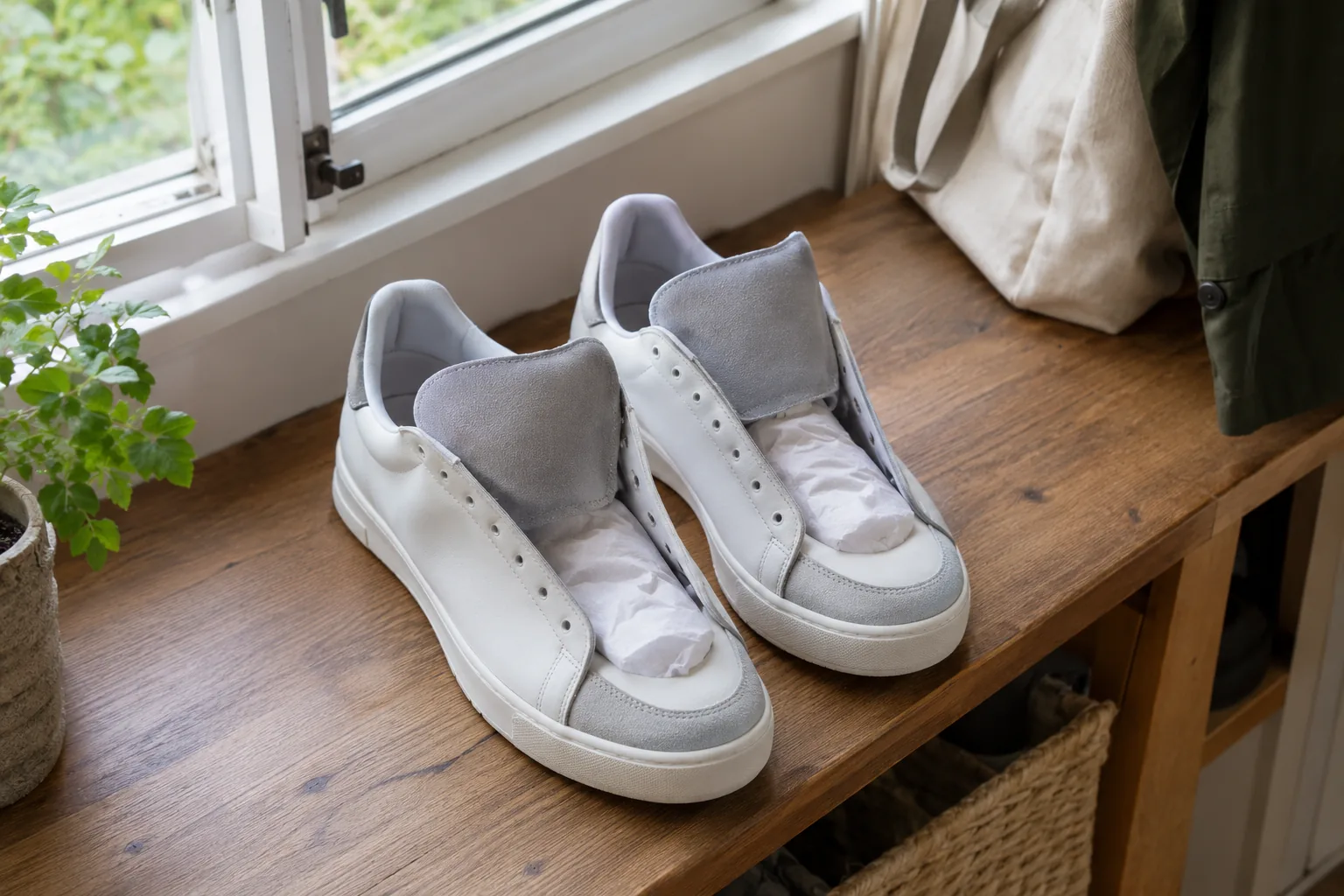
- Press the shoes with a dry towel to soak up surface water.
- Stuff the toes with white paper towels or clean cloth to hold the shape. Replace the stuffing once it is damp.
- Stand the shoes in a ventilated room, tongues pulled forward and insoles set beside them.
- Keep them out of direct sun and away from radiators, heaters and car dashboards.
- Put the insoles and laces back only when everything feels dry through to the toe.
A fan nearby keeps air moving around the shoes. Dry shoes fully before wearing or storing them, since damp foam and fabric can smell.
A drying option for wet footwear: boot dryer
If you wash shoes often, or finish a wet day outdoors, a dedicated dryer is an alternative to open-air drying or placing shoes near a radiator. The AeroVault boot dryer has adjustable arms that reach into boots, shoes and gloves. An internal fan moves warmed air through the liner, and a PTC heating element warms that air.
Onboard sensors track moisture and the unit shuts off automatically once the gear reads dry. Follow the user manual for placement, and use it only on shoes whose care label does not prohibit warmed air.
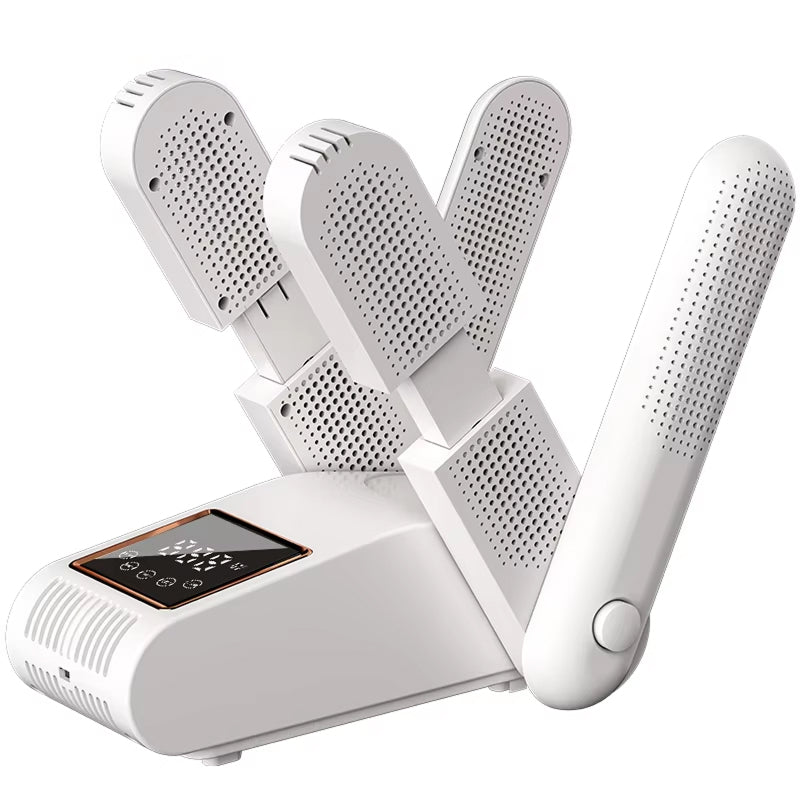 In this guideAeroVault$99.99View
White running shoes, stains and hand washing
How do you clean white running shoes? Mix a small amount of mild detergent in cool water, scrub the upper and midsole with a soft brush, and wipe with a clean damp cloth. Rinse the cloth often so you do not spread dirt back onto the fabric.
Is dish soap good for cleaning shoes? A few drops of a mild liquid dish soap in water can work for spot cleaning canvas and rubber. Use very little, rinse well, and avoid it on leather or suede.
Hand washing step by step
- Remove laces and insoles and brush off dry dirt.
- Dip the brush in soapy cool water and scrub in small circles.
- Wipe away suds with a damp cloth, changing the water as it clouds.
- Dry as described above, not on a heater.
Hand washing suits leather, suede and any pair with a hand-wash-only label. It also works when you want to clean one stained spot without a full cycle.
Hygiene and the drum
Washing shoes in the machine with towels and detergent cleans the surfaces, but the drum then holds dirt from the soles. Run an empty cycle or wipe the drum and door seal afterward, and avoid washing shoes in the same load as clothing.
Common mistakes to avoid
- Skipping the care label, then washing leather shoes or pairs with separating soles.
- Using hot water or bleach on colored or white uppers.
- Leaving laces and insoles in, which tangles and traps water.
- Washing without a bag or towels, so the shoes bang against the drum.
- Drying near a heater or in a tumble dryer.
- Wearing shoes before the toe box is fully dry.
If you are choosing a new pair for long days on hard floors, our guide to comfortable shoes for walking for women covers fit steps, and the same drying habits apply to gear like packs, as in how to choose, clean and dry water bladder packs. For more outdoor and training gear, browse Home & Trail Fitness.
Field note
Wash a pair when it is lightly dirty rather than waiting for heavy mud. Brush off dry dirt after each wear, and the machine only has to do the final clean.