Fishing Gear and Equipment Checklist for Your First Season
A first season needs a matched rod and reel, line, basic tackle, pliers, a license and a way to carry it. Here is what to buy now, what to add soon and what can wait.
Wes Tanner
October 17, 2026 · 8 min read
The fishing gear and equipment you need for a first season is short: a matched rod and reel, line, hooks, a few sinkers and bobbers, bait or lures, pliers, a license, and something to carry it all. Everything else, from extra rods to electronics, can wait until you know which water and which fish you keep coming back to.
This guide sorts the gear into three tiers (buy now, add soon, wait), explains line and terminal tackle in plain terms, then shows how the list shifts for bluegill, steelhead, salmon and saltwater. Use it as a shopping checklist and a way to skip the items that fill a catalog but not a first tackle box.
Fishing gear and equipment checklist: need, soon, wait
Catalogs list thousands of items, and stores that sell fishing and hunting gear side by side can make the aisle feel endless. Whether you browse hunting fishing gear or a single tackle aisle, only a few things matter on a first trip. Start with the first row and add from the second only after a few outings show you what is missing.
| Tier | Items | Why |
|---|---|---|
| Buy now | Rod and reel combo, line, hooks, split shot or sinkers, bobbers, bait, needle-nose pliers, license, a way to carry gear | This is the full chain from your hand to the fish |
| Add soon | Polarized sunglasses, a few lures, line clippers, a small net, a second box of terminal tackle | Useful once you fish regularly and know what you are missing |
| Can wait | Second rod, baitcasting setup, electronics, specialty lures, waders, heavy-duty species gear | These depend on the species and water you settle on |
One item sits outside the table: the fishing license for your state. Check your state wildlife agency for license rules, size limits and seasons before your first trip.
Rod and reel: start with one matched combo
The rod and reel are where beginners overspend or mismatch parts. A spinning combo is a simple choice because the reel hangs under the rod, casts with a basic overhead motion and handles most freshwater fishing. If you want to compare reel styles first, our guide to fishing reel types covers spinning, baitcasting and spincast.
What to look for in a fishing pole for beginners
- Length: a rod around 6.5 to 7 feet suits ponds, lakes, rivers and streams.
- Power: medium-light covers a wide range of small and mid-size freshwater fish.
- Action: a rod that bends along much of its length loads smoothly while you learn the casting technique.
- Bite visibility: a visible tip helps you see bites as well as feel them.
- Matched reel: a reel chosen together with the rod, so you skip guesswork.
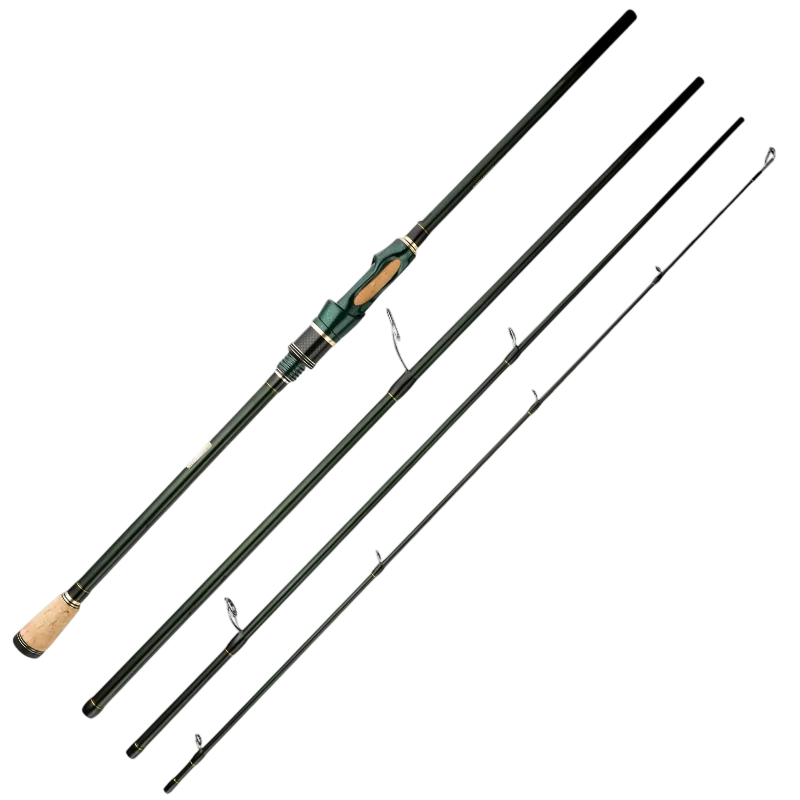
The CastRidge Pro is built around this list. It is a 6.5 to 7 ft medium-light spinning rod with a parabolic composite blank, a clear tip, and a factory-matched spinning reel with anti-reverse that arrives pre-spooled with monofilament line. A protective sleeve and a quick-start guide are in the box, so you add hooks and bait.
 In this guideCastRidge Pro$99.99View
Fishing gear and tackle: line and the small items that do the work
Tackle is everything between the end of your rod and the fish. It is small and easy to lose, so organize it from the first day.
Choosing fishing line
Line is the one consumable you will replace most often. Three types cover nearly every beginner question.
| Line type | What it is | Where it fits |
|---|---|---|
| Monofilament | Single-strand nylon line that stretches a little | All-around starter line; already on a pre-spooled combo |
| Fluorocarbon | Dense, clear-looking line, often used as a leader | A short length tied between main line and hook or lure |
| Braided fishing line | Woven strands with a thin diameter and almost no stretch | Later upgrade for lure fishing and heavy cover |
Start with monofilament. Add a spool of the same type your reel carries, and try fluorocarbon or braid only when a specific situation calls for it.
Core terminal tackle
Terminal tackle is the hardware at the end of the line. A small assortment goes a long way.
- Hooks: a few sizes. Smaller hooks suit small mouths; larger hooks suit bigger baits and fish.
- Split shot or sinkers: weights that carry bait down to the depth you want.
- Bobbers (floats): they hold bait at a set depth and show bites on the surface.
- Swivels and snap clips: useful once you start using lures.
Tools you will use every trip
Needle-nose pliers remove hooks and crimp split shot. Line clippers or small scissors trim knots. A small towel or rag handles bait and fish slime. Add a hook-removal tool or a net if you plan to release fish.
Bait versus lures
Live or natural bait is a straightforward start, especially on a bobber rig. Lures add a skill layer: you choose the retrieve, the depth and the speed. A soft plastic worm on a light hook is an easy first lure to learn because it needs only a slow, steady retrieve. Buy three or four basic lures after your first few trips instead of a large kit on day one.
Carry and organize: fishing backpacks and tackle packs
Loose tackle in a bucket tangles easily. A pack with dedicated slots keeps hooks, line and tools where your hands expect them, whether you walk a bank, hike in or ride in a boat. Backpacks for fishing differ from general daypacks mainly in their tackle box slots and rod loops.
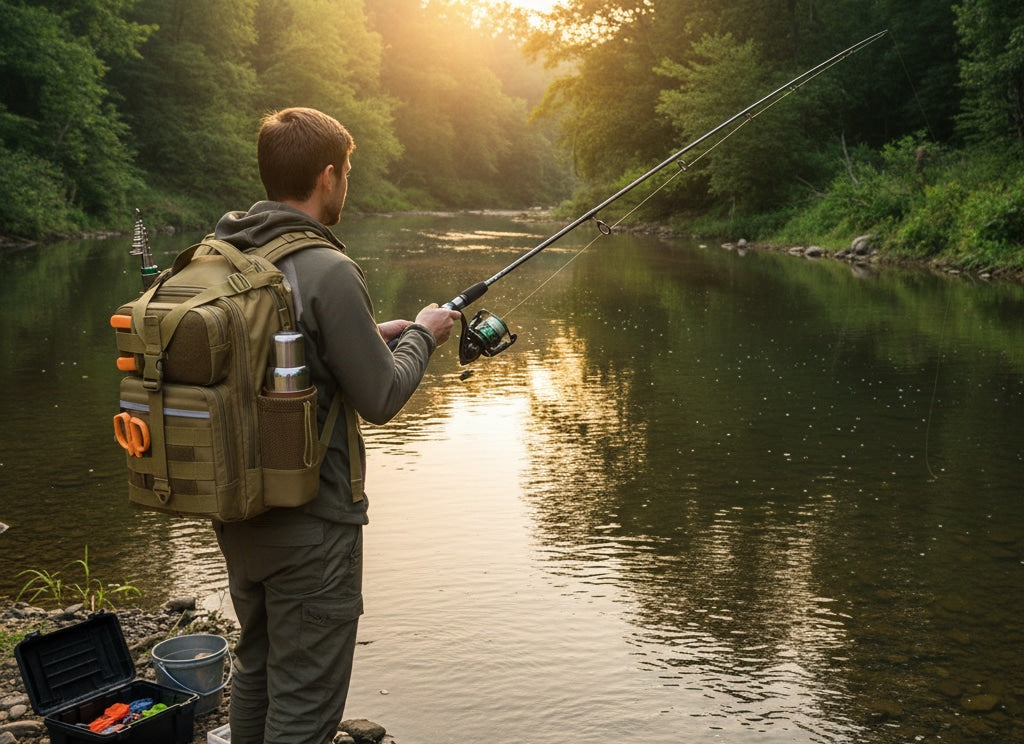
The CatchFlex tackle pack switches between backpack, sling, chest and shoulder carry using zippered straps, with no tools needed. It has slots for three tackle boxes, three front pockets, a rear compartment, and rod loops so your hands stay free. The shell is 600D polyester with a water-resistant PVC coating, and MOLLE webbing lets you add compatible pouches. After a trip, rinse the zippers with fresh water and let the pack dry before storing it.
 In this guideCatchFlex$98.99View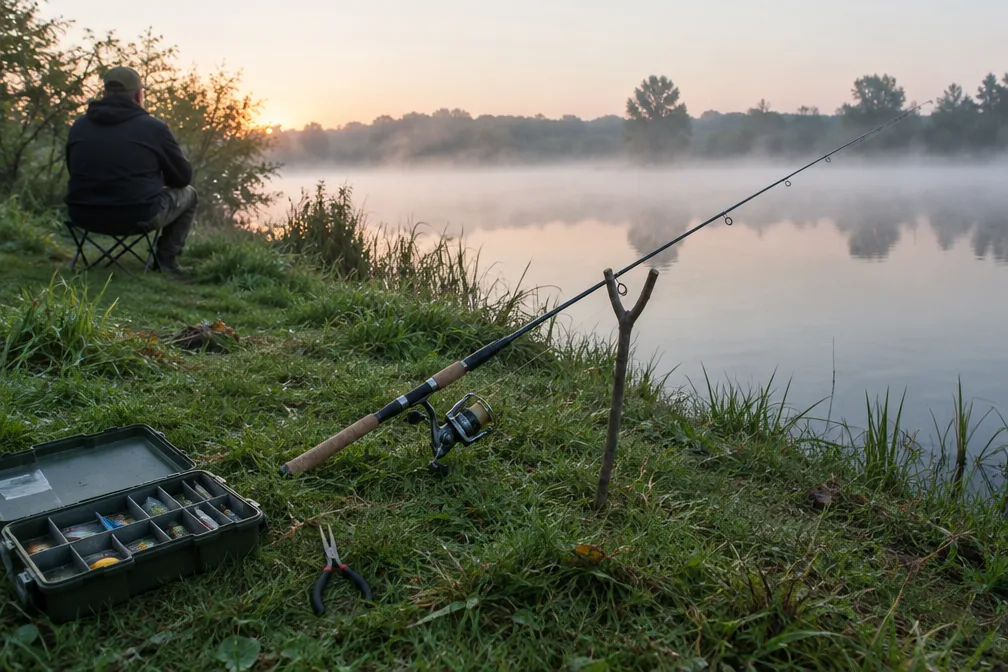
Sun, wind and water: personal gear that earns its place
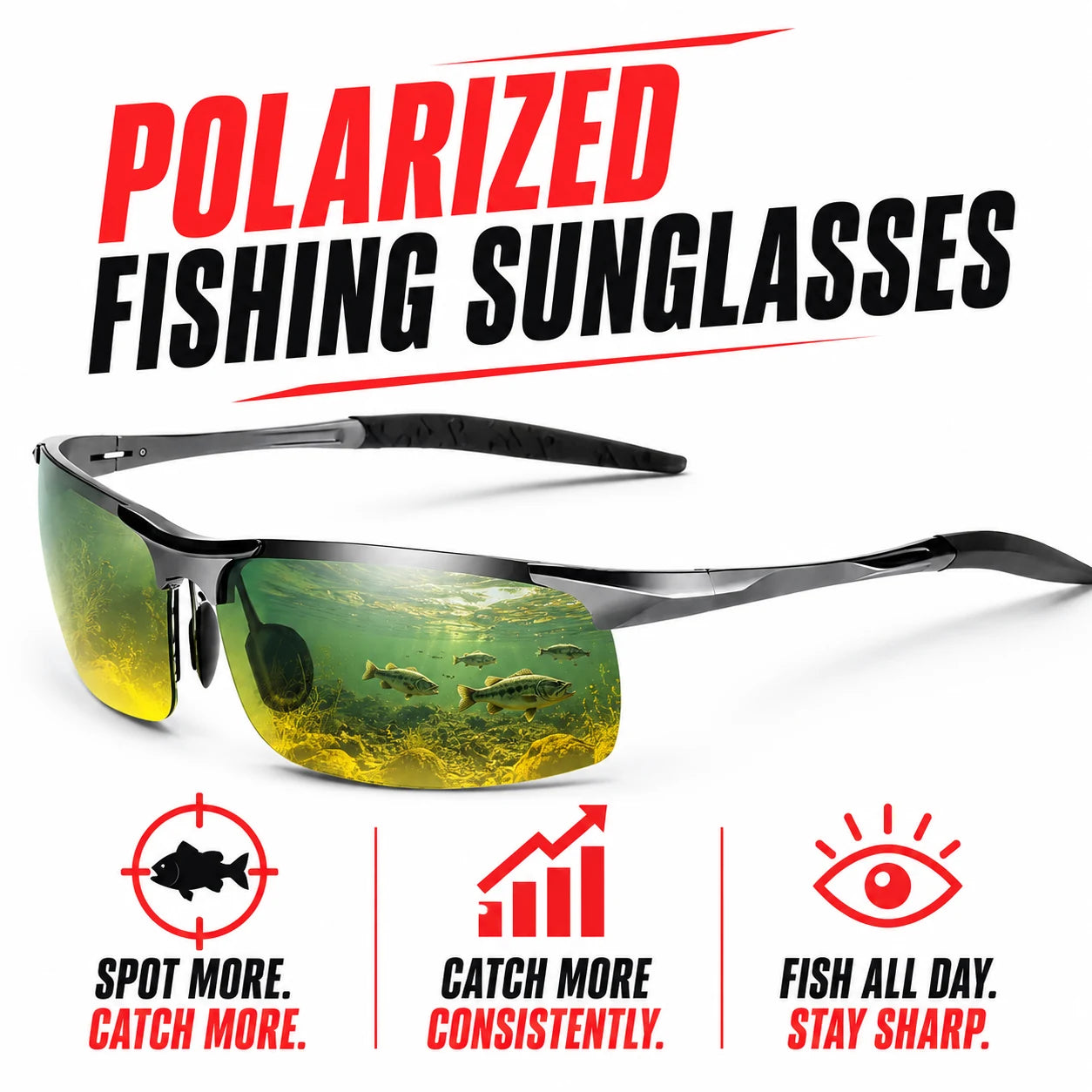
Fishing means hours outdoors with light reflecting off the surface. A hat, sunscreen, a water bottle and a light rain layer matter as much as any lure. Polarized sunglasses for fishing are the one piece of personal gear worth adding early, since polarized lenses are designed for use on the water.
The PolarStrike fishing sunglasses use polarized TAC lenses with tints that filter yellow light, in a wrap-shape aluminum-magnesium alloy frame with silicone nose and grip pads. The alloy is corrosion-resistant, and because it is denser than water the glasses sink if dropped. Keep them in the included hard case when you are not wearing them, or add a retainer strap of your own. A microfiber cloth is included for cleaning the lenses.
 In this guidePolarStrike$89.99View
Field note
Before you buy anything beyond the starter list, write down the species and the water you plan to fish. A one-line answer such as "bluegill, town pond, from the bank" removes most of the shopping decisions.
Adjusting the list by species and water
The starter fishing gear and equipment above fits small freshwater fish. When you move to larger or more specialized fish, the rod, line and tackle change. Gather local advice from a nearby tackle shop or your state wildlife agency before you spend.
| Target | Rod and reel direction | Tackle direction | Notes |
|---|---|---|---|
| Bluegill and other panfish | Light to medium-light spinning combo | Small hooks, small bobbers, light split shot, natural bait | The starter kit already covers this |
| Steelhead | Longer, more specialized rod and a reel with a smooth drag | Leaders, floats, small jigs or flies, depending on local method | Rivers often call for waders or boots and a net |
| Salmon | Heavier rod and reel sized for larger fish | Heavier line, larger terminal tackle, rules-specific rigs | Regulations on gear and bait vary by water |
| Saltwater | Rod and reel built for salt exposure and bigger species | Corrosion-resistant hooks and hardware, heavier weights | Rinse everything with fresh water after each trip |
Fishing gear for bluegill
Bluegill is a friendly first target: they live in ponds and lakes, bite small baits and are often found near shore. A light rod, a small hook, a bobber and a bit of bait is the whole system. This is why the starter list stops where it does.
Gear for steelhead fishing and gear for salmon fishing
Both fish run in rivers and both ask more of your equipment than a pond rod does. Expect to move to a heavier rod, a reel with a smooth drag and heavier line, and to add river items such as a net and appropriate footwear. Because methods and legal rigs differ by river and season, treat these as a second-season purchase and confirm local rules first.
Saltwater, fly fishing and big game
Saltwater and big game fishing call for gear sized to the fish and built for salt exposure, and fly fishing uses an entirely different rod, line and casting method. None of these belong in a first-season kit. Fish fresh water close to home, learn how bites feel, and let that experience guide the next purchase.
Common mistakes and a pre-trip checklist
- Buying a large kit of lures first. A few basics and some bait cover your early trips.
- Mixing mismatched rod, reel and line. A matched combo is set up as one system, so you skip matching parts yourself.
- Skipping the license and local rules. Size limits, seasons and bait rules are set by water and state.
- Leaving gear wet. Dry the rod, rinse the zippers and open the tackle boxes to air out after each trip.
- Chasing electronics too early. Sonar is useful on a boat, but learn the water first; see our fish finder guide when you reach that step.
Run through this list before you leave home:
- License in your pocket or on your phone.
- Rod joined, line threaded through every guide.
- Hooks, split shot and bobbers in a labeled box.
- Pliers and clippers in an easy pocket.
- Sun protection, water and a rain layer.
- Pack adjusted and zippers closed.
- Trash bag for line and wrappers, so the bank stays clean.
When you are ready to fill gaps in your fishing gear and equipment, browse the fishing gear collection and add one item at a time as the water shows you what you are missing.