Wagon on the Beach: Wheels, Load and Sand Tips That Work
A wagon on the beach works when the wheels are wide and low-pressure and the load is packed low and balanced. Here is how to compare wheels, size the load and pack the cargo.
Wes Tanner
October 16, 2026 · 6 min read
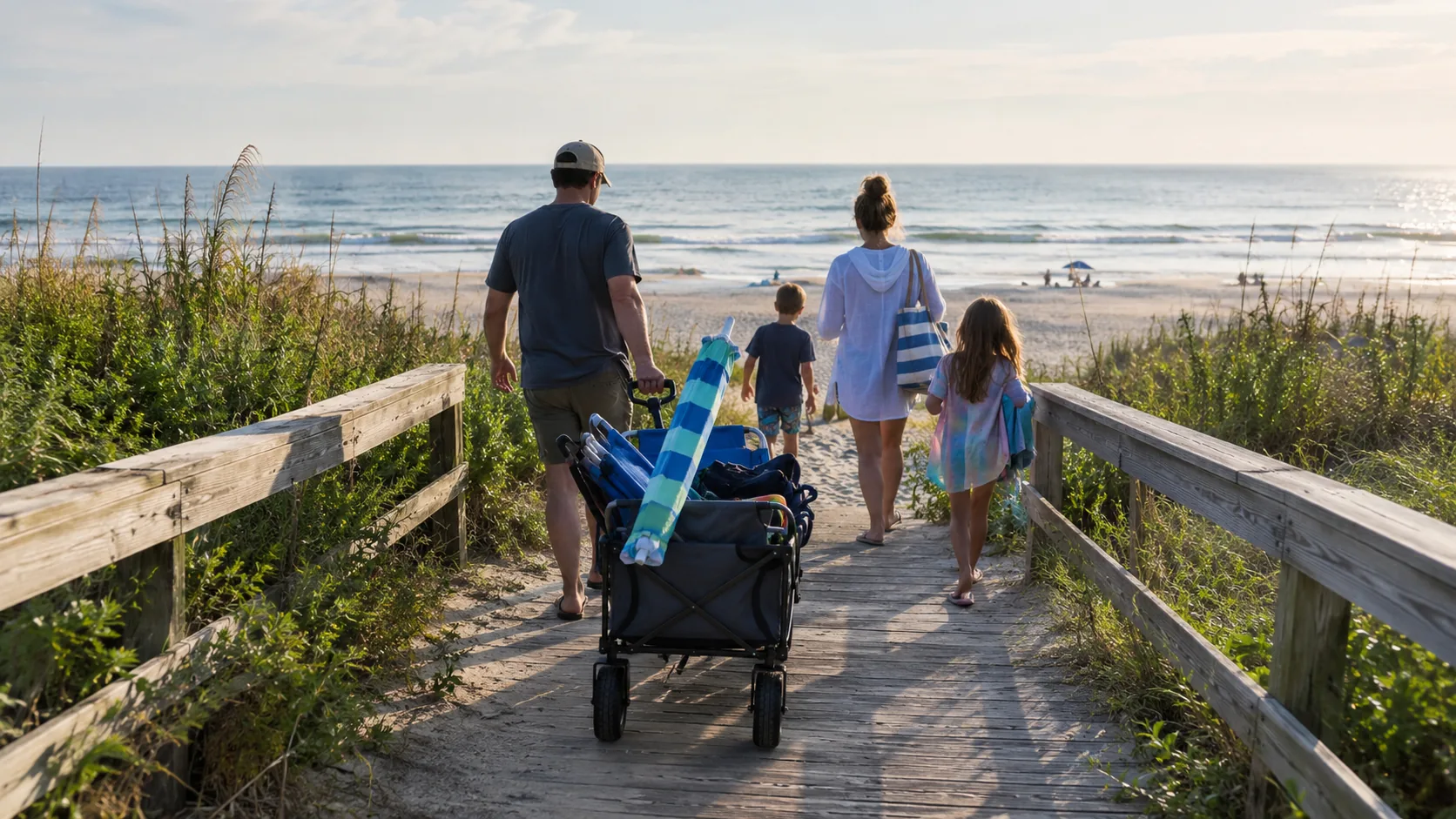
A wagon on the beach works well when it has wide, low-pressure wheels and a load that is packed low and balanced. Narrow hard wheels dig into soft sand, while wide wheels spread the weight over more surface and keep rolling.
This guide compares wheel types, shows how to size your load, and gives a packing checklist so one trip from the car to the water is enough. It also covers cost factors, motorized carts, pulling technique and care.
Will a wagon work on the beach?
Yes, but the wheels decide the result. A standard garden or utility wagon is built for pavement and lawns. Its narrow plastic or hard rubber wheels sink into dry, loose sand and act like small plows when you pull.
Firm, damp sand near the waterline is friendlier to any wheel. The trouble is the soft, dry stretch between the parking lot and your spot, and that is where wheel width and tire type matter most.
Where wagons struggle
- Dry, deep sand: narrow wheels sink and the front wheels dig in.
- Boardwalk edges and curbs: small wheels catch and stop.
- Shell and pebble patches: hard wheels jolt the load and can tip it.
- Tight turns on soft sand: fixed wheels resist turning and drag sideways.
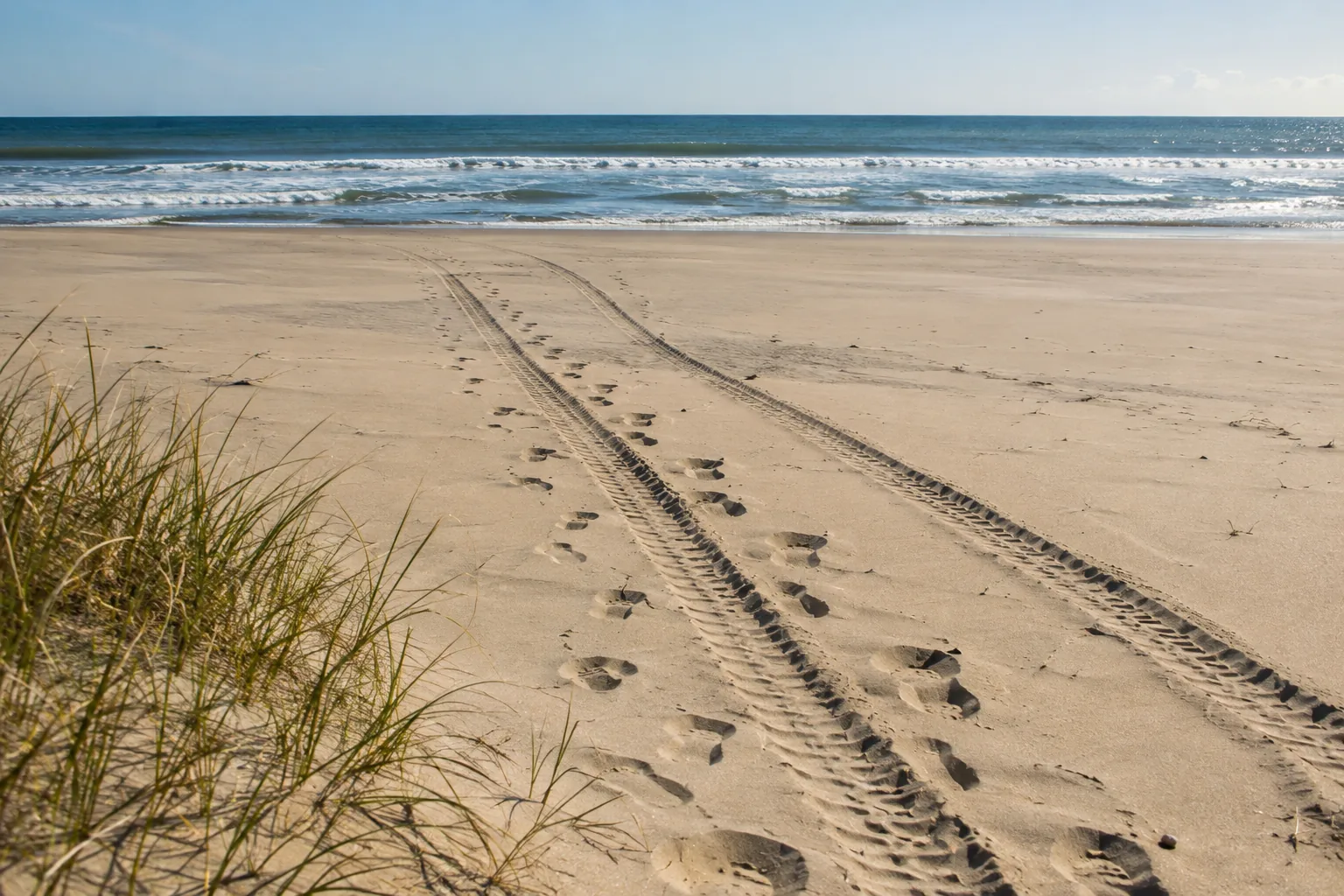
Wheel width and type: what to compare
Look at the wheels before anything else. Width, pressure and steering matter more on sand than frame color or cup holders. A sand wagon is really a wheel design with a cargo bay attached.
| Wheel type | How it behaves on sand | Good for |
|---|---|---|
| Narrow hard plastic | Digs into soft sand and catches on ridges | Paved paths, lawns |
| Narrow rubber | Slightly cushioned but still sinks in dry sand | Packed sand, boardwalks |
| Wide, low-pressure | Spreads weight over a larger contact patch | Soft sand, grass, gravel |
| Oversized spoked or inflatable | Rolls over bumps, often heavier and bulkier | Long, rough walks |
Wheel checklist
- Width: the wider the tire, the less it tends to sink. A beach wagon with big wheels spreads weight over a larger footprint.
- Low pressure or soft tread: lets the tire flatten slightly over sand instead of cutting in.
- Swivel or 360° rotation: helps with turns when the sand is loose.
- Sealed bearings: look for them at the hub, where sand collects.
- Wide stance: a broader wheelbase resists tipping on uneven ground.
Electric and motorized wagons
Some carts add a motor and battery for long or hilly walks. They are heavier and more complex than a pull wagon, so read the manual for charging, load limits and where the maker allows use. Check local beach rules too, since motorized equipment is restricted in some areas.
What wagon works on sand: the features that count
After the wheels, look at the frame, the body and how the wagon stores. A beach wagon for sand travels in a trunk, so the fold matters as much as the roll.
- Frame: aluminum is light to lift into a car. Check the joints and hardware, since sand and salt air wear on them.
- Body fabric: a woven fabric body with stitched seams can be shaken out and wiped down. Rigid plastic beds hold sand in corners.
- Fold: a wagon that folds flat fits a trunk, closet or garage shelf.
- Handle: it should reach a height where you can pull comfortably.
- Stated capacity: use it as a ceiling, not a target.
What shapes the cost
Beach wagons vary in price because of a few build choices: frame material, wheel type, stated capacity, fold design and extras such as canopies or side pockets. Compare those features on the product page rather than the sticker alone. A basic folding cart and a wagon with wide sand wheels and an aluminum frame are different tools.
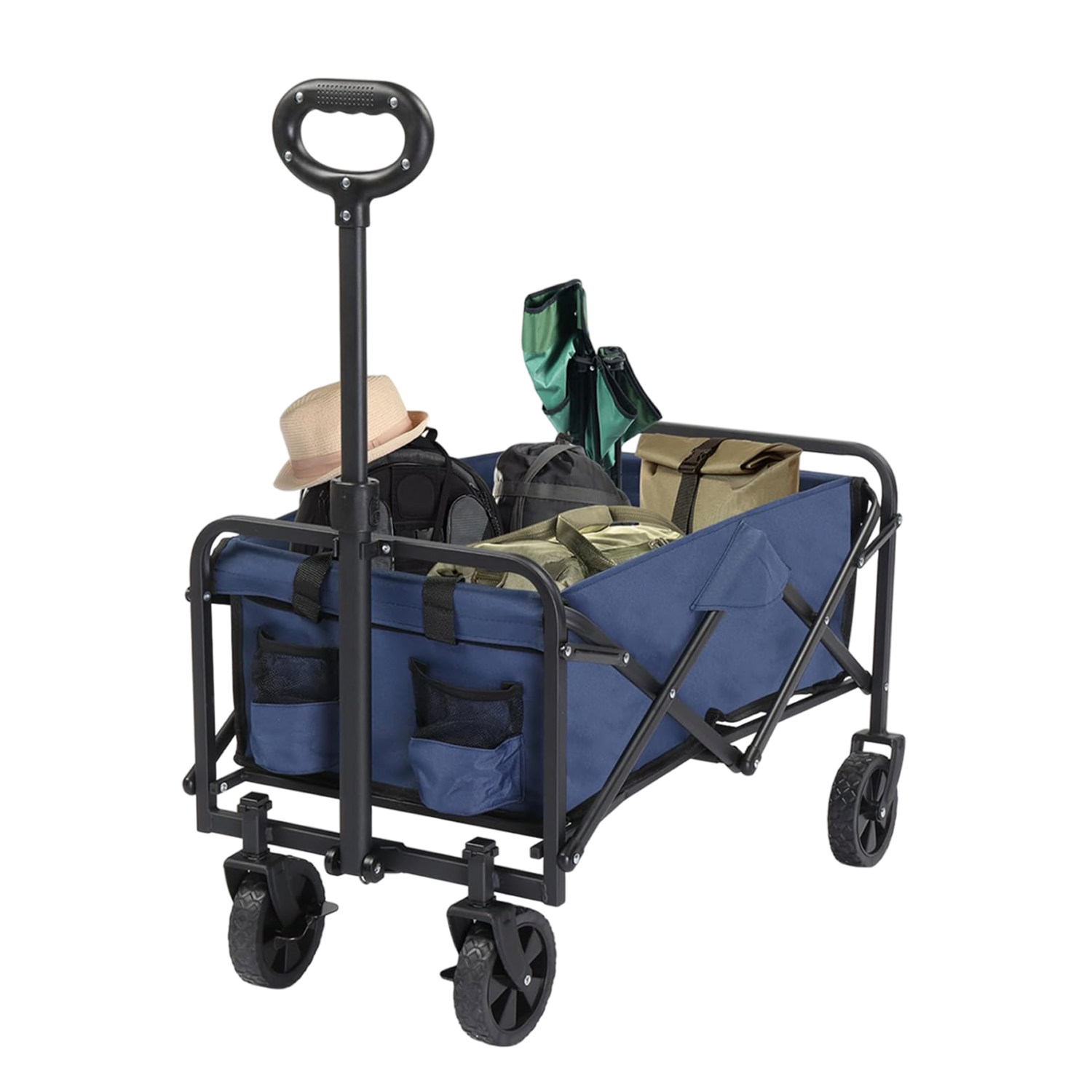 In this guideCoastHaul$159.99View
The CoastHaul is built around that checklist. It has an aluminum frame with powder-coated steel hardware, a 600D Oxford fabric body with stitched seams, and wide, low-pressure wheels with 360° rotation on sealed bearings. It is specified for a load of 220 pounds, with a wide wheel stance and a low center of gravity for a cargo of coolers, chairs and toys. It folds flat to about 4 inches thick, opens in one motion and needs no tools.
How much can you load?
Capacity is only half the question. Sand adds drag, so a load that rolls well on a parking lot feels heavier once the wheels meet soft ground. Plan to load below the stated limit, especially if you pull uphill from the beach or over a dune crossing.
Estimate your load
Rough weights help you decide what rides in the wagon and what you carry by hand.
| Item | Weight note |
|---|---|
| Full cooler with ice | Usually the heaviest single item; ice and drinks add up |
| Folding chairs | Light each, but several add bulk |
| Umbrella or shade canopy | Light but long; lay it along one side |
| Water jugs | Dense; keep them low and centered |
| Toys, towels, bags | Light; use them to fill gaps |
If the total feels close to the limit, make two trips or leave the heavy extras in the car. An overloaded wagon flexes at the frame and tips on uneven sand. A low center of gravity and a wide stance keep the load steadier.
Field note
Pull the wagon with the handle low and a steady pace. Stopping on soft sand makes the wheels settle, so keep moving through the loose stretch and pause on firmer ground.
Packing checklist for a wagon on the beach
How you pack changes how the wagon behaves. Balance and height matter more than squeezing everything in.
- Put heavy items first: the cooler and water jugs go low, centered over the wheels.
- Stand chairs upright along the sides, or lay them flat on top, folded and strapped together.
- Lay the umbrella lengthwise along one edge so it does not poke up and catch the wind.
- Pack soft items in the gaps: towels and blankets stop the load from shifting.
- Keep small items in a bag, so keys, phone and sunscreen stay together and out of the sand.
- Keep the load below the sides if you can, so it sits stable on bumps.
- Check the handle and wheels before leaving the lot.
Cooler choice
The cooler is often the item that decides whether you need a wagon at all. If you want to pull it on its own, choose a rolling model with oversized wheels. The PolarGlide is a 43L rolling beach cooler with oversized wheels on a removable frame and a telescoping handle. You can roll it to your spot, or take the frame off and carry it. Browse more in the Beach & Coolers collection.
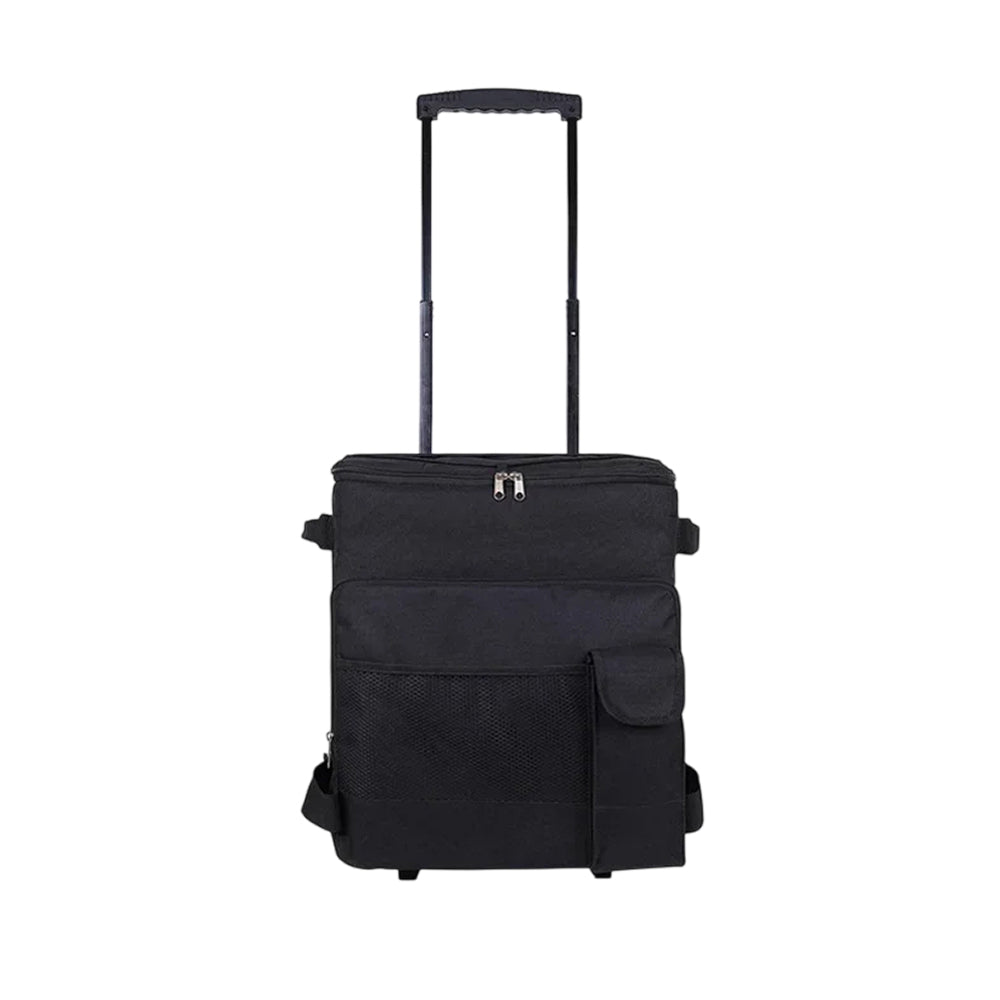 In this guidePolarGlide$129.99View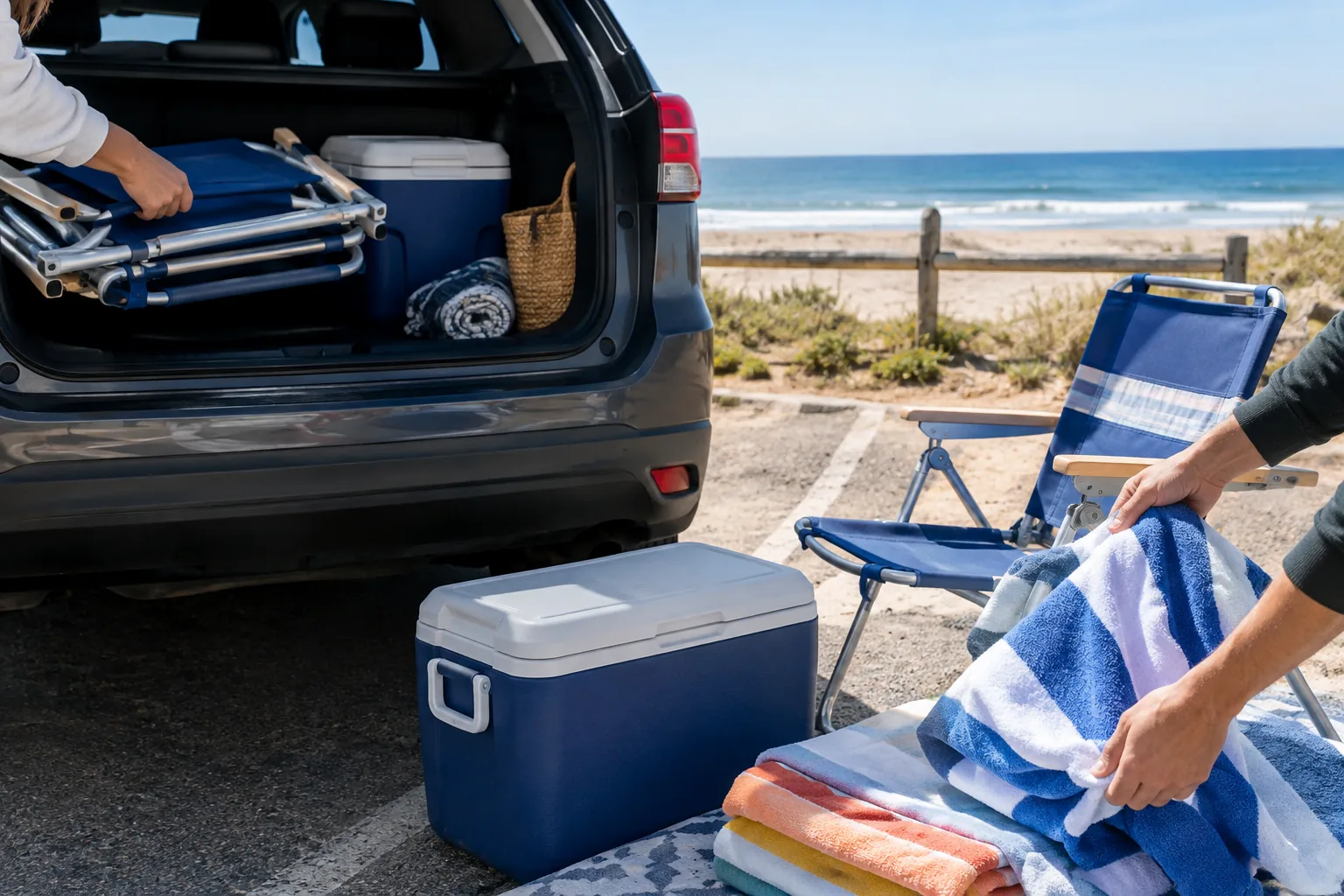
Pulling technique on soft sand
Even with good wheels, how you pull makes a difference.
- Walk in a straight line where you can, since turning on soft sand adds drag.
- Follow existing tracks or firmer, damp sand if the tide allows.
- Lean slightly forward and keep the handle at a comfortable height.
- If a wheel bogs down, lift the handle slightly and keep going rather than yanking sideways.
- Ask a companion to push from behind for dune crossings.
Check local beach rules, too. Some beaches limit wheeled gear on dune paths or in protected areas, so follow posted signs.
Care after the beach
Sand and salt wear on moving parts, so a short routine after each trip is worthwhile.
- Shake the fabric body out completely, including corners and seams.
- Wipe the frame and hardware with a damp cloth.
- Rinse the wheels with fresh water if you pulled through wet sand or surf, then let everything dry fully before folding.
- Check the wheels spin freely and the fold locks engage.
- Store the folded wagon in a dry spot such as a closet or garage.
Common mistakes
- Buying a lawn wagon and expecting it to cross dry sand.
- Stacking heavy items high, which shifts the balance.
- Loading to the stated limit and then pulling uphill.
- Folding the wagon while the fabric is still damp or sandy.
- Skipping a check of local rules for wheeled gear on dunes.