Fishing Reel Types: Spinning vs Baitcasting vs Spincast
Spinning, baitcasting and spincast reels each suit a different skill level, line weight and target fish. Use this guide to match one to your water, then pick a spinning reel size.
Wes Tanner
October 14, 2026 · 8 min read
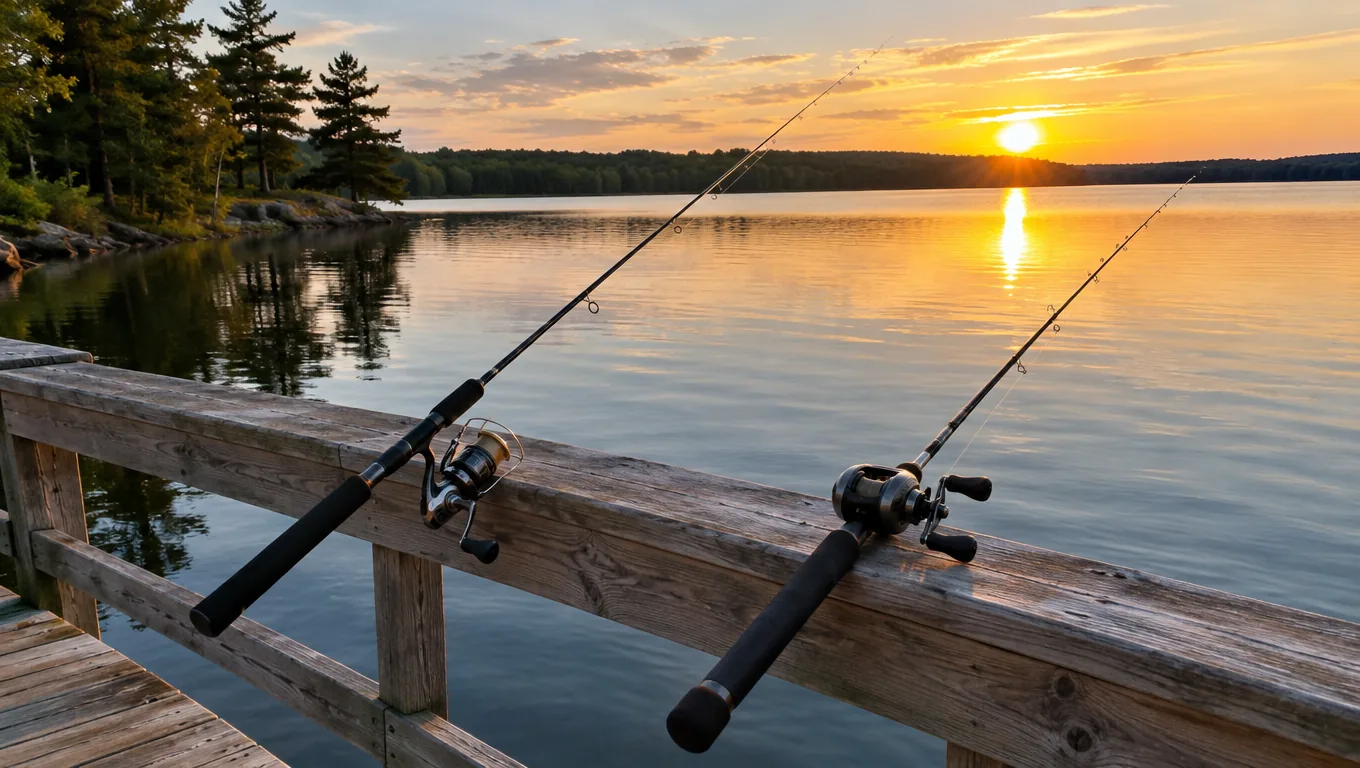
The three main fishing reel types are spinning, baitcasting and spincast. Spincast is the simplest and suits first-time anglers and kids, spinning is the flexible all-round choice, and baitcasting gives experienced anglers control with heavier line and lures. If you are unsure, start with a spinning reel in the 2500 to 3000 size range.
This guide compares the three reel types for fishing by skill level, line weight and target species, walks through how to fish with a spinning reel, covers saltwater use, and settles the 2500 vs 3000 question.
Fishing reel types at a glance
Every reel does the same job: it stores line, releases it on the cast, and applies pressure through the drag when a fish pulls. What changes is where the line sits and how you control it. The table is a quick way to narrow the field.
| Reel type | Skill level | Line weight | Common targets | Main trade-off |
|---|---|---|---|---|
| Spincast | Beginner, kids | Light monofilament | Panfish, small bass, stocked trout | Modest line capacity and drag range |
| Spinning | Beginner to advanced | Light to medium, mono or braid | Trout, panfish, bass, walleye, inshore saltwater | Thick line and heavy lures can loop or twist |
| Baitcasting | Intermediate to advanced | Medium to heavy | Bass, pike, catfish, fishing in heavy cover | Needs thumb control and brake setup to avoid backlash |
Use the line column as a starting point. Always follow the line range printed on your rod and on the reel spool before you spool up. Check your state's wildlife agency for local gear basics and rules for the water you plan to fish, such as a state wildlife department page on open-water reels.
Spinning reels: the all-round choice
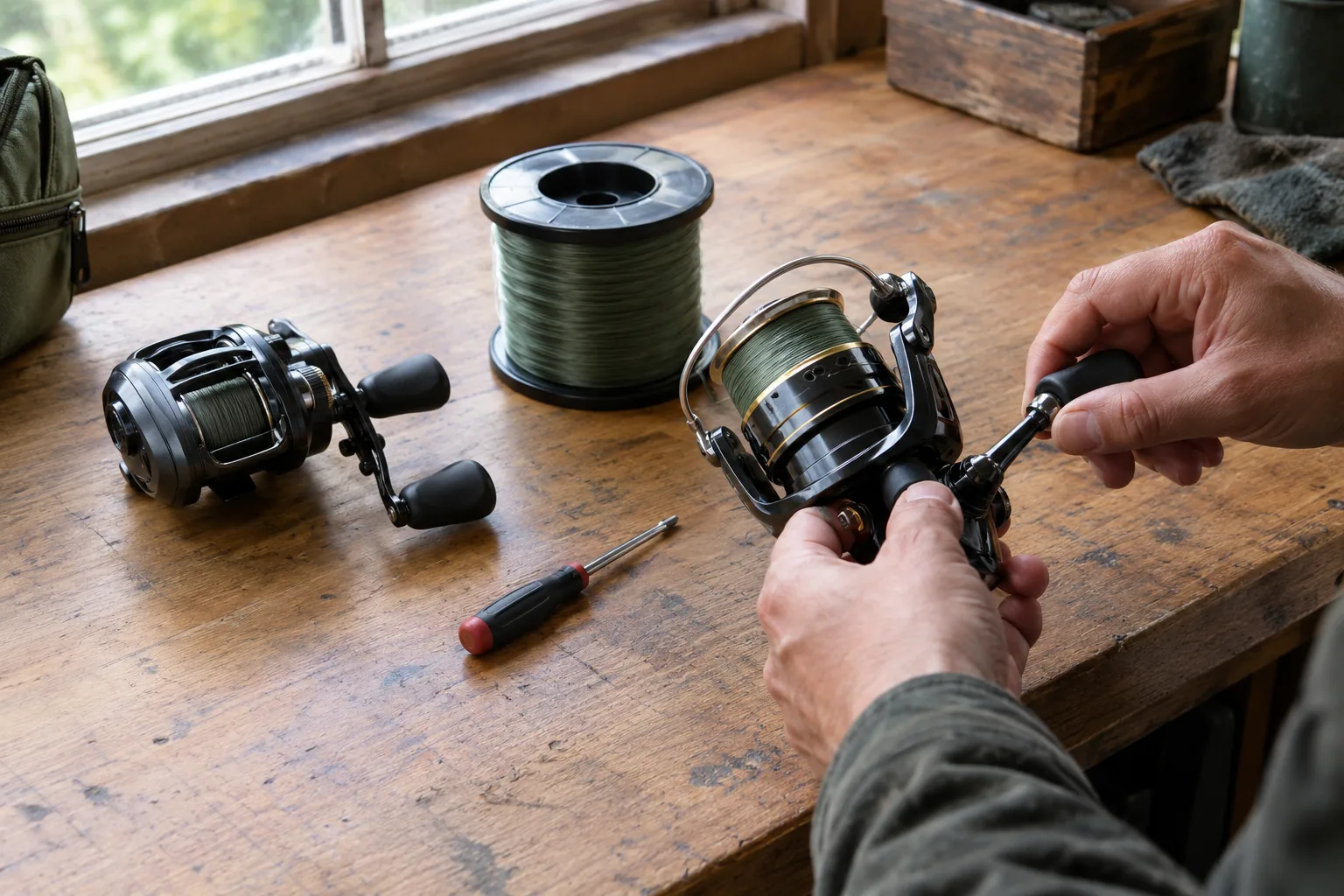
A spinning reel hangs below the rod. The spool stays still while a rotating bail wraps line around it, so line leaves the spool in loose coils during the cast. That layout handles light line and light lures well, and there is no turning spool to overrun.
It is a reasonable reel type to learn on, and it covers ponds, lakes, rivers and shoreline situations. Pair it with a spinning rod, which has the guides on the underside of the blank. The same reel can serve for trout one weekend and bass the next if you change line and lure.
How to fish with a spinning reel
- Check the setup: reel seat tight, reel on the underside of the rod, line through every guide.
- Set the drag: tighten the drag knob until line pulls out under steady pressure but not on its own.
- Open the bail: hold the line against the rod with your index finger, then flip the bail open.
- Cast: swing the rod back over your shoulder, then forward, and release the line partway through the forward swing, before the tip points at your target. Releasing later drives the lure into the water.
- Close the bail: turn the handle to close it, or close it by hand, which can reduce line twist.
- Set the hook: when you see or feel a bite, lift the rod tip and start reeling. Let the drag give line if the fish runs.
A steady, even retrieve keeps the lure moving at a consistent depth. Reel with the handle, not by flicking the rod, and keep light tension on the line so it lays evenly on the spool. Good line management also means not letting slack pile up between casts.
What bait suits spinning reels
Spinning gear handles light offerings well. Common choices are live bait such as worms and minnows, plus small soft plastics, small jigs, inline spinners and small spoons. Match the bait to the species and to the lure weight range printed on the rod.
A beginner spinning setup that arrives matched
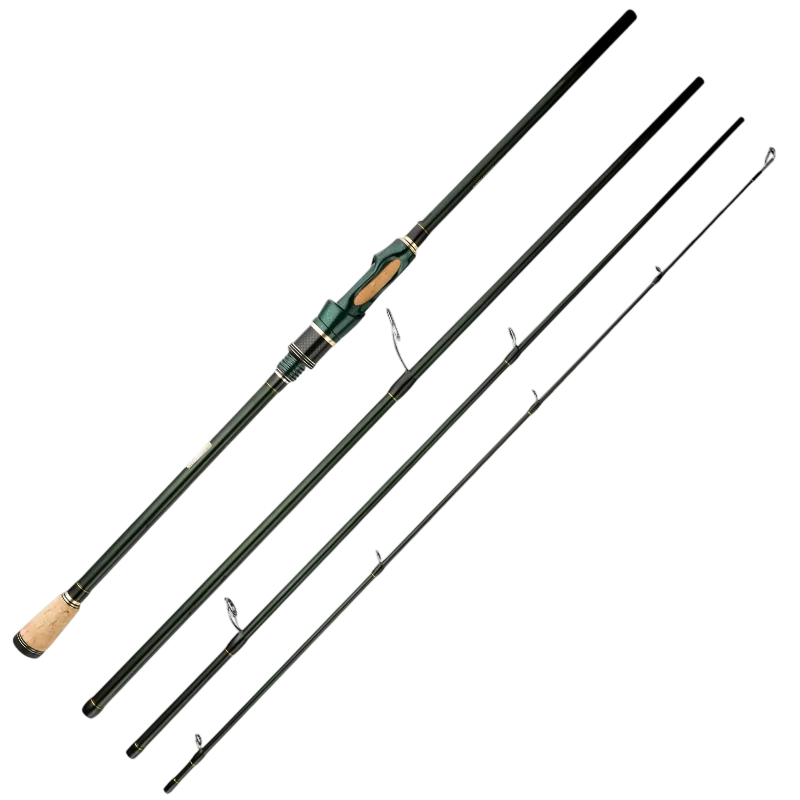
If you would rather not match parts yourself, a combo comes set up as one system. The CastRidge Pro spinning rod and reel combo pairs a 6.5 to 7 ft medium-light rod with a factory-matched reel that has an anti-reverse function and arrives pre-spooled with monofilament line.
The parabolic blank bends along its full length, which suits an angler still building a casting stroke, and the clear tip moves visibly when a fish mouths the bait. It is a medium-light composite build meant for freshwater ponds, lakes, rivers and streams. Add hooks and bait to have a basic kit. The box also includes a protective rod sleeve and a quick-start fishing guide.
 In this guideCastRidge Pro$99.99View
Spincast reels: the simplest option
A spincast reel has a closed nose cone over the spool and a push-button release. You press the button, cast, and release it at the right moment. The cover keeps loose line contained, and there is no bail to flip.
That simplicity is why spincast reels suit kids and first trips. The trade-offs are modest line capacity, a smaller drag range and less feel for light bites. Once you want bigger fish or a wider range of lures, you can move to spinning.
Baitcasting reels: control for heavier lures
A baitcasting reel sits on top of the rod, and its spool turns during the cast. That gives you control over heavier line and heavier lures, and it lets you thumb the spool to place a lure precisely. It also means the spool can overrun and tangle, called a backlash, if the brakes are set too loose for the lure.
This is why baitcasting suits intermediate anglers who already cast comfortably. Typical uses include bass around cover, pike and catfish.
Setting up a baitcaster
- Start with a high brake setting, then reduce it gradually as your thumb control improves.
- Press the thumb bar to release the spool and adjust the tension knob until the lure falls slowly and the spool stops when the lure lands.
- Practice with a heavier lure first. It loads the rod and makes the cast simpler to feel while you learn.
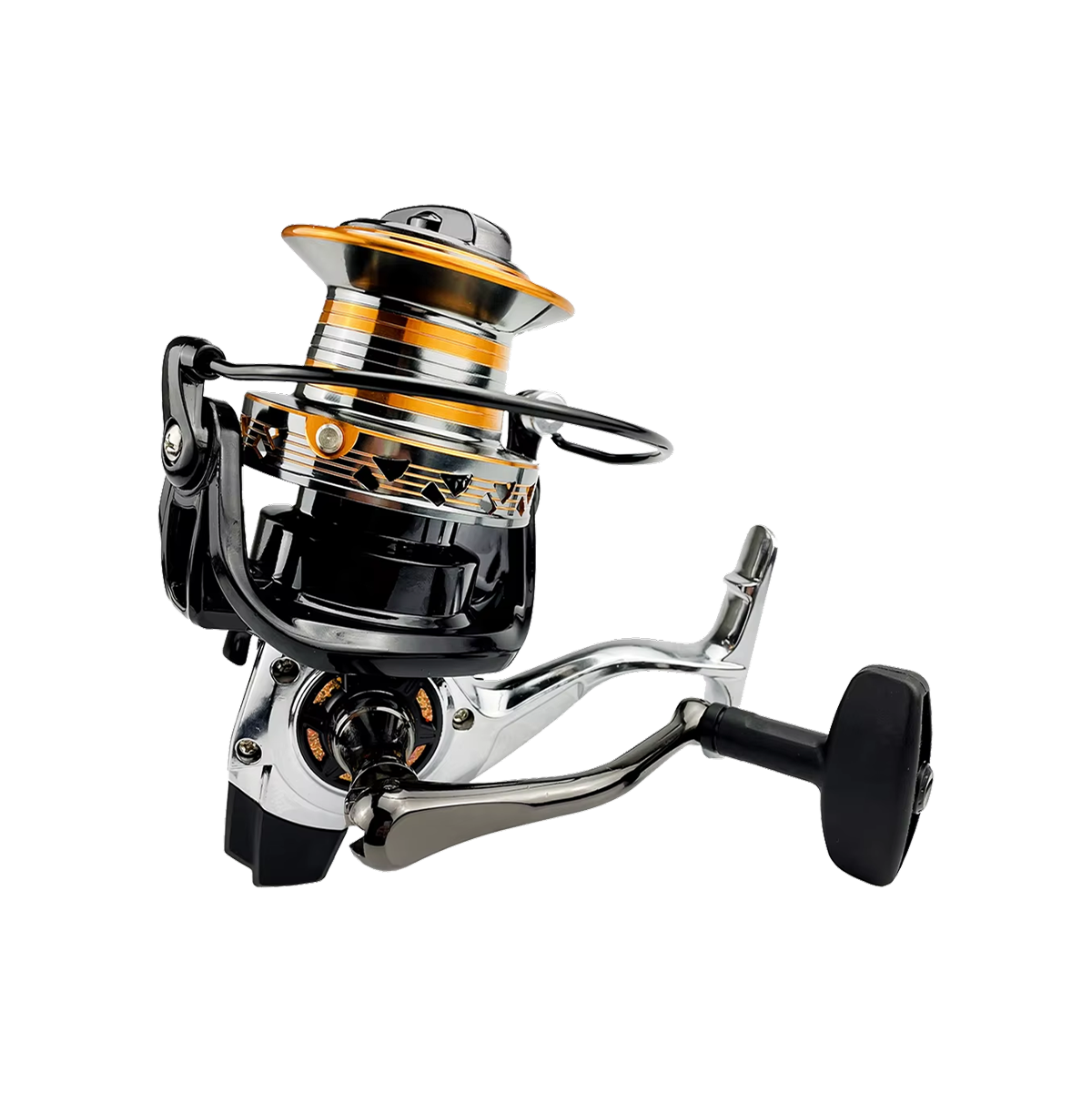
The CastRidge Pro reel includes the controls this setup relies on: a dual magnetic and centrifugal brake system and a tension knob you set for the lure you have tied on. It has an aluminum body, a rubber grip, 13 bearings and a stacked carbon drag with a 30kg maximum setting. The handle fits on either side, so you can configure it for the hand you reel with.
 In this guideCastRidge Pro$119.99View
Field note
Whichever reel you choose, set the drag before the first cast, not when a fish is already running. Pull line by hand and check that it releases smoothly.
Spinning reel size: 2500 vs 3000
Spinning reel sizes are a manufacturer number that signals spool and body size. The number is not standardized across makers, so compare line capacity on the spool, not just the model number. Within that limit, here is how the two common sizes compare.
| Factor | 2500 | 3000 |
|---|---|---|
| Body and spool | Compact, light in hand | Slightly larger, more line capacity |
| Line | Light mono or braid | Light to medium mono or braid |
| Targets | Trout, panfish, small bass | Bass, walleye, larger trout, light inshore use |
| Pairs with | Light to medium-light rods | Medium-light to medium rods |
Neither suits every situation. Choose 2500 if you mostly fish small water with light lures and want a compact reel. Choose 3000 if you want extra line capacity, plan to fish larger rivers or lakes, or want one reel that stretches into light saltwater use.
Balance matters too. Put the reel on the rod, hold it at the reel seat, and see whether the tip sags or rises. A level balance is easy to hold through a long day.
Drag, gear ratio and line
Three details matter on any reel, whatever its style.
- Drag: a stack of washers that lets the spool give line under load. Smooth release matters more than a big maximum number, so set it by hand before you fish.
- Gear ratio: the number of times the spool (baitcasting) or rotor (spinning) turns per turn of the handle. A higher ratio picks up more line per turn, while a lower ratio turns the handle with less effort. Match it to the lure you throw.
- Line type: monofilament stretches and is forgiving for beginners. Braid is thin and has little stretch, so it needs a reel with a smooth drag and a spool that suits it.
Line and reel size go together. A small spool filled with thick line holds less of it and tends to coil, while a large spool with very light line can leave the spool looking empty. Check the capacity listed by the maker for each line type.
Spinning reels in saltwater
3000 and 5000 are common sizes for saltwater spinning reels. Larger sizes such as 5000 hold more line and suit bigger game fish from piers, surf and boats, while 3000 is a common size for inshore fishing and lighter work.
For salt, look for a reel the maker says is intended for it. Spec sheets may mention internal seals or a sealing system, stainless steel or corrosion-resistant parts, and details of the drag system and gear train. Read the manual for what the maker says about each.
Care matters as much as the spec. After each trip, wipe the reel down, rinse it lightly with fresh water as the manual allows, and dry it before storage. Salt left on the gear can leave deposits that make parts stick.
How to choose among fishing reel types in four steps
- Name your water and fish. A small pond with panfish points to spincast or a 2500 spinning reel. A big lake or inshore flat points to 3000 or larger.
- Be honest about skill. If you have not cast a baitcaster, start with spinning and add baitcasting later.
- Match the line weight. Check the rod's line range and the reel's spool capacity so they agree.
- Choose a handle side. Check whether the reel lets you reel with your dominant hand or switch sides, and pick the setup that suits you.
You can browse more rods, reels and accessories in our Fishing Gear collection.
Common mistakes with any reel
A quick check before each trip catches these errors.
- Overfilling the spool: fill to just below the spool lip, not past it, or the line can jump off in loops.
- Using the wrong line weight: heavy line on a small spinning reel stiffens and tangles, and light line on a heavy rig can break at the knot.
- Starting a baitcaster on light lures: light lures are where backlash is most likely.
- Skipping the drag setting: check it each trip, since it can shift in storage.
- Putting wet gear away: dry the rod and reel before you pack them, and follow the maker's care notes.