How to Hand Wash Clothes at Camp, on the Road or at Home
Fill a basin with lukewarm water and a little detergent, soak, squeeze, rinse until clear and press out water. This guide covers camp, travel and home methods.
The Kesslund Team
November 3, 2026 · 7 min read
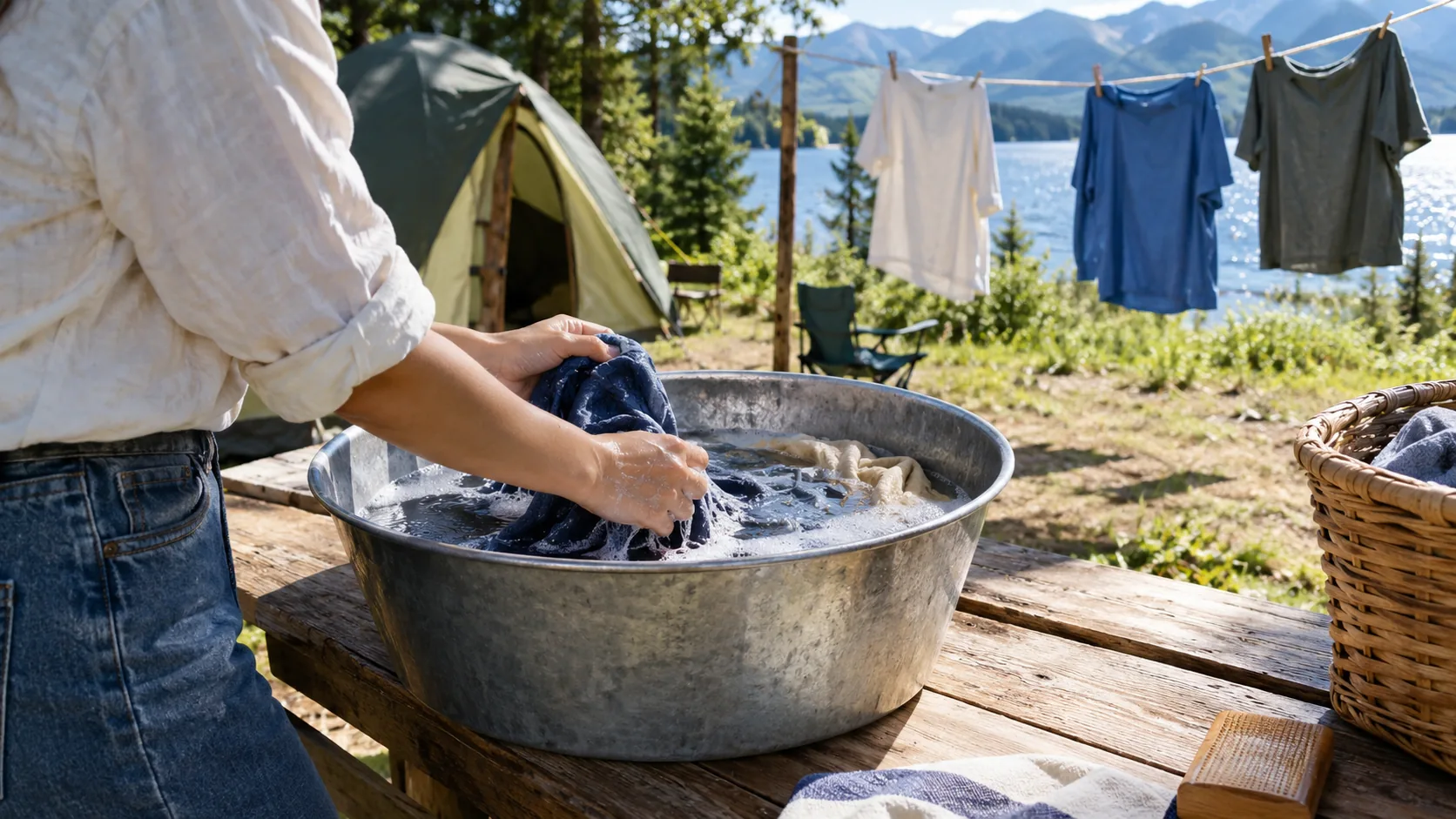
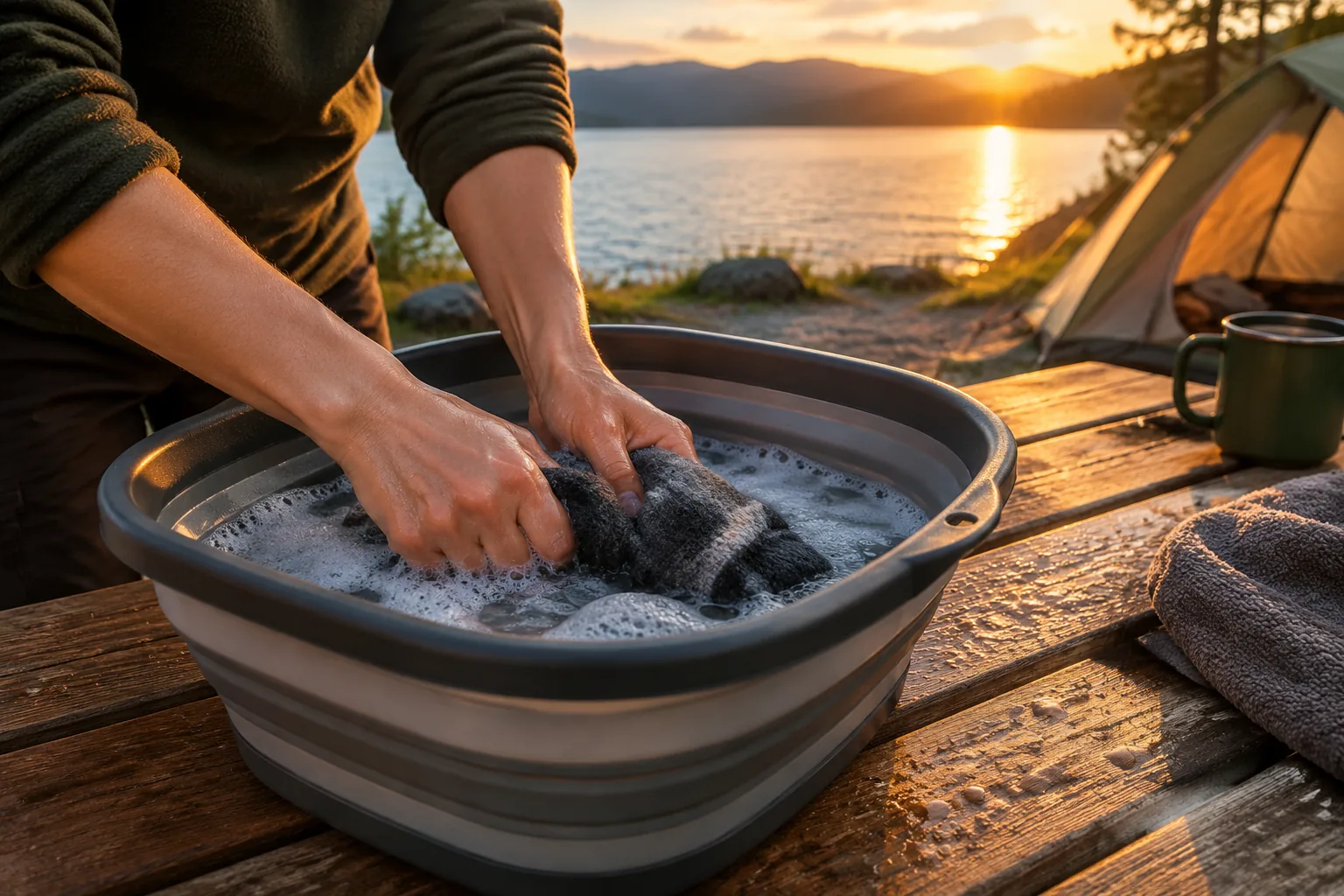
To learn how to hand wash clothes, fill a basin with lukewarm water, dissolve a small amount of detergent, soak the garments, press and squeeze the dirt out, rinse until the water runs clear, and press out the excess water without wringing. Then dry the items flat or hung in the shade. The same method works at a sink, in a bucket at camp or in a compact portable washer.
This guide covers the steps, the detergent choices, what to do with white items, wool and technical fabrics, and how to dry gear when water and space are tight.
What You Need Before You Start
Hand washing needs very little. A clean basin, sink or dry bag holds the water, and a small amount of detergent does the cleaning. A towel and a line or flat surface handle the drying.
- Basin, bucket, sink or collapsible drum
- Liquid or powder detergent (biodegradable if you are outdoors)
- A towel for pressing out water
- A clothesline, cord or drying rack
- Stain remover or a bar of soap for spots
- A mesh bag or pillowcase for small items
Read the care label first. If it says hand wash, follow the water temperature it lists. If it shows a symbol you do not recognize, use cool water and check a hidden seam for color run before soaking the whole garment.
How to Hand Wash Clothes in 5 Steps
- Sort and pretreat. Separate lights from darks. Dab stain remover on spots and let it sit while you fill the basin.
- Fill and dissolve. Use lukewarm water and a small amount of detergent. Swirl until it is fully mixed, which matters most with powder.
- Soak. Submerge the garments and let them sit for about the time the detergent label lists. Heavily soiled items can sit longer.
- Agitate gently. Press, squeeze and swish the fabric. Rub collars, cuffs and underarms against themselves.
- Rinse and press. Drain, refill with clean water and repeat until no suds remain. Press out excess water against the basin wall.
Use less detergent than feels necessary. Extra soap is harder to rinse out, and it takes more of your water to clear it.
Why soaking matters
Soaking lets the detergent loosen dirt and sweat before you touch the fabric, so you can use light pressure instead of hard scrubbing. Hard rubbing wears fibers and can stretch knits. Keep the garment under the surface so the whole piece gets wet.
Washing with powder detergent
Dissolve powder in a small amount of warm water first, then add it to the basin. Undissolved grains can leave streaks on dark fabric. Stir until the water looks clear before adding clothes.
Washing without detergent
Plain water and friction can freshen lightly worn items. For oils and sweat, a small amount of mild soap works on the soiled spot. Rinse thoroughly either way.
Using a washboard
A washboard gives you a ridged surface for stubborn collars and cuffs. Wet the spot, add a dab of soap, and rub the fabric against the ridges with light pressure. Use it only on sturdy cotton or canvas, and skip it on delicates, knits and anything with beads.
Choosing a Detergent for Hand Washing
| Situation | Detergent choice | Note |
|---|---|---|
| Everyday cotton at home | Mild liquid detergent | Dissolves in cool or lukewarm water |
| Wool, silk, cashmere | Gentle detergent made for delicates | Do not wring |
| Camp or trail | Biodegradable soap | Wash well away from streams and lakes |
| Powder on hand | Dissolve first | Rinse until water is clear |
Fabric softener is optional. If you use it, add it to the final rinse in the amount the bottle lists, and skip it on technical fabrics, since it can coat the fibers.
Whatever you choose, measure it. A teaspoon or two of liquid detergent is a reasonable start for a small basin, and you can adjust on the next load.
How to Wash White Clothes by Hand
For how to wash white clothes, keep them apart from colors and use clean water. Pretreat stains, soak in lukewarm water with detergent, and rinse thoroughly so no soap film remains, which can leave whites looking dull.
- Wash whites first, while the water is cleanest.
- Check the label before using any bleach or whitener; many fabrics do not allow it.
- Sun can brighten cotton whites, but keep synthetics and elastic in the shade.
- Change the rinse water until it runs clear.
Sweat-yellowed underarms respond to a longer soak and a gentle rub of the area with detergent. Repeat the soak rather than scrubbing harder.
Wool, Silk, Cashmere and Embellished Items
Delicate fibers need a gentle hand. Use lukewarm water, a detergent made for delicates and a short soak. Press the fabric under the surface instead of rubbing it, and lift the garment out supporting its full weight so wet fibers do not stretch.
- Wool and cashmere: rinse in water of the same temperature as the wash, then reshape on a towel.
- Silk: keep soaks short and rinse well, and keep it out of direct sun.
- Beads and sequins: turn the garment inside out, press lightly and skip any rubbing.
- Hats and bags: spot clean with a damp cloth and a little soap, then air dry in shape.
If a label says dry clean only, follow it or ask a cleaner.
Washing With Little Water at Camp or on the Road
When water is scarce, wash in batches and reuse the final rinse water as the next wash water. Start with socks and underwear, then move to shirts. Carry used water well away from streams, lakes and campsites, and scatter it, following local rules.
A compact washer can hold the soapy water around small items. TrailRinse is a manual portable washing machine with an 8L (about 2 gallon) drum and a drain valve, made with TPE construction. You add 3–4 liters (about 1 gallon) of water and your garments, run the manual wash cycle, swap in fresh water to rinse, open the drain valve and fold it down for your pack.
VerdaWash is an electric option for RVs, dorms and campsites with a power outlet. You add water to the 8L drum, then clothes and a small amount of biodegradable detergent, close the lid, plug it in and set the 10 or 15 minute wash timer. It has a bottom valve for draining and a TPE build that folds flat.
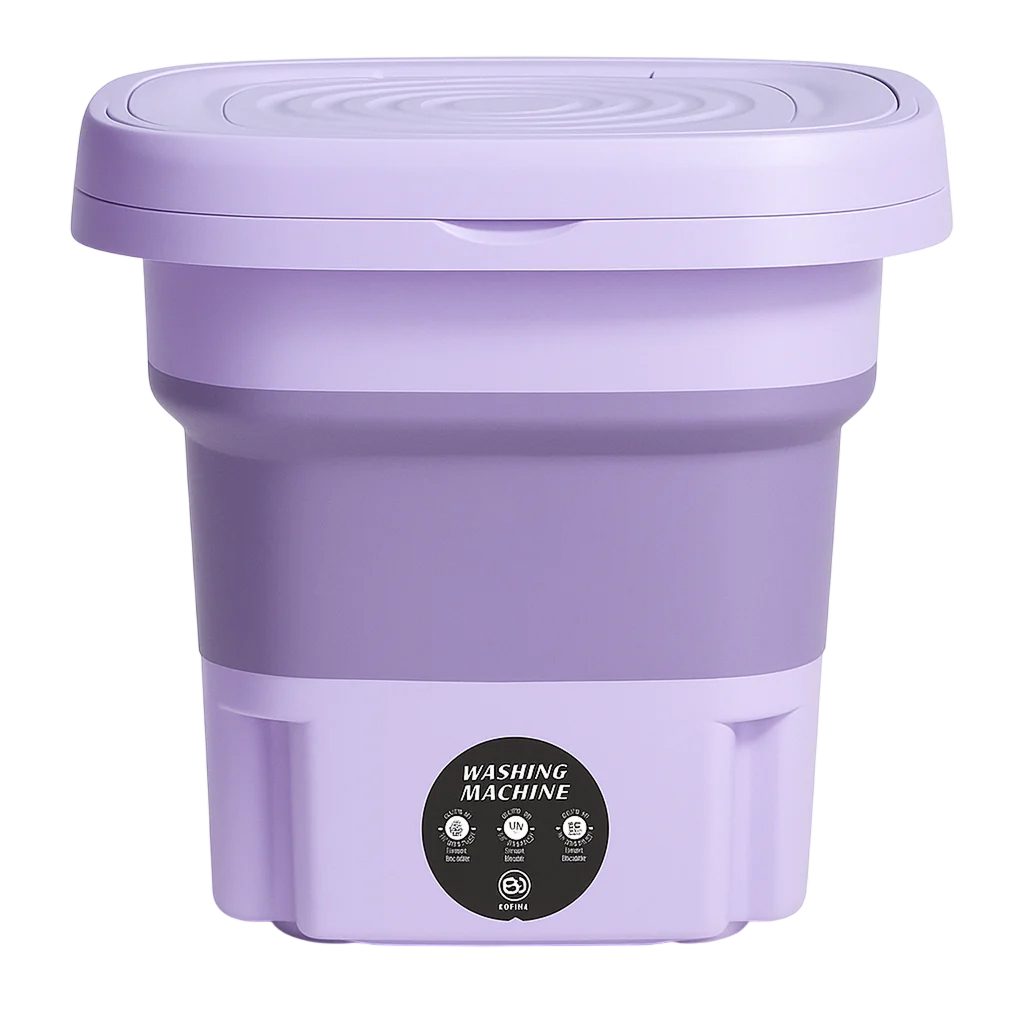 In this guideVerdaWash$119.99View
Field note
Wash small items like socks, underwear and base layers in the drum, and keep bulky jackets for a basin or a laundromat.
Is a Portable Washer Worth It?
| Method | Works well for | Limits |
|---|---|---|
| Sink or basin | Home, hotels, delicates | Needs a sink or a container |
| Dry bag or bucket | Camp washes with what you carry | Can leak or tip; awkward to drain |
| Folding manual washer | Trips of several days with small soft garments | Small 8L drum, so wash in batches |
| Laundromat | Bulky items, bedding | Needs a stop and a schedule |
A folding washer makes sense when you travel for several days, carry few changes of clothes and want to control where the wash water goes. For a weekend trip, a basin is enough. Browse the Portable Laundry & Sun Protection collection for compact options.
Drying Technical Fabrics and Delicates
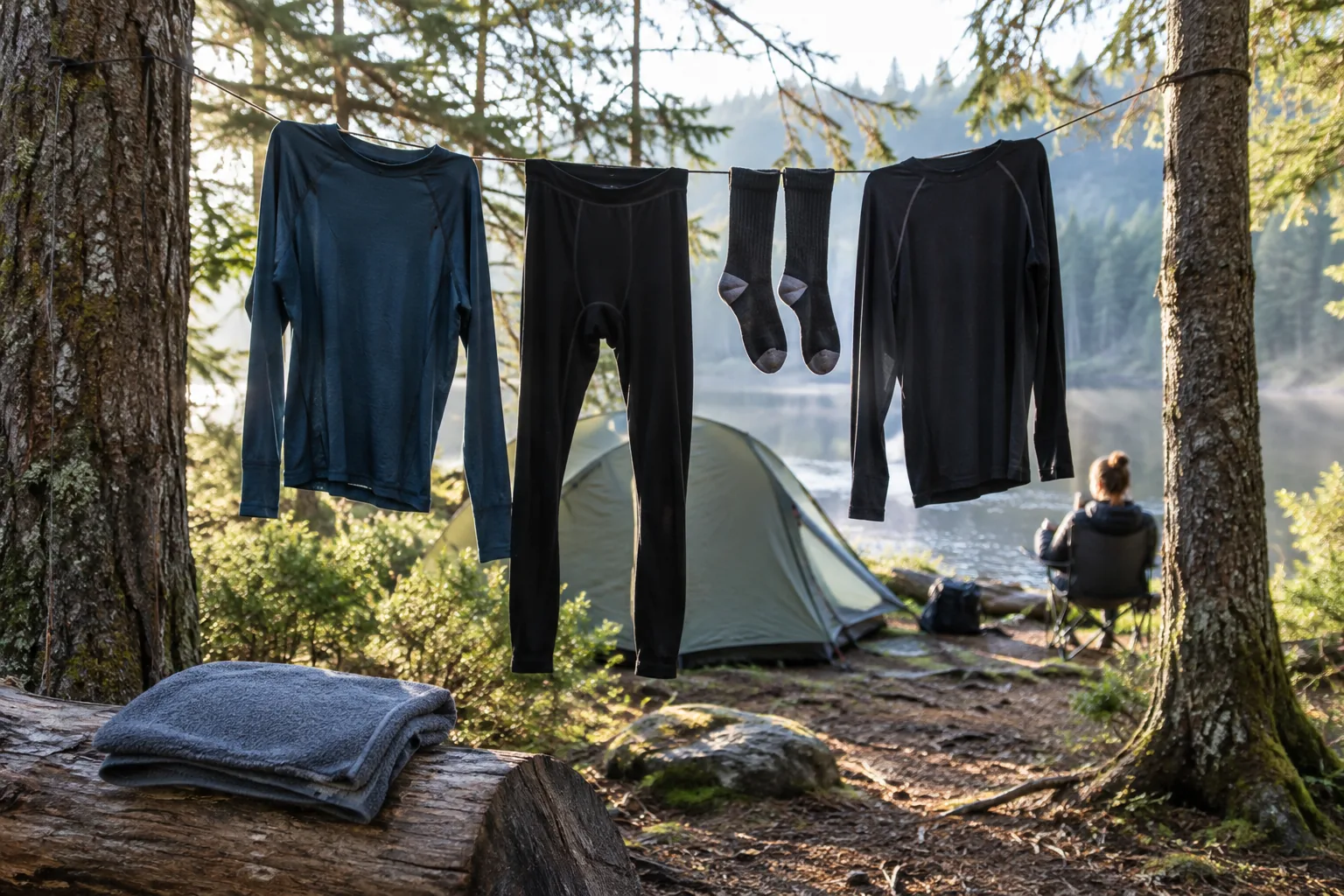
Do not wring. Lay the item on a towel, roll it up and press to take out excess water. Then dry it using the method that suits the fiber.
- Synthetic base layers: hang them in the shade with space around them.
- Wool and cashmere: reshape and lay flat to maintain their shape.
- Cotton: hang or lay flat; it holds water longer than synthetics.
- Socks: clip to a pack or line so air reaches the cuffs.
Pack a damp item away only once it is dry, to avoid odors. If you want to wash sneakers too, see how to wash sneakers in a washing machine.
Common Mistakes to Avoid
- Using too much detergent, which leaves residue.
- Wringing or twisting wool, silk and stretch fabrics.
- Soaking dark or new colors together with lights.
- Drying elastic and synthetics in direct sun for long periods.
- Dumping soapy water near a water source at camp.
- Storing clothes before they are fully dry.
Machine washing an item labeled hand wash is sometimes possible on a delicate cycle with a mesh bag, but check the label and the machine manual first. If the label says dry clean only or hand wash only, hand washing is the option to choose.