Hunting Deer From a Ground Blind: Setup and Tactics
Hunting deer from a ground blind comes down to placement, brushing in, wind, window control and a practiced seated shot. Use this checklist before opening day.
The Kesslund Team
November 1, 2026 · 7 min read
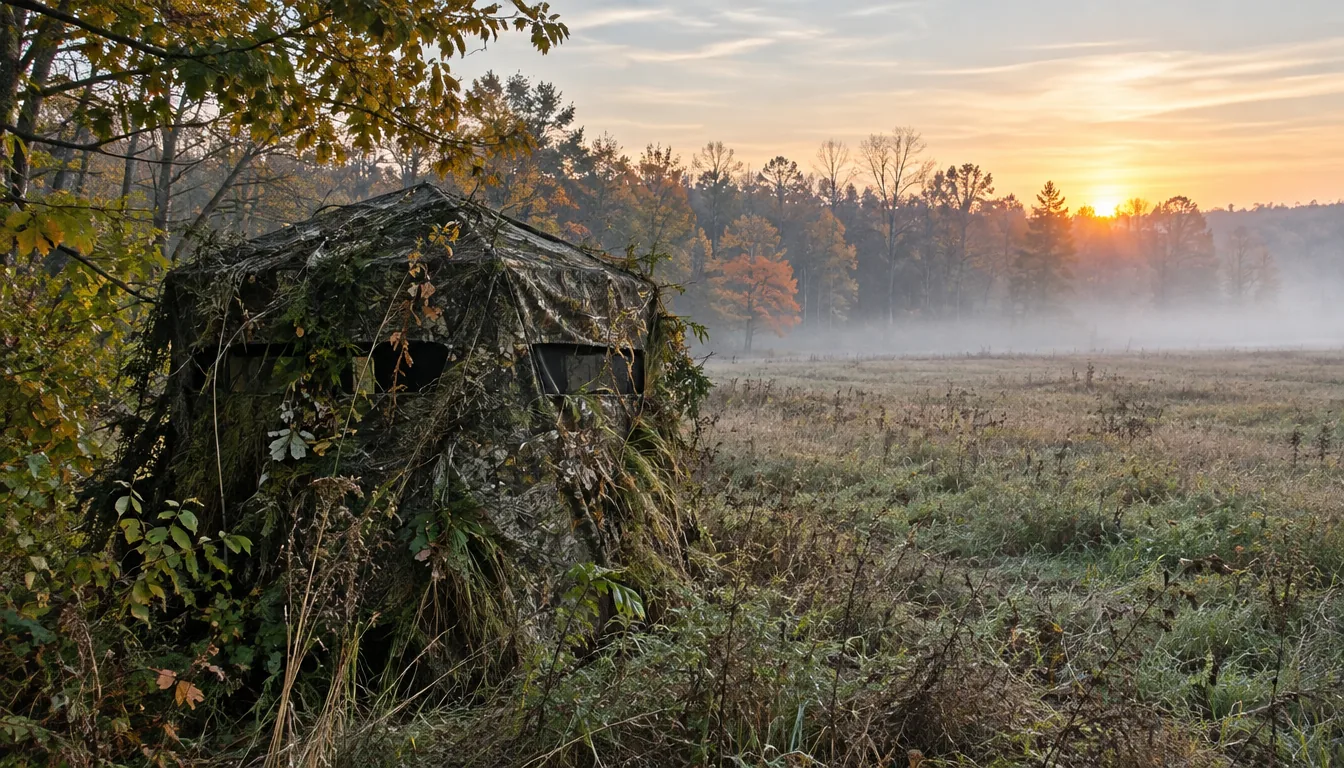
Hunting deer from a ground blind comes down to five decisions: where you place it, how well you brush it in, how you handle wind, which windows you open, and how you sit and shoot. Settle those before opening day and the blind helps hide your outline and movement. This checklist walks through each one in order.
Hunting deer from a ground blind: the setup checklist
Work through the list below in order. Each row is covered in detail in the sections that follow.
| Step | What to do | Check before you leave |
|---|---|---|
| 1. Placement | Pick a spot near a trail, feeding area or travel edge | Wind direction suits the spot |
| 2. Set up | Open the frame, stake it, tension the wind ropes | Blind sits level and the fabric does not flap |
| 3. Brush in | Add local grass, branches and cover around the base and roof line | Blind blends into the background |
| 4. Wind | Plan for a wind that blows across the trail or from the deer toward you | Entry and exit route avoids the deer's approach |
| 5. Windows | Open only the windows you need | Zippers open and close fully |
| 6. Seat and shot | Set seat height, rest and shooting lane | You can draw or raise your weapon without touching the walls |
Follow your state's hunting regulations, including blaze orange rules and blind restrictions on public land, and follow the manual for any weapon you carry.
Choose the spot first
A deer blind for hunting works only where deer already move. Look for trail intersections, field edges, funnels between cover and water, or a feeding area with fresh tracks and droppings. Scout from a distance so you do not leave scent along the route you plan to use.
Place the blind against a solid backdrop such as a tree line, a hedgerow or tall brush. A blind in the open on a bare field has a hard outline that deer notice. Cover behind it breaks up the shape.
Distance and shooting lanes
Set the blind at a distance that fits your weapon. Bow hunters need deer to walk within a short, known range, so pace off distances or mark landmarks. Rifle and shotgun hunters need clear lanes, but cleared lanes are also open lines of sight for deer looking toward you.
Level, firm ground matters too. Avoid low spots where water collects after rain and slopes where the blind and your seat tilt.
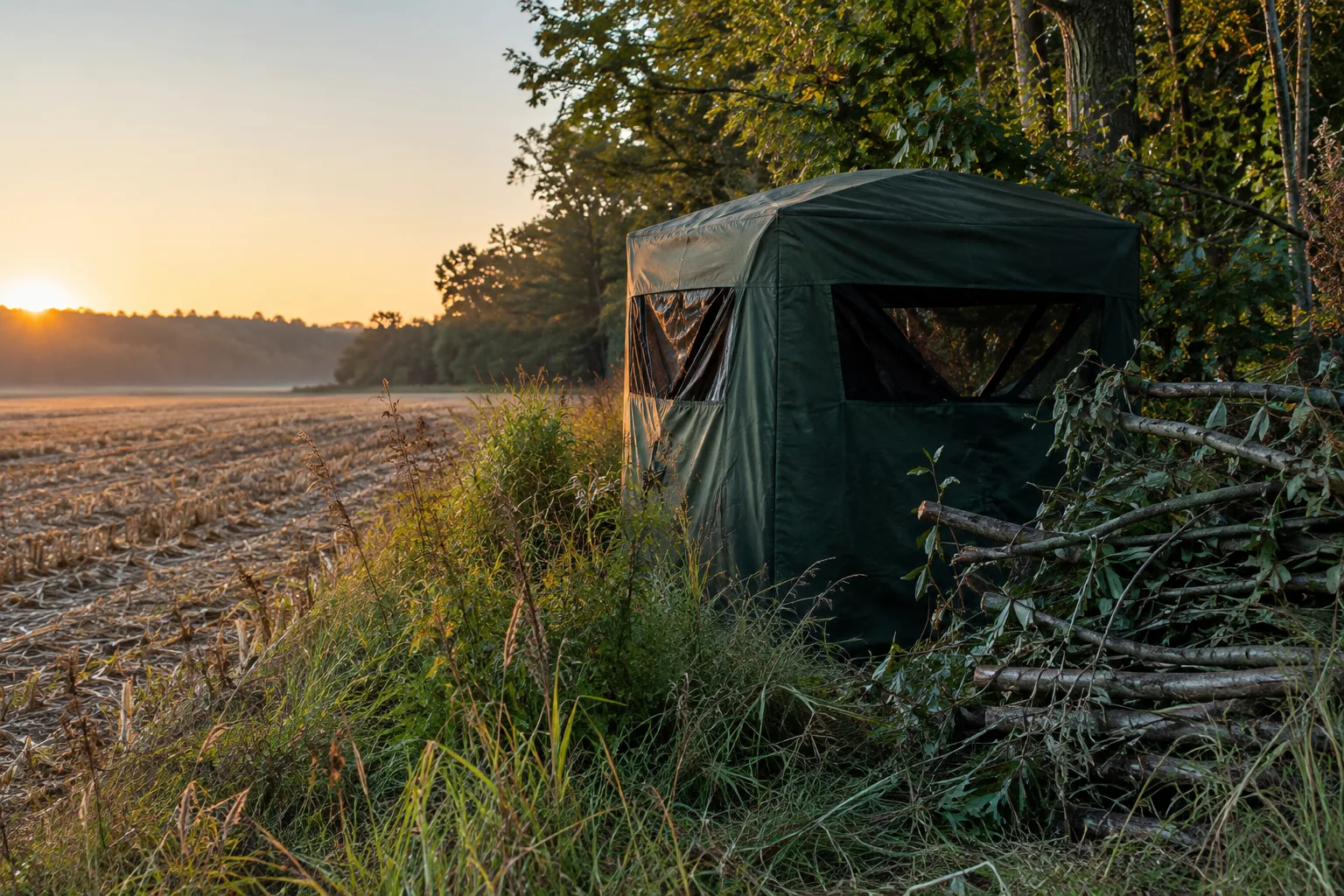
Set up and brush in the blind
Set the blind out before the season, so deer see it as part of the landscape instead of a new object that appears the day you hunt. If that is not possible, add extra cover around it and plan to hunt it with more patience.
For a pop-up model like the ShadowCraft Pro, the steps are short. Lift the blind out of the carry bag and pull the top and side rings to open the frame. Stake it down and tension the included wind ropes to steady the base. The kit includes 8 ground stakes and 4 wind ropes.
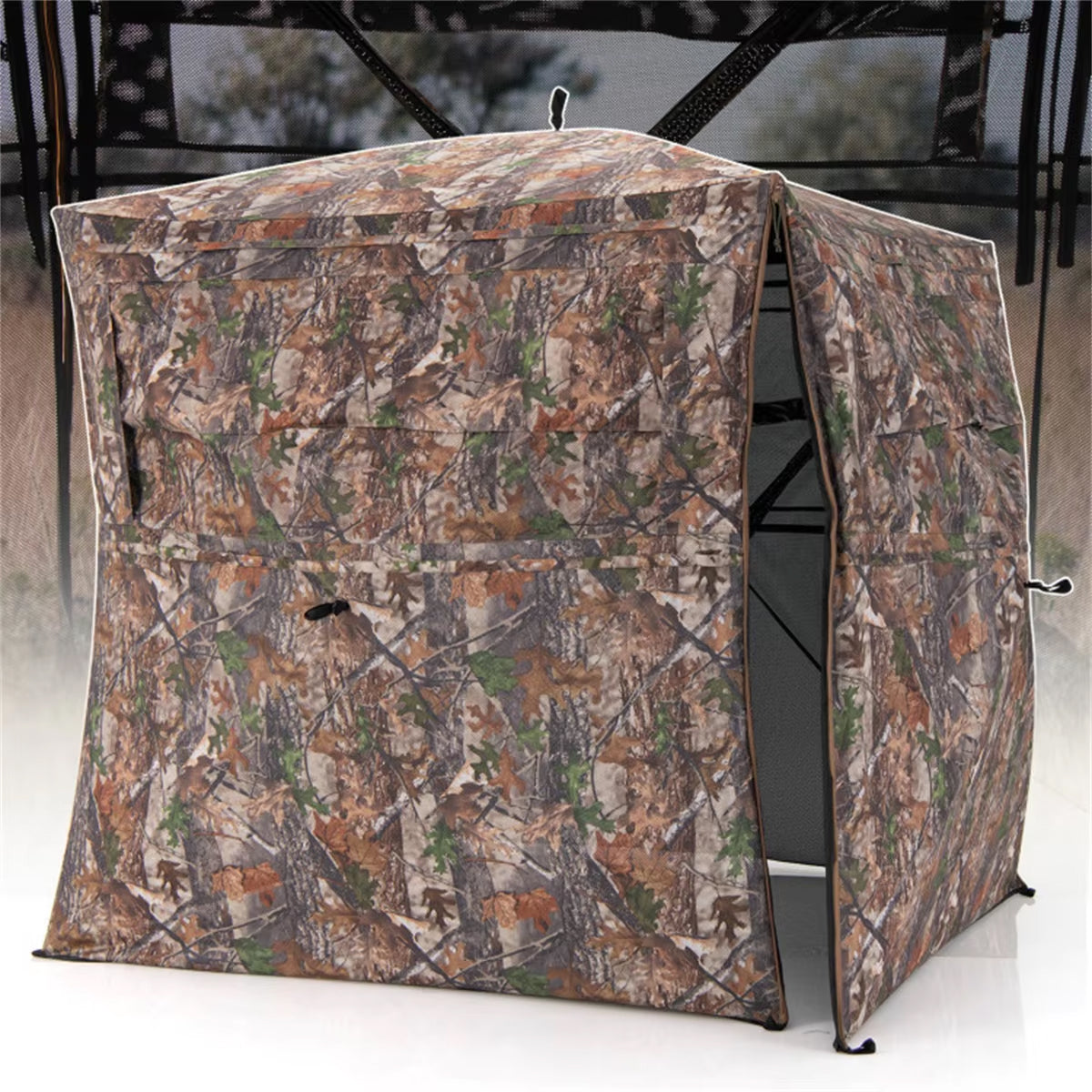 In this guideShadowCraft Pro$349.99View
Brushing in
Brushing in means adding natural material so the blind looks like part of the spot. Use local vegetation that matches what grows nearby: grass, cornstalks, cedar boughs or fallen branches. Lean material against the base and corners, and break up the roof line without covering your windows.
- Cut material in the same area, so color and species match.
- Do not pile cover over zippers or window openings.
- Keep branches clear of the wind ropes so nothing shifts in a gust.
- Walk 30 yards back and look at the blind from the deer's side; fix any straight edges you can see.
Brush helps the blind match the specific spot.
Manage wind and scent
A blind hides your shape, not your scent. Deer can smell you inside a blind if the wind carries your odor to them, so wind direction decides where you sit and which windows you use.
Choose a wind that blows across the trail or from the deer toward you, not from you toward the area where you expect them. Check the forecast the night before and carry a wind checker, such as a small bag of powder or a thread, to the blind.
Plan your walk in and out as well. Approach from downwind of the area deer use, avoid crossing their trails, and leave after dark or once the field is clear if you can. Check that every wind rope is tensioned and each stake is pushed all the way down before you settle in.
Window management
Deer blind windows are your only view and also the place deer are most likely to spot movement. The goal is to open as little as you need.
On the ShadowCraft Pro, four one-way panels let you look out from inside, and the zippered windows open and close so you can change your viewing angle. Work each slider slowly and check every window before the season starts.
Window rules
- Open windows only on the sides you plan to watch.
- Keep the window you are not using closed so light does not enter from behind you.
- Open or close a zipper only when no deer is looking your way, and do it slowly.
- Sit back from the opening so your face stays in the shadow of the interior.
- Wear plain, muted clothing inside so you do not show up as a shape in the opening, and follow your state's blaze orange rules.
Are deer color blind?
Deer see fewer colors than people do. They are less able to tell red and orange from green and brown, while blue tones and bright fabrics can stand out more. For you, a dark interior and plain clothing matter more than the exact camo pattern. Follow your state's blaze orange rules before you go.
Shooting from a seat
Hunting deer in a ground blind means you shoot from a seated position, so try the arrangement at home or in the field before the season. A chair that swivels lets you turn to different windows without large movements.
Choose a seat height that puts your eyes level with the window opening and your shooting arm clear of the walls. For a bow, you need room to draw without hitting the roof, ropes or frame. For a firearm, set up a rest or shooting sticks inside and confirm the barrel does not press against the fabric.
- Practice drawing or raising from the seat with the windows open.
- Keep gear in reach: binoculars, a rangefinder, a pack and a water bottle.
- Keep the muzzle or arrow pointed in a controlled direction, and know what is beyond your target.
- Unload or lower your weapon before you move, exit or pack up.
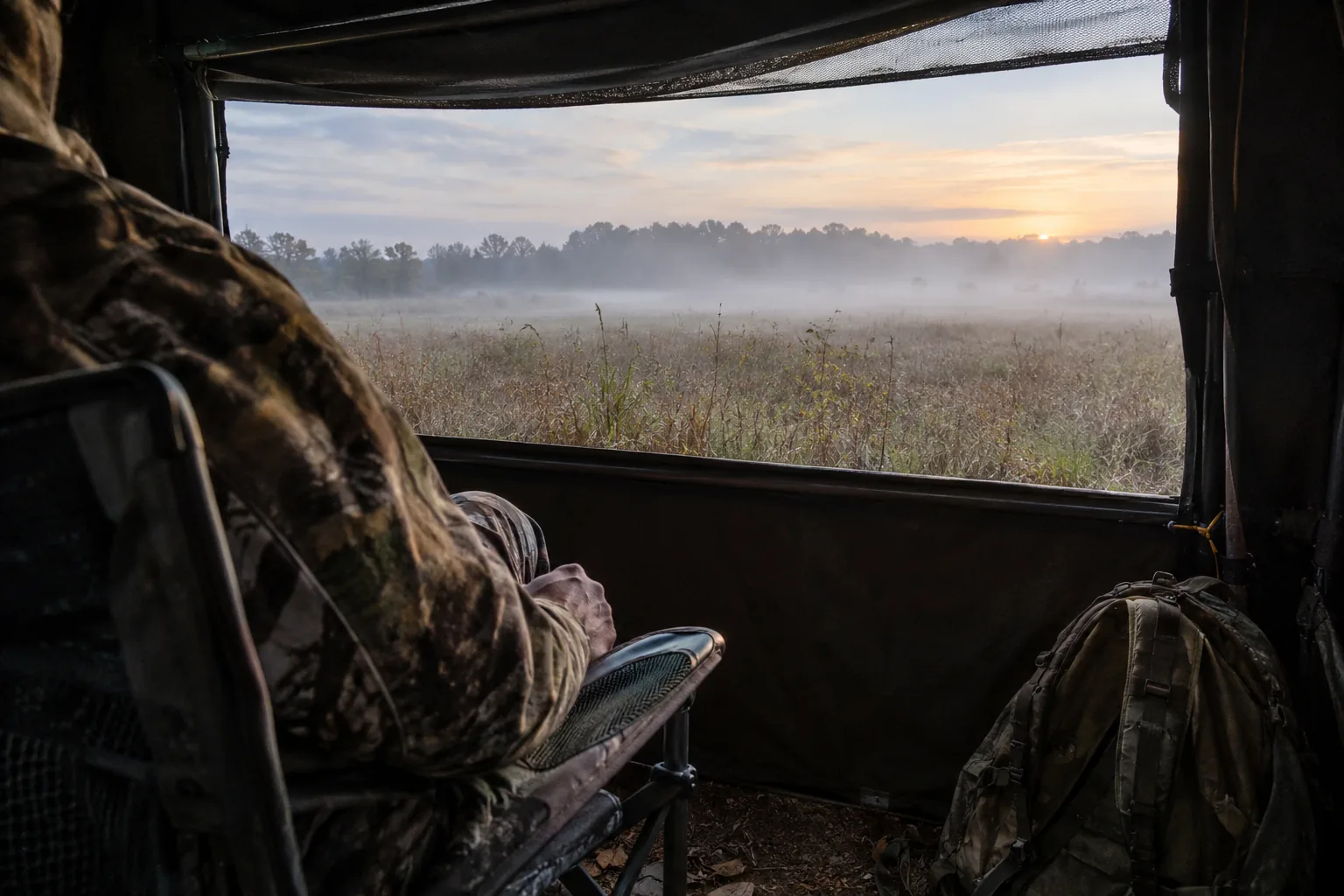
Drawbacks of a ground blind
A blind has trade-offs. The narrow view through the windows means you see less of the surrounding area than you would from an elevated stand. Your scent sits at ground level, so wind matters more. A blind is also a new object in the field, which is why early placement and brushing in count.
Plan for these before you commit to a spot. If the wind will not suit the location on a given day, hunt a different spot instead of forcing the blind.
Common mistakes
- Setting the blind on open ground with no background cover.
- Opening every window at once, which lets light in and shows your outline.
- Ignoring wind direction because the blind feels like a barrier.
- Leaving stakes loose or wind ropes slack.
- Moving fast when a deer is in view.
- Wearing bright, non-required colors inside the blind.
Care between trips
After each trip, check the seams and zippers on the shell. The ShadowCraft Pro uses a 150D PU-coated fabric shell, and the fabric should dry fully before it goes back in the bag. Shake out dirt and plant debris, and pack the 8 stakes and 4 wind ropes together so the kit is complete next time. Browse more hunting apparel and field gear for plain layers to wear inside.
Field note
Sit in the blind once with the windows open and look out from your seat. If you can see your own outline against the back wall, move the chair deeper or darken the interior.