What Is a Good Rangefinder for Hunting? Specs That Matter
A good hunting rangefinder matches your weapon: reach and ballistic data for rifle, angle compensation and a precise short-range reading for bow. Use these steps to choose.
The Kesslund Team
November 11, 2026 · 9 min read
What is a good rangefinder for hunting? It is one that reads the distance to your target reliably at the distances you actually shoot, corrects for slope, and fits how you carry it. For a rifle that means reach and a clear view of distant targets; for a bow it means accurate short-range readings and angle compensation from a stand.
Instead of ranking models, this guide walks through the specs in order, then shows how the answer changes between rifle hunting and bow hunting. Use the table and checklists to narrow your choice before you look at any product page.
Start with your weapon and your shot distance
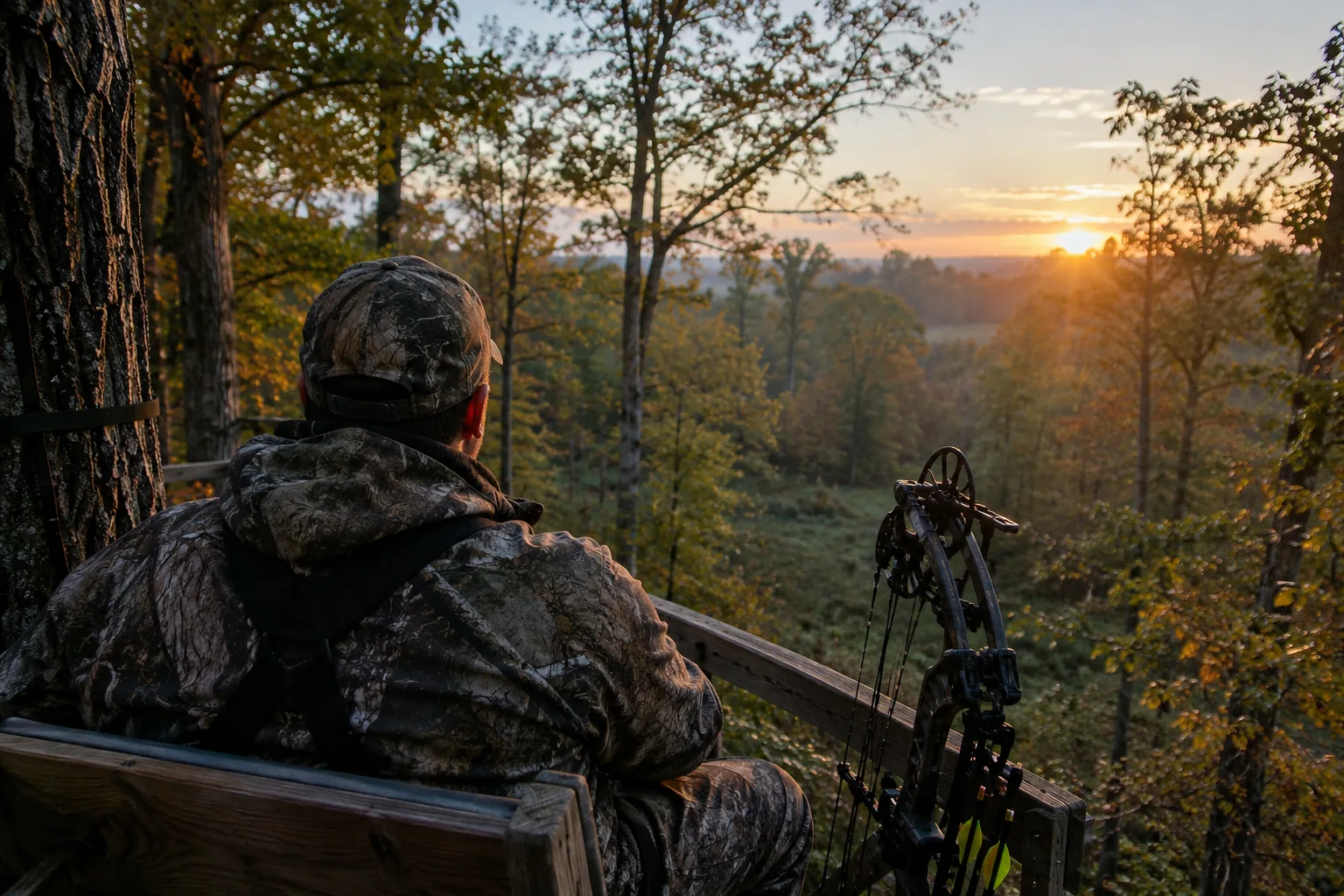
The first decision is not a brand or a price. It is the longest and shortest shot you realistically take. A treestand bow hunter and a western rifle hunter need different things from the same device.
Write down your typical shot distances in yards, then add the farthest shot you would ever consider. That number sets how much reach you need. Everything else in this guide builds on it.
| Question | Rifle hunting | Bow hunting |
|---|---|---|
| Typical shot distance | Medium to long, open ground or field edges | Short, often from a stand or blind |
| Reach you need | Check the maximum on animal-sized targets, not reflective ones | Reach matters less than a precise short-range reading |
| Angle compensation | Useful on hills and from elevated positions | Essential from a treestand |
| Magnification | Higher for spotting and steady aiming | Moderate is enough for close shots |
| Ballistic data | Helpful if you dial or hold over | Rarely needed; pins cover set distances |
| Brush filtering | Useful at timber edges | Useful in cover and thickets |
The specs that matter, in plain terms
Range and the target you actually aim at
Maximum range on a spec sheet is often measured on a highly reflective target. A deer, a patch of brush or a dull hillside returns less laser light, so the reading you can count on is shorter than the headline number. Compare the stated range for animal-sized or non-reflective targets when the product page gives it.
Choose reach with a margin over your farthest shot. If you stay within modest distances, extra reach adds cost and size without helping the hunt.
Angle compensation
When you shoot uphill or downhill, the distance along the line of sight is longer than the distance that matters for bullet or arrow drop. Angle compensation uses the slope to calculate the horizontal distance, which is the number your hold or sight setting is built around.
Look for a unit with separate modes for rifle and bow, because the two are set up for different shot profiles. Read the manual to see exactly what each mode displays.
Magnification and optical quality
Magnification enlarges the target so you can place the aiming mark on it. Handheld units commonly sit in the six- to seven-power range; higher power also magnifies hand movement, so a steady rest matters more. Multilayer-coated glass is a feature to look for when you hunt in low light, since coatings affect how the view looks at dawn and dusk.
Hold the unit to your eye with your hunting glasses or sunglasses on, and check that you can see the whole display and adjust the focus, if there is a focus adjustment.
Display: LCD vs LED
The display shows the reading inside the eyepiece. An LCD can show several lines of information, such as the distance, the mode and a battery indicator. An LED display is typically a bright red or black readout that stays visible against dark timber or bright sky.
Look for adjustable brightness settings if you hunt from first light to sunset. A reticle you can see against both snow and dark brush matters more than any extra data line.
Scan and brush filtering
Scan mode updates the reading as you pan across terrain. That helps when an animal is moving or when you want to check several landmarks. Brush filtering, sometimes called first or last target priority, tells the unit whether to read the near twigs or the farther animal behind them.
Match the features to a rifle hunt
For a rifle, you are balancing reach, steadiness and the numbers you need at the turret or reticle. Work through these steps in order.
- Set your farthest realistic shot in yards and choose a unit whose stated range on non-reflective targets exceeds it with margin.
- Pick magnification you can hold steady. If your hands shake at higher power, use a rest, a tree or a pack.
- Confirm the unit has a rifle mode that gives horizontal distance after slope correction.
- Decide whether you need ballistic solutions. A ballistic rangefinder can calculate a holdover or dial value from your load data, but it needs accurate inputs and is not a substitute for practice.
- Check display brightness and reticle visibility in the light you hunt in.
If you hunt moderate distances and already know your drop at set yardages, you may not need ballistic data. You can use a standard horizontal-distance reading and a drop chart taped to the stock.
Rifle hunting versus long-range shooting
Long-range target shooting is a different job from hunting. It places more weight on ballistic data, wind information and the ability to read distant steel. Hunting at those distances puts more responsibility on you for shot placement, so confirm your skill and your ethics before extending your range. Plan the shot, not just the reading.
What is a good rangefinder for hunting with a bow?
Bow shots are close, but a small error matters. A few yards of misjudged distance change where the arrow lands because it drops quickly. Slope matters too, especially from a stand.
- Prioritize a clean reading at short distance over maximum reach.
- Choose a unit with a dedicated bow mode that applies slope correction for archery.
- Pick a compact body you can raise and lower without noise. Check how it clips to a pack strap or hangs from a lanyard.
- Look for brush filtering, since bow shots often pass through thin cover.
- Range your landmarks before the hunt: a stump, a trail bend, a fence post. Then you do not have to range while a deer approaches.
After you pick the unit, make sure your sight is matched to those distances. Our guide on how to sight in a bow covers pin setup so the numbers on your rangefinder line up with your pins.
One handheld unit that covers both: SightForge
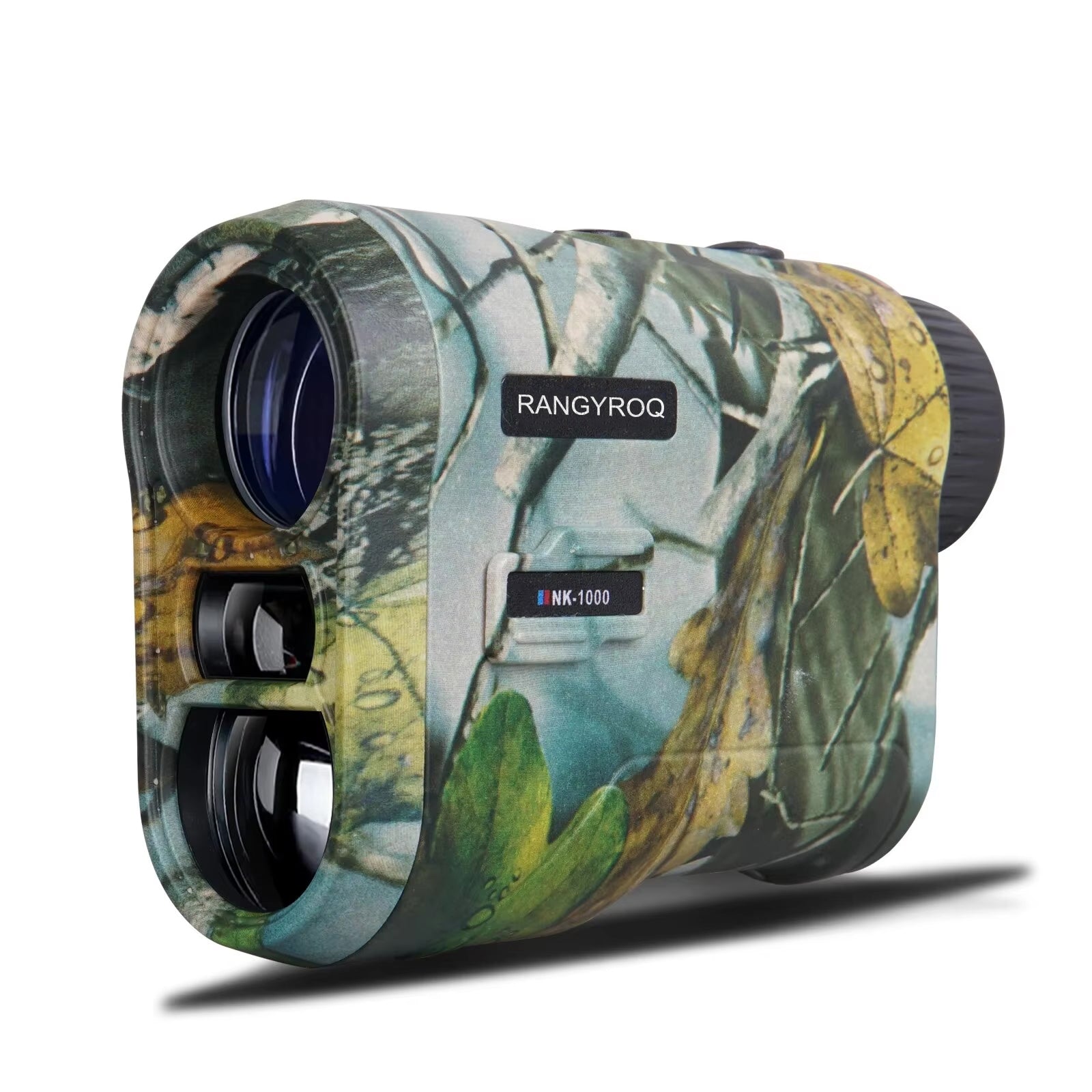
If you hunt with both a rifle and a bow, one unit with several modes can cover both. SightForge is a hunting rangefinder with 6X magnification and multilayer-coated optics. It has seven measurement modes, including brush, bow, rifle and golf.
You power on the unit, select a mode and aim through the eyepiece. Choose Brush Mode for timber, or Bow or Rifle Mode for angle compensation. The unit sends laser pulses and its processor filters near objects such as twigs and grass, then confirms the reading with a vibration. You read the horizontal distance on the LCD, adjusted for slope.
It weighs 4.94 ounces and comes with a neck lanyard, a protective carrying bag, a microfiber cleaning cloth, a USB-C charging cable and a user manual. The housing is sealed, and the Li-ion battery charges over USB-C. Check the product page for the listed range before you decide it fits your farthest shot.
 In this guideSightForge$179.99View
Field note
Range two or three landmarks from your stand or blind before legal shooting light. Write the distances on a card or memorize them, so on a live hunt you only confirm instead of searching.
Binoculars, handhelds and budget
A handheld monocular rangefinder is compact and easy to raise. Rangefinder binoculars combine a spotting optic with a laser, so you glass and range with one tool. They are heavier and bulkier, and the laser button position is something to check by hand.
| Type | Good fit | Check before buying |
|---|---|---|
| Handheld rangefinder | Bow and rifle hunters who already carry binoculars | Weight, grip, display visibility |
| Rangefinder binoculars | Open-country rifle hunters who glass often | Weight on the neck strap, battery type, optical quality |
| Ballistic rangefinder | Rifle hunters who dial or hold over | Load data entry, how clearly the solution reads |
Choosing a good rangefinder for hunting on a budget
On a tight budget, keep these features first: a reliable reading at your actual shot distance, slope correction in the right mode, and a display you can read in your light. Skip ballistic data, wireless connections and extra modes you will not use.
A budget unit that meets those three needs fits the hunt better than a pricey one with features you leave switched off. Browse the trail cameras and rangefinders collection to compare what we stock against your checklist.
Construction and carry
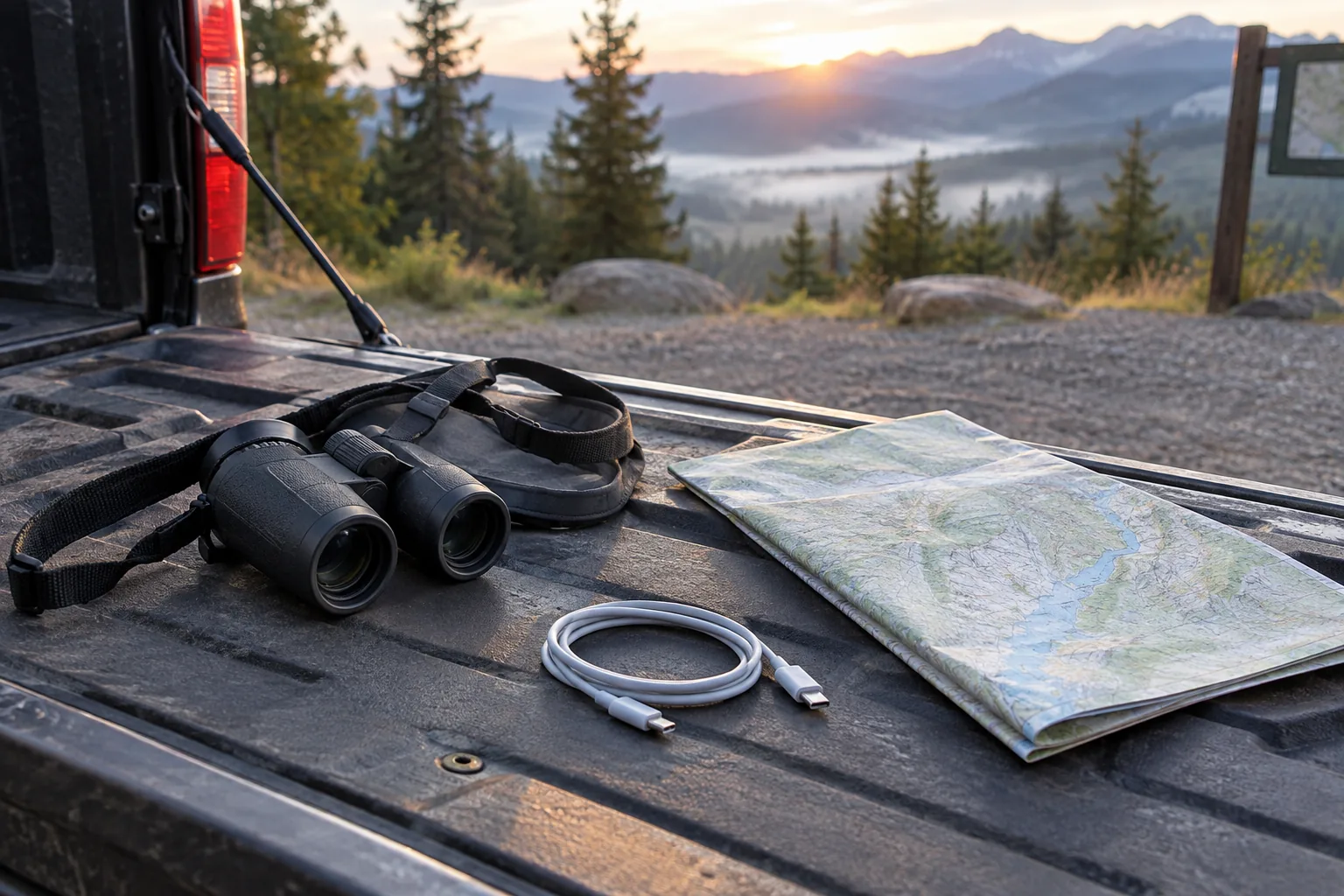
Check the housing for a sealed build and a grip that works with gloves. A neck lanyard keeps the unit within reach, but a stiff cord can tap against a bow, so some hunters clip it inside a jacket pocket. A rechargeable battery is a convenience, but carry a plan for power on longer trips, such as a charged cable and a power bank.
Set up and use it in the field
A rangefinder only helps if you use it the same way every time. Follow this routine before the season and keep it simple.
- Charge or check the battery at home and pack the charging cable with your kit.
- Read the manual to learn each mode, including how the display shows slope-corrected distance.
- Clean the lenses with a microfiber cloth before you head out.
- Practice on fence posts, trees and a hay bale at known distances, then compare the readings to a measured tape or a known yardage.
- Confirm your mode matches your weapon before each hunt: bow mode for the bow, rifle mode for the rifle.
- In timber, switch to a brush mode and aim steady on the animal rather than a branch in front of it.
If you use game cameras to learn where animals travel, our guide to trail camera hunting shows how to place them, and you can then range those spots from your stand.
Common mistakes when picking and using a rangefinder
- Buying for the maximum range printed on the box while ignoring the target type.
- Leaving the unit in the wrong mode, so a bow shot reads with a rifle correction.
- Ranging the grass in front of the animal instead of the animal.
- Skipping practice, then fumbling the buttons while an animal is in view.
- Forgetting that rain, fog and snow can shorten the reliable reading, so range closer landmarks when visibility drops.
- Trusting a reading without confirming it on a second try.
Handle lasers according to the manual. Do not point the beam at the eyes of people or animals, and keep the device out of children's reach.
A decision path for a good rangefinder for hunting
- Choose your weapon and write down your farthest shot.
- Confirm reach on non-reflective targets with margin.
- Check that bow or rifle mode applies angle compensation.
- Pick magnification you can hold steady.
- Confirm a readable display and brush filtering for your cover.
- Add ballistic data only if you will use it.
- Check weight, carry method and battery plan.
With those seven steps done, you have the answer for your own hunting, rather than for someone else's.