Binocular Hunting: 10x42 vs 12x50 and How to Choose
For binocular hunting, 10x42 suits timber and mixed country, while 12x50 suits open ground and long glassing sessions. Match the size to your terrain, then check the features.
The Kesslund Team
October 20, 2026 · 5 min read
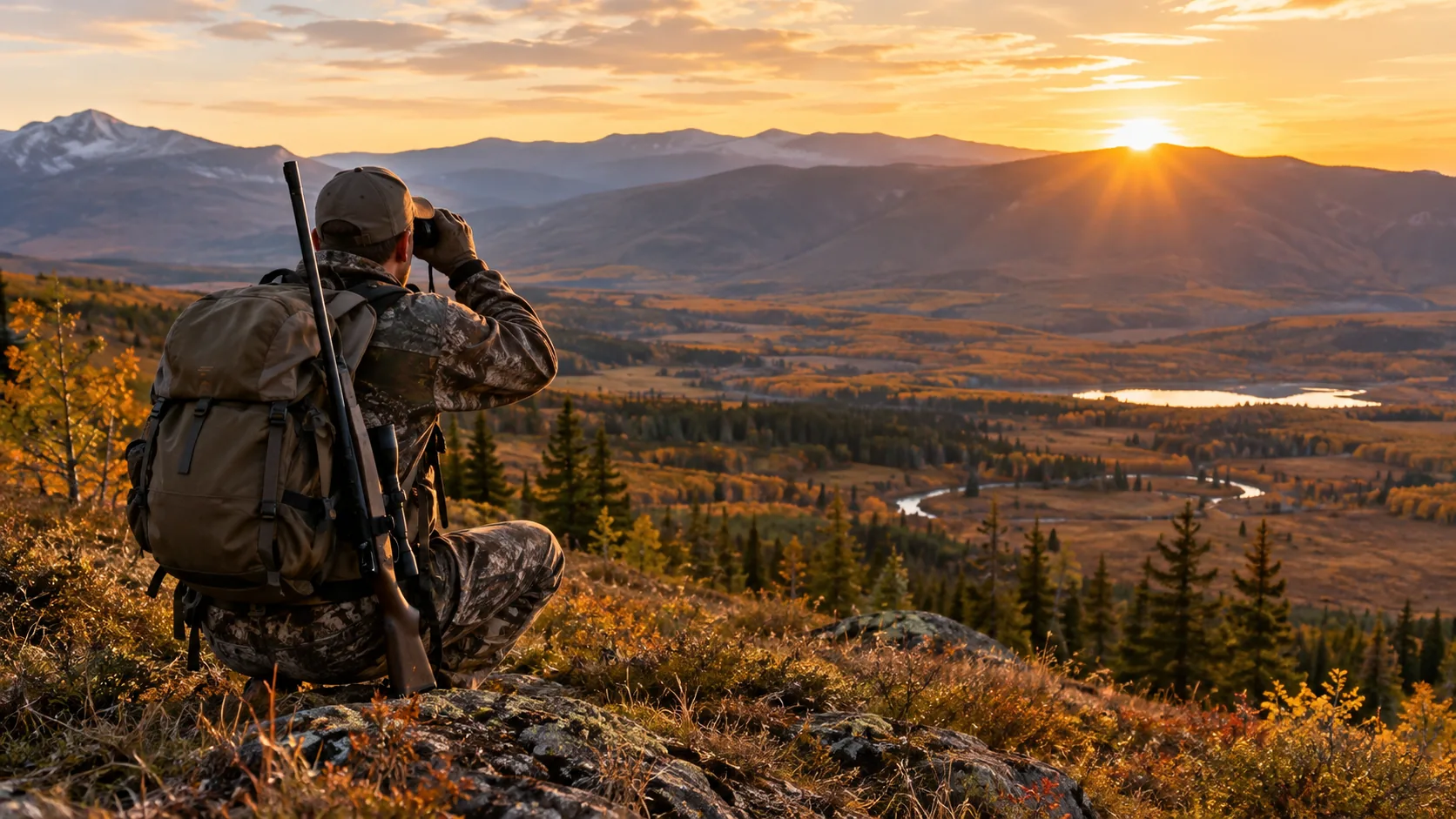
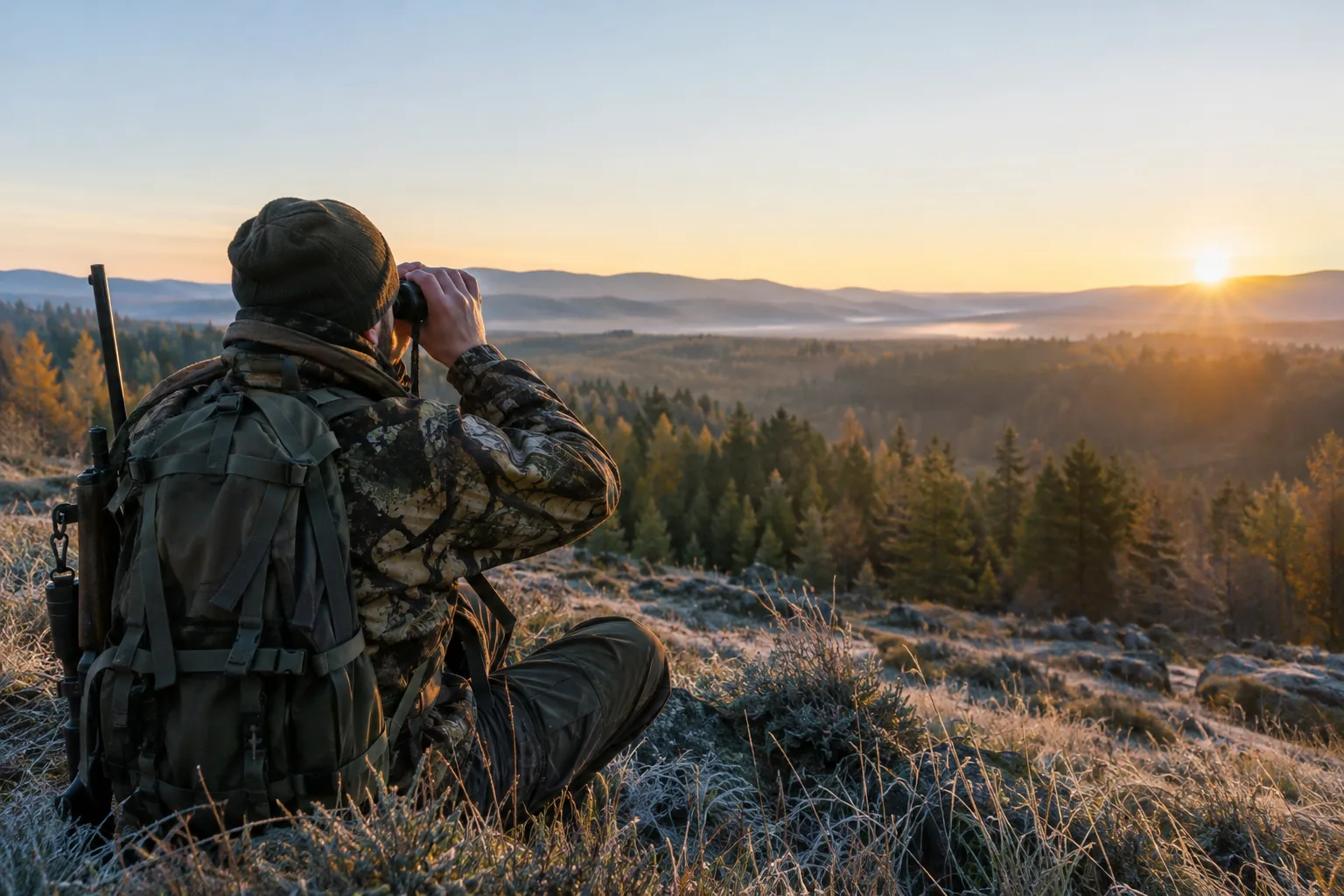
Binocular hunting comes down to two numbers: magnification and objective lens size. A 10x42 is a general-purpose choice for timber, field edges and mixed country, while a 12x50 suits open ridges and long glassing sessions where you can rest the glass. Pick by the ground you hunt most, then check prism type, eyecups, focus and carry.
This guide compares the two sizes by terrain instead of ranking models, so you can decide before you look at a single spec sheet.
What 10x42 and 12x50 actually mean
The first number is magnification. With a 10x42, a subject looks ten times closer than it does to the naked eye. With a 12x50, it looks twelve times closer.
The second number is the objective lens diameter in millimeters. A 42mm objective lens and a 50mm objective lens both gather light; the larger one admits more of it, and it also makes the body larger and heavier.
Exit pupil in one line
Divide the objective size by the magnification to get the exit pupil, the beam of light that leaves the eyepiece. A 10x42 gives 4.2mm. A 12x50 gives about 4.17mm. The two land almost in the same place, so the practical difference is magnification and bulk, not the size of that beam.
10x42 vs 12x50 side by side
| Factor | 10x42 | 12x50 |
|---|---|---|
| Exit pupil | 4.2mm | About 4.17mm |
| Field of view | Wider at the same distance | Narrower; magnification trades against it |
| Size and weight | Compact full-size body | Larger body, heavier on a harness |
| Hand shake | Visible, manageable offhand | More visible; a rest or tripod helps |
| Typical use | Timber, brush, field edges, stand hunting | Open ridges, basins, prairie, long glassing |
The takeaway: neither size fits every setting. The terrain decides.
Binocular hunting by terrain
Timber and brush
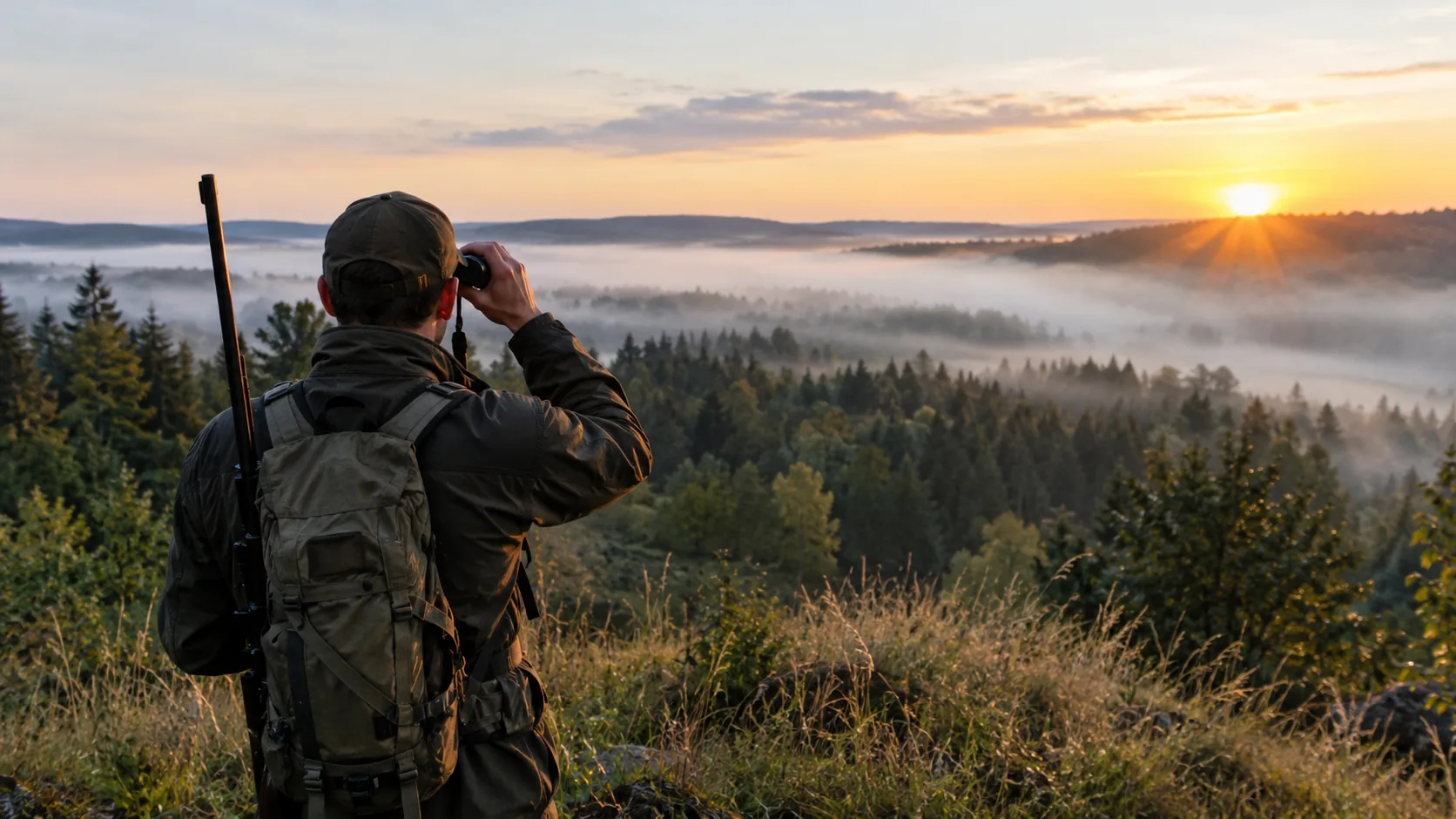
Sight lines are short and animals appear and vanish quickly. A 10x42 gives you a broad view to pick up movement and enough magnification to check for antlers. You also carry less weight through thick cover.
Open country and mountains
When you scan basins, slopes and far tree lines, extra magnification pays off. A 12x50 lets you pick apart distant ground from a seat or a pack rest. Brace your elbows on your knees, or mount the glass on a tripod. Our guide to a spotting scope and tripod rig covers the matching and setup.
Deer hunting from a stand or blind
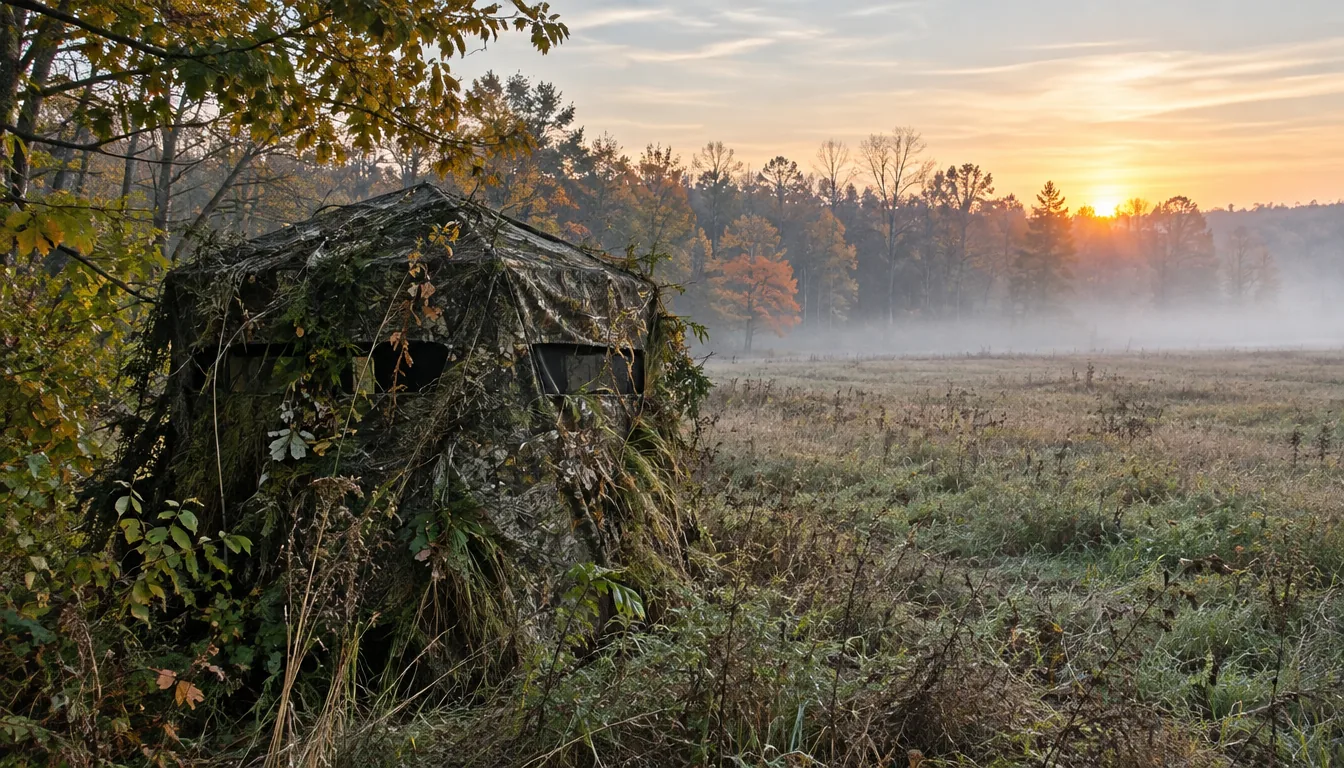
For deer, both sizes work. A 10x42 handles field edges and wooded lanes. A 12x50 suits long food plots and cut fields where you sit still and scan for a long time. If your stand overlooks short lanes, the smaller size is enough.
Dawn and dusk
Low light is where larger objective lenses and good glass matter. Look at coated optics and the exit pupil, not only the size printed on the barrel.
Field note
Before buying, hold both sizes up for a full minute while looking at a distant object. If your arms tire or the image shakes too much, the extra magnification will not help you in the field.
Features to check on any hunting binocular
| Feature | What to look for |
|---|---|
| Prism type | Roof prism bodies are straight and slim; porro prism bodies are wider with offset barrels |
| Glass | BAK-4 prisms or extra-low dispersion elements, plus multi-coated lenses |
| Eyecups | Twist-up or fold-down cups that fit with or without glasses |
| Eyepiece distance | A longer distance between eye and lens suits glasses wearers; check the spec sheet |
| Diopter | A locking diopter holds your setting |
| Focus wheel | Large enough to find with gloves on |
| Housing | Sealed against rain, humidity and condensation |
| Carry | A harness or chest pack with a case that closes |
Set the diopter once at home, using the manual, then lock it if the model allows. In the field, you only turn the focus wheel.
An adjustable zoom option
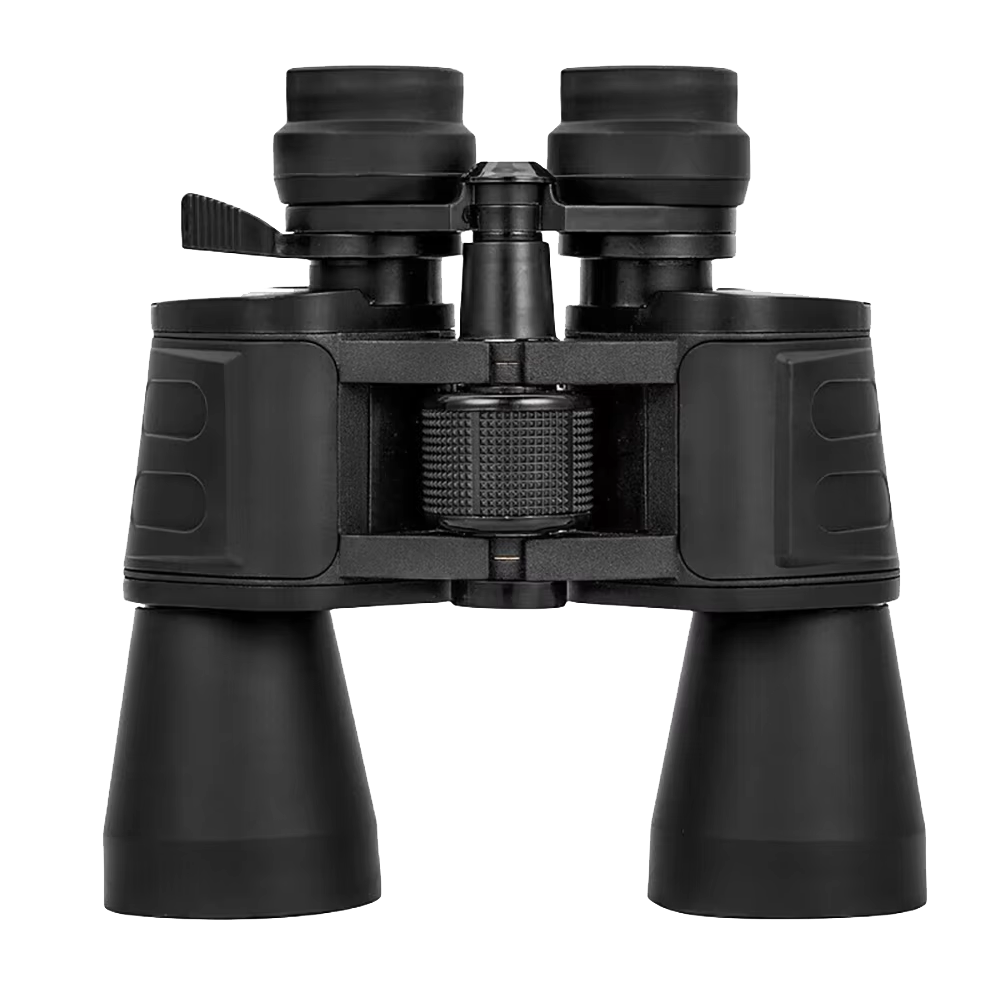
If you hunt both timber and open ground, a zoom binocular covers both uses in one body. The FarSight Pro has an adjustable 8-24x zoom and a 50mm lens with BAK-4 glass. Its field of view is 268 feet at 1,000 yards, so you can scan wide country at low power, then bring a subject in closer.
To use it, start at the low end of the zoom range and scan the tree line, ridge or field. Turn the focus wheel and raise the zoom when you spot movement. A built-in night mode, charged through the included USB cable, can be switched on at dawn or dusk when you glass shaded ground.
The shell is fully sealed against rain, humidity and condensation, and a carrying case comes in the box for the pack, the stand or the trailhead.
 In this guideFarSight Pro$129.99View
Pair your binocular with a rangefinder
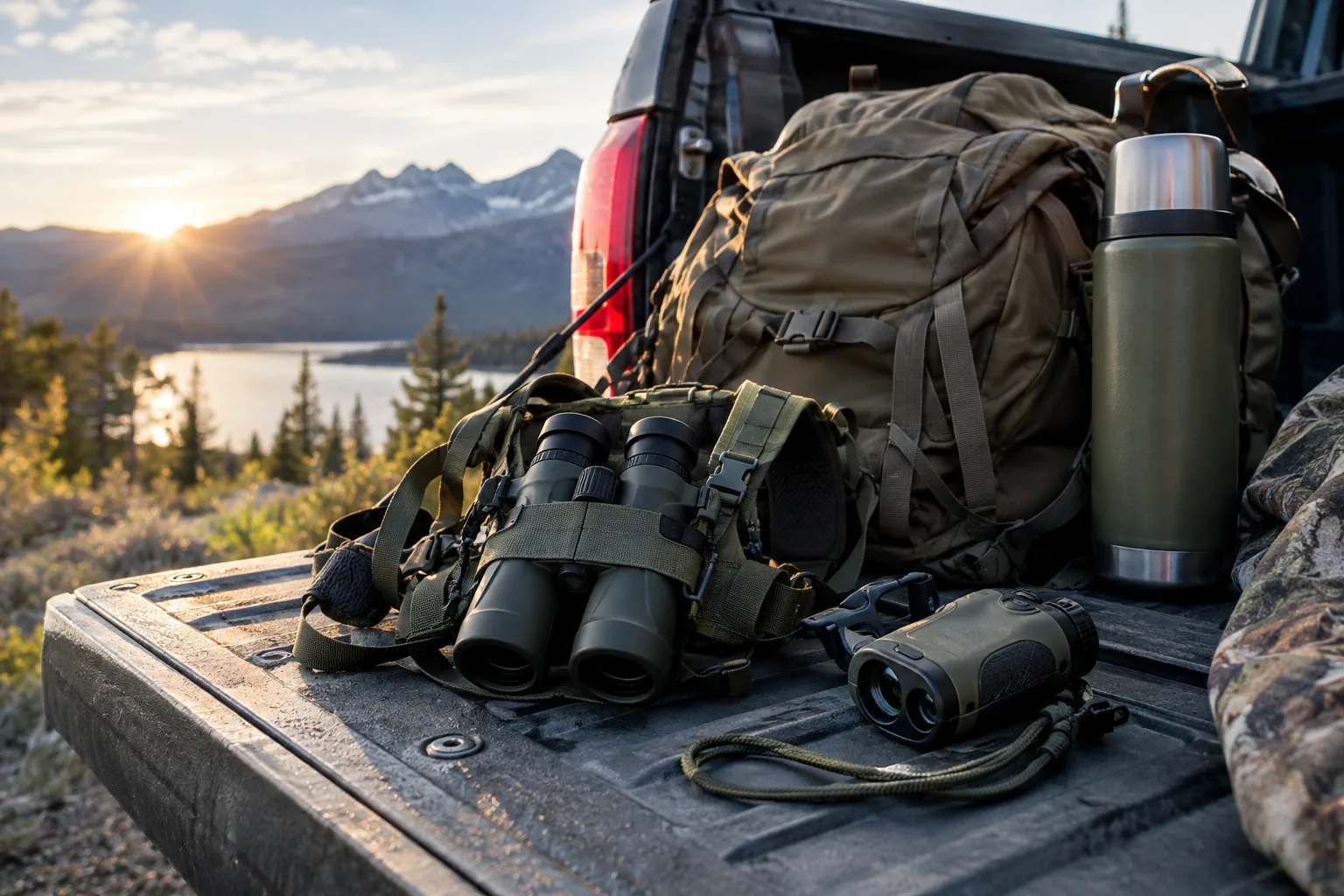
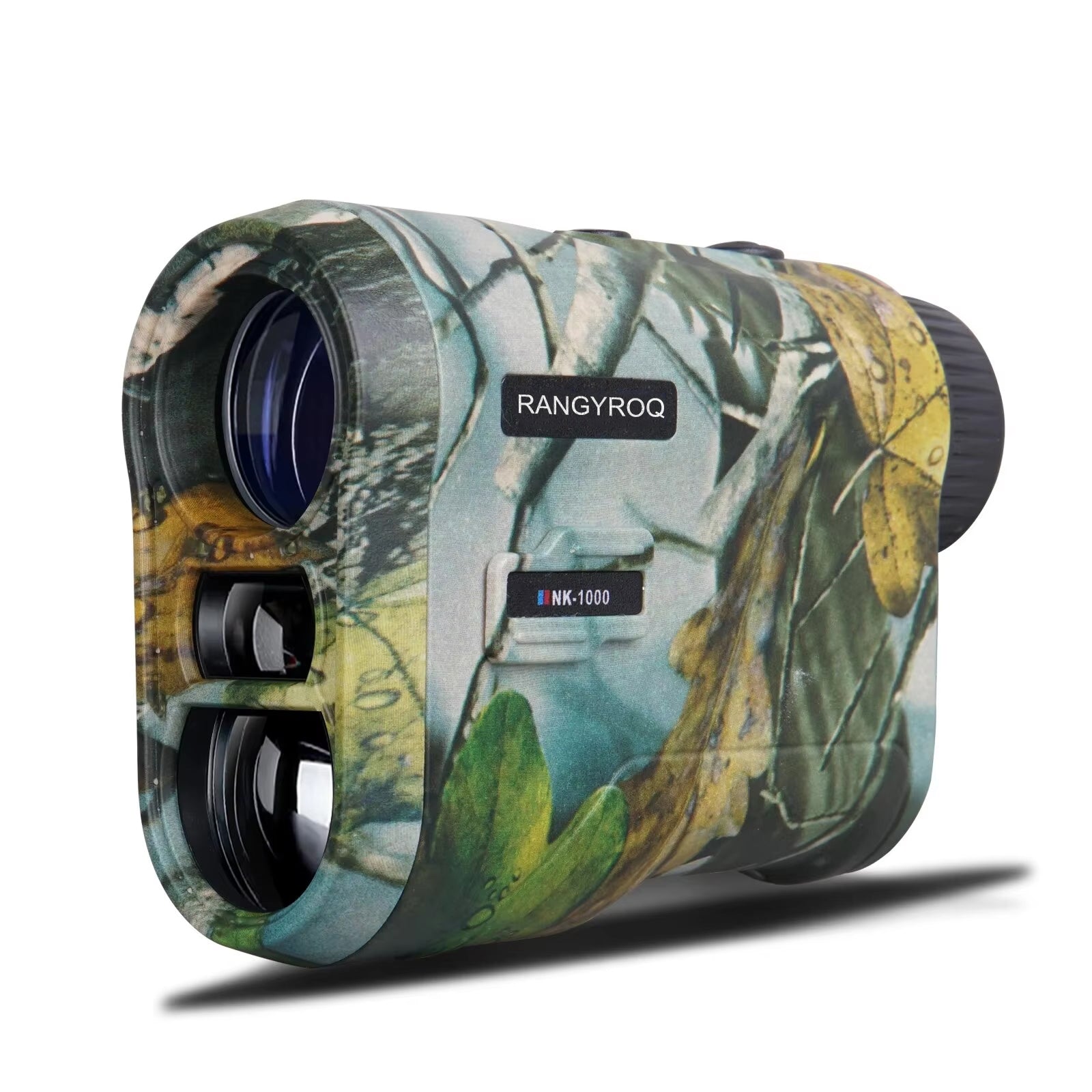
A binocular finds the animal; a rangefinder gives the distance. The SightForge is a hunting rangefinder with 6X magnification, multilayer-coated optics and seven measurement modes, including brush, bow, rifle and golf.
You aim through the eyepiece, pick a mode and read the distance on the LCD. Brush Mode uses pulse filtering to skip near objects such as twigs and grass and read the farther target behind them. It weighs 4.94 ounces, comes with a neck lanyard, and charges over USB-C. Follow the manual, and do not aim the laser at people.
 In this guideSightForge$179.99View
You can browse more glass and ranging gear in the Binoculars, Scopes & Night Vision collection.
Carry, harness and common mistakes
A binocular on a neck strap swings and bounces as you walk. A chest harness holds it against your body, and a closed case covers the lenses from brush and rain. Plan the harness with the rest of your load; our backpack hunting guide covers how a pack and chest rig work together.
- Buying the highest magnification without checking hand shake.
- Ignoring eyecups and eyepiece distance when you wear glasses.
- Skipping the diopter setup and blaming the optics.
- Wiping lenses with a dry sleeve instead of blowing off grit and using a lens cloth.
- Leaving the lens caps off in rain or brush.
Quick decision steps
- List the three types of ground you hunt most.
- If most of it is timber or brush, start with 10x42.
- If most of it is open and you can rest the glass, look at 12x50.
- If you split your time, consider an adjustable zoom.
- Check prism type, eyecups, eyepiece distance and diopter lock.
- Add a harness and, if you shoot at range, a rangefinder.