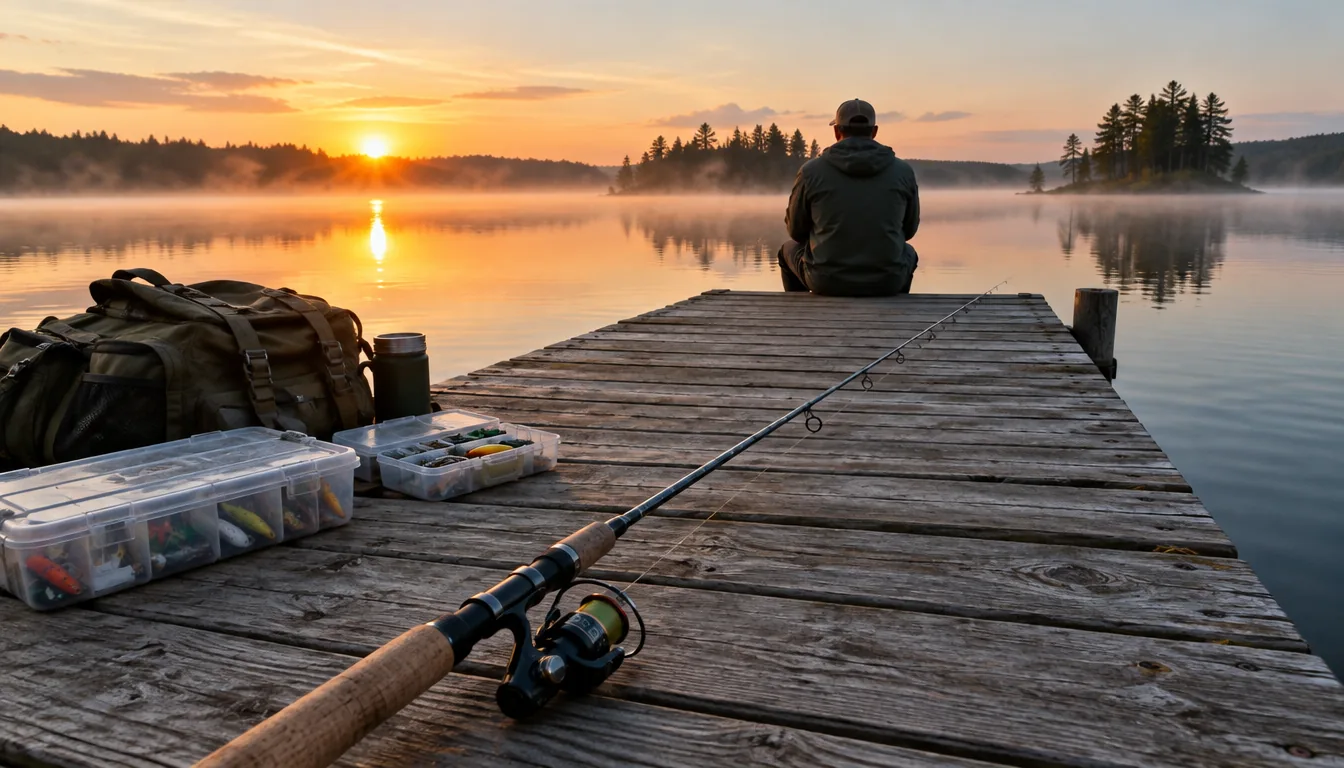
Men's Heated Jacket: Heat Zones, Battery Life and Fit
A heated jacket adds a rechargeable, battery-powered layer to your outerwear. Check heat zones, battery setup, fit and care before you choose one.
Wes Tanner
October 17, 2026 · 7 min read

If you are shopping for a heated jacket, men's styles work like a regular outer layer with thin heating elements wired to a rechargeable battery pack. You pick a heat setting, the elements warm panels around your core, and the fabric helps you stay warm by holding that heat in. Choose one by checking four things: where the heat zones sit, how the battery connects and charges, how the jacket fits over your layers, and how you wash it.
This guide covers each of those, plus the drawbacks worth weighing and a fit checklist that applies to both men's and women's cuts.
Heated jacket men's: what to check before you buy
Start with how you will use it. A jacket for sitting in a tree stand has different needs from one for a commute, a job site or everyday wear around town. Stationary use asks for more heat coverage and a wind-blocking shell. Active use asks for breathability and room to move.
Then run through this short checklist for any heated jacket for men:
- Heat zones: how many, and where they sit on the body.
- Heat settings: at least a high, a medium and a low heat mode, so you can adjust as conditions change.
- Battery: removable and rechargeable, with a charging method you already own.
- Outer shell: water-resistant fabric if you will be out in drizzle or snow.
- Materials: a softshell or similar outer layer with a soft, breathable lining.
- Care: a removable battery and a washing guide in the box.
How heated jackets work and where the zones sit
Heated clothing uses thin conductive wiring or carbon fiber heating elements sewn inside the lining. Current from the battery warms the elements, and the warmth spreads into the fabric around them. A high zone count is only part of the picture. Placement matters, because you want warmth and comfort where you feel the cold most.
Where zones usually sit
| Area | Why it matters | Good for |
|---|---|---|
| Collar | Warms the neck, where cold air gets in | Wind, commuting, standing still |
| Chest and upper back | Covers the core of the torso | Almost every use |
| Lumbar (lower back) | Covers the area that gets cold when you sit or bend | Tree stands, saddles, desk-to-car days |
| Hand pockets or hand panels | Warms hands between tasks | Work and photography |
If you mostly sit or stand in one spot, prioritize the collar and lumbar zones. If you move a lot, a core-focused layout is usually enough, because your body is already producing warmth.
Weighing a jacket against a lighter option? Our guide to the men's heated vest explains where a vest makes more sense.
Battery life: what shapes it
Searching for a heated jacket men's listing often turns up a single battery-life figure on the spec sheet, and that figure rarely reflects every setting and condition. This guide does not quote a number, because the real figure depends on factors you control and factors you do not. That is true of any rechargeable heated jacket.
- Heat mode: high draws more power than medium or eco, so plan to use high in short bursts.
- Air temperature and wind: in colder, windier weather you will reach for higher settings.
- Battery capacity and age: a larger pack holds more energy, and all rechargeable batteries lose capacity over time.
- Starting charge: a pack charged partway will not match a full one.
A practical approach
Use high to warm up at the start, then drop to medium or low heat once you feel comfortable. Plan your outing around the lower modes and treat high as a boost. For long hours outside, carry a spare power source. Some jackets, including the one below, can run from a standard USB-C power bank.
Field note
Switch the jacket on before you step outside, then turn the setting down once you are comfortable.
Drawbacks to weigh honestly
Heated jackets suit people who stand, sit or ride in the cold, but they come with trade-offs. Knowing them up front helps you decide whether one is worth buying for you.
- You depend on a battery. When it runs out, you are wearing a jacket with extra wiring. Carry a charged spare or a power bank, and keep a base layer on.
- Extra care. You must remove the battery before washing and follow the care guide.
- Added bulk at the battery pocket. You may notice the pack under a backpack strap or seatbelt.
- Charging routine. It is another device to charge between outings.
- Wiring wear. Repeated folding and tight stuffing into a bag can stress connectors, so reinforced connectors and a carry case help.
Whether the trade is worth it depends on how much time you spend in cold, still conditions. For short walks from car to door, a good insulated jacket or a fleece may be enough.
Safety basics
Follow the manual for charging, wear and washing. Stop using the jacket if the wiring, battery or connector looks damaged, and do not charge it unattended. If you wear any personal electronic device on your body, check the manual and ask a qualified professional before wearing a heated garment.
Fit checklist for men's and women's jackets
Heated clothing works as intended when the panels sit close to your body, but you still need room for a base layer and for movement. Use this checklist when you try one on or read a size chart.
| Check | What you want |
|---|---|
| Chest and torso | Snug enough that panels touch your base layer, loose enough to zip over it |
| Shoulders | Seams sit at the shoulder point, with no pulling when you reach forward |
| Sleeve length | Cuffs cover your wrists when your arms are raised |
| Back length | Hem covers the lower back when you bend or sit |
| Collar | Closes at the neck without pressing on it |
| Battery pocket | Easy to reach, and the pack does not shift or press when you move |
If you are shopping for a heated jacket women's cut, the same list applies, with extra attention to hip length and the shoulder-to-bust fit, since a tapered cut changes where the panels sit. A heated women's jacket should let the chest and back panels rest against the base layer without a tight squeeze. Some brands also sell unisex styles, so compare the size chart rather than assuming.
Size for your normal layering. If you wear a thick fleece underneath, try the jacket with that fleece. If you plan to wear only a thin base layer, sizing up for extra room can leave the panels floating away from your body.
A nine-zone option to consider
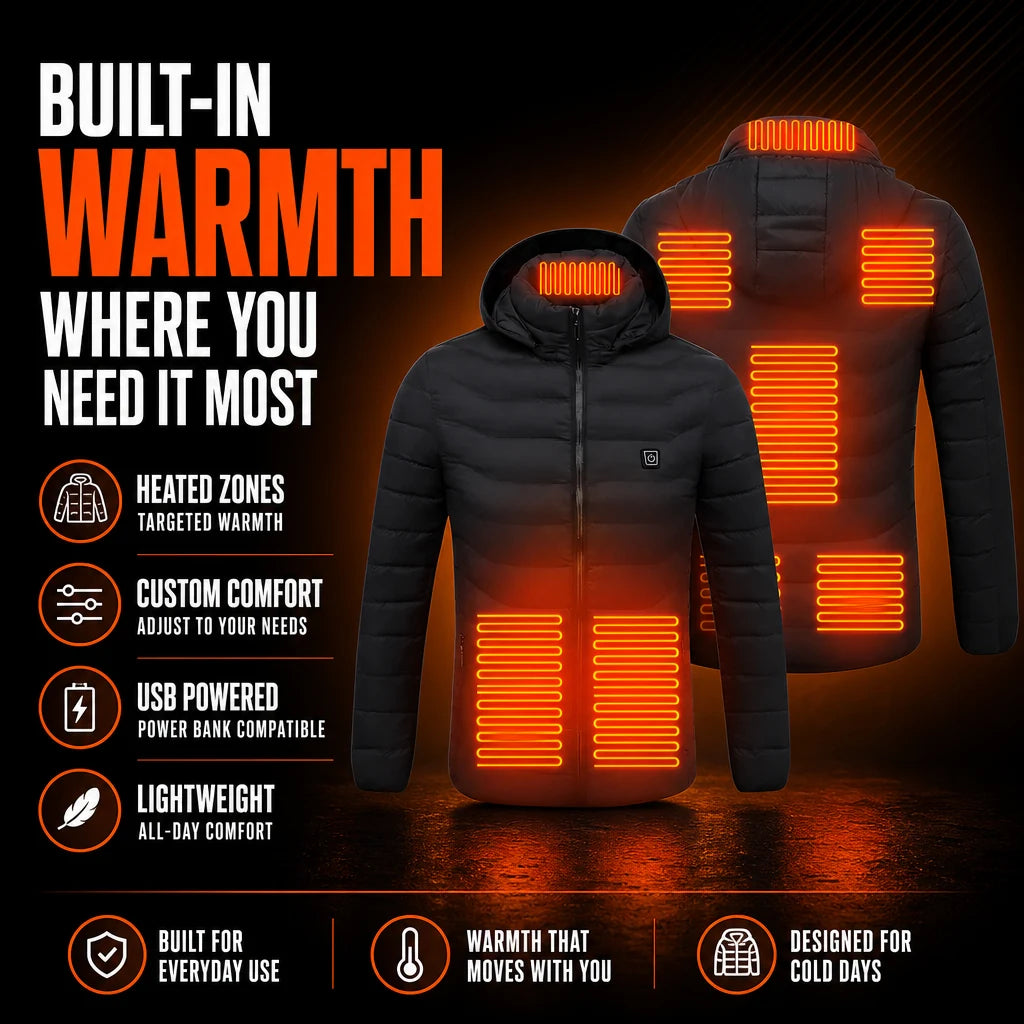
For a heated jacket men's list built around high coverage, three heat modes and a water-resistant shell, the ThermaCore heated jacket fits. It has nine heating zones across the collar, core and lumbar areas, and a rechargeable battery pack that charges over a USB cable. One button cycles through High, Medium and Eco, and a color-coded LED shows the current mode.
The outer layer is water-resistant and paired with breathable inner materials that leave room to move, so it is versatile enough for the trail, a tree stand or a commute.
 In this guideThermaCore$119.99View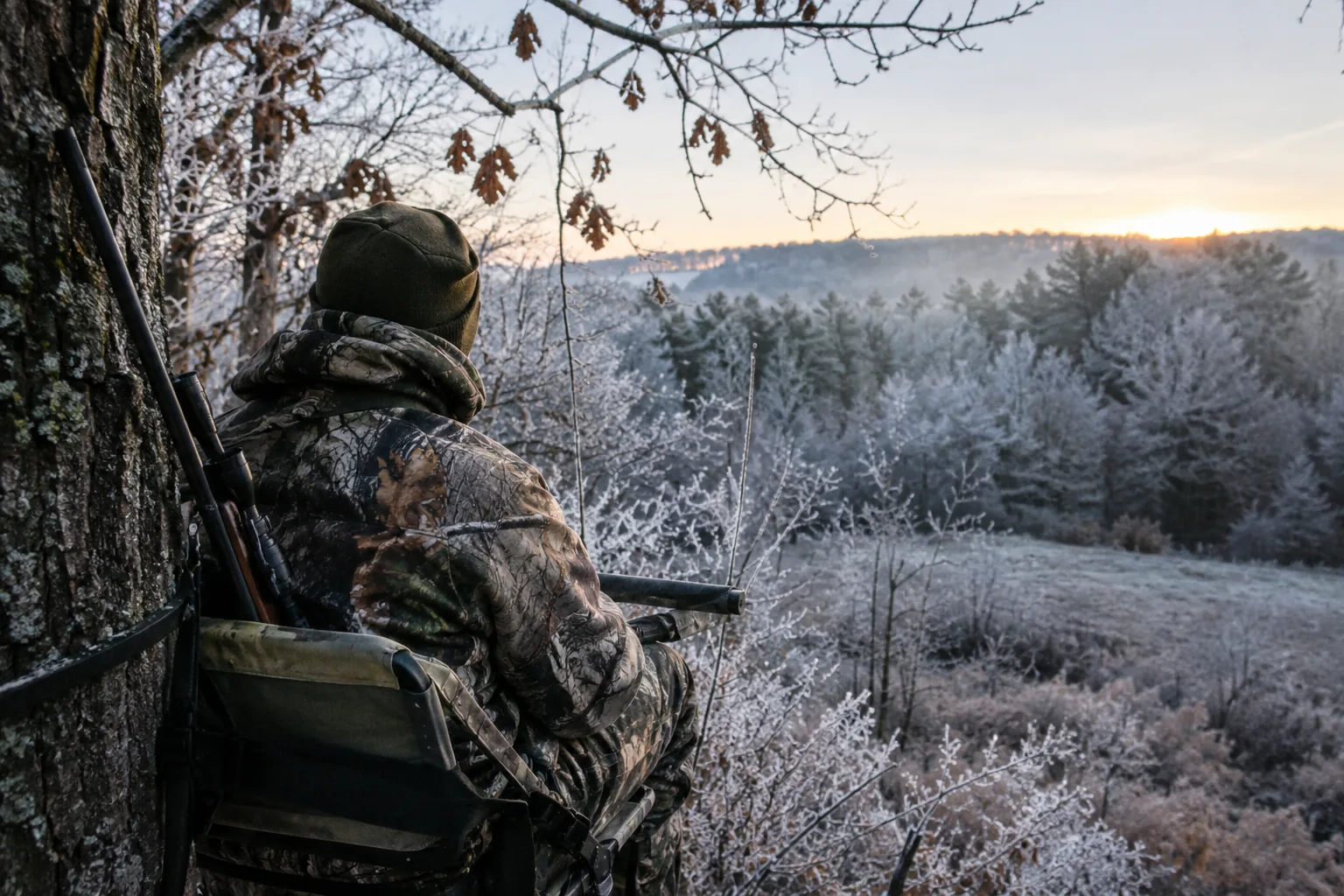
Setup, use and care
The ThermaCore ships with the jacket, a rechargeable battery pack with a USB charging cable, a protective carry box, and a user manual with a care guide.
- Charge the pack with the USB cable before your first outing, following the manual.
- Slide the battery into its place in the jacket.
- Press the button to turn it on, and press again to cycle through High, Medium and Eco.
- Check the LED to confirm which mode you are in.
- Carry a USB-C power bank on longer outings, since the jacket can run from one.
Washing and storage
Detach the battery pack before you wash. The jacket is machine-washable and uses reinforced connectors, and the care guide in the box covers the details. For any other model, read the label before you machine wash, and ask the maker before you dry clean or iron it. Let the jacket dry fully before storing, and keep the battery in the carry box away from damp spots.
Off-season storage and travel
At the end of the season, wash the jacket, dry it fully and store it with the battery detached. Before a flight, check the airline's rules on batteries; spare batteries and power banks are usually asked to travel in carry-on bags rather than checked luggage.
Common mistakes to avoid
- Wearing cotton underneath: a damp cotton layer holds moisture against you, so choose a thin, breathable base layer.
- Staying on high for the whole outing: use high in short bursts as a boost, then step down to a lower mode.
- Forgetting to charge: make charging part of your gear-prep routine.
- Washing with the battery in: always remove it first.
- Buying by zone count alone: placement, fit and shell matter as much.
When you are ready to compare more options, browse our Heated Apparel & Cold Weather Gear collection.