Warmest Ski Gloves: How to Judge Insulation, Shell and Fit
The ski gloves warmest on a cold day combine mitten shape, synthetic insulation, a membrane shell and a closing cuff. Use this checklist to judge fit, shell and heated options.
The Kesslund Team
November 17, 2026 · 7 min read

The ski gloves warmest on a cold day share four traits: a mitten shape or a roomy glove, synthetic insulation with a removable liner, a water-resistant shell with a membrane, and a cuff that closes over your jacket sleeve. Add a heated option if your hands go cold even in good gloves. Work through the checklist below in order, and you can judge any pair without relying on a brand name.
Warmth in a glove is a system. Insulation holds heat, the shell keeps snow and wind out, the fit leaves room for air, and the cuff closes the gap at the wrist. If one of those fails, the others cannot make up for it.
Step 1: Gloves or mittens
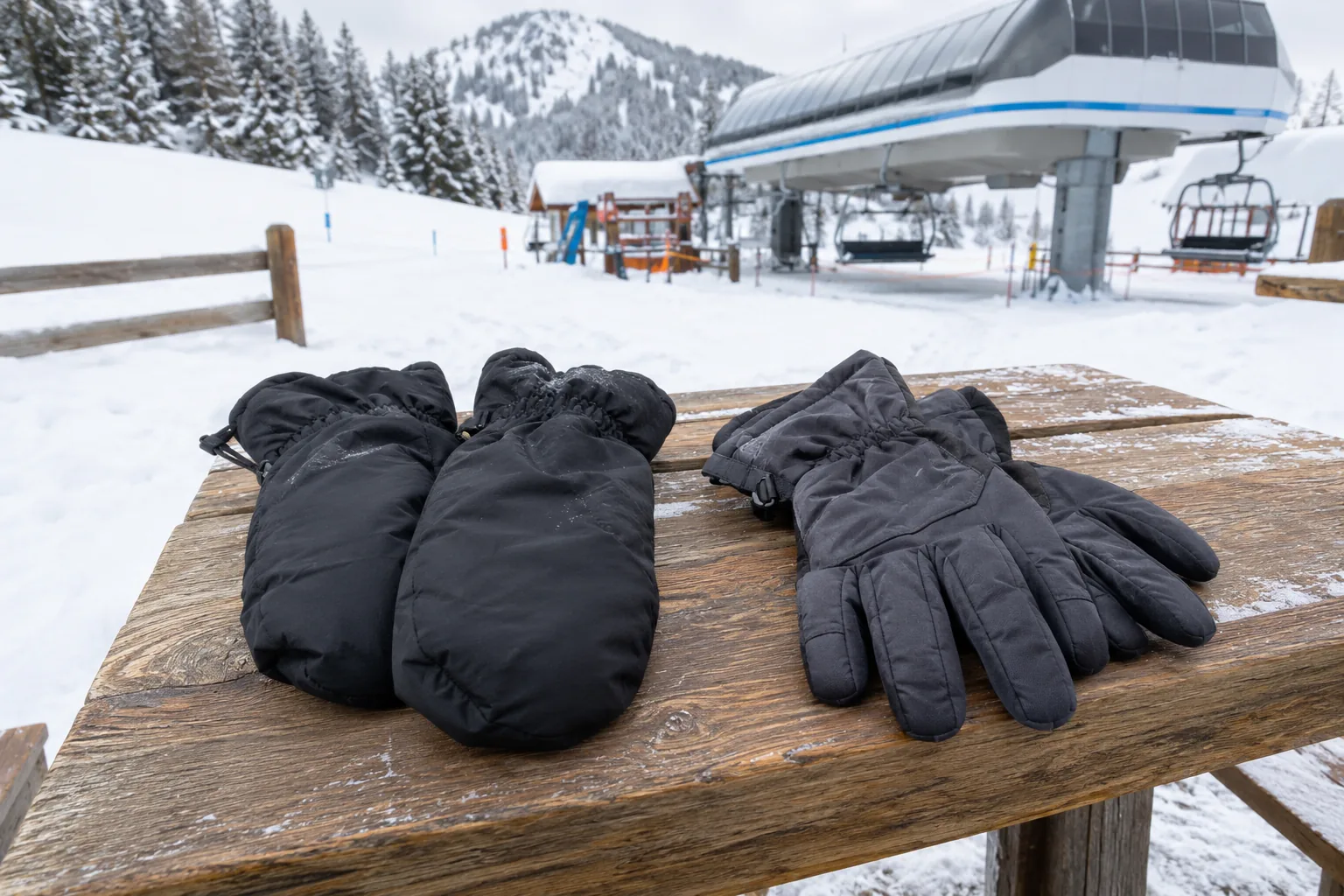
This is the first choice because it sets the ceiling for warmth. In a mitten, four fingers share one space, so they sit together instead of in separate sleeves. A glove gives each finger its own sleeve, which adds seams.
The tradeoff is dexterity. With mittens, adjusting a buckle, zipping a pocket or using a phone takes more effort. Gloves let you do those jobs with a covered hand.
A quick way to decide
- Choose a ski mitten if you run cold, ski long lift days, or stand around in wind.
- Choose gloves if you handle gear often, carry a camera, or ski in milder weather.
- Consider a lobster-style mitt, with the index finger separate, as a middle path.
- Pair mittens with a thin liner glove so you can pull the mitten off for a short task and keep some cover.
Step 2: Insulation type and liner
Insulation traps air that your hand has warmed. Some ski gloves use synthetic insulation, which is fill made of polyester fibers. Some add a brushed polyester or fleece lining against the hand as a soft first layer.
Look at how the insulation is built into the glove, not only its name.
- Fixed insulation is sewn in. It keeps the glove one piece.
- Removable liner pulls out. You can dry it on its own after a wet day, and wear it alone on mild days.
- Liner glove is a thin separate layer worn inside. It adds a little warmth and lets you take the outer glove off without bare skin.
A removable liner is the feature to look for if you ski many days in a row, because damp insulation holds less warmth. Pull liners out at night and let them air dry away from direct heat.
Step 3: Shell material and water resistance
The shell is the outer layer that meets snow, wind and the lift chair. Two parts matter: the fabric or leather on the outside, and the membrane under it.
Leather or synthetic
Leather palms and fingers are durable and give a firm hold on poles. They need periodic conditioning with a product made for leather, and they dry slowly. Synthetic shells are light and dry out sooner, but a rough pole grip can wear them down.
Sealed seams and the membrane
A membrane is a thin film between the shell and the insulation. It blocks liquid water while letting some vapor out. Check that the glove lists a membrane and that seams and zippers are sealed. Without them, wet snow works through at the stitching first.
Coatings on the outer fabric make water bead up, but they wear off. Reapply a wash-in or spray-on coating made for gloves when water starts to soak in instead of rolling off.
Step 4: Cuff style and wrist closure
Cold air and snow enter at the wrist, so the cuff matters as much as the fill. There are three common designs.
| Cuff type | How it fits | Suited to |
|---|---|---|
| Gauntlet | Long, wide cuff that goes over the jacket sleeve | Deep snow, falls, storms, powder days |
| Under-cuff | Slimmer cuff that tucks inside the sleeve | Fitted jackets, groomed runs, mild weather |
| Neoprene cuff | Stretch cuff that hugs the wrist | Layering with a slim sleeve, lighter gloves |
Whatever the cuff, look for an adjustable wrist strap. It lets you cinch the glove down so air and snow have a smaller opening. Some gloves also come with leashes, short straps that attach to your wrist so a glove does not drop from the chair lift when you pull it off.
Step 5: Fit and dexterity
A tight glove is a cold glove. Compressed insulation holds less air. Leave a little room at the fingertips so the fill keeps its loft.
Try gloves on with your liner glove, if you plan to wear one. Then run through this checklist.
- Make a fist. The seams should not pull across the knuckles.
- Grip a pole or a broom handle. The palm should not bunch.
- Touch each fingertip to your thumb. You should reach it without strain.
- Cinch the wrist strap and bend your wrist. Nothing should gap.
- Put on your jacket, then check that the cuff closes over or under the sleeve as designed.
If you buy for a child, check the same list on their hands, and leave room for growth only if the cuff can still be cinched tight. Gloves too large shift on the pole and let snow in.
Field note
Dry your gloves between runs and at night. Open the cuff, pull out any removable liner, and stand the gloves fingers-up in a warm room, away from direct heat sources that can damage leather and glue.
Step 6: Ski gloves warmest with added heat
Some skiers have cold hands whatever they wear. Insulation only holds the heat your hand produces, so if your hands start cold, even a well-built pair may not be enough. A heated option adds a heat source instead of just holding what you have.
Heated gloves use heating elements powered by a battery pack. Check where the elements run (fingers, back of hand), how many heat levels you get, and how the battery attaches. For a full walkthrough of finger heat, battery and fit, read our guide to good heated gloves.
Heated gloves we stock
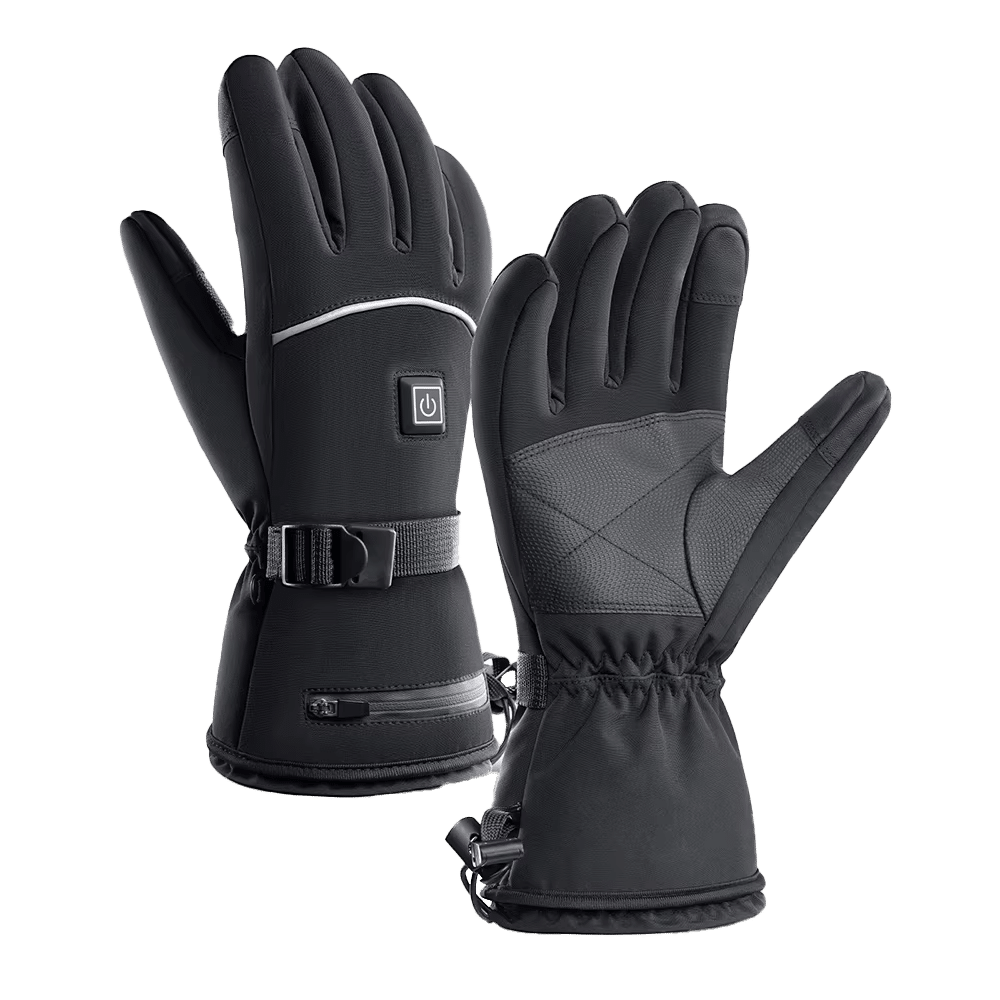
Mittavo are heated ski gloves with heating elements through every finger and the back of the hand, powered by a battery case. They have three heat levels, fleece inside each finger, and a double-layer shell with sealed zippers for snow and wind. Adjustable wrist straps tighten the fit, and silicone patterns add texture for a hold on poles. Two fingertips are conductive for touchscreen use. Batteries ship separately, so plan for that before your first day.
 In this guideMittavo$89.99View
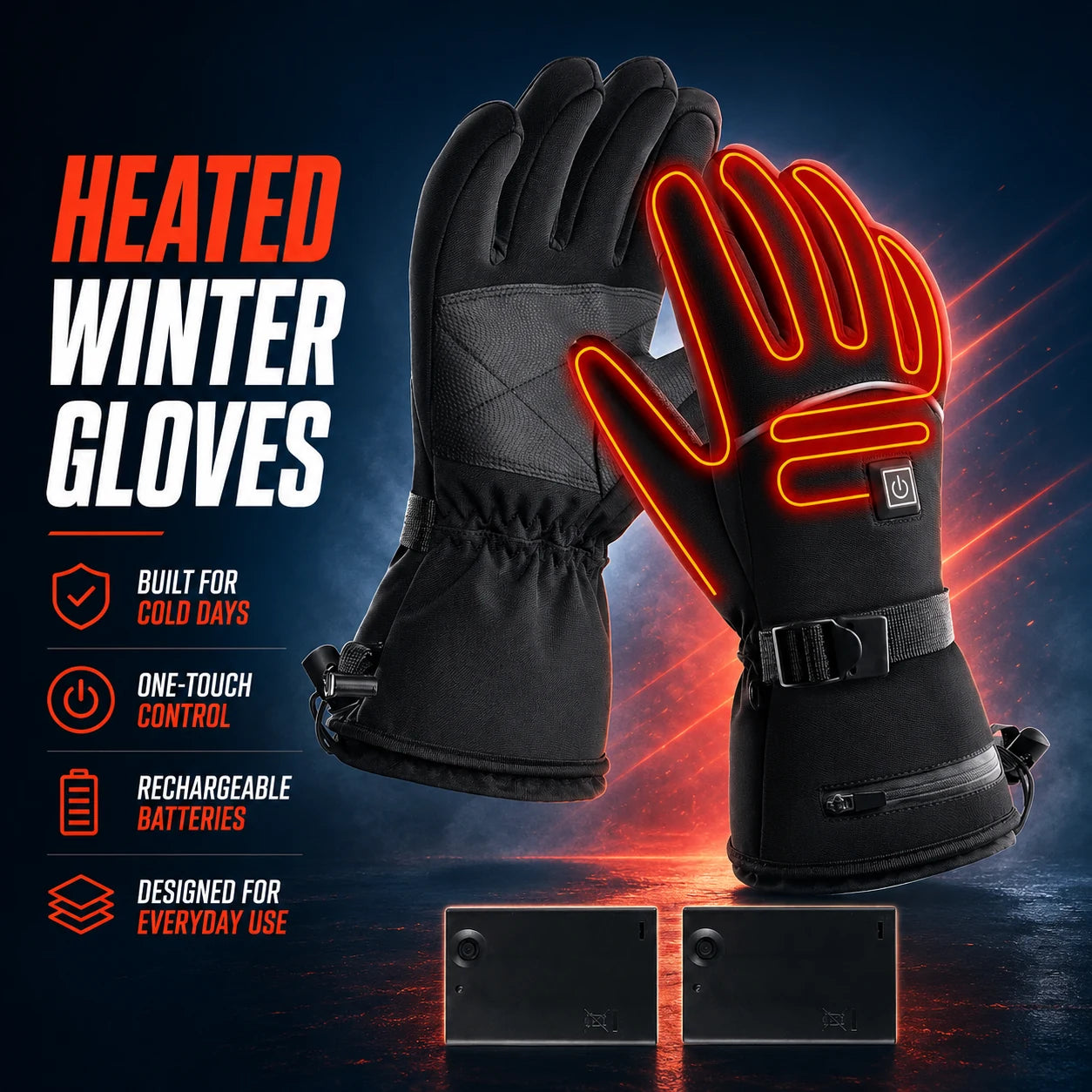
ThermaPulse also runs heating elements through all five fingers, powered by a battery box. It has a five-layer shell with a sealed inner liner, three heat settings and an LED indicator that shows the active level. The palm is PU with an anti-slip silicone pattern. It suits cold-weather riding, hiking and fieldwork, so check the fit with your own poles before choosing it for the slopes.
 In this guideThermaPulse$79.99View

Step 7: A warmer inside mittens or gloves
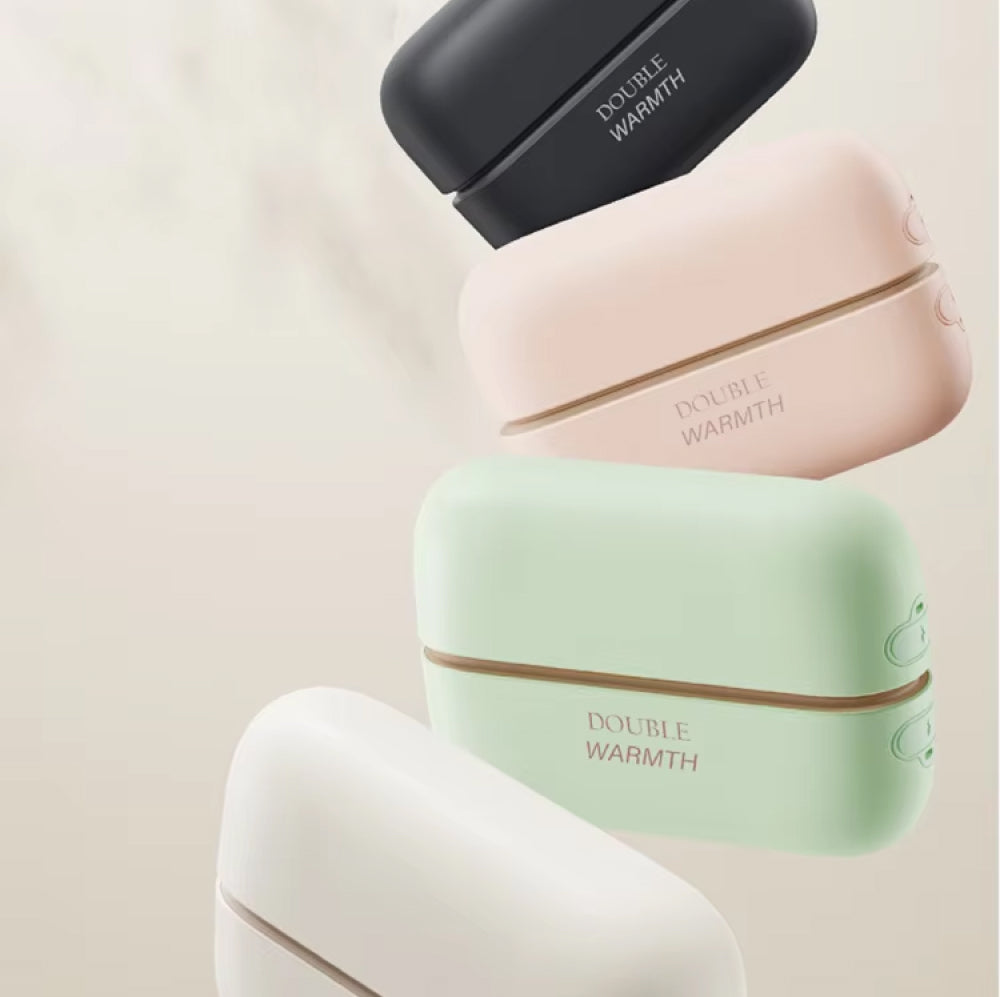
You do not need a heated glove to add heat. A rechargeable hand warmer can sit in a mitten or a roomy glove, or in a jacket pocket, between runs. MagnaWarm is a rechargeable hand warmer made of two magnetic halves. Press the button to activate it, keep the halves joined or detach one so two people share.
It charges over USB-C, with the cable in the box, and has a built-in USB output that can charge a phone. Built-in NTC sensors cut power before the surface gets too hot. Roomy mittens have space to hold it, while slim gloves may not. Follow the manual for use and charging.
 In this guideMagnaWarm$59.99View
Quick decision table
| If you... | Choose | Check |
|---|---|---|
| Run cold or ski long days | Mittens with removable liner | Gauntlet cuff, wrist strap |
| Handle gear and phone often | Gloves with conductive fingertips | Seam placement, sealed zippers |
| Ski wet snow | Membrane shell | Sealed seams, dry-out routine |
| Still get cold hands | Heated gloves or a hand warmer | Battery type, heat levels |
| Buy for a child | Cinchable cuff, snug fit | Pole grip, leashes |
For more heated clothing to pair with your gloves, browse the Heated Apparel & Cold Weather Gear collection.
Common mistakes to avoid
- Buying on the shell alone and ignoring the cuff, which is where snow enters.
- Choosing a size that squeezes the insulation flat.
- Wearing damp gloves into the next day instead of drying the liner.
- Skipping a thin liner glove, which leaves your bare hand exposed when you remove the outer glove.
- Charging heated gloves the night before without reading the manual for battery handling and storage.
- Judging by brand name instead of the construction on the label.
For your budget, spend first on the shell, the cuff and the liner. Extras such as touchscreen tips and leashes are useful but come second.