Good Heated Gloves: How to Check Finger Heat, Battery and Fit
Good heated gloves run heating elements through all five fingers, with several heat settings, a carried battery and room to move. Here is a checklist to verify each one.
The Kesslund Team
November 7, 2026 · 7 min read

Good heated gloves have heating elements that run through every finger, not only the back of the hand, plus a battery with several heat settings and a fit that leaves room for air around your fingers. Check those three things first, then look at the shell, the grip and the fingertip material for the work you do. This guide gives you a checklist you can run in a store, on a product page or at home with the gloves on.
The checklist for good heated gloves
Use this table to compare any pair. Each row is something you can verify from the product page or the manual, or by wearing the gloves for a short trial.
| Check | What to look for | Why it matters |
|---|---|---|
| Element coverage | Heating elements routed through all five fingers | Palm-only or back-of-hand heating leaves the fingertips to your own body heat |
| Heat settings | At least three levels and an indicator you can read with gloves on | You can step the heat down in mild weather and up when you stand still |
| Battery | Run time listed for each setting, and a battery box you can carry | One total run time for the highest setting does not describe your day |
| Fit | Snug but not tight, with space at the fingertips | Compressed insulation holds less warm air |
| Dexterity | You can pinch, zip and grip a tool | Bulk that blocks fine work gets taken off |
| Weather layer | A shell with a sealed liner or membrane, and a gripping palm | Wet fabric pulls heat from your hands |
| Fingertip surface | Touchscreen-compatible fingertips if you use a phone | You keep the gloves on to answer or navigate |
Do heated gloves actually heat the fingers?
Some do and some do not, and the difference is where the wiring goes. Many heated gloves place a single heating panel on the back of the hand. That warms the large area of the hand, but the fingers are the part that gets cold first, and a panel behind the knuckles does not reach them directly.
Look for wording such as heating elements through all five fingers on the product page. Then check the layout: flexible conductors and tucked wiring matter because wires that bunch up inside the glove can press on the finger and make the fit awkward.
How to check at home
- Charge the battery as the manual describes.
- Put the gloves on in a cool room, indoors, and switch to the lowest setting.
- After a short while on that setting, compare the warmth at the thumb, index finger and little finger.
- Repeat on the middle and highest settings.
If the little finger and thumb stay noticeably cooler than the rest on the highest setting, the coverage is uneven. Return it if the seller allows, and look for a pair with elements in each finger.
Battery, heat settings and fit
The battery decides how useful the gloves are on a long day. Gloves with a battery box that you carry on a belt, in a pocket or in a pack keep the weight off your wrist, but the cord has to be routed so it does not snag on a jacket sleeve.
What to ask about run time
Look for a run time listed for each heat setting. The lowest setting is the one you will use most when you are moving, so that number is the one to compare. The manual and the product page are where those figures belong; if a seller gives only one number, ask which setting it refers to.
- Check whether the battery is rechargeable and how it charges.
- Find out whether a spare battery is sold separately.
- Confirm the indicator tells you the current setting without taking the gloves off.
- Read the manual for charging and storage instructions and follow them.
Cold reduces what any battery can deliver, so keep the battery box against your body under a jacket instead of in an outside pocket when you can.
Fit, dexterity and the fingertip test
A heated glove still works by trapping warm air. If the glove is so tight that the insulation is squeezed flat, the elements have less air to warm. If it is so loose that your fingers slide around, the heat sits away from your skin.
Try this: make a fist, then open your hand fully, then pinch a coin or a zipper pull. The glove should follow without pulling at the fingertips or bunching at the knuckles. If you plan to wear a thin liner under the glove, try it with the liner on.
Grip and touchscreen
For handlebars, trekking poles or hand tools, a textured palm helps. A wear-resistant palm with an anti-slip pattern gives you a surface to hold onto when the handle is cold and damp. If you read maps or answer calls outside, touchscreen-compatible fingertips mean you can keep the gloves on.
Match the glove to the job
Skiing, shoveling and field work ask different things from a glove. Use the table to decide which items matter most.
| Activity | Prioritize | Watch for |
|---|---|---|
| Skiing | Weather-resistant shell, sealed liner, a cord that stays under the cuff | Bulk that makes it hard to work a buckle or strap |
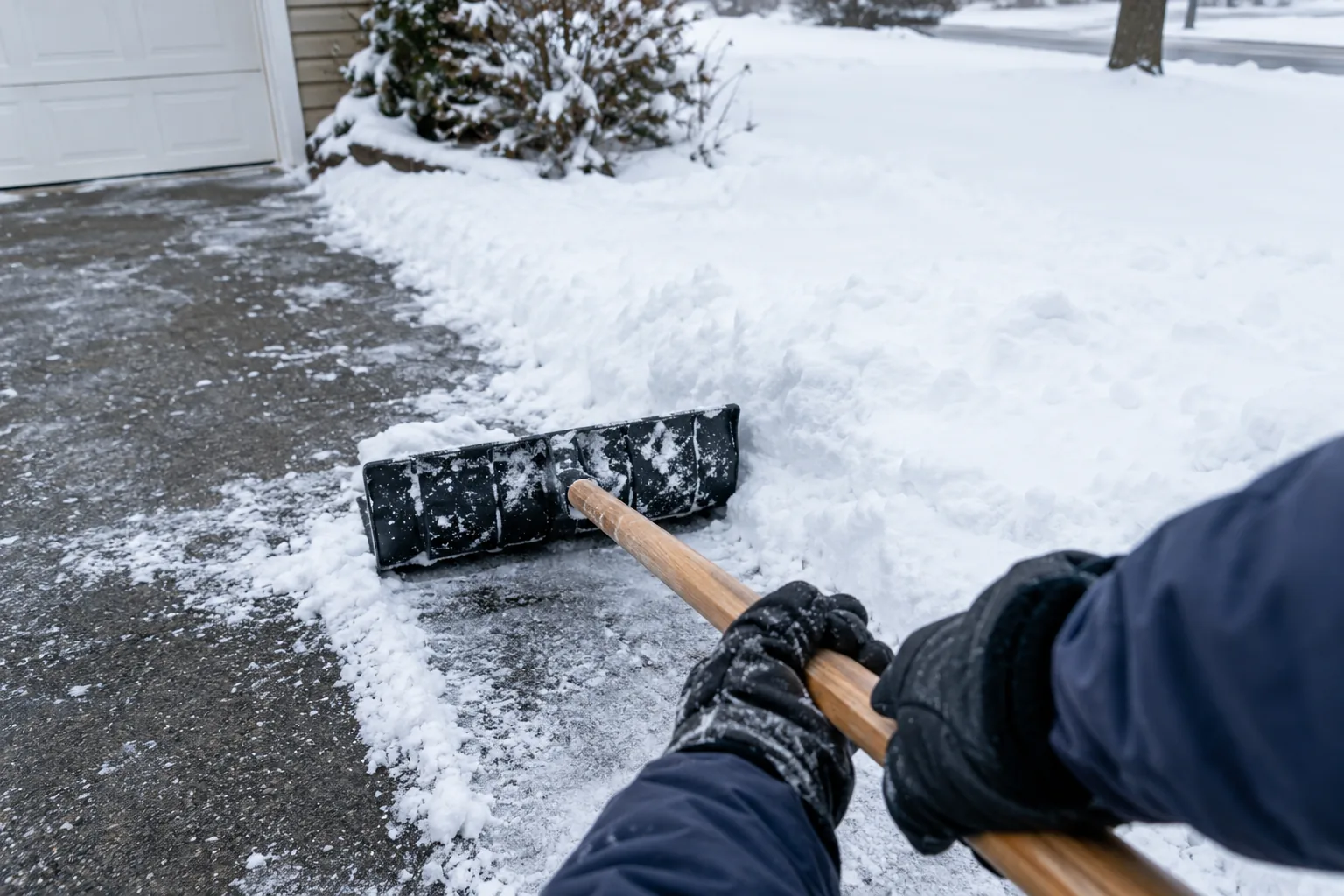
| Shoveling snow | Textured palm, a durable shell, heat that holds on a low setting while you move | Sweat building up inside on the highest setting |
| Field or outdoor work | Grip, fingertip dexterity, a battery box that does not catch on tools | Wiring that pinches when you grip a handle |
| Cycling or riding | Grip on the bars, a clear indicator, a snug cuff | A bulky battery cord near the controls |
| Hiking | Light weight, touchscreen-compatible fingertips, grip for poles | Packing the battery where you can reach it |
A pair built around finger heating
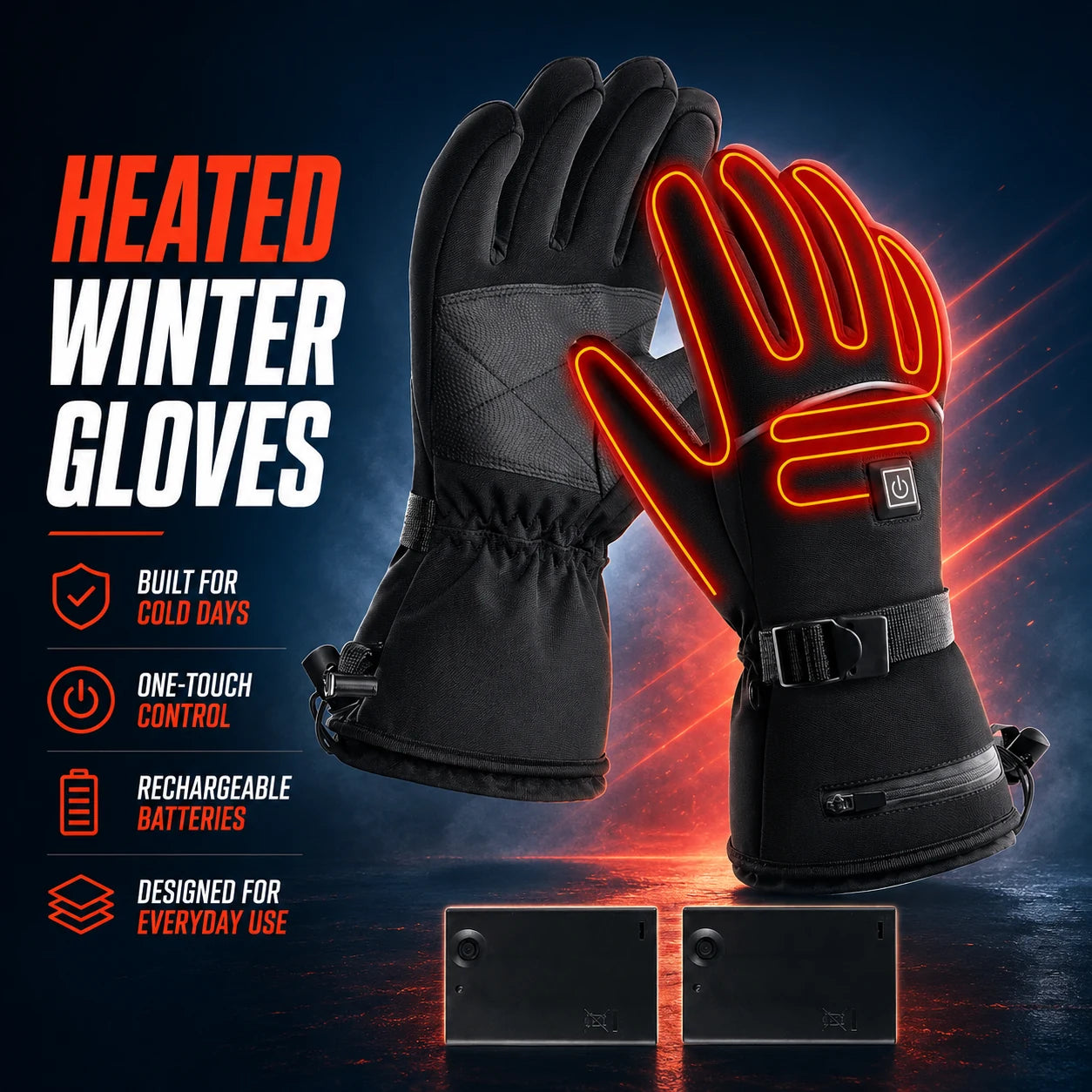
The ThermaPulse heated gloves are built around the finger-heating requirement. The heating elements are routed through each of the five fingers, not only the palm, and flexible conductors with a tucked-wire layout connect the gloves to the battery box you carry.
The construction is a five-layer shell with a sealed inner liner, made for wet, cold days on the trail, at the cabin or on the road. The palm is wear-resistant PU with an anti-slip silicone pattern for handlebars, trekking poles or hand tools.
 In this guideThermaPulse$79.99View
How the controls work
Hold the button to switch the gloves on, then tap it to step through the three heat settings. The LED indicator shows red, blue or green depending on the setting, so you can check the level at a glance without taking the gloves off. The fingertips are touchscreen-compatible, so you can keep the gloves on while you use your phone.
The box includes one pair of gloves, one battery box and a user manual. Read the manual for charging and care before the first outing. For run time on each setting, use the product page and the manual instead of a guess.
Is it worth buying heated gloves?
They make sense if your hands get cold while you are standing still or working with them for long stretches, such as ski lift lines, early-morning field work or riding. Regular insulated gloves can be enough for short walks or active days when your body heat keeps your hands warm. Good heated gloves earn their place when the cold is steady and the work keeps you in one spot.
Consider these points before you buy:
- You need to charge and carry a battery, which adds a step to your routine.
- A heated glove still needs a weather-resistant shell, because wet fabric pulls heat from your hands.
- If you already have a warm shell glove you like, heated liners are another route, but they add bulk at the fingers.
If your cold hands are tied to a health condition, ask a health professional before relying on any heated product.
Common mistakes to avoid
- Buying on the claim of "warmest" without checking where the elements sit.
- Choosing a size that squeezes the fingers, which flattens the insulation.
- Starting on the highest setting every time. Begin low and step up.
- Leaving the battery in a cold outside pocket.
- Skipping the manual. Follow it for charging, washing and storage, and stop using the gloves if the wiring or battery looks damaged.
Field note
Do the home check before you rely on a pair outdoors: wear them on each heat setting and compare thumb, index and little finger. Uneven warmth tells you more than the product description.
Care, storage and the rest of your layers
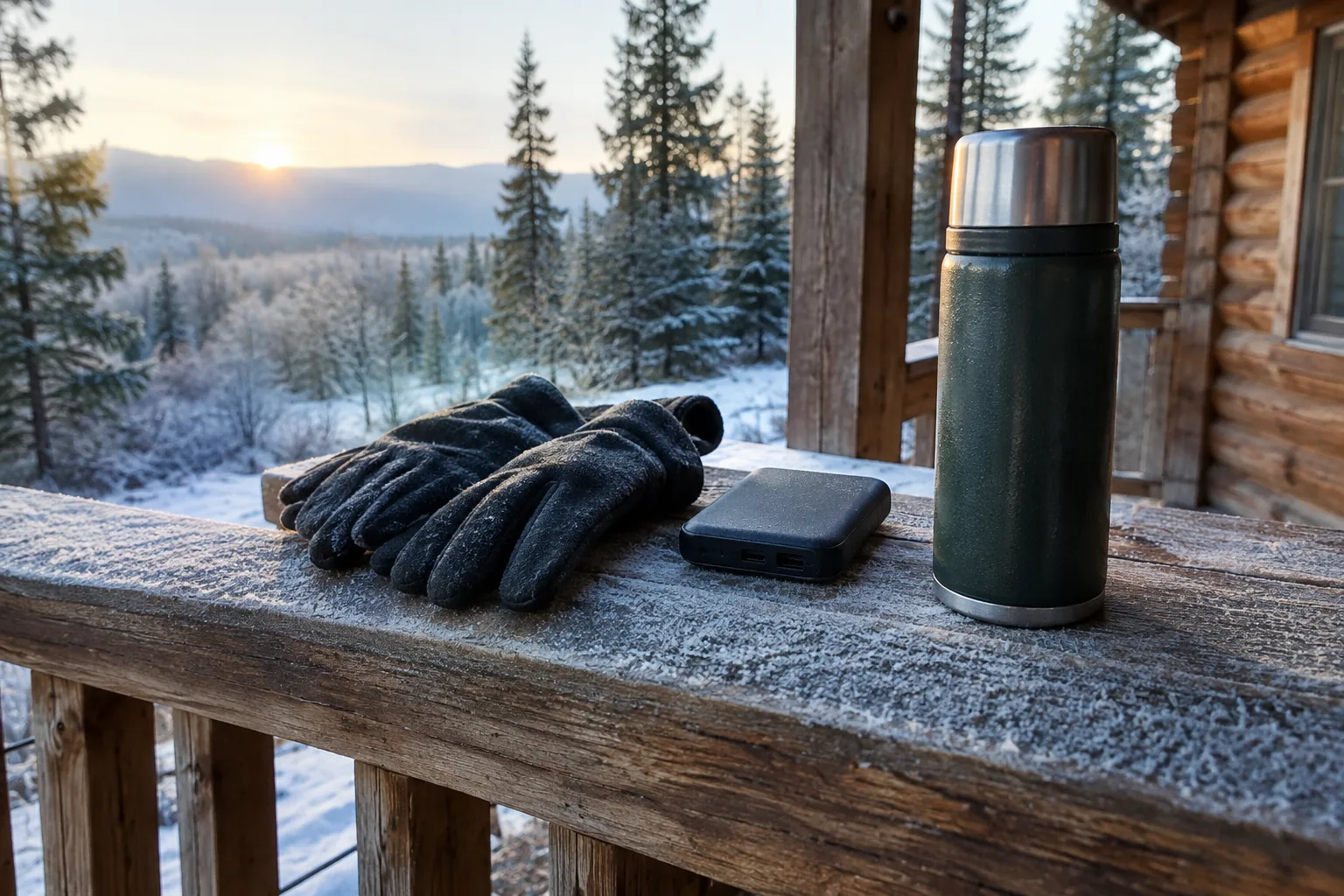
Before cleaning, switch the gloves off and disconnect the battery box. Wiped-down exteriors and air drying away from direct heat are standard practice, but follow the manual for what it allows, since washing rules differ between heated gloves. Store the gloves flat or loosely, without folding the finger wiring sharply, and keep the battery in a dry place at room temperature.
Hands stay warmer when your core is warm. If you are building a cold-weather layering system, see our guides to heated jackets, heat zones and fit and heated socks, battery and heat settings. You can also browse the Heated Apparel & Cold Weather Gear collection for more options.