What Is Rock Climbing? Styles, Gear and How Beginners Start
Rock climbing is moving up natural rock or an artificial wall with your hands, feet and balance, with or without a rope. Here are the four main styles, the gear and a first-month path.
The Kesslund Team
November 13, 2026 · 8 min read
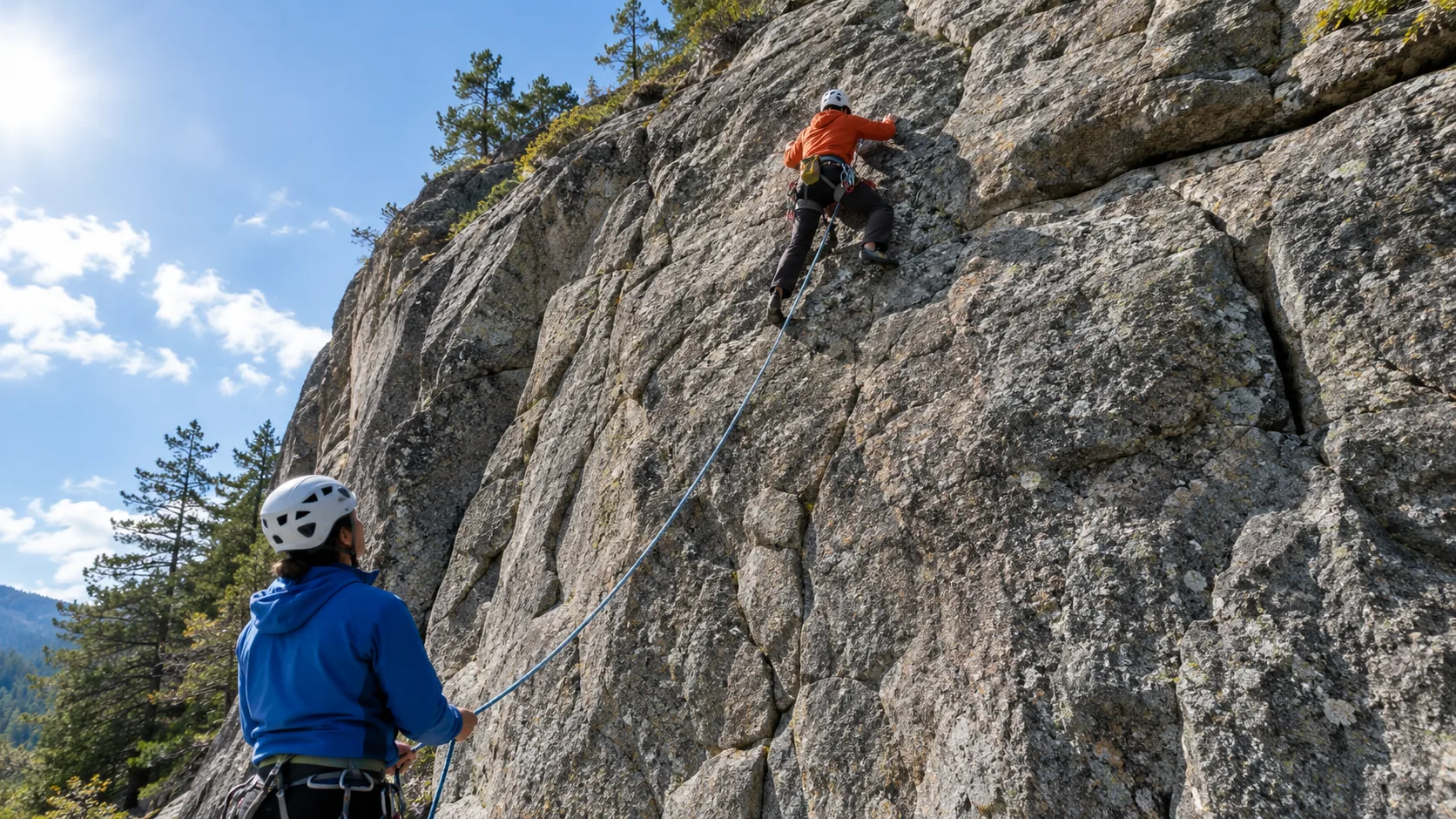
What is rock climbing? It is the sport of moving up rock, on a natural cliff or an artificial indoor wall, using your hands, feet and balance to follow a route. Some styles use a rope and a partner for protection, and others use only a crash pad and low walls.
You do not need a cliff nearby to start. You can begin at an indoor climbing gym, where staff explain the rules and may rent basic gear. This guide compares the four main styles, lists the gear each needs and lays out a first-month path.
What is rock climbing and how is it divided?
Every climb is a route or a problem: a line of holds or natural features that you use to reach a finish. Indoors, holds are bolted to the wall and often marked by color. Outdoors, you use ledges, edges, cracks and pockets in rock such as granite, sandstone or limestone.
Climbing is split by how you are protected in a fall. That one choice decides your gear, whether you need a partner and how much you must learn before the first outing.
Free climbing and aid climbing
In free climbing, you move up using only your hands and feet on the rock. The rope and gear are there for protection, not to pull you upward. Bouldering, top rope, sport and trad are all forms of free climbing.
In aid climbing, climbers pull or stand on gear to make upward progress. It is a separate skill set and not where beginners start.
Indoor and outdoor climbing
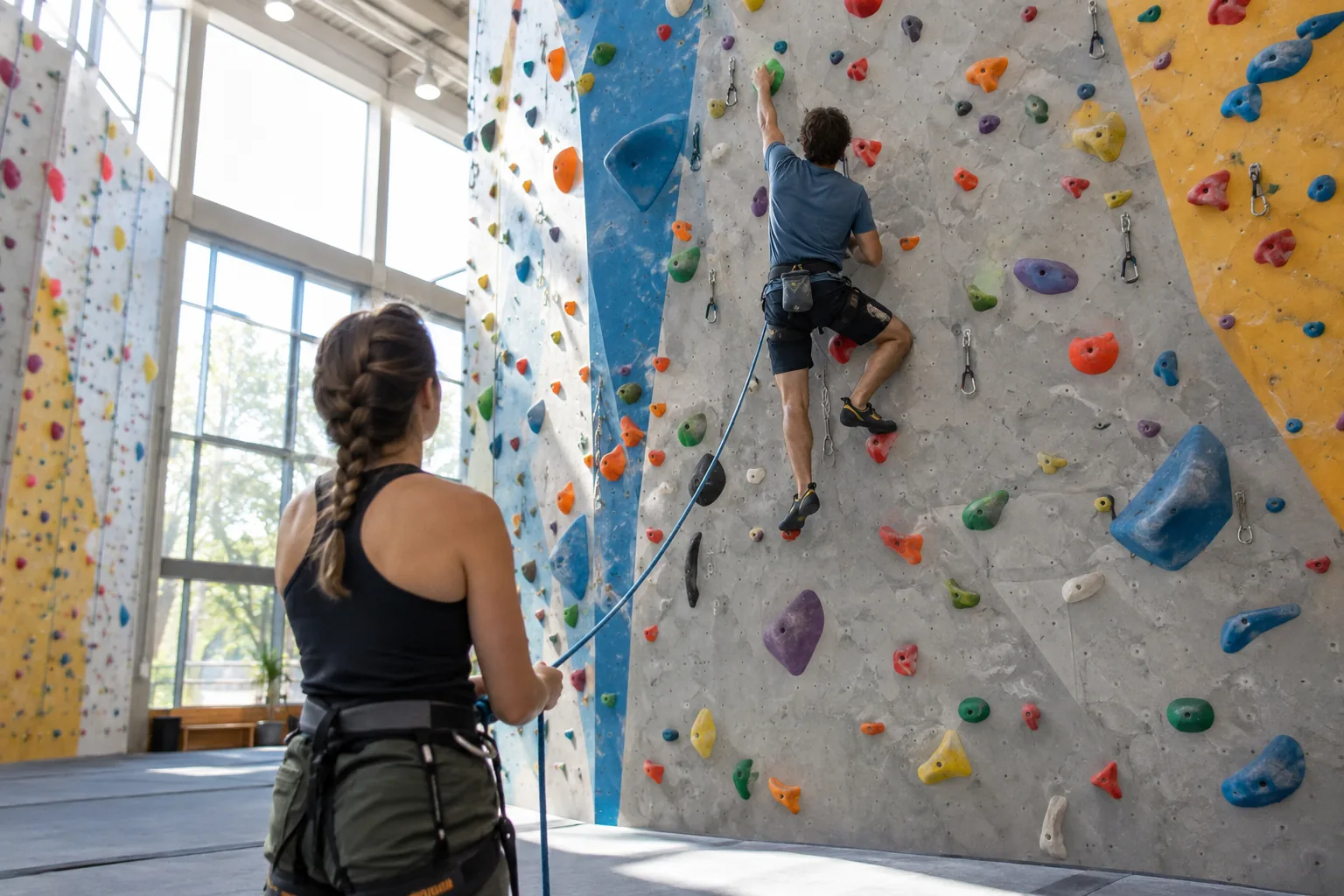
Indoor climbing walls give you marked routes, padded floors and staff. Outdoor climbing adds weather, approach hikes, rock that varies from crag to crag and a need for careful judgment. You can learn the movement indoors first, then move outside with an experienced partner or a guide service.
Climbing also includes competition formats and paraclimbing, where adaptive rules and equipment open the sport to climbers with different bodies and abilities. Both start from the same basics described here.
Bouldering, top rope, sport and trad compared
Use this table to see the gap between the four styles before you spend anything.
| Style | How it works | Gear needed | Entry cost | Partner needed |
|---|---|---|---|---|
| Bouldering | Short climbs near the ground, no rope, a pad below | Climbing shoes, chalk, a crash pad outdoors | Lowest | Helpful, not required indoors |
| Top rope | Rope runs through an anchor above you and back down to your belayer | Harness, shoes, belay device, locking carabiner | Moderate | Yes, to belay |
| Sport | You clip the rope into fixed bolts as you climb | Harness, shoes, rope, quickdraws, belay device, helmet | Higher | Yes |
| Trad | You place removable protection in cracks and build anchors | Sport gear plus a rack of removable protection and slings | Highest | Yes, experienced |
Check whether your gym rents shoes and harnesses; the entry cost in the table applies mostly to buying your own gear. Trad asks for the most learning, which is why it comes last in a sensible path.
Bouldering
Bouldering keeps you low, so the focus is on movement: balance, body position and short, hard sequences. Indoors, thick padding covers the floor. Outdoors, climbers carry a crash pad and a spotter helps direct a fall.
Place the pad under the likely landing zone, and learn spotting in a class before you rely on it.
Top rope
With top rope, the rope is already anchored above the route. Your belayer takes in slack as you climb. Some gyms start rope climbers here because the setup comes down to tying in and checking your partner.
Sport climbing
Sport routes have fixed bolts. You clip quickdraws to the bolts as you go, so you climb above your last clip. It adds rope handling and lead belaying, which a gym lead class teaches.
Trad climbing
Trad, or traditional climbing, has no fixed bolts. You place removable protection into cracks and remove it as the second climber follows. It rewards patience and skill with gear, so learn it from an experienced mentor or instructor.
Is rock climbing hard for beginners?
Climbing is physical, but the first sessions are about technique more than strength. Your feet carry much of the work, and learning to keep your arms straight and your hips close to the wall helps you use your legs. Beginner routes in a gym are set with large holds and clear lines.
Early challenges include forearm fatigue, fear of falling and learning rope skills. Short sessions and rest days between them let you build up gradually. If a route feels too difficult, pick an easier one and come back later.
Grades in plain terms
Routes carry a grade that describes difficulty. In the US, boulder problems use a V-scale starting at V0, and roped routes use the Yosemite Decimal System, where lower numbers such as 5.6 mark easier roped climbs. Grades vary between gyms and crags, so use them as a rough guide.
Rock climbing equipment: what you need first
At a gym, you can start with athletic clothes and rented shoes. Once you have tried rentals and know the fit you want, buy in this order: climbing shoes, chalk, a harness, then a belay device. Outdoors add a helmet, rope and quickdraws for sport, and a full rack for trad. Follow the manual for every piece and ask an instructor to check how you tie in.
Harness
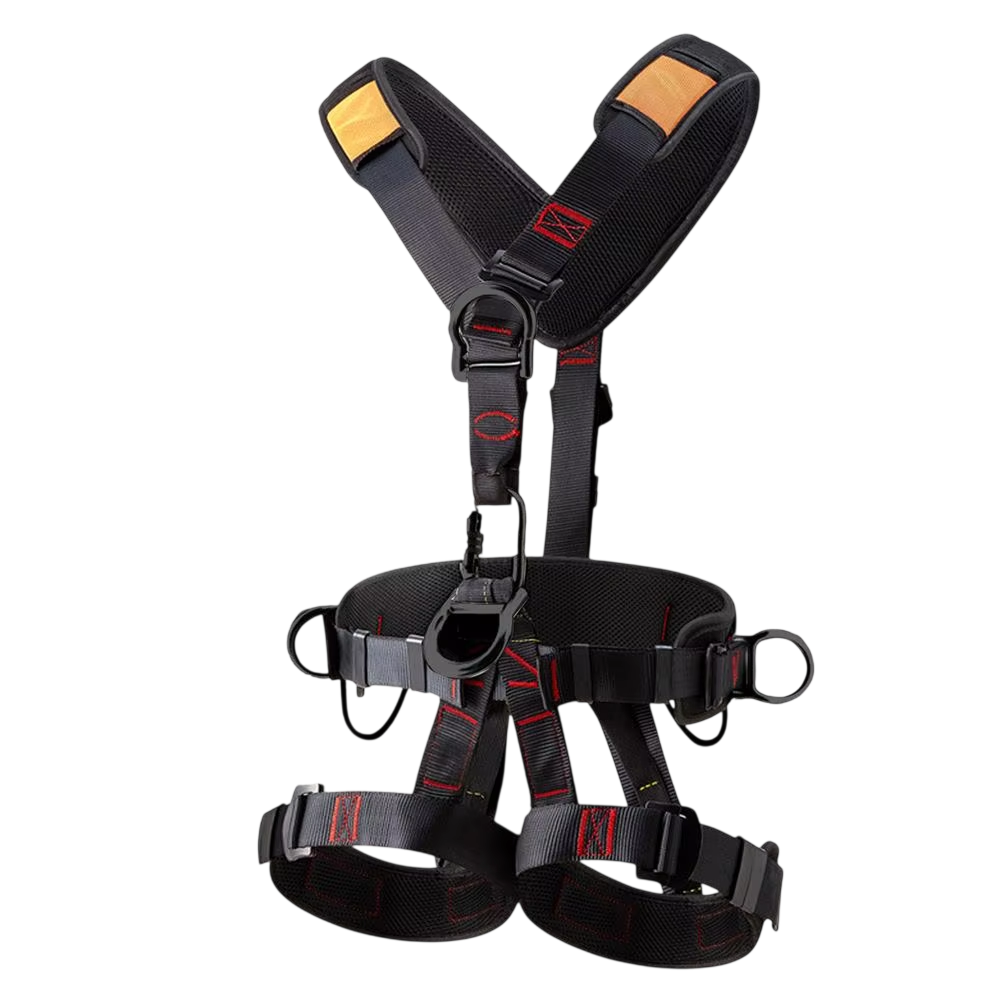
A harness is your connection to the rope for top rope, sport and trad. The AscendLock is a five-point climbing harness with adjustable waist and leg straps and forged alloy steel buckles. You step in, pull the straps snug and lock the buckles before clipping in. The waist adjusts from 80 to 150 cm (about 31.5 to 59 inches), so one harness can fit a group, and the webbing is polyester. Check webbing and stitching before every big climb, and hand wash and air dry after a trip.
 In this guideAscendLock$119.99View
Gloves
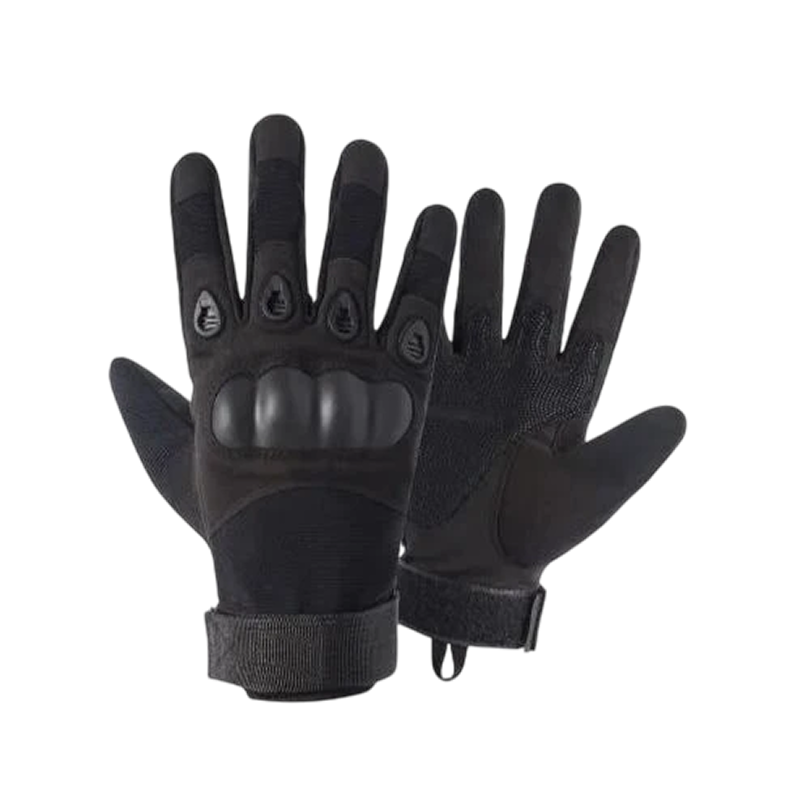
You can climb bare-handed in a gym, but gloves have a place in belaying, rope handling and crack climbing, where rock scrapes the backs of your hands. The BelayMitt has textured palm padding, reinforced panels at the knuckles and palm, and a stretch knit back. The fingertips are conductive, so you can use a phone with the gloves on. Hand wash cold and air dry away from heat.
 In this guideBelayMitt$69.99View
Pack and extras
Shoes, chalk, rope and layers add up on an outdoor day. Our article Backpack for Climbing: How to Choose a Crag or Alpine Pack explains what to look for in a pack that carries it. You can also browse the Climbing & Winter Sports collection for related gear.
Field note
Rope climbing relies on correct knots, belay technique and partner checks. Learn them in a class from a qualified instructor, follow each manufacturer's manual, and do a partner check before every climb.
Basic climbing techniques
Technique is the focus of early sessions. These are the moves you will hear named in a gym.
- Footwork: place your toes precisely on holds and stand on them rather than pulling with your arms.
- Body position and balance: keep your hips near the wall and shift your weight over the foot you are standing on.
- Edging and smearing: edging uses the side of your shoe on a small ledge, and smearing uses friction on a blank surface.
- Crimping and pinching: crimping grips a small edge with your fingertips, and pinching squeezes a hold between thumb and fingers.
- Jamming: used in crack climbing, where you wedge a hand, fist or foot into the crack.
- Laybacking, bridging and chimneying: body-tension moves for corners, edges and wide cracks.
You do not need to master these at once. Pick one per session and repeat easy routes while you practice it.
Outdoor basics
Outdoors, climbers follow local ethics: stay on marked trails, pack out trash and respect any seasonal closures posted by the land manager. Check the weather and the route description before you go, and tell someone your plan.
Your first month: a starter path
This path assumes a local climbing gym and a partner or classmate. Adjust the pace to your schedule.
- Week 1: Book an intro class. Rent shoes and a harness, learn the gym rules and spend the session on easy bouldering and an introduction to the wall.
- Week 2: Take a belay class and pass the gym's belay test if it has one. Climb top rope routes with a partner, and practice tying in and doing the partner check.
- Week 3: Visit twice. Alternate bouldering and top rope, work on footwork, and rest a day between sessions.
- Week 4: Decide on your style. If you enjoy ropes, buy a harness and shoes that fit. If you prefer problems, focus on shoes and chalk.
After the first month, ask about a lead climbing class for sport routes, or book a guided outdoor day. Wait on trad until you have a mentor. By then you will have a clearer sense of what climbing is for you: a movement puzzle, a social sport or a way to get outside.
Is rock climbing an expensive hobby?
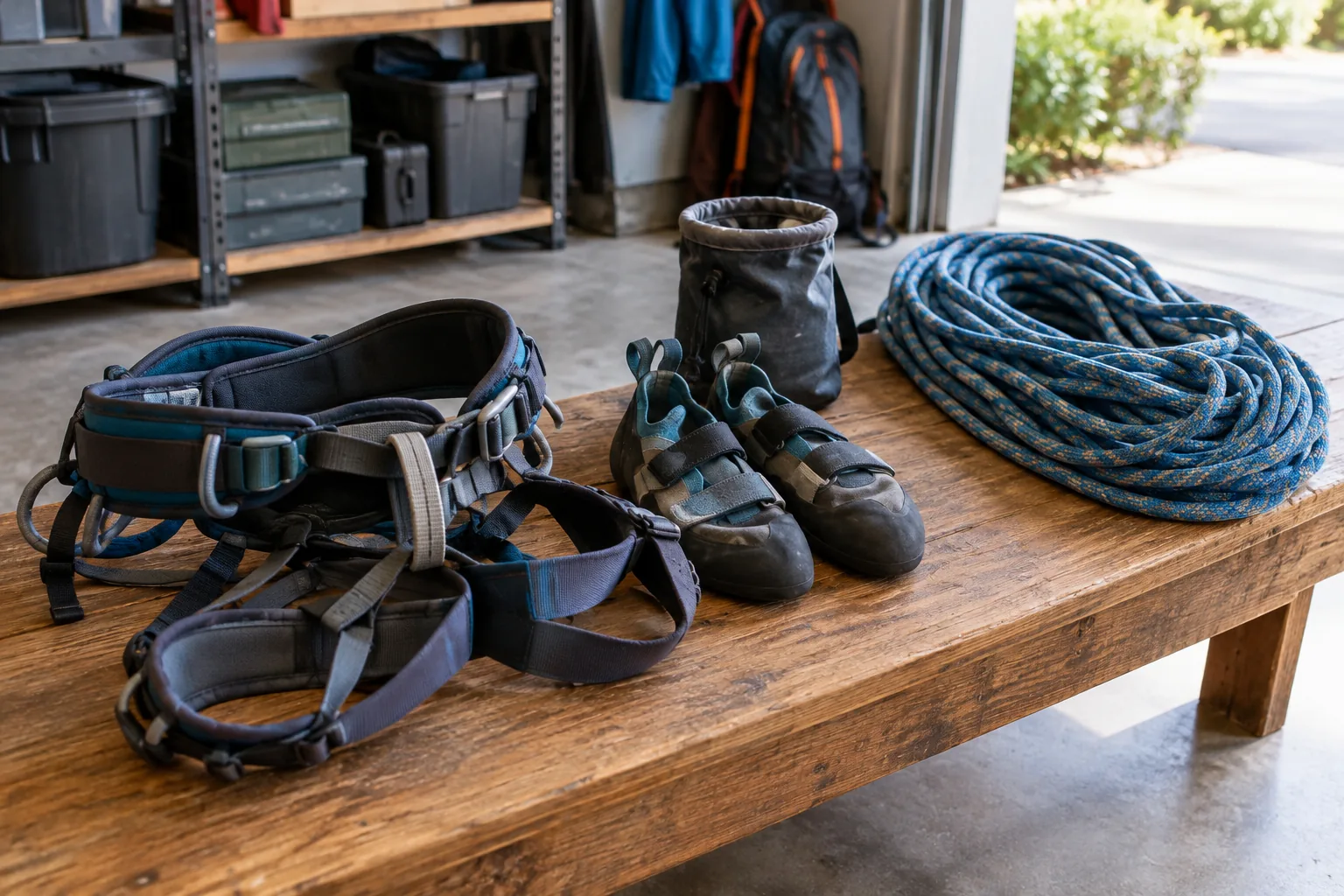
It can start modestly and grow. A gym membership or day pass plus rented gear covers the early weeks. Buying shoes, a harness and chalk comes next, and outdoor sport or trad adds rope, quickdraws and, for trad, a rack of removable protection.
Check what your gym rents and share group gear where you can. An adjustable harness, like one that fits a range of waist sizes, helps when a crew shares equipment.
Common beginner mistakes
- Skipping the partner check before leaving the ground.
- Pulling with your arms and ignoring your feet.
- Going outside before you can read a route and manage rope at the gym.
- Climbing on days when your fingers and forearms need rest.
- Buying shoes before trying rentals and getting a fitting, so you know the fit you want.
- Using worn gear. Inspect webbing, stitching and buckles before every outing.