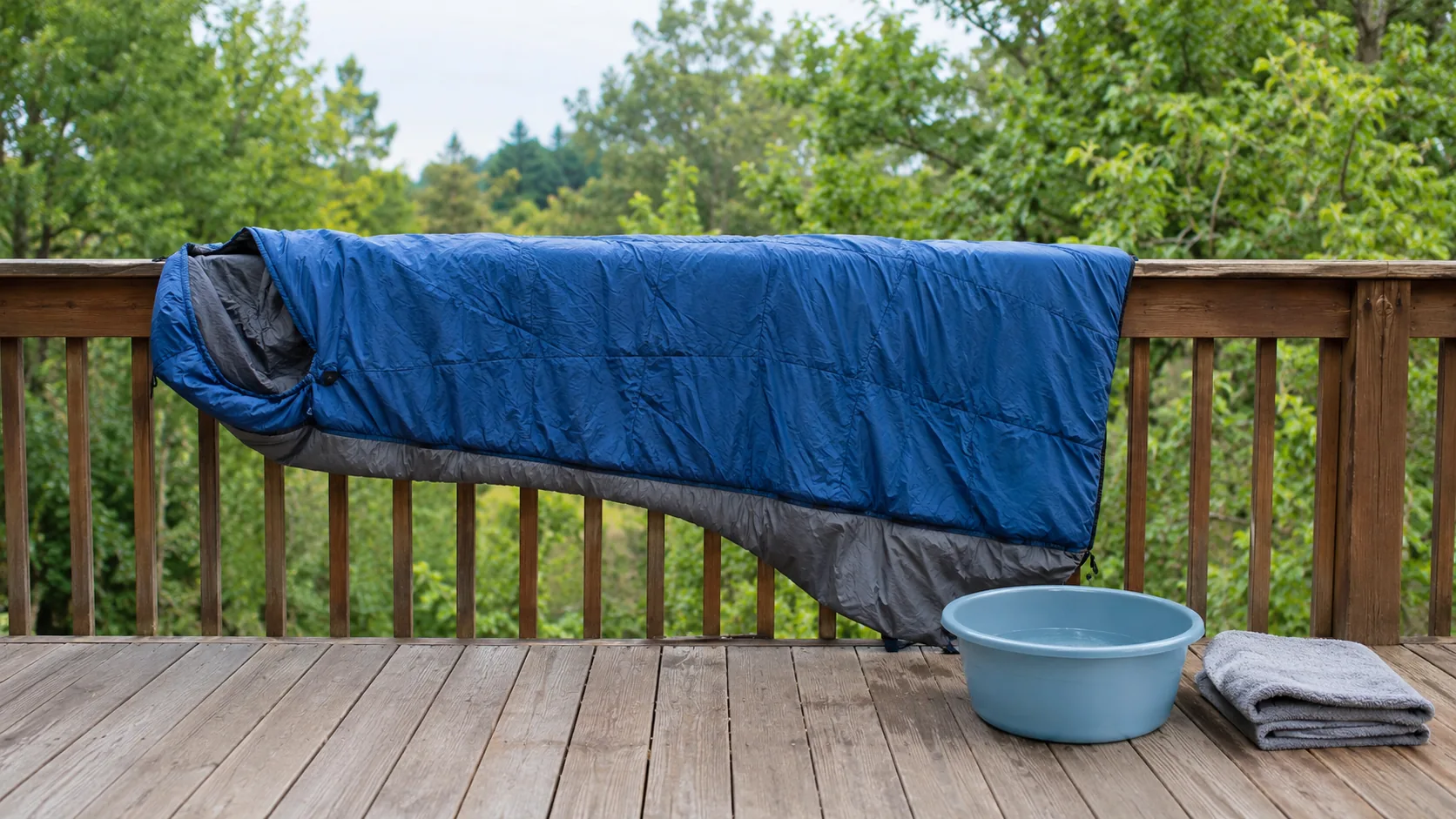
Camping Pillow Inflatable: Choose Size, Shape and Valve
Check packed size, weight, shape, valve, surface and how the pillow sits on your pad. This checklist helps you choose an inflatable camping pillow and set it up.
The Kesslund Team
November 22, 2026 · 7 min read

For a camping pillow inflatable, check six things in this order: packed size, weight, shape, valve, surface noise and how the pillow sits on your sleeping pad. A pillow that packs small but slides off the pad, or a valve you cannot adjust half asleep, is a poorer match than one that weighs a few extra ounces. This guide gives you a checklist to run on any pillow, plus the setup steps and care habits for it.
Inflatable pillows suit backpacking, bike trips and tent camping because they roll down small enough to fit in a pack pocket. If you camp from the car, you have room for a bulkier foam or fill-based pillow, and the decision changes. Below, you will see where each choice makes sense.
What to check before you buy a camping pillow inflatable
Run through the table first. It turns a long product page into six checks, and you can hold any pillow up against it.
| Check | What to look for | Why it matters |
|---|---|---|
| Packed size | Fits in a stuff sack or pouch that slips into a side pocket or the lid of your pack | Pack space is shared with your bag, pad and stove |
| Weight | Listed weight on the product page, with the pouch included or not | Compare like with like when you add up your base weight |
| Shape | Rectangular, contoured or tapered | Sets how your head and neck sit on the ground |
| Valve | Built-in, opens and closes with one hand | Lets you adjust firmness without letting out all the air |
| Surface and noise | Brushed, fabric-covered or bare plastic; press and shift on it to hear how much it crinkles | Sets the feel against your face and the sound when you turn |
| Pad pairing | Grippy backing or a width that matches your pad | Decides whether the pillow stays where you put it |
Packed size and weight
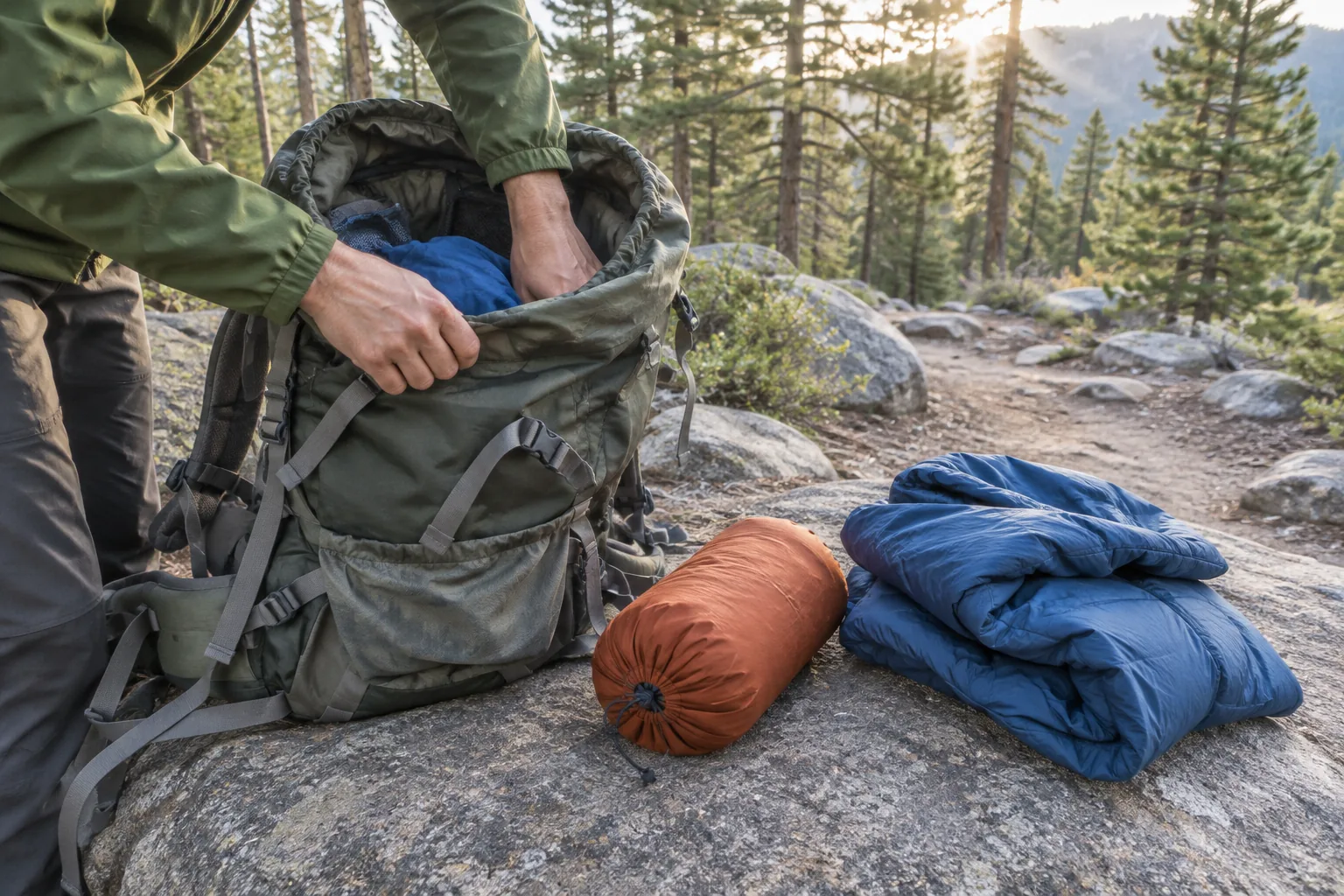
Look at the packed size before anything else. Many inflatable pillows ship with a small stuff sack or carry pouch, and that pouch tells you whether the pillow lives in a daypack pocket or needs its own spot. If the product page lists only the inflated dimensions, look for the packed figure in the specs or the photos.
Weight matters more the farther you carry the pillow. For short trips, a few extra ounces cost you little. For multi-day hikes, weigh the pillow with its pouch and add it to your gear list next to your pad and bag. Some campers skip a pillow and stuff a jacket into a fabric sack instead, which is fine if you want one less item.
Pack-size rule of thumb
Choose the pillow you will actually bring. A full-size pillow that stays at home because it feels bulky does nothing for you at camp. If you hesitate over pack space, pick the one that rolls smaller.
All-air, hybrid or foam: which build fits your trip
An all-air pillow has an air bladder and nothing else, so it rolls smallest and suits ultralight trips. A hybrid pairs an air bladder with a layer of synthetic fill or foam, which gives a fuller pillow shape and still packs into a small pouch. A pillow made only of foam or fill is bulkier and fits car camping, where pack space is not the limit.
| Build | Packs | Fits |
|---|---|---|
| All-air | Smallest | Ultralight backpacking, bike trips |
| Hybrid (air plus fill) | Small pouch | Backpacking, tent camping |
| Foam or fill only | Bulky | Car camping |
Shape and size: rectangle, contoured or tapered
A pillow on the ground sits lower than one on a bed, so shape does real work. Your sleeping position points you toward the right one.
- Back sleepers: a rectangular or lightly contoured pillow with a flat center.
- Side sleepers: a taller pillow with enough height to fill the gap between your shoulder and your ear.
- Stomach sleepers: a low profile, adjusted by letting some air out at the valve.
- Restless sleepers: a wider pillow, so your head stays on it when you turn.
A contoured shape has a dip in the middle and raised sides that cradle your head. A flat rectangle gives you a wider surface when you turn. Choose based on how you sleep at home.
The inflated size should also match your sleeping bag. A pillow wider than the hood of a mummy bag pushes against the fabric and can shift in the night. If your bag has a hood, try the fit before you leave.
Valve and inflation
The valve is the part you touch every day on the trail, so give it a close look. A built-in valve is attached to the pillow, so there is no separate plug to misplace. Look for one that opens and closes with a single hand, because you will often use it in the dark.
You can fill a pillow by mouth or with a pump or squeeze bag. Mouth inflation means no extra item in your pack. A pump adds a piece of gear, but suits you if you prefer not to blow up the pillow every night. Either way, add air slowly and stop short of fully firm, since a very tight pillow pushes your head up and away from the pad.
Try the firmness adjustment at the valve at home. Open it a little, let air out, close it, and see whether the pillow holds its shape. If air seeps out while you do this, choose a different pillow before you go.
Field note
Inflate the pillow at home once and leave it overnight on a table at a steady room temperature. If it feels softer in the morning, check the valve seat and seams before your trip; a cold room can also soften it.
Noise and surface fabric
Some inflatable pillows crinkle when you shift, because the outer film is stiff. Press and shift on the pillow to hear how much the surface crinkles. A brushed top layer or a fabric cover gives the surface a softer feel against your face, while bare plastic can feel clammy on a warm night.
If you do not like the surface on a pillow you already own, a spare pillow case or a clean shirt wrapped around it works. Pressing the pillow at home tells you more than the product photo.
Look at the underside as well. A smooth bottom slides across a smooth pad, and the pillow can end up under your shoulder by morning.
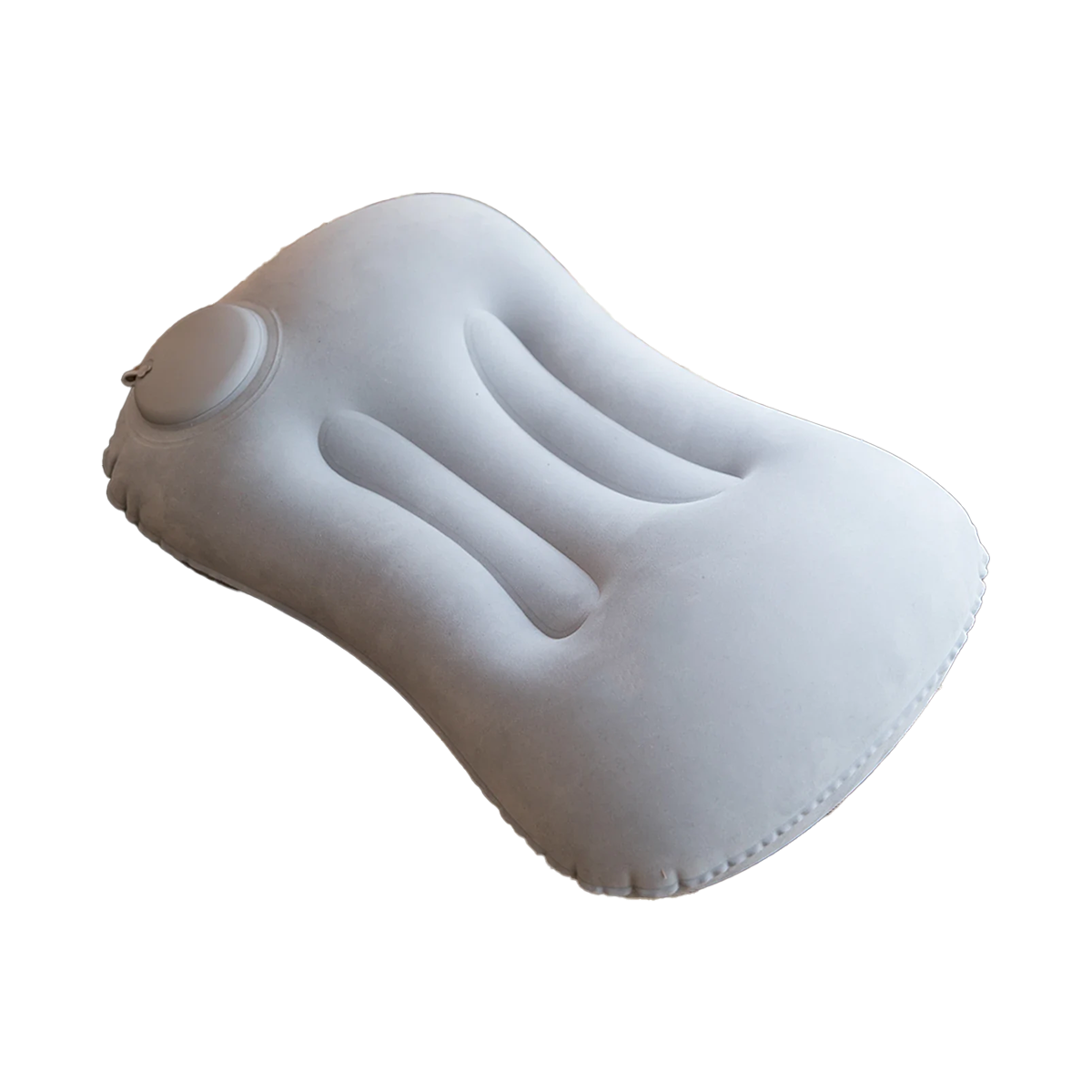 In this guideDriftPuff$49.99View
How the pillow pairs with your sleeping pad
A pillow and a sleeping pad work as one system. The pad sets the height of your body off the ground, and the pillow fills the gap between pad and head. A thick pad raises your shoulders, so side sleepers on a thick pad often need a taller pillow than they would on a thin foam mat.
Check three things when you pair them. First, grip: DriftPuff has a slip-resistant backing that helps it stay on your sleeping pad. Second, width: the pillow should sit entirely on the pad's top edge. Third, pad surface: slick pad fabric gives any pillow less to hold on to.
If you are also replacing the pad, a double format changes the layout. CloudDrift is a double inflatable camping sleeping pad, four inches thick, with a built-in foot pump. It weighs 3.3 lb and packs to 13.8x4.7 in. With two people on one pad, each person needs a pillow, and a grippy backing is useful on a wide surface.
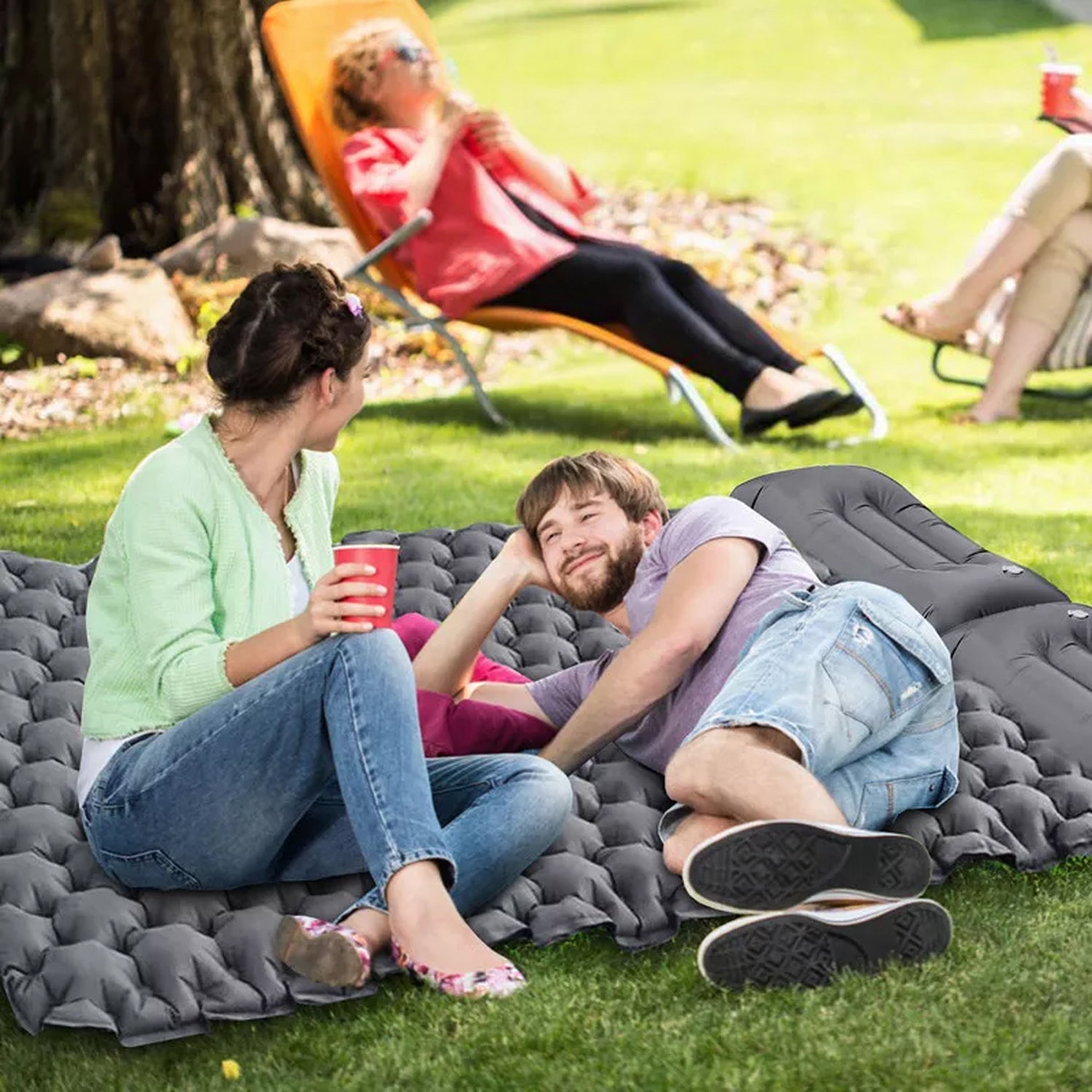 In this guideCloudDrift$119.99View
Common mistakes when choosing an inflatable pillow
- Buying only for packed size and ignoring shape, then sleeping with a flat pillow that leaves the neck at an angle.
- Overinflating the pillow, which pushes your head upward and makes it roll off.
- Skipping the valve check at home and finding a slow leak on the first night.
- Ignoring the pad underneath, so the pillow slides every time you turn.
- Packing the pillow with moisture from your breath still inside.
For more on building a sleeping setup, see our hammock camping guide, which covers setup, insulation and site checks. If you are packing for a road trip, the travel camping checklist lists what else to bring.

Setup and care checklist
- Unroll the pillow and open the valve.
- Inflate with breaths or a pump until the pillow holds your head level, then close the valve.
- Set it on the sleeping pad, with the grippy side down if it has one.
- Adjust at the valve: open it slightly to let air out until your neck sits level.
- In the morning, open the valve, press out the air and roll the pillow toward the valve into its pouch.
Between trips, wipe the surface with a damp cloth and mild soap, and let it air dry fully with the valve open. Store it loosely rolled or lightly inflated, away from sharp objects, rather than tightly folded in the pouch. Follow the care instructions that come with your pillow.
To pull together a full sleeping setup, browse the Tents, Shelter & Camp Comfort collection for pads and other camp comfort gear. For any camping pillow inflatable, settle the pad and bag first, then run the six checks above to match the pillow to them.