Travel Camping: A Road Trip Plan and Packing Checklist
Travel camping works when each day's drive leaves you daylight on arrival. Use the 3-3-3 rule, a site checklist and a packing table to plan it.
The Kesslund Team
October 23, 2026 · 7 min read
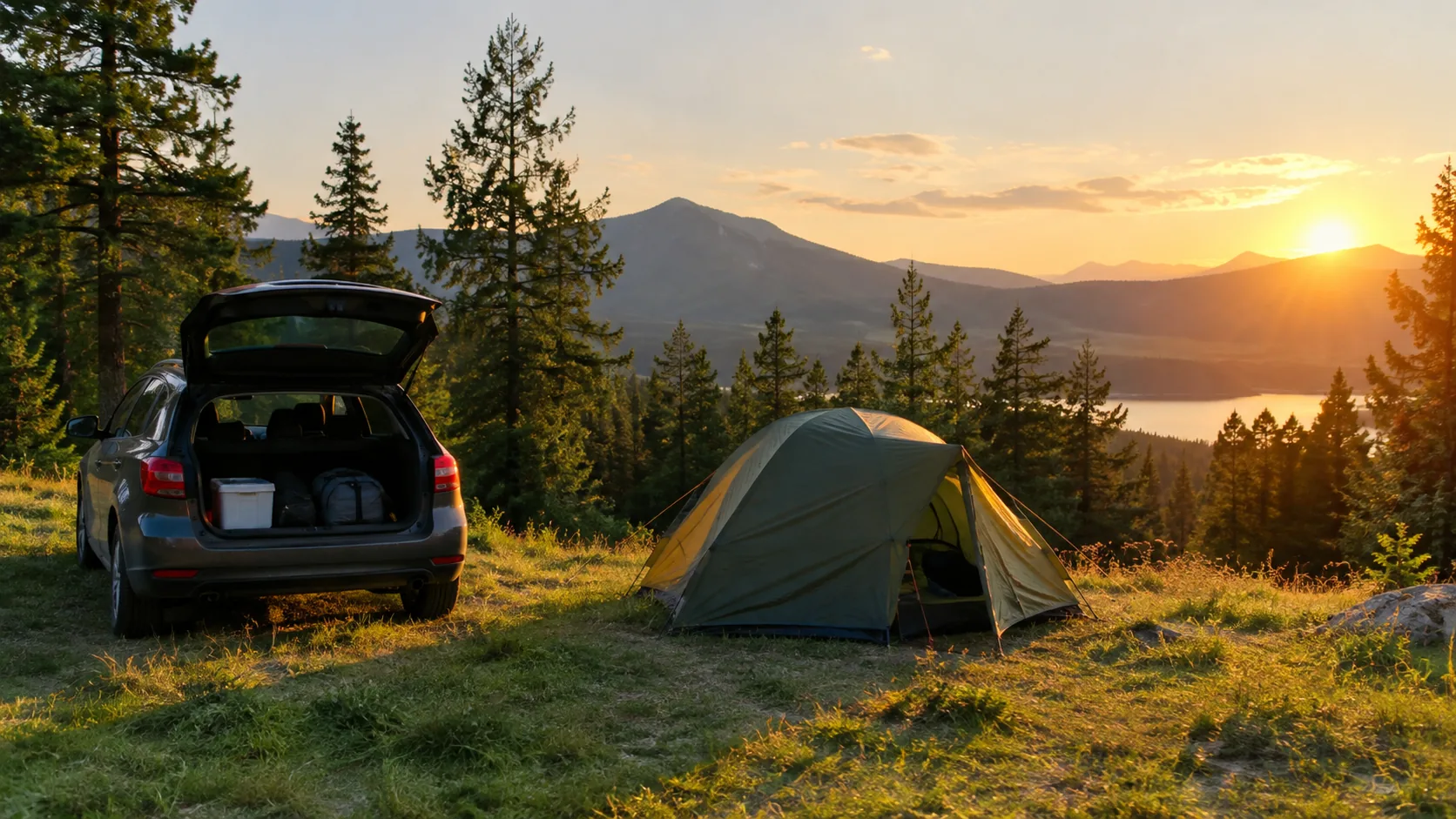
Travel camping is camping while you move: a string of campsites along a route, with gear that has to pack, unpack and repack every day or two. The pacing rule that keeps it workable is 3-3-3, one version of which is about 300 miles of driving, arrival by 3 p.m., and 3 nights at each stop. Use the rules, site checklist and packing table below to plan the route and the gear together.
Some trip plans cover only booking. This guide also covers what happens at each stop: how you arrive, what comes out of the vehicle, and how you break camp.
Travel camping rules: 3-3-3, 200 and 4-4-4
These are rules of thumb, and the wording differs from one source to the next. Pick one version, write it at the top of your plan, and adjust it for your vehicle, your group and the terrain.
| Rule | One version of it | Where it fits |
|---|---|---|
| 3-3-3 | Drive about 300 miles, arrive by 3 p.m., stay 3 nights | Road trips with a new site every few days |
| 200 rule | Camp, cook and use the toilet at least 200 feet (about 60 m) from lakes and streams | Any site near water; check the local rules, which may set a different distance |
| 2-2-2 | Drive about 200 miles, arrive by 2 p.m., stay 2 nights | Trips where you want short drives and time to set up |
| 4-4-4 | Drive about 400 miles, arrive by 4 p.m., stay 4 nights | Longer trips with fewer moves and more time at each site |
In camping, the 200 rule usually means the 200-foot distance from water. The 200-mile driving version is a second meaning, and it belongs to the 2-2-2 pacing rule.
The common thread in the driving rules is arriving with daylight left. Setting up a tent, finding the water source and reading the site rules all go with light to see by. If the drive runs long, pick a closer fallback campground in advance.
Plan the route and choose your campsites
Start with a map, not a booking page. Mark the days, then look for campgrounds within your daily mileage limit. For travel camping, state parks and national parks are the obvious starting points, and some campgrounds require reservations through an online recreation portal, so check booking windows early.
Mix site types
You do not need the same kind of site every night. Use a reserved campground on days with a fixed arrival, a first-come site when your schedule is loose, and a cabin when the forecast turns bad. Some trips also include dispersed camping on public land, which has no hookups and few facilities, so bring water and a plan for waste.
Where is the cheapest place to camp?
Dispersed sites on public land can be free where the land manager allows it, and a free campground app can show where they are. Rules differ by area, with stay limits and fire restrictions, so read the local page before you drive out. Developed campgrounds list their campsite fees, which vary by park and season.
Save offline maps before you leave. Cell service drops out in some of the places worth camping, and a saved map helps at a forest road junction.
Site checklist before you book or arrive
- Check-in and check-out times match your driving plan.
- The site type fits your setup: tent pad, vehicle spur, group area or cabin.
- Water, restrooms and trash service are listed, or you have a plan to carry your own.
- Fire rings are present, and any fire restrictions are posted for the dates you are there.
- Quiet hours and stay limits are written down.
- Food storage rules are clear, including bear boxes or vehicle storage where required.
- A backup site is saved on your offline map.
Print this list or save it to your phone, and tick it off at each stop before you drive to the site.
Shelter that suits a new site every night
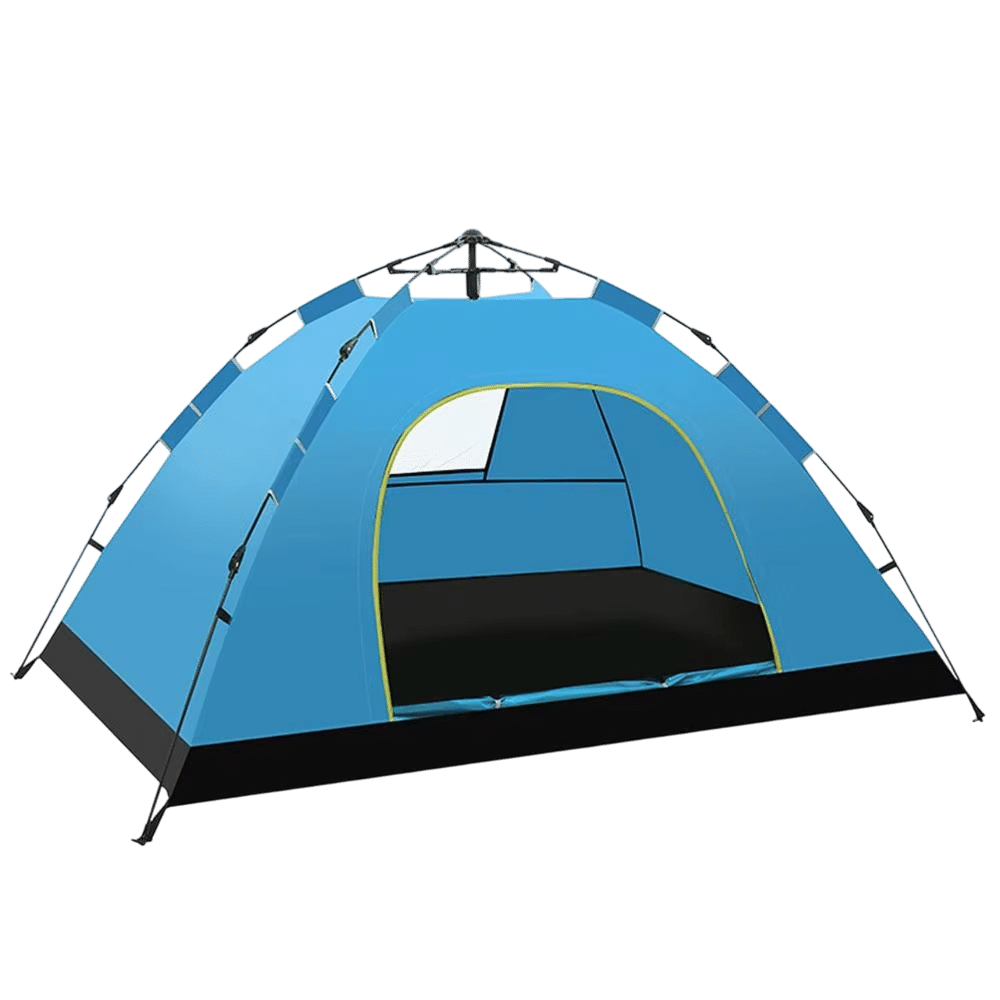
When you move often, the tent matters as much as the route. Poles to thread, long stake lists and a bulky bag all add up across several mornings of packing. A pop-up tent has the frame built into the shell, so there are no poles to thread.
SwiftPitch is a pop-up camping tent with a self-expanding frame, so it needs no assembled poles. Release the strap and the frame opens into its shape, much like an umbrella opening. Then stake the corners, attach the guy lines and unzip the doors.
It has two doors with mesh panels, taped seams on the shell, and it comes with ground stakes, guy lines and a carry bag. It weighs under 2 kg (under 4.4 lb) and fits in a pannier, a pack or a trunk. To compare other shelters, browse tents, shelter and camp comfort.
 In this guideSwiftPitch$198.99View
Gear checklist for a road trip
Group the gear by job, and pack each group in its own bin or bag. When you arrive, you know which container holds the kitchen and which one holds the bedding.
| Zone | Pack | Note |
|---|---|---|
| Shelter | Tent, stakes, guy lines, ground cloth, mallet | Keep stakes in the tent bag so they are not left behind |
| Sleep | Sleeping bags, pads, pillows, one extra blanket | Match the bag to the coldest night on your route |
| Kitchen | Camp stove, fuel, lighter, pot, pan, utensils, cooler, water jug | Check fire restrictions to decide between campfire and stove |
| Light and tools | Headlamps, lantern, spare batteries, knife, duct tape | Keep one headlamp in the cab |
| Clothing | Layers, rain jacket, camp shoes, hat | Pack by day count, then wash midway |
| Navigation | Offline maps, paper map, charger, power bank | Save the backup site on every map |
| Hygiene | Toilet paper, hand soap, trowel or portable toilet, trash bags | Use them at least 200 feet from lakes and streams, and follow leave no trace practices at every stop |
For food storage and keeping drinks cold on multi-day drives, read what a soft sided cooler is and when to pick one over a hard cooler.
Day packs and bathroom setup
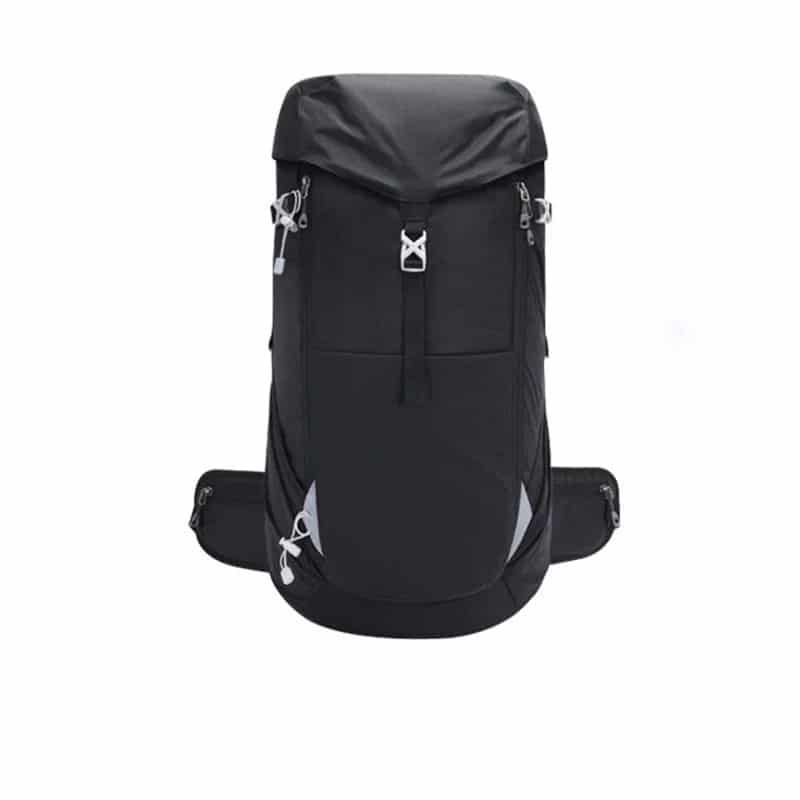
A road trip means day hikes from the campsite, and you may not want to carry a full pack on each one. SummitPack is a packable camping backpack that stuffs into its own back-panel pocket, so it can ride inside a larger bag until you reach camp. Once open, it has padded chest and shoulder straps that you can adjust after loading, plus side and chest pockets for a phone, map, water bottle and snacks.
 In this guideSummitPack$89.99View
To compare more options, browse backpacks and hydration. If you are sizing a day pack, this guide to day hiking backpack size, fit and features walks through the choices.
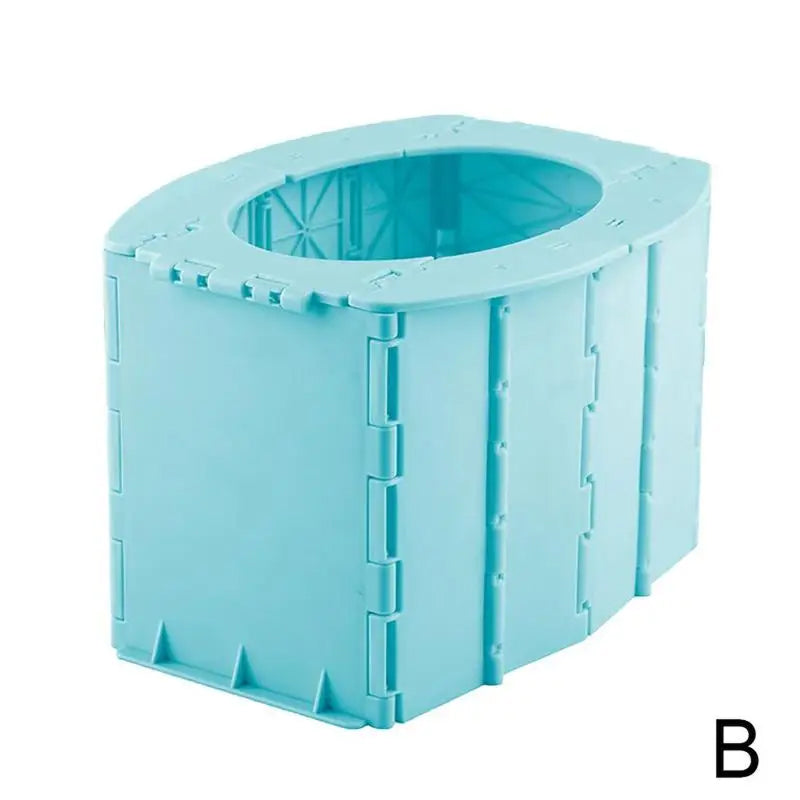
Bathrooms are the other gap. Dispersed sites and some remote campgrounds have none, and you may camp in a van where a restroom is far away. CampRelief Pro is a folding bucket toilet that ships flat and opens into a pop-up reinforced PVC frame with a stated weight capacity of 380 lbs. It takes standard 5-gallon waste bag liners, and you can add pine pellets or gel as an absorbent, bought separately.
 In this guideCampRelief Pro$49.99View
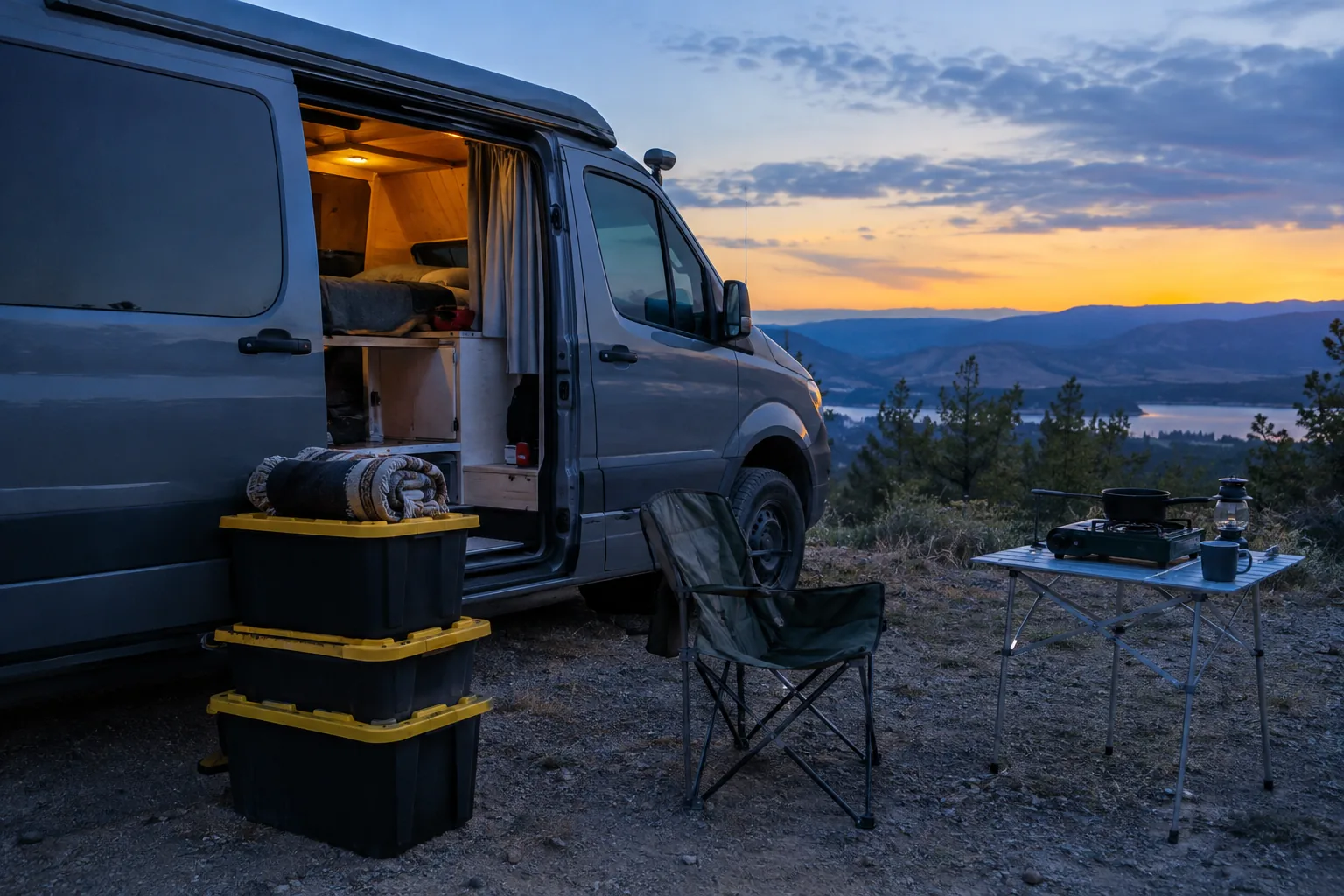
Arrival and departure routine
A fixed order means you do not rebuild the plan every day. Run the same sequence at each site.
- Walk the site before parking and look for low spots, dead branches and a level surface for the tent.
- Pitch the shelter first, while there is light.
- Set up the kitchen and bathroom zones away from where you sleep, and at least 200 feet (about 60 m) from lakes and streams unless local rules say otherwise.
- Store food as the site rules say.
- Before leaving, sweep the site, check the ground for stakes and trash, and make sure any fire is fully out and cool, following the park's rules.
Dry the tent when you can. If you pack it damp, open it at the next stop before it sits closed for days.
Field note
Keep a "first night" bag: headlamp, toilet paper, water, a snack and a warm layer. If you arrive late, you can set up the basics without unpacking the whole vehicle.
Common mistakes on a camping road trip
- Booking every night in advance with no slack for weather or road delays.
- Driving past the arrival time because the next scenic view was close by.
- Packing in one big pile rather than by zone.
- Skipping the site rules for fires, food storage and quiet hours.
- Leaving offline maps until the last stop with cell service.
Fix these on paper before you leave, and travel camping runs on a plan. Think of the travel camp as a moving home base: route, site, shelter, kitchen and bathroom, packed so each piece comes out in order.