Hammock Camping: Setup, Insulation and Site Checklist
Hammock camping comes down to site, hang angle, tree straps, and insulation below you. Use this checklist to set up, stay warm, and follow Leave No Trace rules.
The Kesslund Team
October 24, 2026 · 6 min read
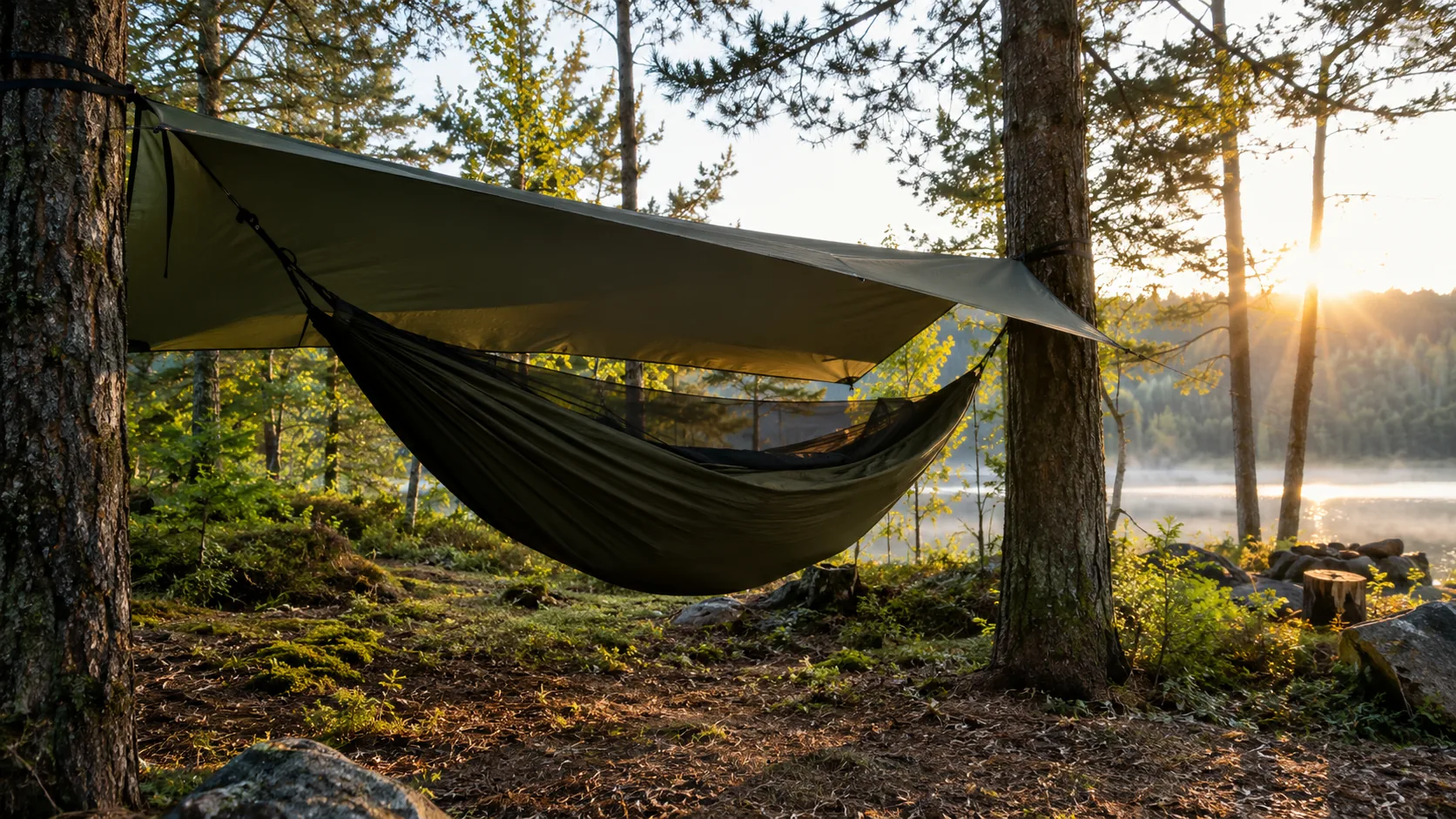
Hammock camping means hanging a fabric bed between two anchor points, then adding a tarp overhead and insulation underneath. To set it up, pick two sturdy trees about 12 to 15 feet apart, wrap tree straps around them at about head height, and adjust until the sag is at about a 30 degree angle. Add an underquilt or pad for warmth, and follow Leave No Trace rules at the site.
This checklist walks through the site, the hang, the insulation, and the cleanup, in the order you do them at camp.
Hammock camping gear checklist
A hammock setup has four layers: the bed, the suspension, the cover, and the insulation. If one is missing, the first night is where you find out.
- Hammock body with a suspension system (straps and carabiners or similar)
- Rain tarp with guylines and stakes
- Underquilt or sleeping pad for the cold side
- Top quilt or sleeping bag
- Insect netting if bugs are active where you camp
- Small repair kit and a spare length of cord
If you are building a full kit for the first time, browse the Tents, Shelter & Camp Comfort collection for the shelter side of the list.
Choose the site before you unpack
A hammock needs two anchors, so the site decides everything else. Walk the area first and look up as well as down.
Check the trees
- Pick living trees that are thick and healthy, not thin saplings.
- Look overhead for dead branches, often called widowmakers, and move if you see any.
- Skip trees that lean in an unstable way, and skip dry creek beds or low spots where water collects.
- Leave open space around the hang so a falling branch or a gust of wind does not reach you.
Check the rules
Rules for hammocks differ by land manager. Some national parks and campgrounds limit where you can hang, require wide straps that spare bark, or ask you to use designated sites only. Check the park or forest website, or ask a ranger, before you go.
Some areas need a permit, and some dispersed areas do not. Confirm this for the exact place you plan to camp, since neighboring areas can have different rules.
How to hang a camping hammock
Hanging comes down to spacing, height, and angle. Pulling the hammock too tight stresses the suspension and leaves the fabric flat, so leave some sag.
- Pick two trees roughly 12 to 15 feet apart, closer for a short hammock and wider for a long one.
- Wrap each tree strap around the trunk at about head height, so the hammock hangs near sitting height once weighted.
- Clip the carabiners to the straps and to the hammock ends.
- Adjust until the hammock body sags at about a 30 degree angle between the suspension and a horizontal line.
- Sit in it first, then lie back and check the height; your bottom should clear the ground by about a foot.
- Pitch the tarp over the ridgeline last, and stake the corners.
Follow the instructions that come with your own suspension, and inspect the straps and carabiners for wear before each trip.
Lie across, not along
Lie on a slight diagonal instead of straight down the middle, with the ends of the hammock a little higher than the middle. Try a few angles in the backyard to find the one that suits you.
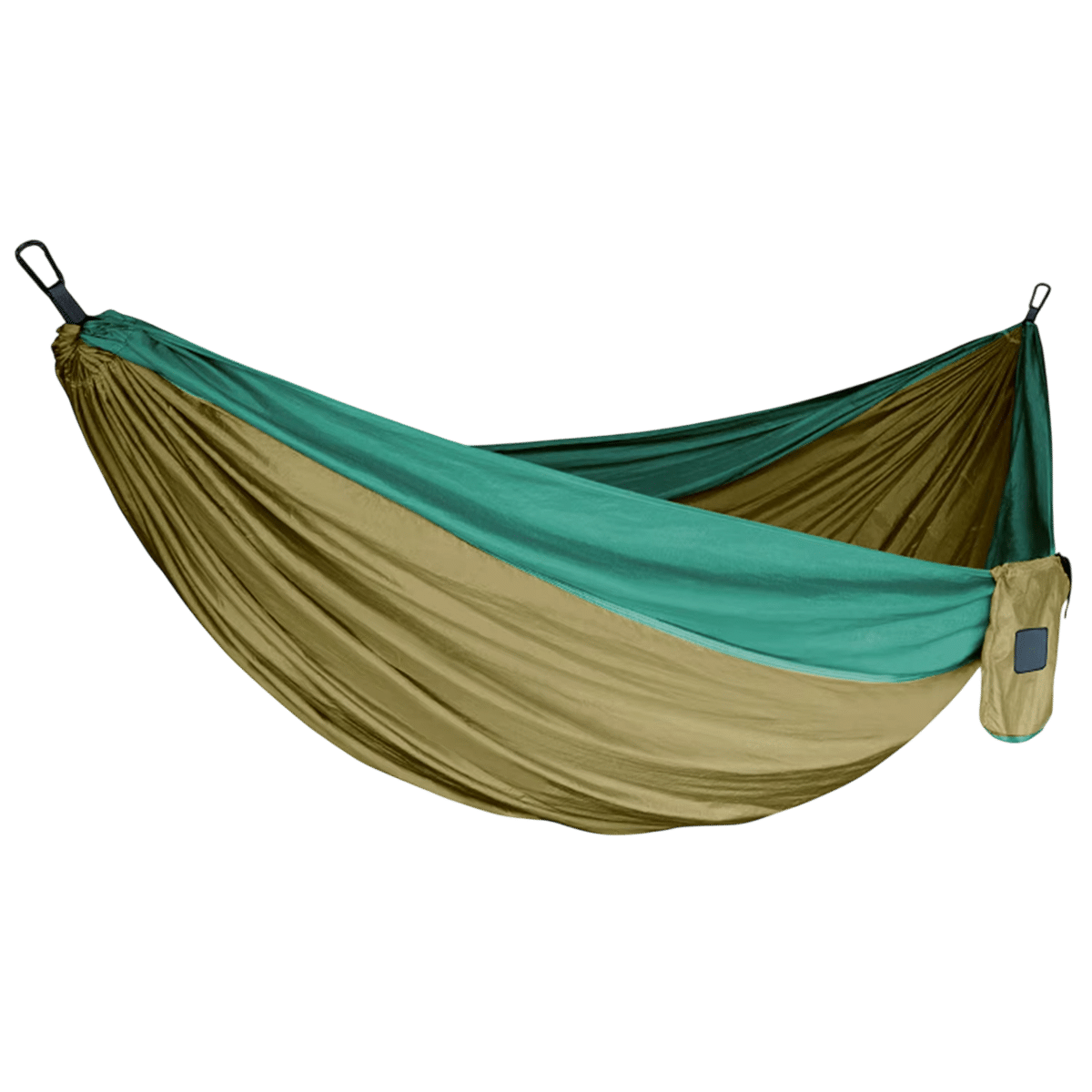 In this guideCanopyDrift$89.99View
A hammock built for the trail
CanopyDrift is a camping hammock cut from 210T parachute nylon. Its listed total weight is 600 grams (about 1.3 lb), and the weight capacity is 500 lbs. A double size is also offered with the same stated capacity as the single.
The box includes two 200cm (about 6.6 ft) adjustable straps and two black carabiners, plus a compact carrying pouch. You loop the straps around two trees or sturdy anchor points, clip in, and no poles or other tools are needed. Pack everything back into the pouch when you break camp.
For a first trip, CanopyDrift covers the bed and suspension. You still add a tarp and insulation, covered below.
Insulation: the underquilt and the cold-bottom problem
Warmth is the surprise in camping in a hammock. Your weight compresses the insulation of a sleeping bag beneath you, and air moving under the hammock pulls heat away, so a bag alone leaves your underside exposed even on mild nights.
Add insulation under the hammock, not more on top. An underquilt hangs outside the hammock, while a pad sits inside it. You have these choices:
| Option | How it works | Points to consider |
|---|---|---|
| Underquilt | Hangs beneath the hammock and holds loft against the underside | Adjust it to hang snug against the fabric; adds pack volume |
| Sleeping pad | Sits inside the hammock between you and the fabric | Can shift during the night; check that its shape fits the hammock |
| Top quilt | Covers the top half | Pairs with either option above |
Try your insulation at home or in the backyard before a long trip. Match the quilt or pad to the lowest night temperature you expect, and carry a spare layer for the first cold night.
Cover and airflow
A rain tarp should extend past both ends of the hammock and pitch low enough to block wind-driven rain. Keep guylines clear of walking paths so nobody trips in the dark. If bugs are active, add netting that closes around the body of the hammock.
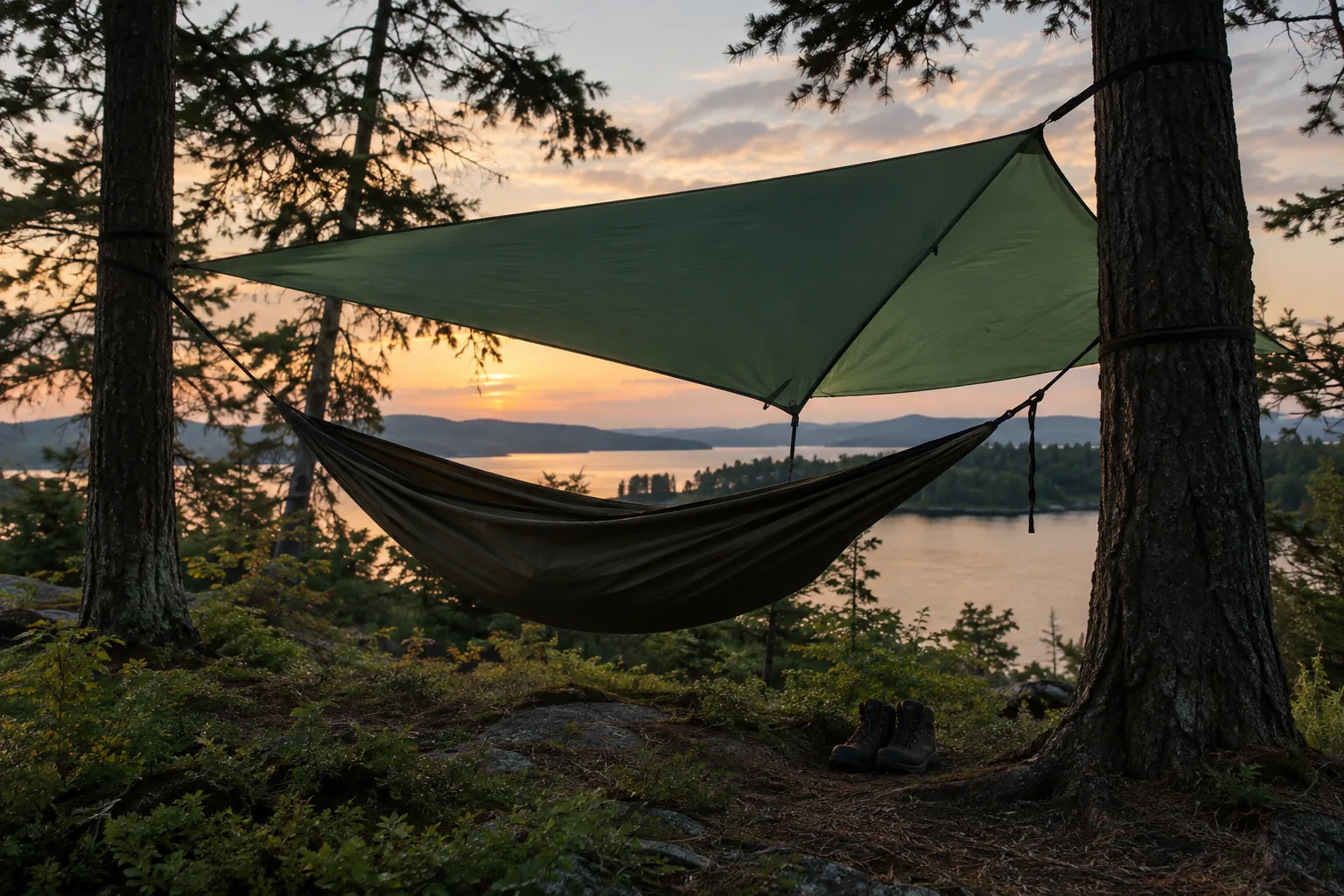
Field note
Hang the hammock first, then lie in it and look at the tarp. If you can see the sky past the edge of the tarp, lower or widen the pitch before dark.
Leave No Trace site rules for a hammock camp
A hammock site has no tent pad to flatten, but the trees carry the load. Stay on durable ground and follow a few habits to keep the site in good shape for the next camper.
- Use wide tree straps so the bark is not cut, and do not use thin rope or wire directly on a trunk.
- Do not tie off to young trees, shrubs, or exposed roots.
- Walk around the hang on existing sites, rock, gravel, or dry grass.
- Pack out all trash, including food scraps and tape.
- Store food away from the sleeping area, using the method the local rules ask for.
- Check for fire restrictions before lighting anything, and keep fires in existing rings only where allowed.
- Remove stakes and cord when you break camp, and leave the site as you found it.
If you carry water for the trip, see Water Bladder Packs for choosing and cleaning a reservoir. For wider trip planning, Travel Camping has a road-trip plan and packing list.
Common mistakes to avoid
| Mistake | What to do instead |
|---|---|
| Hanging the hammock too tight | Aim for a sag of about 30 degrees |
| Using only a sleeping bag for warmth | Add an underquilt or pad |
| Hanging under dead branches | Look up before you hang |
| Hanging too high off the ground | Keep the sitting height low enough to step out |
| Skipping a trial run | Practice in the yard first |
Whether you are sleeping in a hammock for one night or several, the first night shows what to adjust. Change one thing at a time: hang angle first, then insulation, then the tarp.
Pre-trip and breakdown checklist
- Check the land manager's rules and any permit needs.
- Inspect straps, carabiners, and stitching.
- Pick the trees and look overhead.
- Hang the hammock, set the sag, and sit in it before you commit.
- Pitch the tarp, add insulation, and stow your gear off the ground.
- In the morning, shake out the fabric, let it dry if damp, and pack it into its pouch.
- Walk the site once more for trash and loose cord.
Use this pre-trip sequence for a first outing, and adjust it as your kit changes.