What Is Hiking? Hiking vs Trekking and What You Need to Start
Hiking is walking on trails or natural terrain, usually as a day outing. Learn how it differs from walking, trekking and backpacking, and what to pack for a first hike.
The Kesslund Team
November 20, 2026 · 6 min read
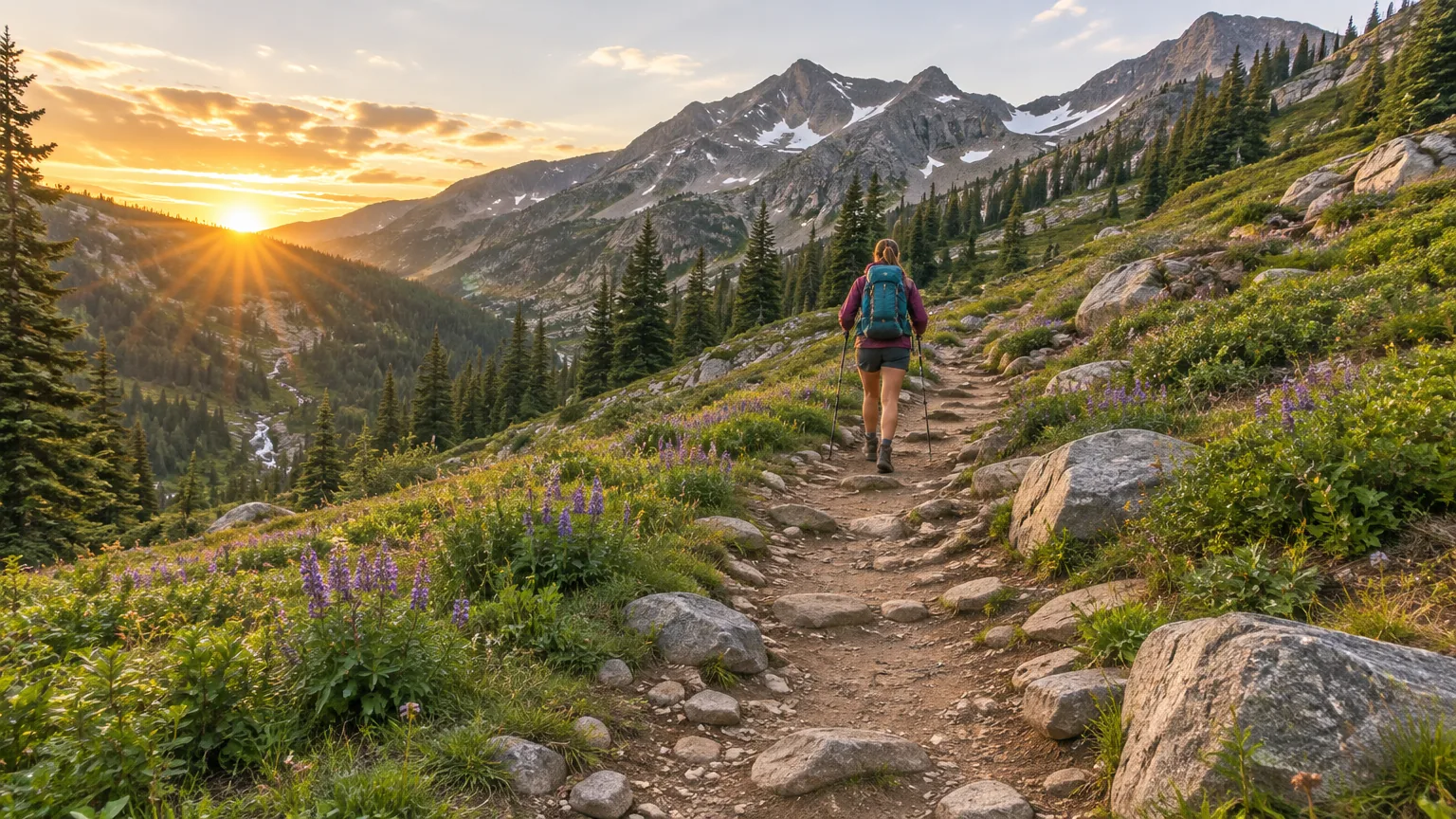
What is hiking? Hiking is walking on trails or natural terrain for the purpose of being outdoors, covering a route that can be a short loop or a full day on the trail. It differs from a neighborhood walk because the surface is uneven, the route follows a trail, and you carry what you need.
This guide defines hiking against walking, trekking and backpacking, explains what qualifies as a hike, and ends with a minimal gear checklist for your first trip.
What is hiking, and what qualifies as a hike?
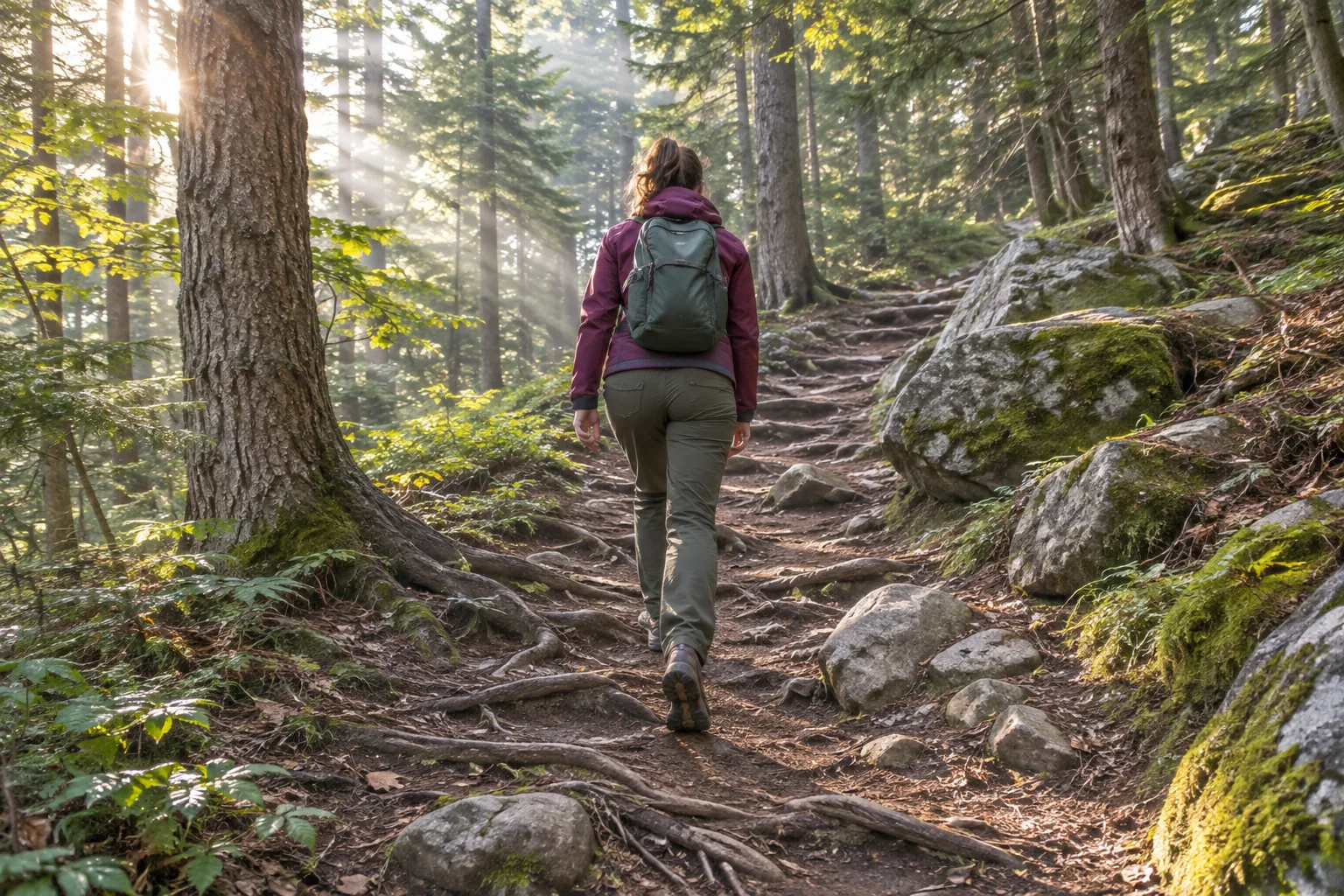
The common definition has three parts: you travel on foot, you are on a trail or in a natural setting, and the route has some terrain to it. Dirt paths, tree roots, rocks, stream crossings and climbs all count. A paved sidewalk through a city park usually does not.
There is no official minimum distance. A short loop to a lake and a long ridge route are both hikes, because the natural terrain defines the activity, not the mileage. If you need to check the route on a map, watch your footing and bring water, you are hiking.
In Spanish, hiking is commonly called senderismo. In school settings, such as physical education, it is taught as an outdoor walking activity that builds trail skills and route planning.
Hiking vs walking, trekking and backpacking
The four terms overlap, and different regions use them differently. In the US, "hiking" often covers everything from a short trail walk to a multi-day trip. The table shows how the terms are generally used.
| Activity | Where | Length of outing | Gear carried |
|---|---|---|---|
| Walking | Sidewalks, paths, parks | Any | Phone, maybe water |
| Hiking | Marked trails, natural terrain | A few hours to a full day | Daypack, water, snacks, layers |
| Trekking | Remote or mountainous routes | Several days | Larger pack, shelter or lodging plan, food |
| Backpacking | Trails and backcountry | One night or more | Sleeping system, stove, food, full pack |
What is the difference between trekking and hiking?
Hiking is usually a day outing that starts and ends at the same place. Trekking is a longer journey over several days, often through remote terrain, where you move from one camp or lodge to the next. Trekking needs more planning for food, water and weather, and a larger pack.
Hiking vs walking
Walking is defined by the surface and the setting: flat, maintained and close to services. Hiking adds uneven ground, elevation change and a route you follow with some preparation. Footwear with grip and a map or navigation tool mark the shift from a walk to a hike.
Hiking vs backpacking
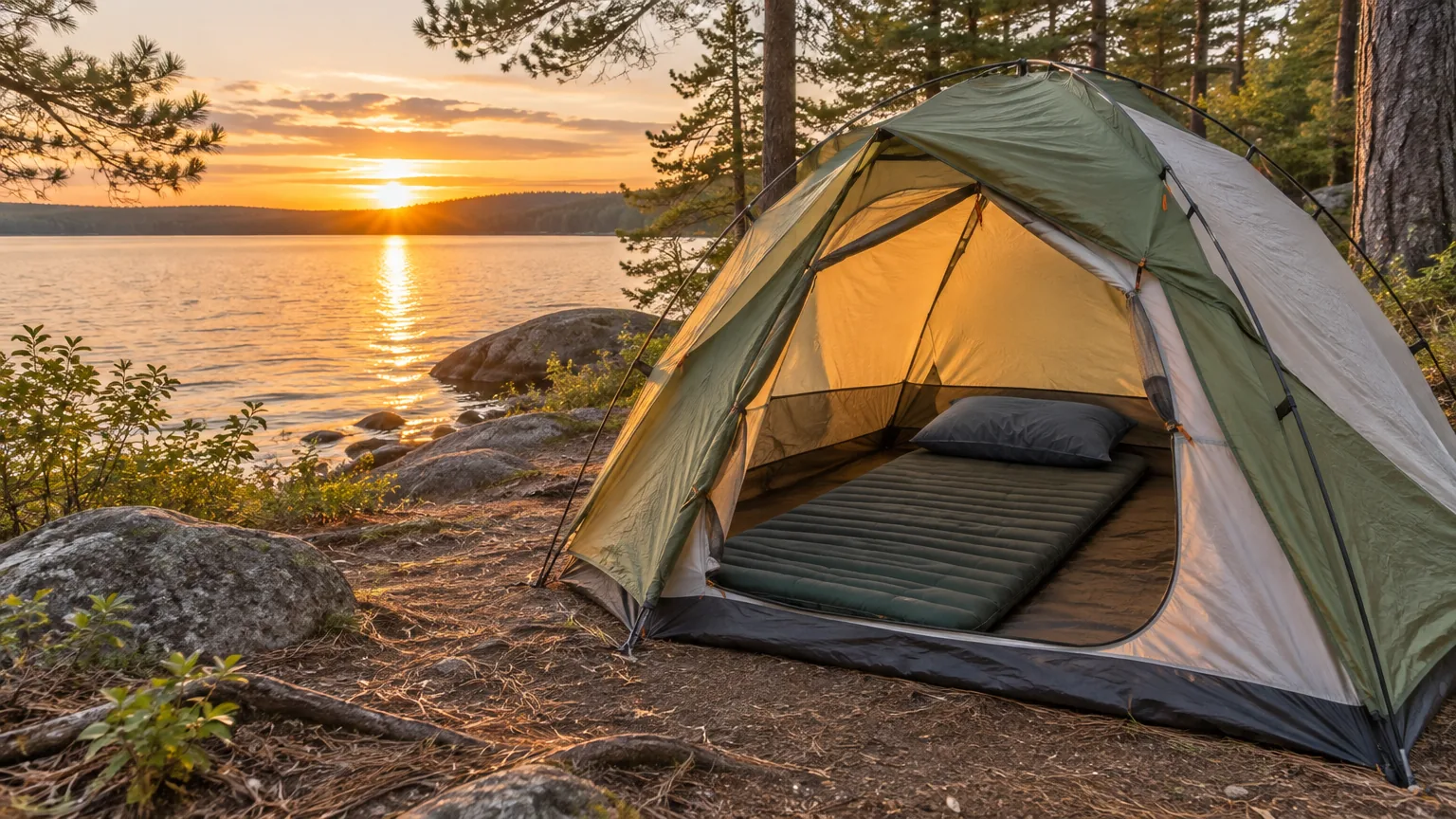
Backpacking is hiking with your camp on your back. The difference is the overnight stay. If you sleep outdoors and carry the shelter, you are backpacking; if you return home or to a car the same day, it is a hike.
Types of hiking
Trail shapes and trip lengths give you a simple way to sort routes before you pick one.
- Out-and-back: you walk to a point and return the same way.
- Loop: the trail circles back to the start without repeating much ground.
- Point-to-point: you start and finish at different trailheads, so it needs a shuttle or a second vehicle.
- Peak or summit hike: the route climbs to a high point or viewpoint.
- Day hike: any of the above, finished in one day.
- Multi-day hike: a route that includes camps or lodging, which overlaps with trekking and backpacking.
For a first outing, an out-and-back or loop on a marked trail lets you turn around whenever you choose.
What is the purpose of hiking?
People hike for different reasons. Some want time in natural settings away from roads. Others want a viewpoint, a waterfall, or a place only reachable on foot. Some hike for exercise and physical fitness, and some hike to practice skills such as map reading before longer trips.
Because the purpose is your own, the route can be as short or as long as you decide. Choose a trail that suits your gear and your experience.
What you need for a first hike
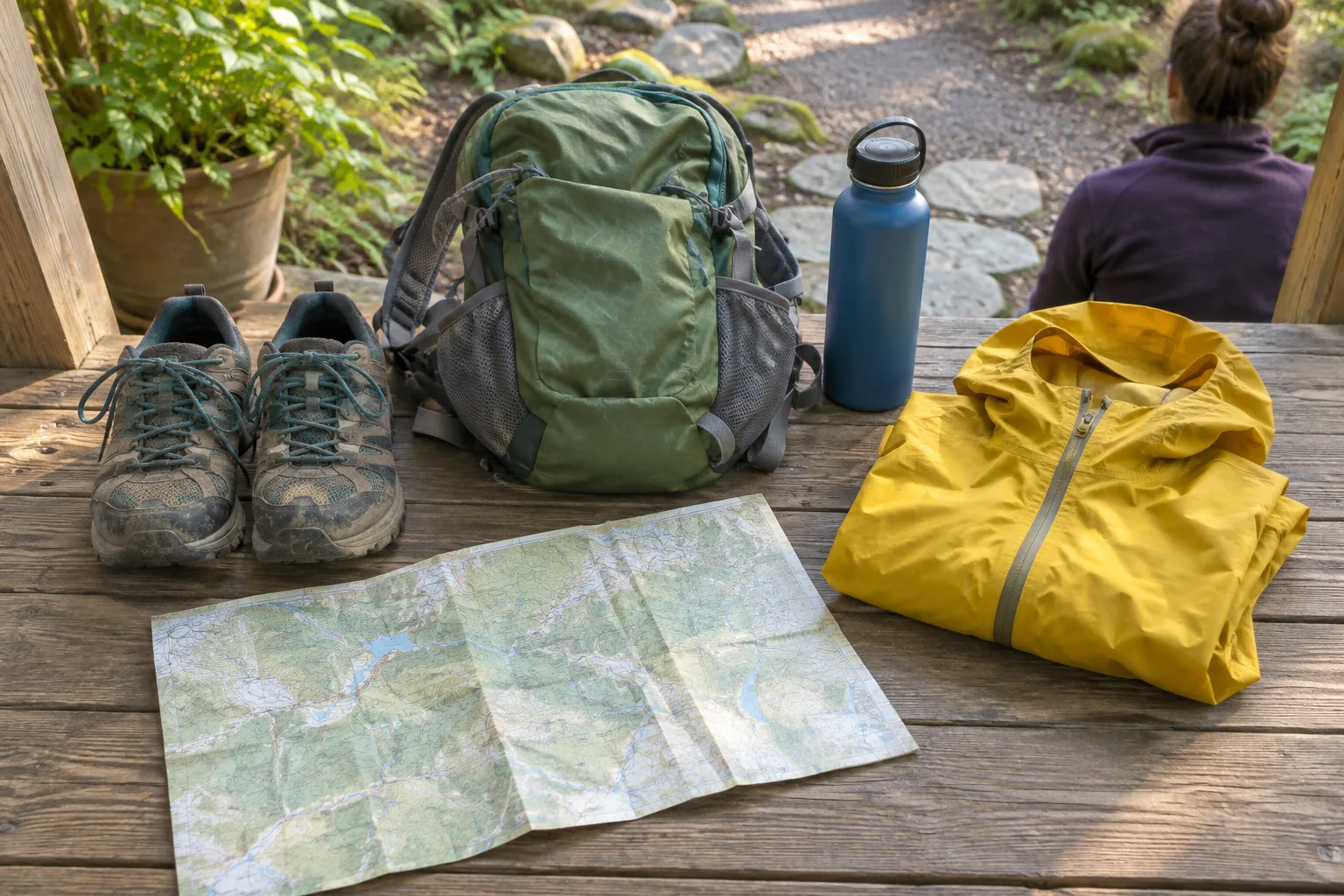
A first hike does not need a full kit. You need footwear, water, a way to carry things, layers, navigation and a few safety items. Hiking gear is simply equipment that supports those jobs on uneven ground.
| Item | What it does | What to check |
|---|---|---|
| Hiking shoes or boots | Give grip on roots, rocks and loose dirt | Try the fit with the socks you will wear |
| Daypack | Carries water, food and layers | Padded straps and a hipbelt for loads |
| Water | Drinking on the trail | Bottle or hydration reservoir sized to the route |
| Snacks | Food on the trail | Pack extra for the planned route |
| Extra layer and rain jacket | Weather changes on the trail | Pack them even on clear mornings |
| Navigation | Keeps you on route | Offline map, paper map or a watch with positioning |
| First aid kit | Basic first aid supplies | Check contents before each trip |
| Sun protection | Hat and sunscreen | Pack them for open trails |
Shoes and socks
Hiking shoes or boots have tread built for loose ground. Break them in on short walks before the trip, and pack spare socks if the route crosses water.
Choosing a pack
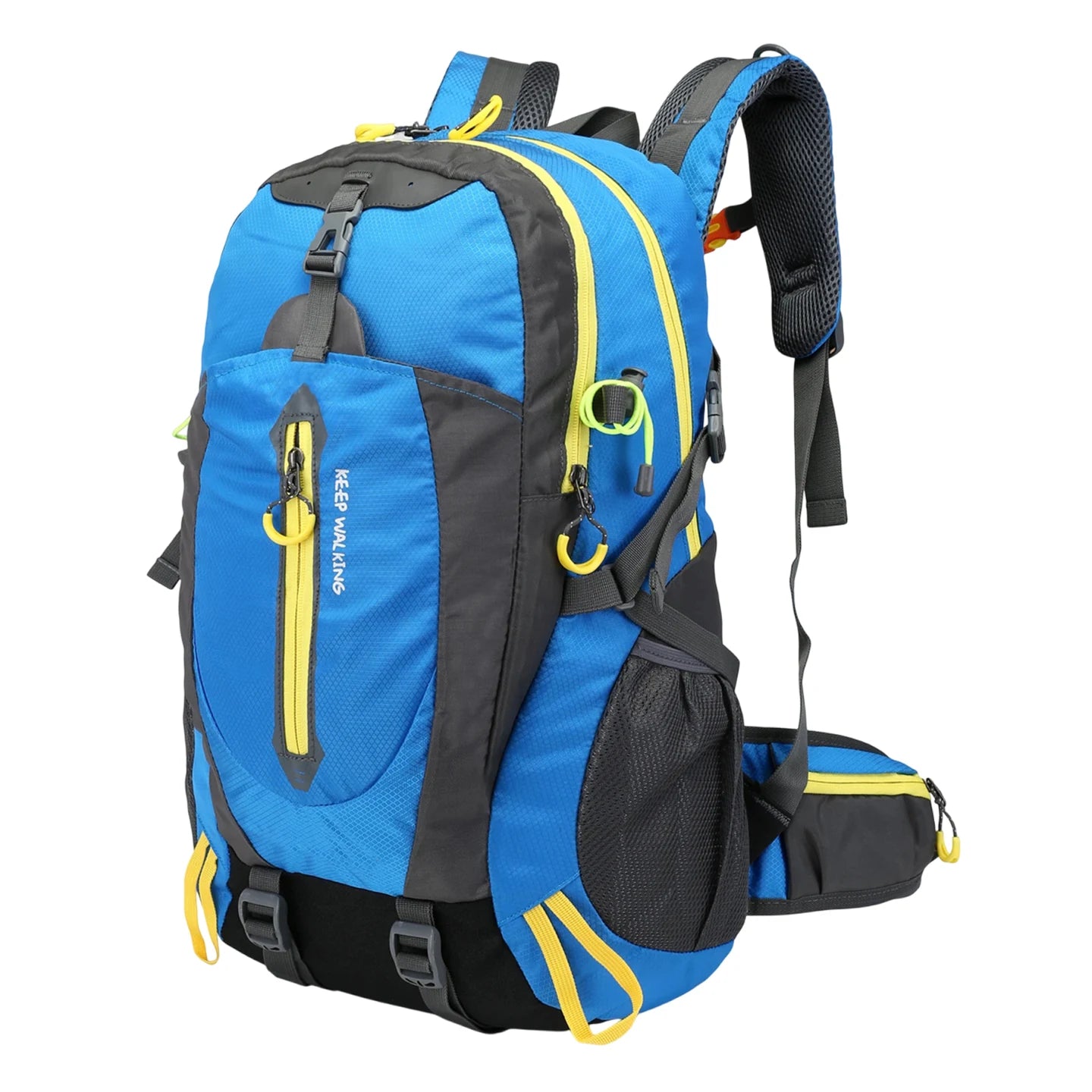
For a day hike, a small to mid-size pack with padded shoulder straps and a hipbelt is enough. Our guide to the day hiking backpack covers size, fit and features. If you plan to step into weekend trips or a trek, a larger pack such as the TrailVantage is a 40L trekking backpack made from water-repellent nylon, with a foam-padded waist belt, adjustable shoulder and sternum straps, airflow channels on the back panel and six pockets.
 In this guideTrailVantage$99.99View
Water and navigation
Carry water in bottles or a reservoir. If you choose a reservoir, read how to choose, clean and dry water bladder packs. You can browse packs and reservoirs in Backpacks & Hydration.
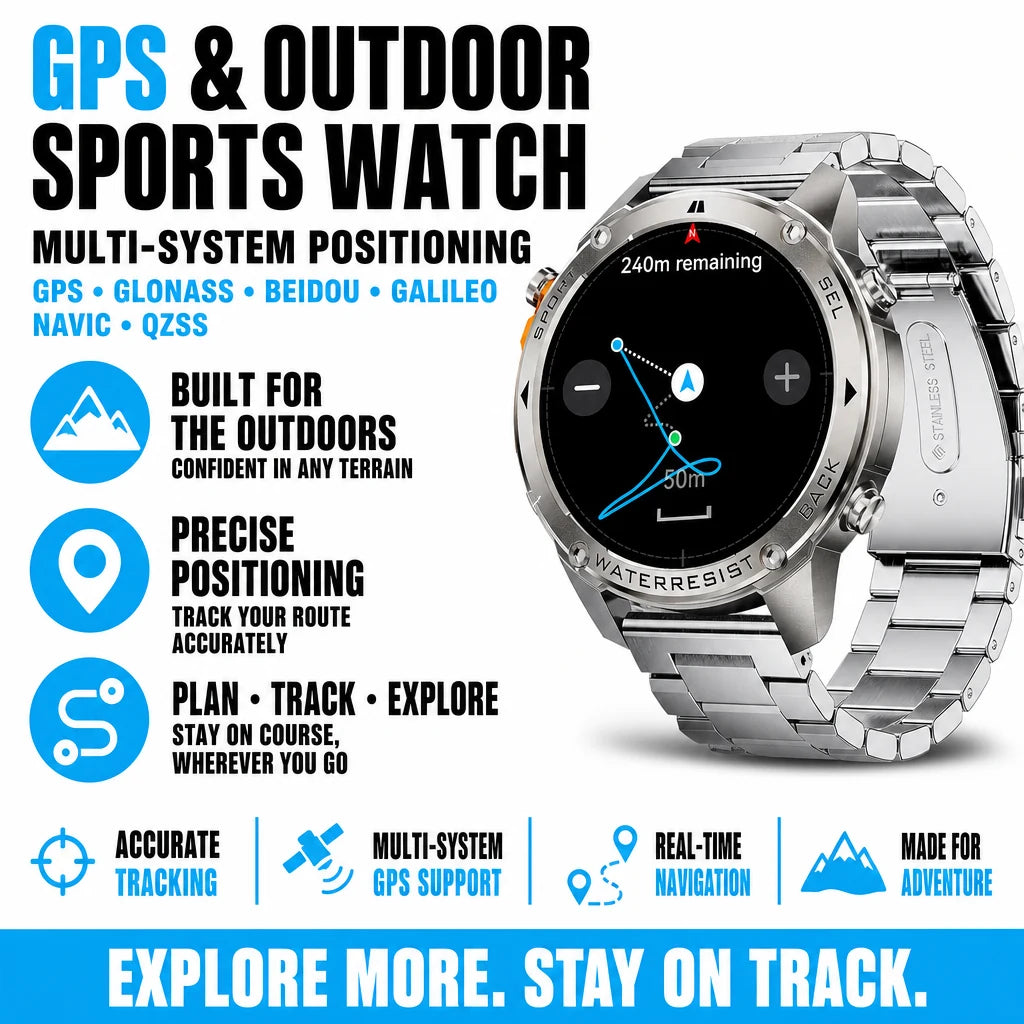
For navigation, a downloaded map and a paper backup are the basics. A watch like the TerrainSync adds dual-frequency, six-satellite positioning to your wrist, plus a high-contrast AMOLED display for reading stats. It pairs with a companion app on your smartphone, where you load settings before the trip.
 In this guideTerrainSync$159.99View
Field note
Load your route and watch or phone settings at home, before you reach the trailhead, and tell someone where you are going and when you plan to be back.
How to plan your first hike
- Pick a marked trail with a clear start and finish, such as a loop or out-and-back.
- Read the trail description for length, elevation change and surface.
- Check the weather and the sunset time for the day.
- Pack the checklist items and fill your water.
- Share your route and return time with someone.
- Start at a conversational pace, take breaks, and turn around if conditions change.
Follow posted trail rules, carry out your trash and stay on the marked path. If you have health questions about starting a new activity, ask a qualified professional before you go.
Start with a short trail
Now that you know what is hiking, the next step is simple: choose a local trail, pack the basics and walk it. Add distance, a larger pack and navigation tools as your routes grow. If a trip later extends to several days, you will be moving into trekking or backpacking, and the gear list grows with it.