Anti Fogging Swimming Goggles: Choose Lens, Seal and Fit
Choose anti fogging swimming goggles by seal first, then lens tint, then coating care. This guide gives you a suction fit test, a tint table and a care routine.
The Kesslund Team
November 16, 2026 · 7 min read
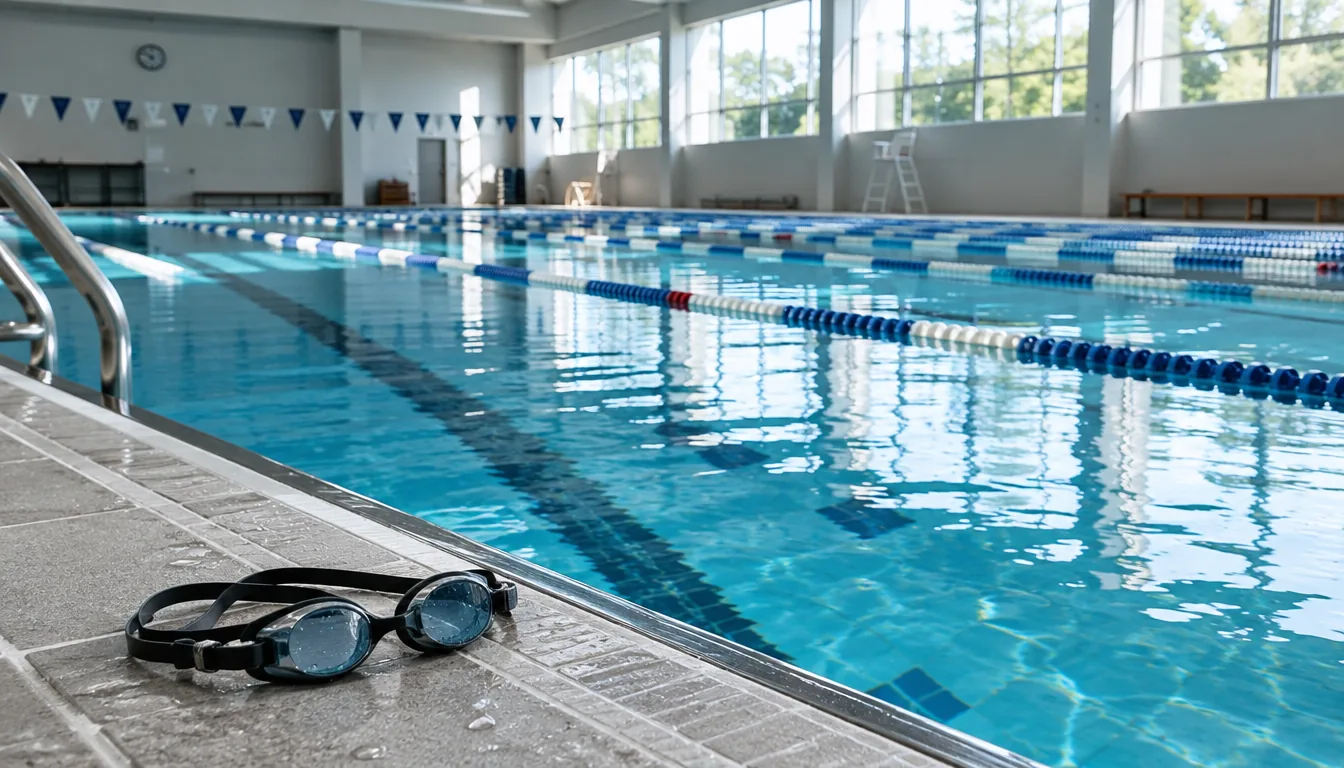
Anti fogging swimming goggles are goggles with a lens coating that spreads moisture into a thin clear film instead of beads. To choose a pair, test the seal with a suction check, match the lens tint to where you swim, and care for the coating by rinsing and air drying instead of wiping the inside of the lens.
Fit decides most of what follows. A goggle that leaks or presses on the eye sockets will pull your attention off the pool line no matter how good the coating is. The sections below take you from fit to lens to care, with a checklist at the end.
How anti fogging swimming goggles work
Fog forms when warm, moist air around your eyes meets a cooler lens surface. Tiny droplets collect on the inside and scatter light, so the lane line turns blurry. A coating on the lens changes how that moisture sits, spreading it into a thin clear film so you can keep your eyes on the line.
The coating is a surface layer, not a permanent feature of the plastic. Fingers, towels and dry rubbing can wear it down. That is why care matters as much as the purchase, and why this guide has a full care routine further down.
Is it necessary to wear goggles while swimming?
No rule says you must wear them, and casual dips are fine without. For laps and open-water swims, though, goggles let you open your eyes underwater, read the lane line, spot the wall and sight a buoy. If you plan structured sets, goggles are standard kit.
Step-by-step suction fit test
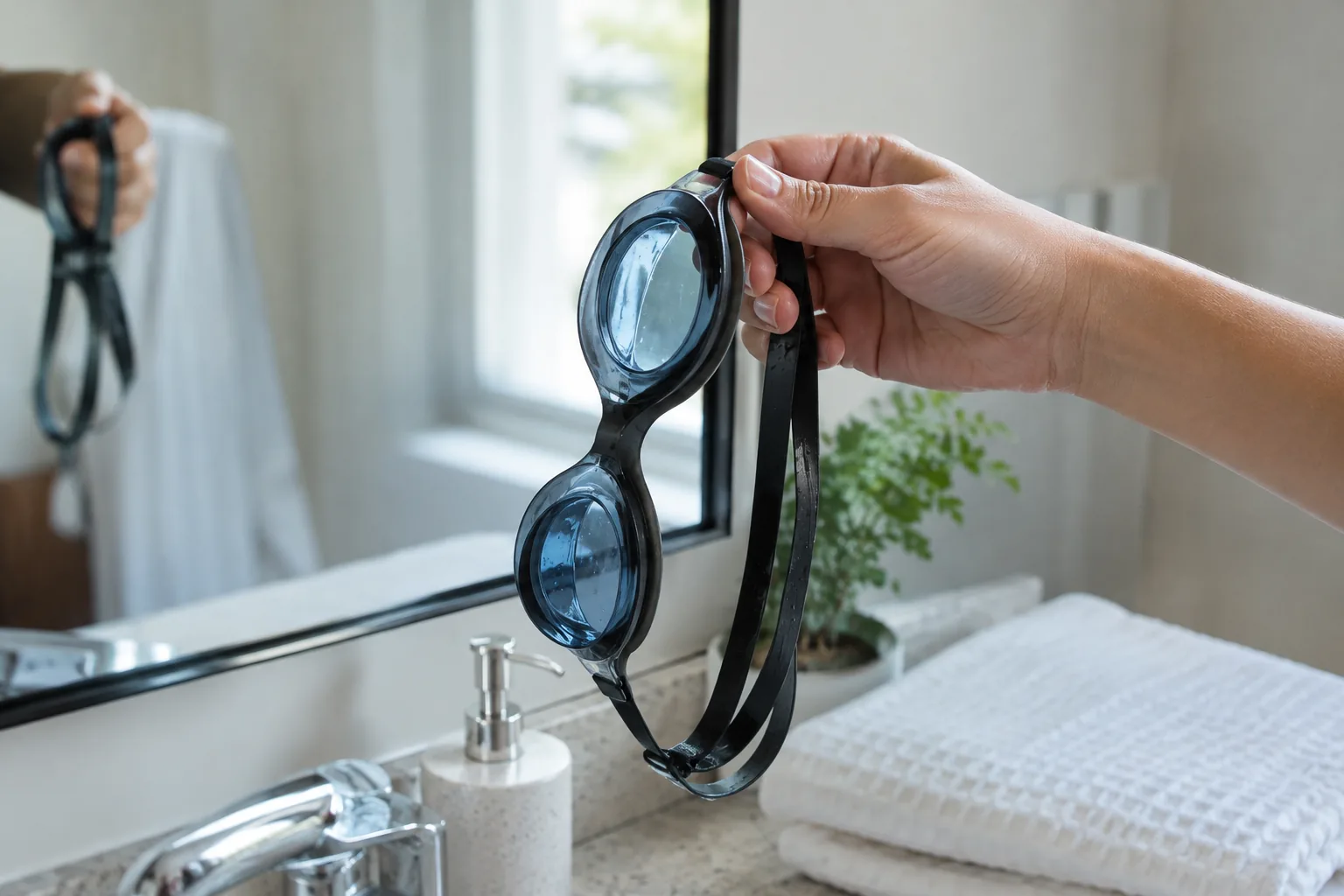
Do this at home, dry, before you ever get in the water. It shows whether the gasket shape matches your eye sockets. Adjust the straps only after the suction check, because a tight strap can hide a poor match.
- Pull the strap out of the way and hold the goggles with the lenses facing you.
- Press the two eyecups lightly onto your eye sockets, with the nose bridge resting where it naturally sits.
- Let go of the goggles without touching the strap. The cups should stay in place on their own.
- If they drop right away, the gasket shape or nose bridge is wrong for your face.
- Check that no part of the gasket crosses your eyebrow bone or sits on your cheekbone. The seal should follow the eye socket.
- Bring the strap over the back of your head. With a split strap, set one band high on the crown and one lower, then adjust until it sits snug, not tight.
- Look side to side. Your view should stay clear and the gasket should not shift.
Nose bridge: the part that decides the seal
Distance between the eyes varies from face to face. A fixed nose bridge suits some faces and leaves a gap on others. Goggles with a swappable nose bridge let you try more than one width and keep the one that passes the suction test. Custom-fitted swimming goggles go further by shaping the fit to your face, but a swappable bridge plus adjustable straps covers the same ground for some swimmers.
Avoid overtightening to fix a leak. Pressure around the eyes can build up over a long set, and a seal that holds only because the strap is cranked can let go on a push-off.
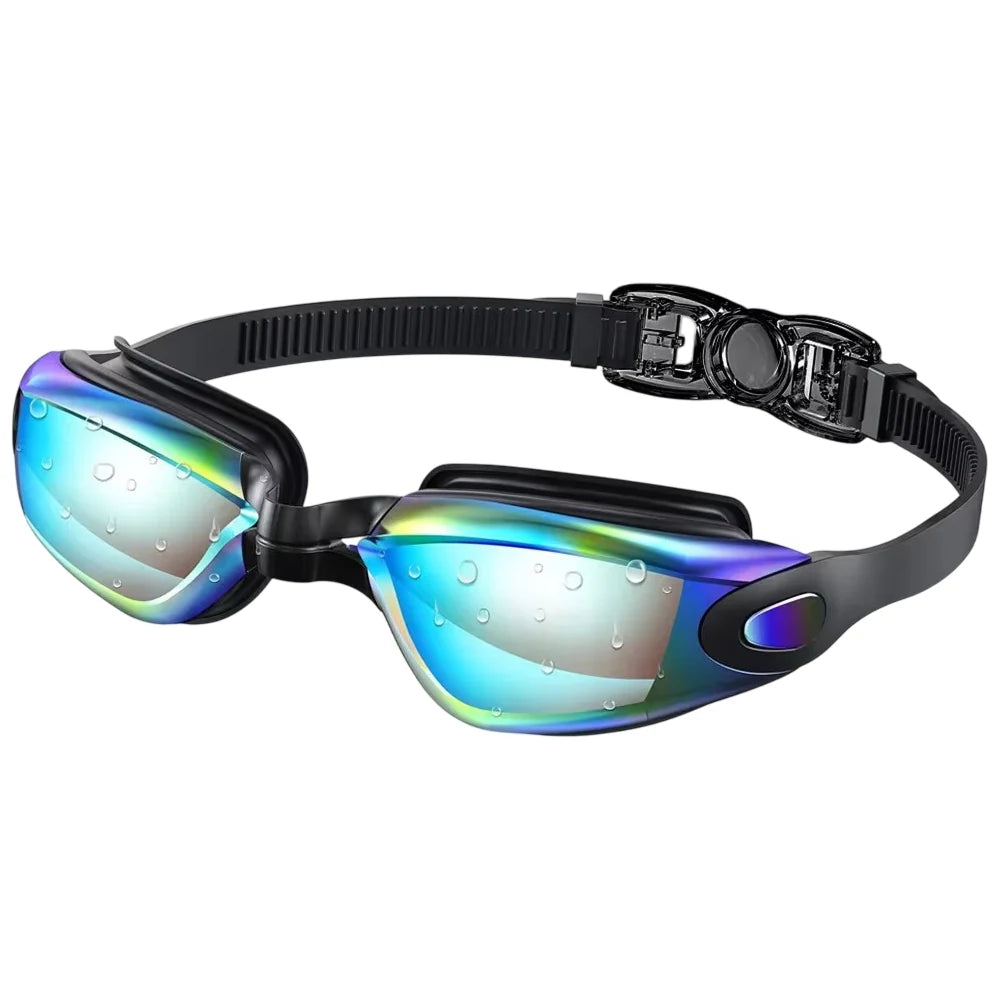 In this guideStrokeSight$59.99View
The StrokeSight goggles are built for this routine. They have adjustable straps, swappable nose bridges and silicone gaskets that follow the shape of the eye socket. They also carry an anti-fog lens coating and UV-blocking lenses, and they come with a protective case.
Lens tint for pool or open water
The tint changes how much light reaches your eyes, so pick it for where you swim most. When choosing anti fogging swimming goggles, the wrong tint means squinting at glare or straining in dim water.
| Where you swim | Lens to look for | Why it fits |
|---|---|---|
| Dim indoor pool | Clear or light-tinted | Lets in the most available light |
| Bright indoor pool with skylights | Light smoke or light blue | Takes the edge off overhead glare |
| Sunny outdoor pool | Smoke or mirrored | Darker lens for direct sun |
| Lake or ocean in sun | Mirrored or dark tint with UV-blocking | Bright surface light and water glare |
| Overcast or early morning open water | Amber, rose or light tint | Keeps contrast in flat light |
Why mirrored swim goggles?
A mirrored finish is a reflective layer on the outside of the lens that reflects part of the incoming light. That makes it useful in sun and bright pools. In a dim pool or at dawn, it can leave the view too dark, so a clear lens is the better match there.
Lens shape and field of view
Flat lenses can box in your side view, while curved lenses stretch the view to each side. If you swim lanes and need to see markers and neighbors without turning your head, curved lenses help with peripheral vision. Open-water swimmers also need to sight forward, so a lens that leaves room above the brow matters.
UV-blocking is worth checking for outdoor sessions. The StrokeSight lenses block UVA and UVB light, which suits sunny lake or ocean swims.
Goggles for lap swimming
When you compare swimming goggles for lap sets, look for a seal that sits well against the eye sockets, a strap you can adjust and lock, and a wide side view for lane lines.
The DiveLumen pool goggles cover several of these points. They have curved lenses that widen the side view to see lane markers, a latex-free silicone seal that rests against the eye sockets, and a press-slide-lock strap. The box also holds a matching silicone swim cap and comfort-fit ear plugs, so one bag carries the pool kit.
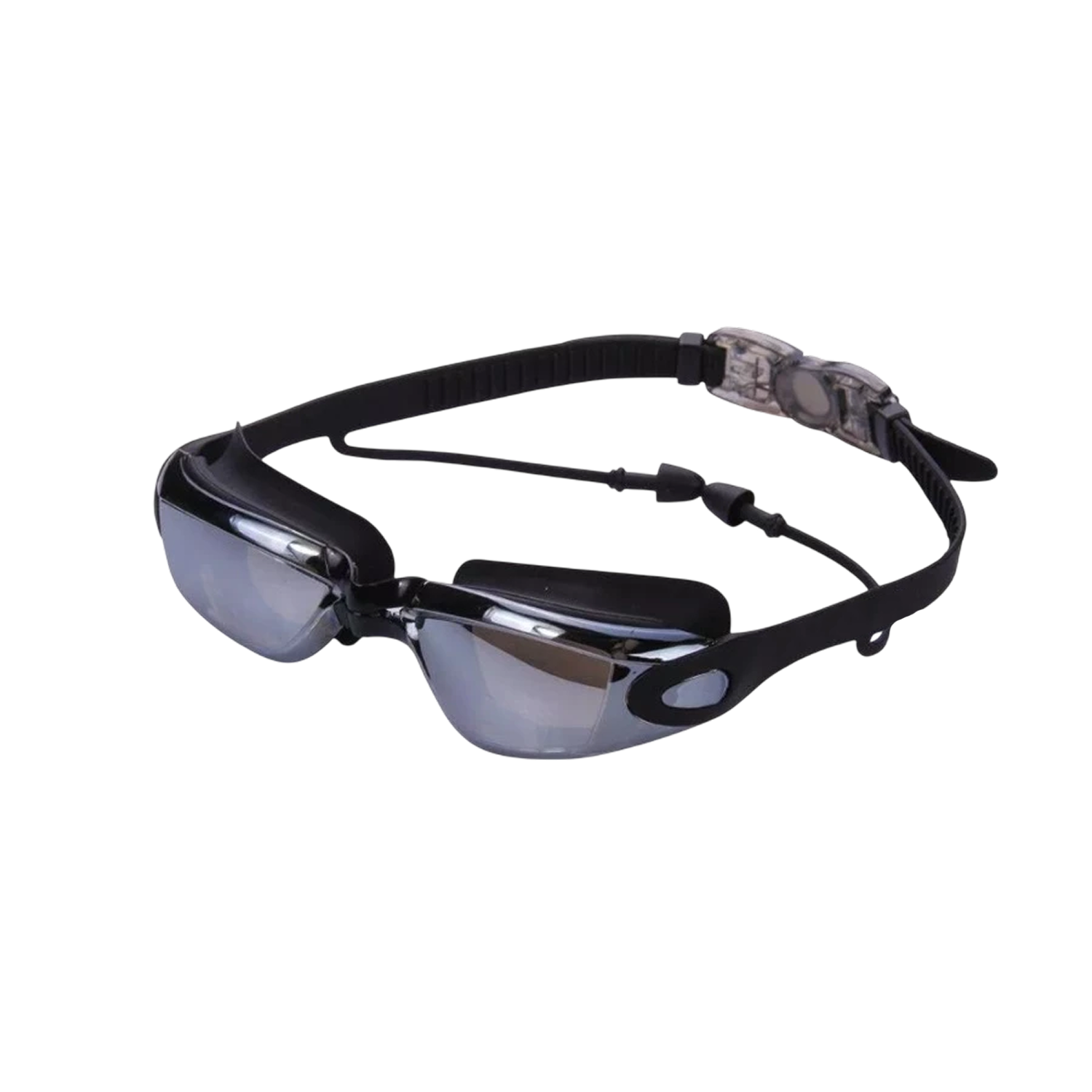 In this guideDiveLumen$89.99View
Whichever pair you pick, check the fit with the suction test first. Strap adjustment on the DiveLumen goes like this: press the buckle to release tension, slide the strap until it sits snug, then lock it in place.
Does the goggle brand matter?
No brand fits every face, so brand name is a weak guide. Judge a pair by the suction test, the nose bridge options, the lens tint and whether the strap adjusts without fuss. A lesser-known goggle that seals on your face beats a famous one that leaks.

Care routine for anti fogging swimming goggles
The coating sits on the inner lens surface, so most damage comes from how you handle that side. Follow a simple routine to keep the lenses clear.
- Before the first swim, rinse the lenses with fresh water.
- Do not touch or wipe the inside of the lenses with fingers, a towel or a shirt.
- If you must clear a lens mid-swim, dip the goggles in water and shake them. Skip rubbing.
- After each swim, rinse again with fresh water, especially after chlorine or salt water.
- Shake off droplets and air dry away from direct sun.
- Store the goggles in a protective case so nothing presses on the lenses.
Skip harsh cleaners and abrasive cloths, which can strip the coating. If a lens stays misty after many swims, the coating has worn and the goggles may need replacing. Follow the care notes in the manual for your pair.
Common mistakes when choosing goggles
- Cranking the strap to stop a leak instead of changing the nose bridge.
- Choosing a dark mirrored lens for an indoor pool with dim lighting.
- Wiping the inside of the lens with a towel after each swim.
- Leaving goggles in a hot car or wet gym bag.
- Buying by brand or looks without trying the suction test.
Field note
Put on your cap first, then your goggles, and fine-tune the strap over the cap. Recheck the seal once everything is on.
Checklist before you buy
| Check | What to look for |
|---|---|
| Suction test | Cups stay in place on their own |
| Nose bridge | Swappable or adjustable to your face |
| Gasket | Soft silicone that follows the eye socket |
| Lens | Tint matched to pool or open water |
| Coating | Anti-fog coating, with a care routine you will follow |
| Strap | Adjusts and locks without fuss |
| Storage | Case or pouch for the lenses |
If you also swim with a mask or fins, see Snorkeling and Diving: Gear and Skills Compared for how that gear differs. Browse the wider Diving & Snorkeling collection for more in-water gear.