What Does Ah Mean on a Battery? Amp Hours for Camp Gear
Ah means amp hours: how much current a battery can supply over time. Convert Ah, mAh and Wh, then size a battery to your cooler or lantern.
The Kesslund Team
November 8, 2026 · 6 min read

What does Ah mean on a battery?
What does Ah mean on a battery? It stands for amp hours, a measure of how much electric charge a battery can supply. The formula is amps × hours = amp hours, so 10 A for 1 hour and 1 A for 10 hours both equal 10 Ah. It tells you the size of the tank, not how hard the battery can push.
On its own, Ah is incomplete. The voltage on the label tells you how strongly that charge is pushed, and the two together give you the energy in watt-hours (Wh). For camp gear, the energy figure is what you compare against what your cooler or lantern uses.
The formula is short: amp hours × volts = watt-hours. A 12V, 20 Ah battery holds 240 Wh. Every example below builds on that line.
Ah, mAh, Wh and V: the conversions
Small devices use milliamp hours (mAh), where 1,000 mAh equals 1 Ah. So 20,000 mAh is the same as 20 Ah as a number. The catch is voltage: power banks quote mAh at the internal cell voltage, often near 3.6 or 3.7 V, while the ports output 5 V or more. The energy in Wh is the fair way to compare them.
| You have | Do this | Example |
|---|---|---|
| mAh | Divide by 1,000 to get Ah | 1200 mAh = 1.2 Ah |
| Ah and volts | Multiply to get Wh | 20 Ah × 12 V = 240 Wh |
| Wh and volts | Divide to get Ah | 240 Wh ÷ 12 V = 20 Ah |
| Watts and volts | Divide to get amps drawn | 48 W ÷ 12 V = 4 A |
Ah by itself only compares batteries at the same voltage. A 20 Ah battery at 12 V holds more energy than a 20 Ah battery at 3.7 V, so check the V on the label before you compare. The tables in this guide work as a small lithium battery amp hours chart: find your Ah and volts, then read across to Wh.
How to calculate battery runtime from amp hours
Use this checklist to turn a label into a planning estimate. The results below are paper estimates, before any margin. Cold weather, battery age and device settings all change the result.
- Find the battery capacity in Ah (or mAh) and the voltage on the label.
- Multiply to get Wh. Convert mAh to Ah first.
- Find your device's draw in watts, or in amps and volts, on its label or manual.
- Leave a margin. The battery's manual lists any limit on discharge depth, so plan on less than the full label.
- Divide the Wh you plan to use by the device's watts. The answer is the runtime, counted in hours.
If you only know amps, skip the watt step: Ah ÷ amps drawn gives the runtime in hours at the same voltage. For example, 20 Ah ÷ 4 A = 5.

Worked example: powering an electric cooler
Say you carry a 12V, 20 Ah battery and a cooler that draws 4 A (48 W) the whole time it is on. These are example numbers for the math, not figures for any product.
- Energy: 20 Ah × 12 V = 240 Wh
- Divide by the draw: 240 Wh ÷ 48 W = 5, which reads as a paper estimate counted in hours
- Apply a margin for cold, age or discharge limits
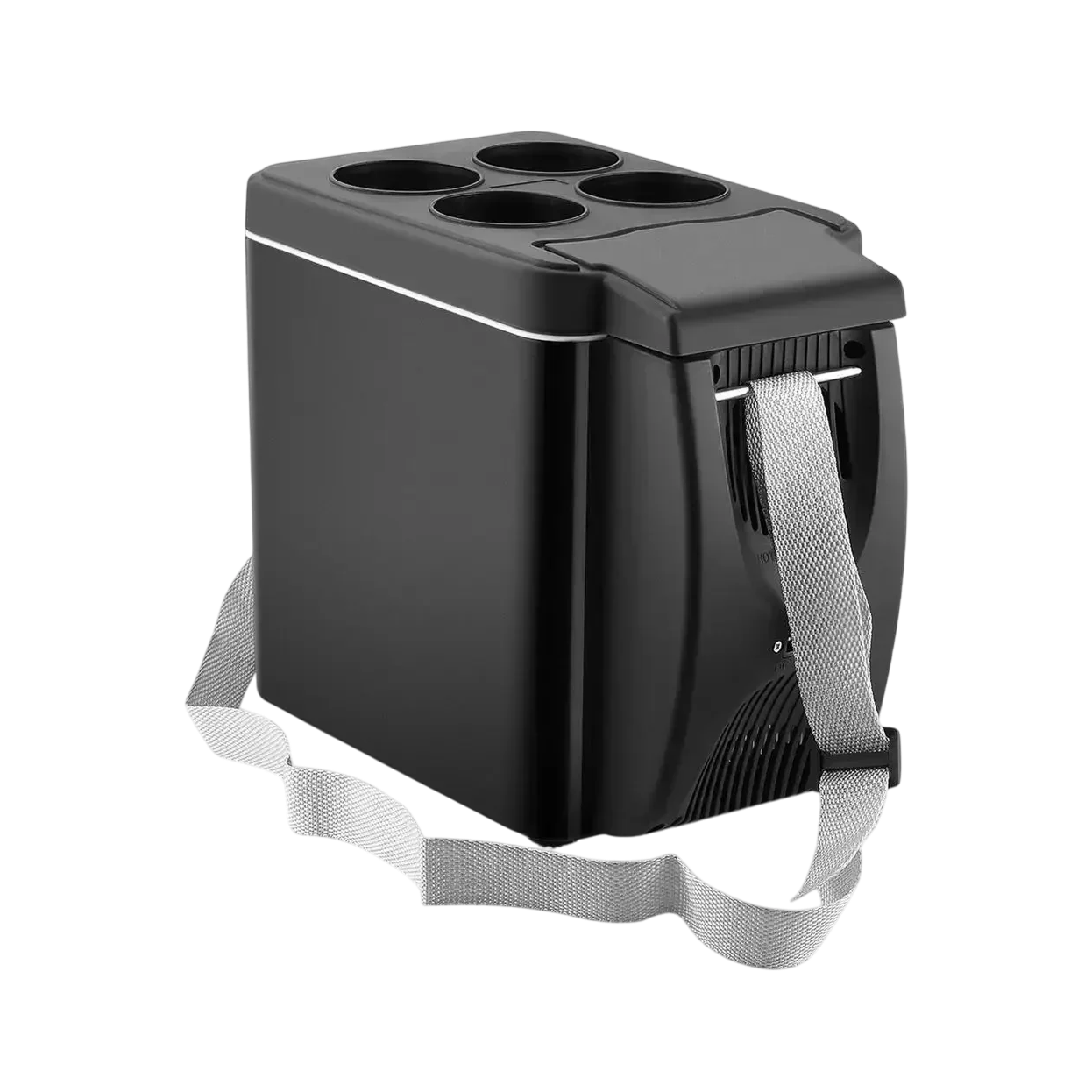
A thermoelectric fridge such as NomadChill uses a thermoelectric plate and a fan instead of a compressor, and it plugs into a 12V car outlet or a home adapter. It has a cooling mode and a heating mode in a 6-liter interior. Find its actual draw on the unit or in the manual, then drop that number into step 5. Its fan runs while it is on, so keep the vents clear when you load it. For other ways to carry food and drinks, browse the Beach & Coolers collection.
 In this guideNomadChill$159.99View
Field note
Running a cooler from a car outlet with the engine off can drain the starter battery, and some vehicles cut outlet power when the engine is off. Check your vehicle manual, and consider a separate battery for camp loads.
Worked example: how long a lantern battery runs
Take a hypothetical cell, not any product: 2,000 mAh at 3.7 V. Convert it: 2,000 mAh ÷ 1,000 = 2 Ah, and 2 Ah × 3.7 V = 7.4 Wh.
Now pick example draws. A lantern pulling 1 W on a high mode gives 7.4 Wh ÷ 1 W = 7.4. A low mode pulling 0.5 W gives 7.4 ÷ 0.5 = 14.8. Read each result as a paper estimate counted in hours. Real lanterns list their own draw in the manual, so use that figure instead of these.
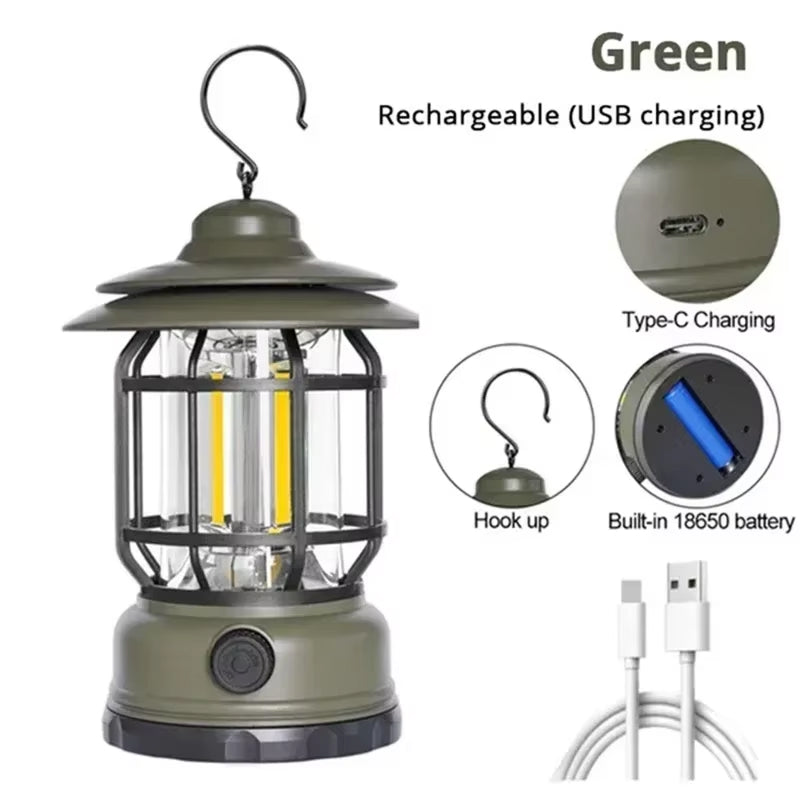
The same steps work for RadiCove, an LED lantern with a built-in 18650 lithium battery of 1200mAh, which is 1.2 Ah. Multiply by the cell voltage on the battery label to get its Wh. It charges over USB, has a high mode and a warm low mode, and gives 360° warm-spectrum light. Its power-bank mode charges a phone from the same battery, so that use draws on the same stored charge.
For any lithium battery, charge only with a compatible source, follow the manual on charging temperature and storage, and stop using a battery that is damaged or swollen.
 In this guideRadiCove$89.99View
Refilling the battery at camp with solar
Amp hours also tell you how much you need to put back. If you used the 240 Wh from the cooler example, a charging source has to return about that much energy, plus losses.
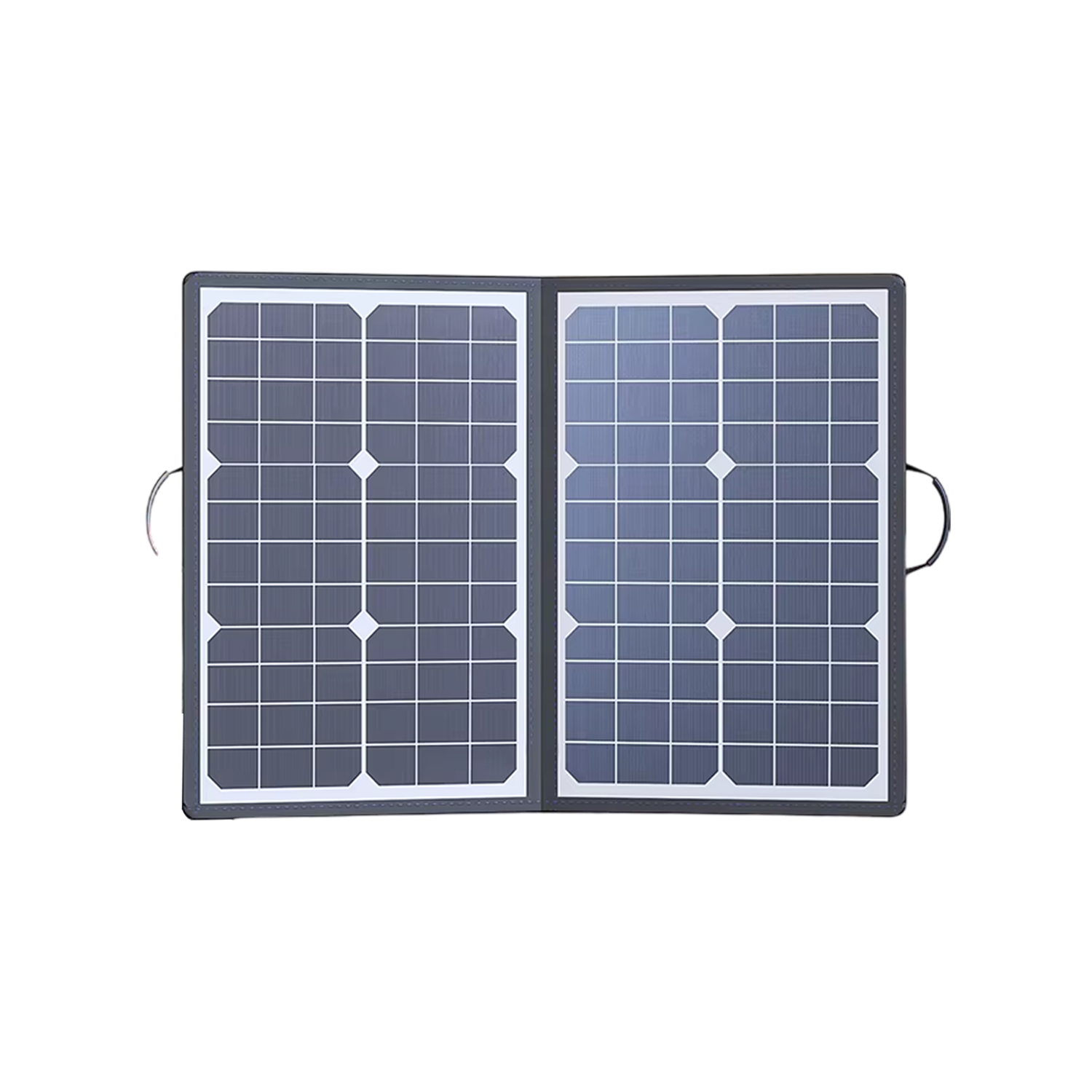
HelioCrest is a foldable camping solar panel with monocrystalline silicon cells, two USB-A ports, one USB-C port and a DC5521 output at 18V, 2.4A. It can connect to a power bank or a compatible power station with a matching input. Real sun, panel angle and clouds change what a panel delivers, so check the panel and power station manuals when you plan a recharge. For sizing watts against your gear, read Camping With Solar Panels: Sizing Watts for Your Gear.
 In this guideHelioCrest$179.99View

Car batteries, tool batteries and bigger Ah numbers
How many Ah is a 12V car battery?
Labels vary by battery size and type, so check the Ah or reserve capacity printed on your own battery. A car battery is built mainly to start an engine, which is why it also lists cold cranking amps (CCA). It is not meant for deep, repeated draw at camp.
150, 200 and other large Ah numbers
A 150 Ah or 200 Ah figure at 12 V means 1,800 Wh or 2,400 Wh. Run the same formula: Ah × V. These sizes appear on deep-cycle and larger lithium batteries, which can weigh a lot to carry.
2.0 Ah versus 4.0 Ah
On tool batteries at the same voltage, a 4.0 Ah pack stores more charge than a 2.0 Ah pack. The tool does not gain output; it can run for more time between charges. The larger pack can weigh more.
| Label | Voltage | Energy |
|---|---|---|
| 2.0 Ah | 18 V | 36 Wh |
| 4.0 Ah | 18 V | 72 Wh |
| 20 Ah | 12 V | 240 Wh |
| 150 Ah | 12 V | 1,800 Wh |
| 200 Ah | 12 V | 2,400 Wh |
So a higher Ah does not mean more power. It means more stored energy at that voltage. Power is volts times amps, and the device sets how much it draws.
Common mistakes when reading amp hours
Once you know what Ah means on a battery, avoid these slips when packing:
- Comparing Ah across different voltages. Convert both to Wh first.
- Counting the whole label as usable. Plan on a share of it, as the manual allows.
- Reading power bank mAh as output energy. Conversion between cell voltage and 5 V output has losses.
- Guessing the draw. Read the label on the device or the manual.
- Forgetting cold and age, which both change what a battery delivers.
For more cooler basics, see What Is a Soft Sided Cooler? When to Pick Soft Over Hard. For lighting gear, browse Trail Lighting & Navigation. Follow each manual when you charge, and unplug before cleaning any device.