Chair on the Beach: How to Pick Height, Recline and Carry Style
Pick a chair on the beach by matching seat height, recline and carry style to how you spend your beach day. Use the decision table, then run the sand checks before you buy.
The Kesslund Team
November 19, 2026 · 7 min read
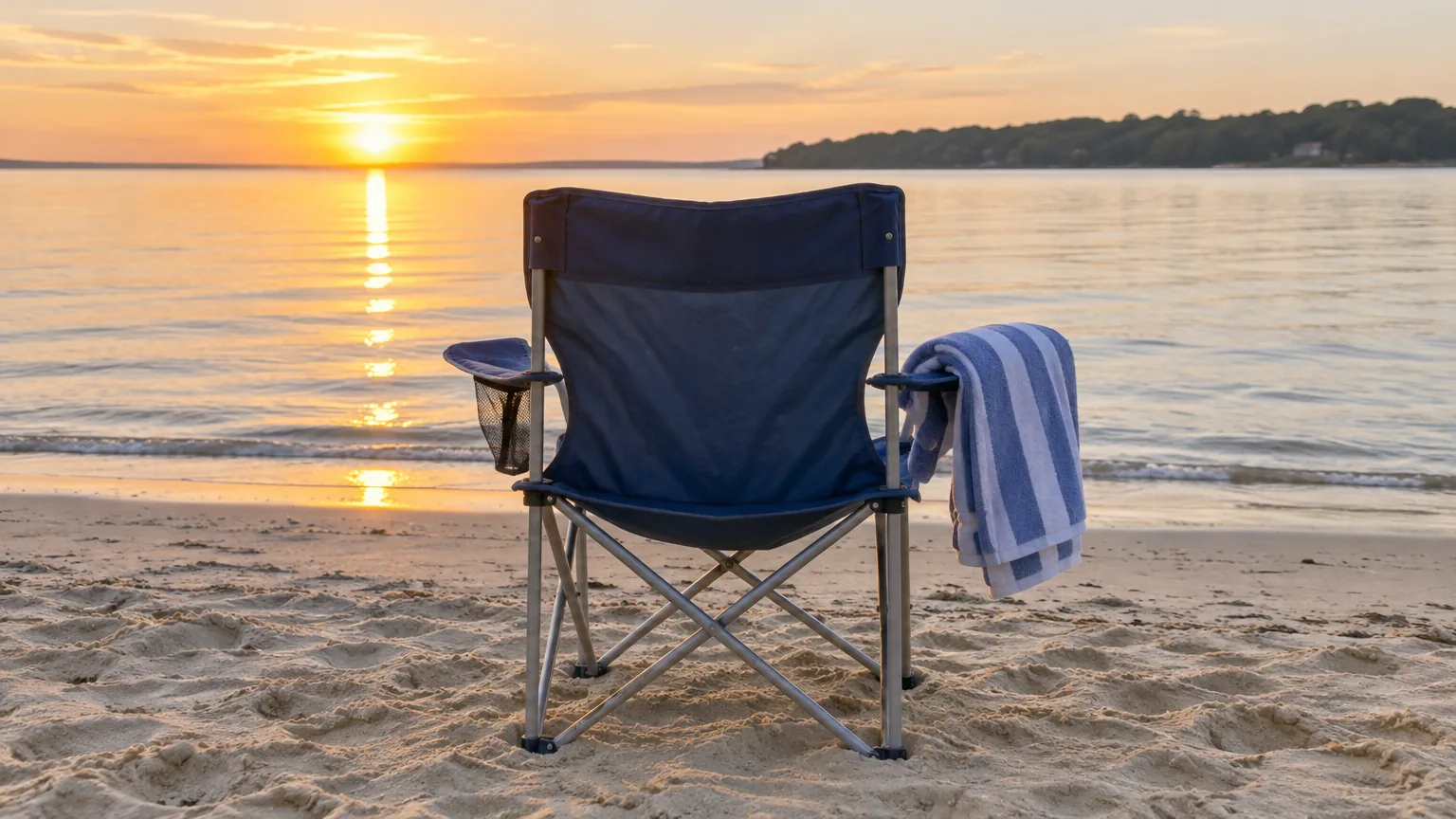
The right chair on the beach depends on four choices: seat height, recline, weight and how you carry it. A low seat with a reclined back suits a long stretch of reading, a mid-height upright seat suits watching kids and a cooler, and a light folding or backpack style suits a long walk over the dunes. Match those four to your day, then check how the feet behave on soft sand.
This guide gives you a decision table, plain rules for each feature and a short list of checks to run before you commit to a seat.
Match a chair on the beach to your day
Start with what you will actually do. A chair for a boardwalk-side spot is a different tool from one you carry half a mile to a quiet cove. Find your row in the table, then read the sections below for the reasoning.
| Your beach day | Seat height | Recline | Carry style | What to check |
|---|---|---|---|---|
| Reading or napping for hours | Low to mid | Several positions, or a fixed lean-back with a headrest | Folding with a bag | Headrest position, fabric that brushes clean |
| Watching kids at the waterline | Mid | Upright or one slight lean | Folding | Wide feet, a seat you can rise from |
| Long walk from the parking lot | Low to mid | One or two positions | Backpack straps or a slim fold with a bag | Packed weight, free hands |
| Group day with a cooler and umbrella | Mid | Any | Folding, loaded on a cart | Space in the trunk, see the wagon tips below |
| Fishing from the shore | Mid | Upright with a headrest | Folding | Steady on firm, packed sand above the wet line |
Seat height: low, mid or tall
Seat height decides two things: how close you sit to the sand and how hard it is to get up. A low seat keeps your weight near the ground, which suits lounging and sitting at the edge of a towel. The trade-off is the climb out of it.
When a low seat fits
Choose a low seat when you plan to stay put. It sits close to a towel or a small table, and the back often reclines further for reading.
When a mid or tall seat fits
If you stand up often to check on children, grab a drink or walk to the water, a mid-height seat gives you a shorter rise. Tall seats also fit if you find low ones awkward to leave. A taller frame puts the center of weight higher, so the feet matter more on soft ground.
Recline positions: how many do you need?
A beach chair is a portable folding seat built for sand, with a frame that opens and locks and a fabric seat and back. The recline is the angle of that back, and it comes in three kinds.
- Fixed lean: one set angle, with few joints to check for sand.
- Two or three positions: the back locks at set angles, so you can sit upright to eat and lean back to read.
- Lay-flat: the back drops close to horizontal, which suits napping but takes more room on the sand.
A long chair for the beach, the lounger style that stretches out full length, fits a day of napping when you have open sand to spread out on. For reading, a built-in headrest matters as much as the angle. If you eat on the chair or hold a drink, an upright setting is worth having. Look at the locking points on any adjustable chair and brush sand off them before folding.

Weight and carry style: backpack or folding
Carry style is about your route. Count the steps from the car to your spot, and count what else you carry: towels, a cooler, an umbrella, a bag.
Backpack chairs
A backpack chair has straps that put the chair on your shoulders and leave both hands free. This suits stairs, boardwalks and long walks over soft sand. Check how the straps sit when the chair is folded and whether the seat has a back that reclines.
Folding chairs with a carry bag
A folding chair collapses to a slim profile and slides into a bag, which stores in a trunk or on a closet shelf. If the route is short, a bag handle or shoulder strap is enough. For a longer carry, look for a low packed weight, since you add it to everything else in your arms.
Bringing gear for a group
If you haul coolers and chairs together, a cart takes the load off your arms. Our wagon on the beach guide covers wheels, loads and sand tips, and the Beach & Coolers collection has the cooler side of the setup.
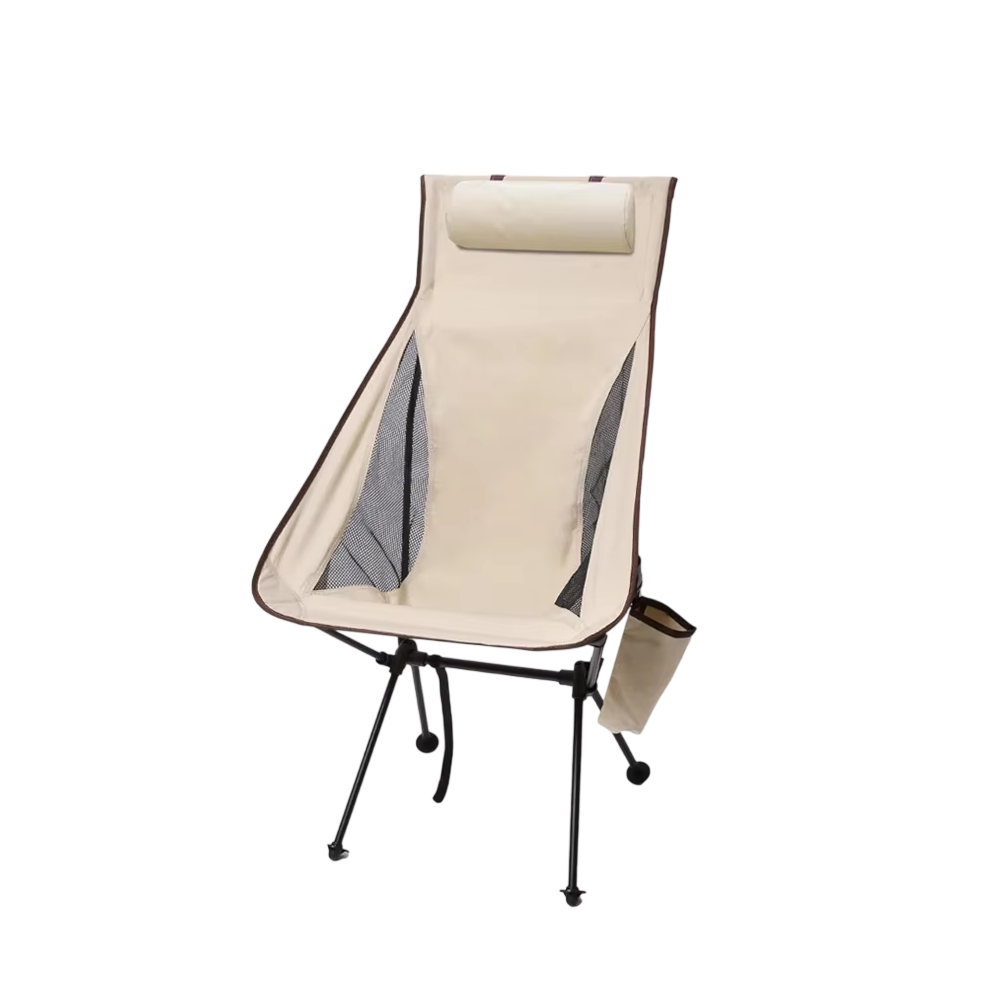
A folding chair for a simple setup: Shorelyn
If a slim fold, low packed weight and a headrest match your list, the Shorelyn is a folding beach chair with an aluminum frame and ripstop fabric. It weighs 3.3 pounds and has a built-in headrest and a contoured back. It has a wide footprint for sitting on sand, grass or gravel.
To use it, take the chair out of its carry bag, open the frame and lock the legs into place. No tools are needed. Sit back against the headrest, and fold it into the bag when you leave. The ripstop fabric brushes clean after a day on the sand, and you can wipe the aluminum frame with a cloth.
 In this guideShorelyn$89.99View
Sand-stability checks before you sit
Soft sand is where chairs fail. Narrow feet push in, one leg settles lower than the others and the chair tilts. Run these checks at home on a lawn or at the beach itself.
- Look at the feet. Wide feet or a wide footprint spread the load, while narrow tips push into sand.
- Open the chair and confirm each leg locks fully before you sit. Follow the manual for the lock type.
- Pick a level spot above the wet line, where the sand is firm and the tide does not reach.
- Press each corner of the frame down by hand. If one corner sinks, move or twist the chair a few inches.
- Sit slowly and shift your weight once. Stand up and reset if the chair tilts.
- Face the chair so the back is not on a slope that pushes it backward when you recline.
If a chair still wobbles on your usual beach, choose a wider stance, a lower seat or a firmer spot, and check the manual or contact our support team about the frame if you are unsure.
Field note
Twist each chair foot a quarter turn into the sand as you set it down, so the foot rests on packed sand instead of loose sand on top.
Plan a day at the beach with a chair, shade and storage
A chair is only one part of the setup. Sun and wind change how long you can sit in one spot, so plan the shade before you plan the extras.
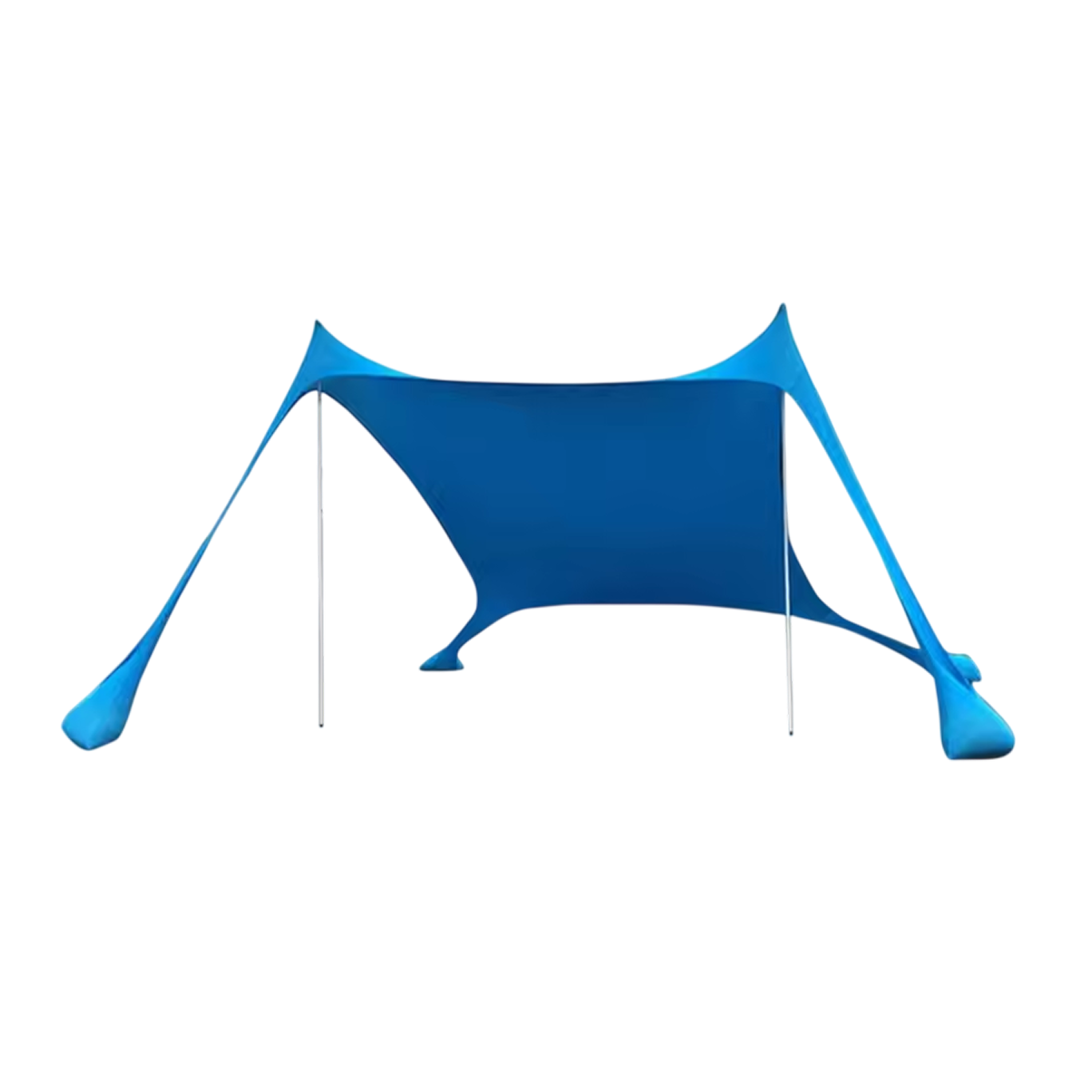
The SolArbor beach tent has a Lycra canopy with open sides and two support rods. Corner pockets fill with sand or rocks to hold it in place. It weighs 1.7 kg (about 3.7 pounds) in its storage bag, and the kit includes the rods, the bag and an installation manual. Turn the open sides toward the breeze, and set towels, bags and a cooler under the canopy.
 In this guideSolArbor$149.99View
Common mistakes and a packing checklist
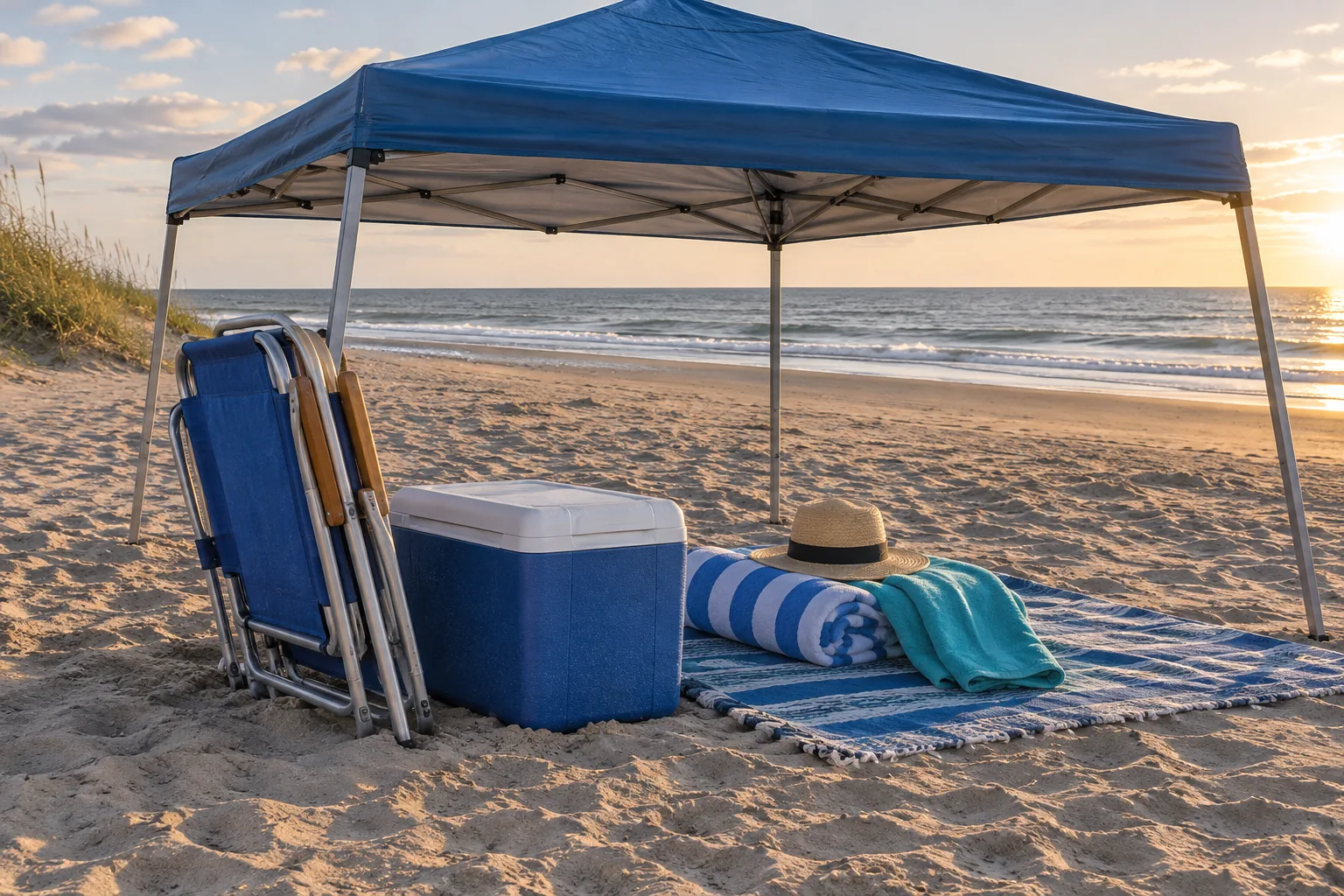
Bad chair choices come from buying for the product photo instead of the route. Avoid these:
- Choosing a lay-flat back when you mostly sit upright to eat or watch kids.
- Ignoring the carry distance until you are halfway across the dunes.
- Setting the chair at the waterline, where sand softens as water moves through it.
- Folding the chair with sand in the joints. Brush it off first.
- Leaving the chair packed damp in a closed trunk. Let the fabric dry in open air.
Before you leave home, check the list below.
- Chair opens and each leg locks.
- Bag or straps are on the chair.
- Shade and anchor pockets are packed.
- Cooler, towels and water are loaded.
- Cart or second trip is planned if the carry is long.
For the cooler choice, read what is a soft sided cooler to see when a soft one fits a walk to the shore.
Care after the beach
Salt and sand wear on joints and fabric over a season. Shake the chair out and brush the fabric, then wipe the frame with a damp cloth. Open it and let it air dry before you fold it into its bag. Check the lock points for grit each time, and store the chair in a dry closet or trunk shelf.
With the day mapped out, you can decide on height, recline and carry style and pick the chair on the beach that matches your route.