Fin for Swimming: How to Choose and Train With Swim Fins
Pick a fin for swimming by blade length, heel style and fit, then start with short kick drills. This guide compares each option and lists a starter routine.
The Kesslund Team
October 26, 2026 · 6 min read
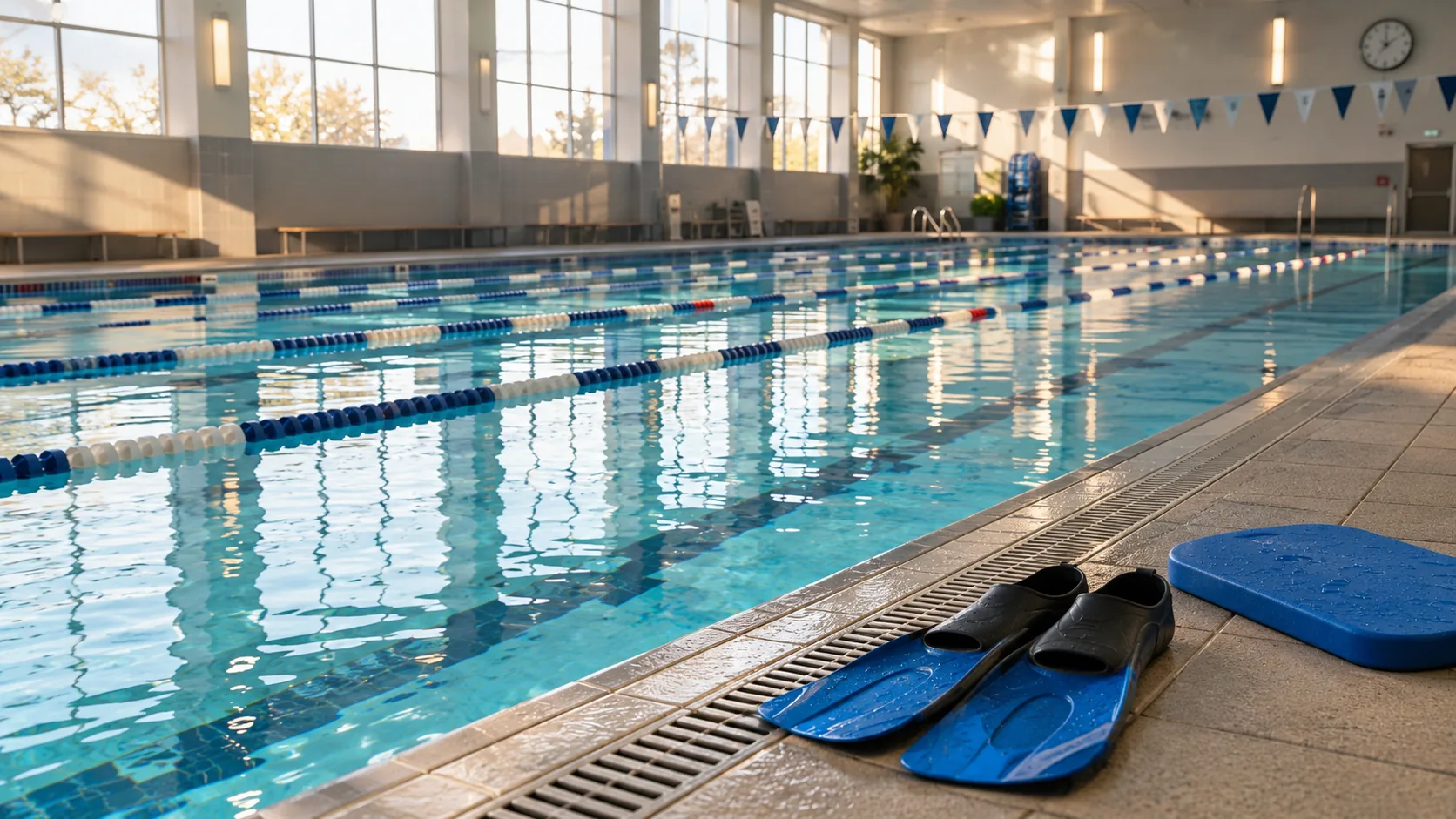
The right fin for swimming comes down to three choices: blade length, heel style and fit. Short blades suit technique work in the pool, long blades suit longer kick sets and open water, and a snug, adjustable foot pocket keeps the fin in place. Start with one pair, a few easy drills, and adjust from there.
This guide compares the fin types, shows how to check the fit, and gives a starter routine. It also explains how competitive finswimming uses the same idea with bi-fins and a monofin.
Choose a fin for swimming: the four decisions
Before you compare models, decide what you want the fin to do. A fin changes how your legs push water, so the same pair will not suit every goal. Use the table as a checklist.
| Decision | Option | Suits |
|---|---|---|
| Blade length | Short | Pool technique, drills, a natural kick tempo |
| Blade length | Long | Longer kick sets, lake and ocean swims, snorkeling |
| Heel style | Closed heel | Pool training, a shoe-like foot pocket |
| Heel style | Open heel with strap | Adjustable fit, use with booties or on rocky entries |
| Design | Bi-fins (one per foot) | Pool and open-water use |
| Design | Monofin (both feet, one blade) | Competitive finswimming and dolphin-style kick work |
Short blades vs long blades
Short blades
A short blade moves less water per kick, so it lets you keep a natural kick rhythm. Some swim coaches use short fins to add a little push while you work on body position, streamline and a steady flutter kick. They also fit in a gear bag with little fuss.
Long blades
A long blade gives each kick a longer lever, so you move with a slower, wider kick. That suits steady sets, lake swims and snorkeling, where you glide more than you sprint. Expect to feel the work in your hips and thighs, so begin with short sets.
Which one to start with
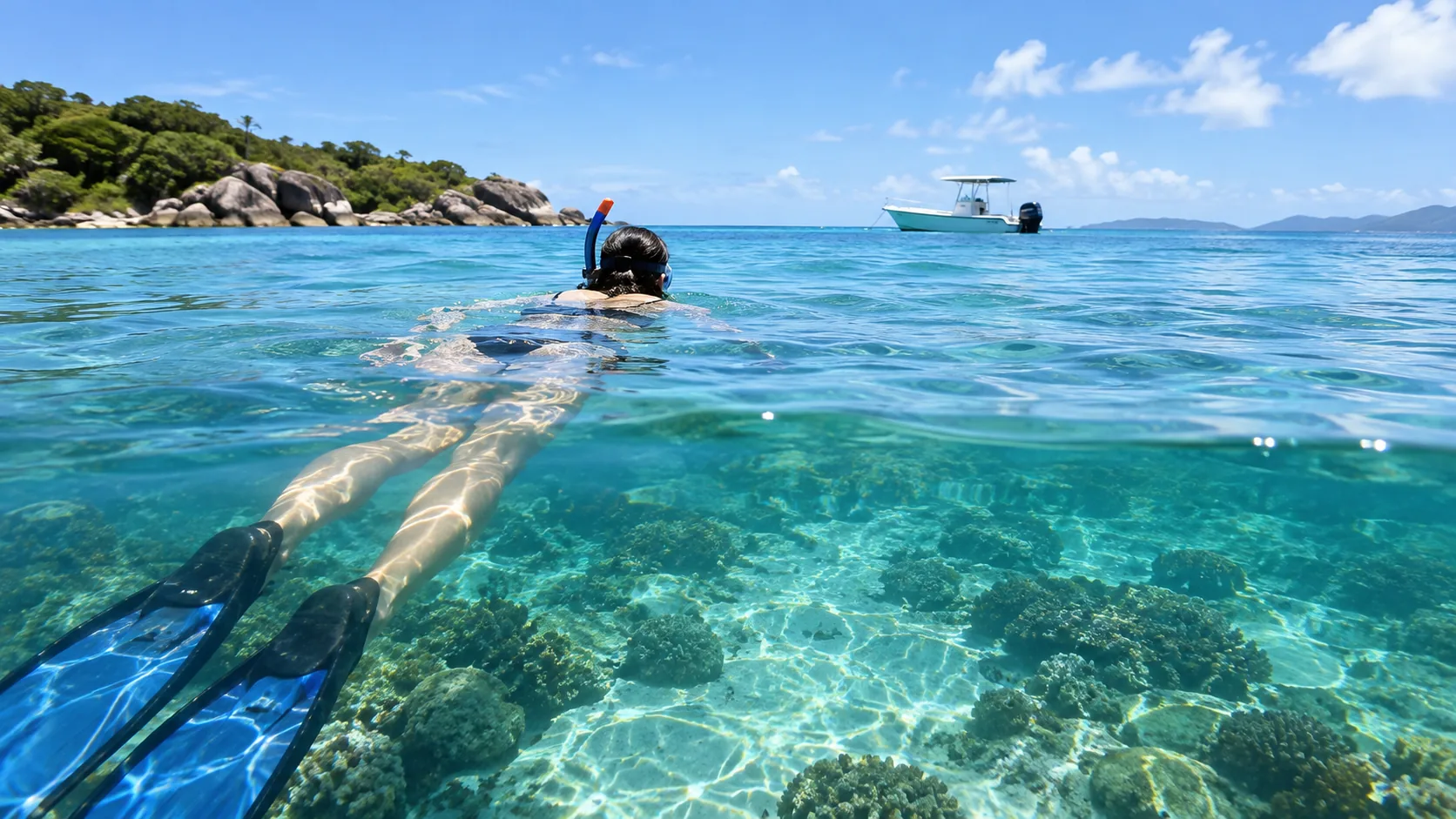
If you swim laps and want to work on your kick, start with a short blade. If you mostly swim in open water or snorkel, a longer blade or a frog-palm shape makes sense. You can own both once your routine settles.
Open heel vs closed heel
A closed heel is a full foot pocket that you slip on like a shoe. It has no straps to adjust, so sizing matters. An open heel leaves the heel exposed and uses a strap or buckle, which suits a wider range of foot sizes and lets you wear neoprene booties in cold water.
Check for these when you compare:
- The foot pocket holds your foot without sliding side to side.
- Toes sit near the front without bending against the edge.
- Straps or buckles can be loosened and tightened without tools.
- The sole gives some grip for walking on a wet deck or shoreline.
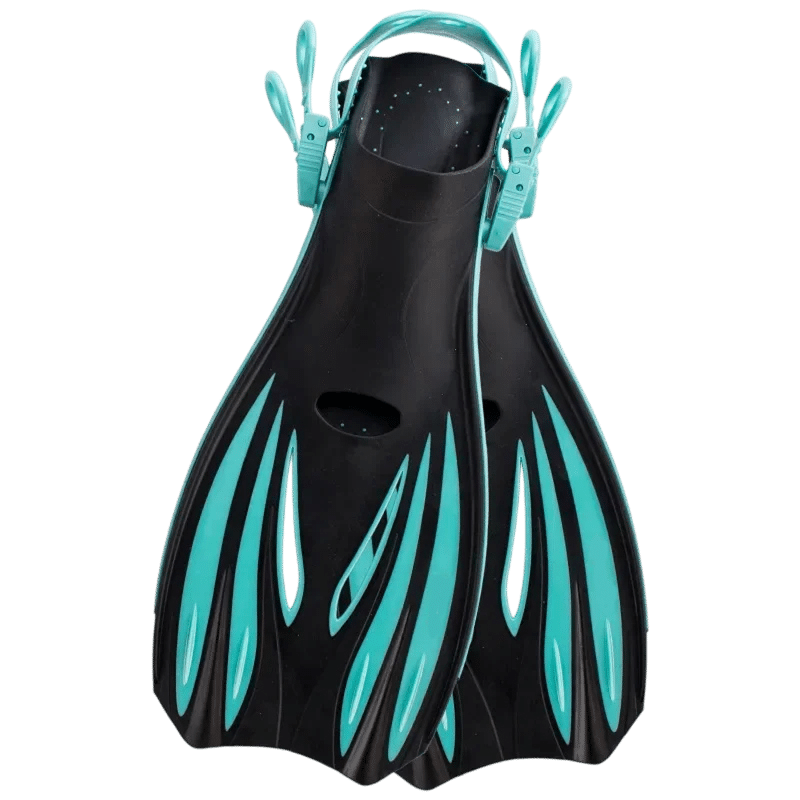
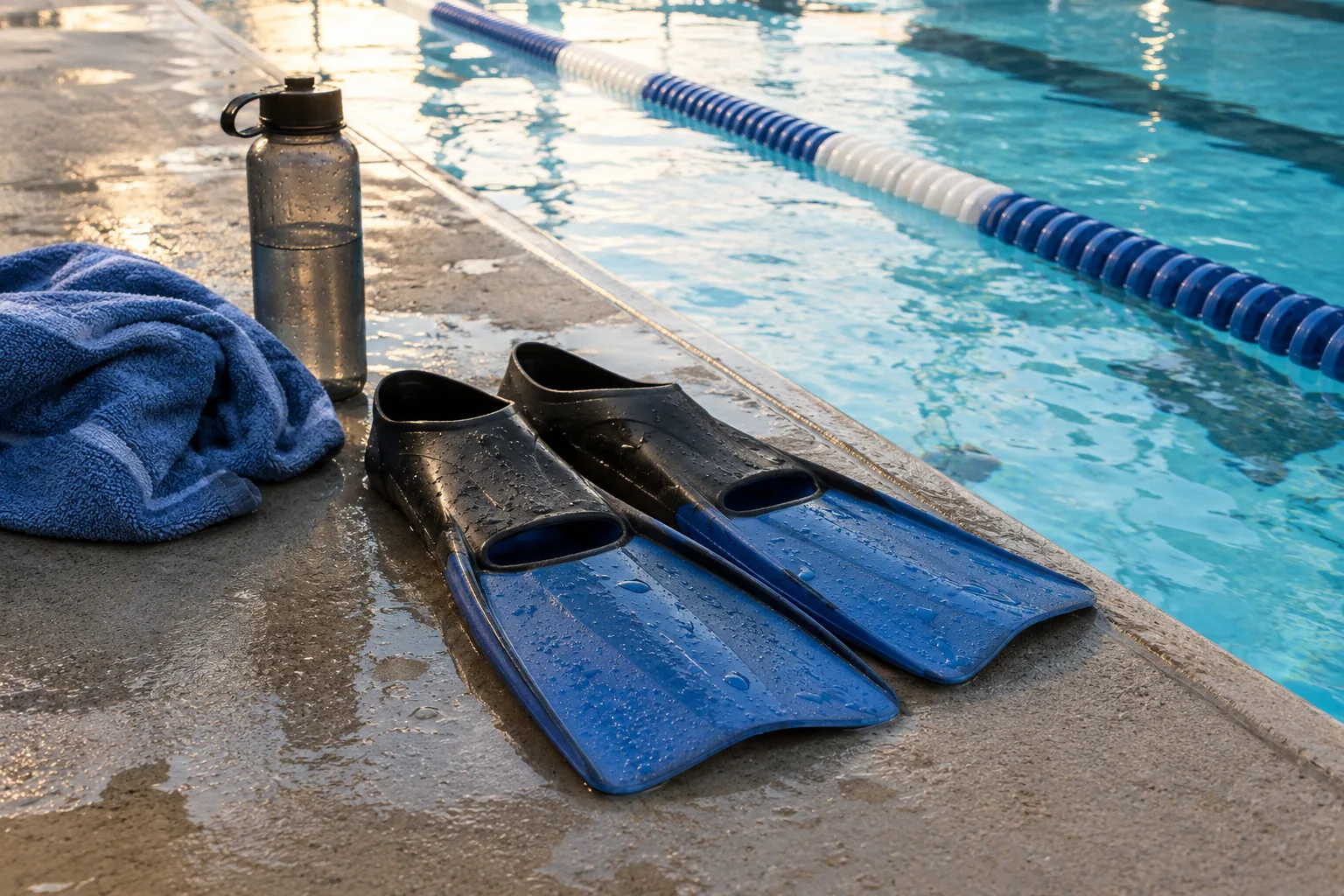
One option that covers several of these points is TidalFin. It has a frog-palm blade, a soft shoe cover and adjustable buckles, and the textured non-slip sole gives a patterned tread for wet decks and rocky shorelines. The reinforced TPR and PP construction forms a single shaped fin from foot pocket to blade tip, and the compact foldable design packs into a gear bag or carry-on.
 In this guideTidalFin$118.99View
Fit checklist before you get in
Fit decides whether a fin helps your kick or just gets in the way. Work through these steps on dry land first.
- Slide your foot into the soft shoe cover or foot pocket until your heel sits in place.
- Set the buckle to a firm tension, then stand and shift your weight to check for slipping.
- Walk a few steps. Your foot should not lift out of the pocket.
- Loosen the buckle if the strap presses into the top of your foot, then retighten once in the water if needed.
- Follow the quick-start fitting guide or the manual that comes with your pair.
If you plan to snorkel, pair the fins with a mask and snorkel that fit well. Our guide to snorkeling with a full face mask covers fit and checks for that side of the setup, and the Diving & Snorkeling collection lists related gear.
Starter drills with swim fins
Keep your first sessions short and simple. Use fins for part of the workout, then swim without them so you notice what your own kick does. Stop and rest whenever your legs feel tired.
| Drill | How to do it | Focus |
|---|---|---|
| Kickboard flutter | Hold a board, kick with small, steady strokes for a few lengths | Kick from the hips, ankles loose |
| Side kick | Lie on one side, lower arm extended, top arm resting along your body | Body line and balance |
| Vertical kick | In deep water, hold your arms crossed or above water and kick to stay upright | Kick size and ankle flex |
| Streamline kick on back | Arms overhead, face up, steady flutter kick | Hips high, relaxed shoulders |
| Fins on, fins off | Swim a length with fins, then a length without, same rhythm | Carry the kick tempo over |
Field note
Keep the kick small. Wide, bent-knee kicks make a fin work against you, while a kick that starts at the hips and ends with loose ankles lets the blade do its job.
Open water and snorkeling use
In a lake, bay or ocean, a longer blade or a frog-palm shape suits a steady, relaxed kick. Check local conditions, swim with a buddy and follow the manual and posted rules for the water you are in. Carry the fins to the water and fit them at the edge unless the sole is meant for walking.
For rocky entries, set the buckle before you step in. A textured sole gives tread on wet decks and shorelines, but step slowly regardless. Rinse your fins after each swim and let them dry before packing them away.

Finswimming: the sport behind the gear
Finswimming is a competitive sport where athletes race with fins. Races are held in pools and in open water over various distances, and events include relays for men and women and mixed teams. A world championship is held for the sport.
There are several disciplines:
- Surface finswimming uses a monofin, a mask and a snorkel, with the swimmer breathing through the snorkel.
- Apnoea is underwater swimming while holding one's breath.
- Immersion uses underwater breathing apparatus.
- Bi-fins races use a separate fin on each foot.
Competition fins are specialized, so a recreational pair is for training and fun, not a replacement. If you want to try the sport, look for a club or a swim program near you, since coaches can guide technique, equipment and rules for young and adult swimmers. Whether it appears at any major multi-sport games changes over time, so check the governing body for current details.
Common mistakes and care
- Choosing a size that is too loose, so the foot slides inside the pocket.
- Starting with long sets, then ending the session early because your legs are tired.
- Kicking from the knee instead of the hips.
- Using fins for the whole workout, so your unaided kick stays unchanged.
- Leaving fins in a hot car or a closed bag while wet.
For care, rinse with fresh water after pool or salt-water use, wipe the buckles, dry the fins in shade and store them flat or folded as the manual describes. Check the buckles and strap for wear before each swim, and replace worn parts rather than using them.