Snorkeling With a Full Face Mask: Fit, Use and Safety Checks
A full-face mask is for floating on the surface, not diving down. This guide covers fit, how the airflow channels work, beard questions and a checklist to run before every swim.
The Kesslund Team
October 25, 2026 · 7 min read
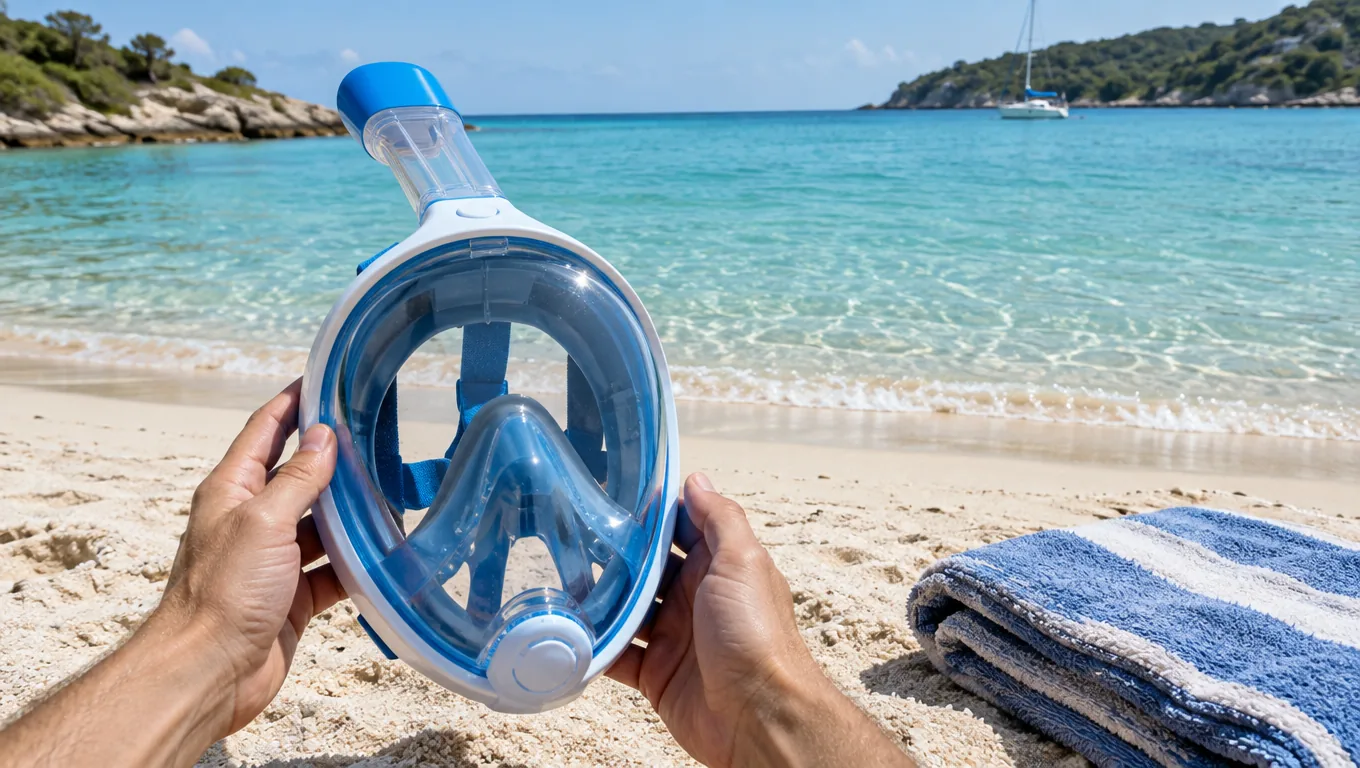
Snorkeling with full face mask gear means floating face-down on the surface while one mask covers your eyes, nose and mouth. The mask has to seal evenly against your face, and you stay on top of the water: a full-face mask is not built for diving down. Fit the strap, check the valves and agree on a plan with your swim partner before you enter the water.
This guide covers sizing, putting the mask on, how the airflow design works, its limits, and a checklist to run before every swim.
How a full-face snorkel mask works
A traditional setup has a mask over your eyes and nose plus a separate snorkel tube you bite. A full-face mask replaces both with one shell. You breathe through your nose or mouth, and the air travels through a snorkel built into the top of the shell.
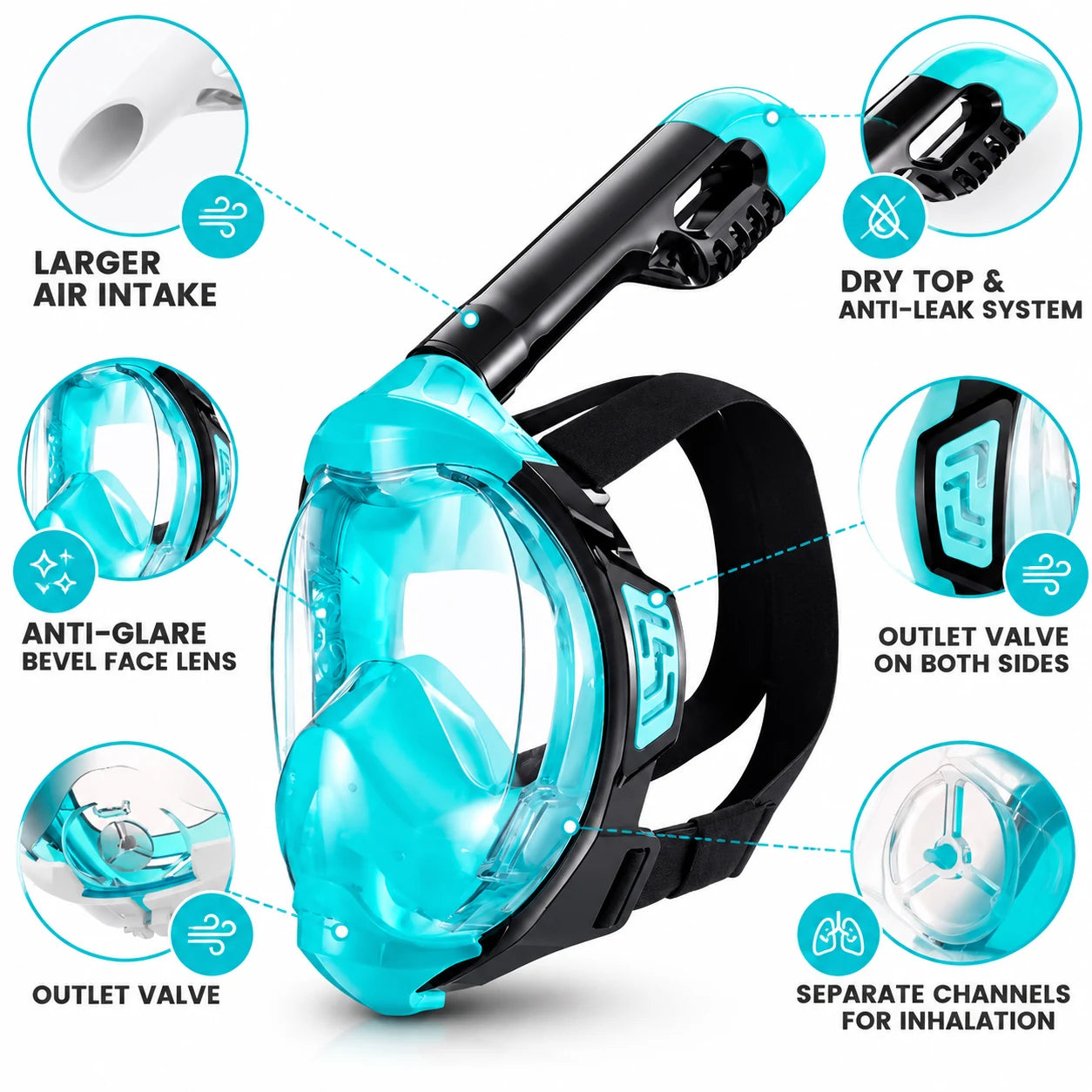
Some designs use separate air channels: one path for inhaling and one for exhaling. A dry-top snorkel with a float valve closes the tube when a wave pushes the top under, and a purge valve lets you push out water that collects inside. Read your manual to see which valves your mask has and how they work.
Exhaled air and why it matters
Every breath you exhale carries carbon dioxide (CO2). In a large shell that covers your nose and mouth, some of that exhaled air can linger instead of leaving through the tube. If you breathe it back in, the air feels stale and you may want to breathe harder.
This is the reason designs separate the inhale and exhale paths, and the reason you should breathe slowly and deeply. If the air ever feels stale, lift your head, remove the mask and breathe fresh air. Airflow design helps, but it does not replace paying attention to how you feel.
What it does not do
A full-face mask does not supply oxygen or any air of its own. You breathe surface air through the tube, so the tube must stay above the water. It is also a different tool from a scuba or freediving mask. Can you swim underwater with it? The plain answer is no: stay on the surface, and do not dive down or hold your breath below it.
One reason is pressure. With a small mask you can pinch your nose to equalize as you descend. A full-face shell covers your nose, so that option is gone. Another reason is the tube, which works only while its top is clear of the water.
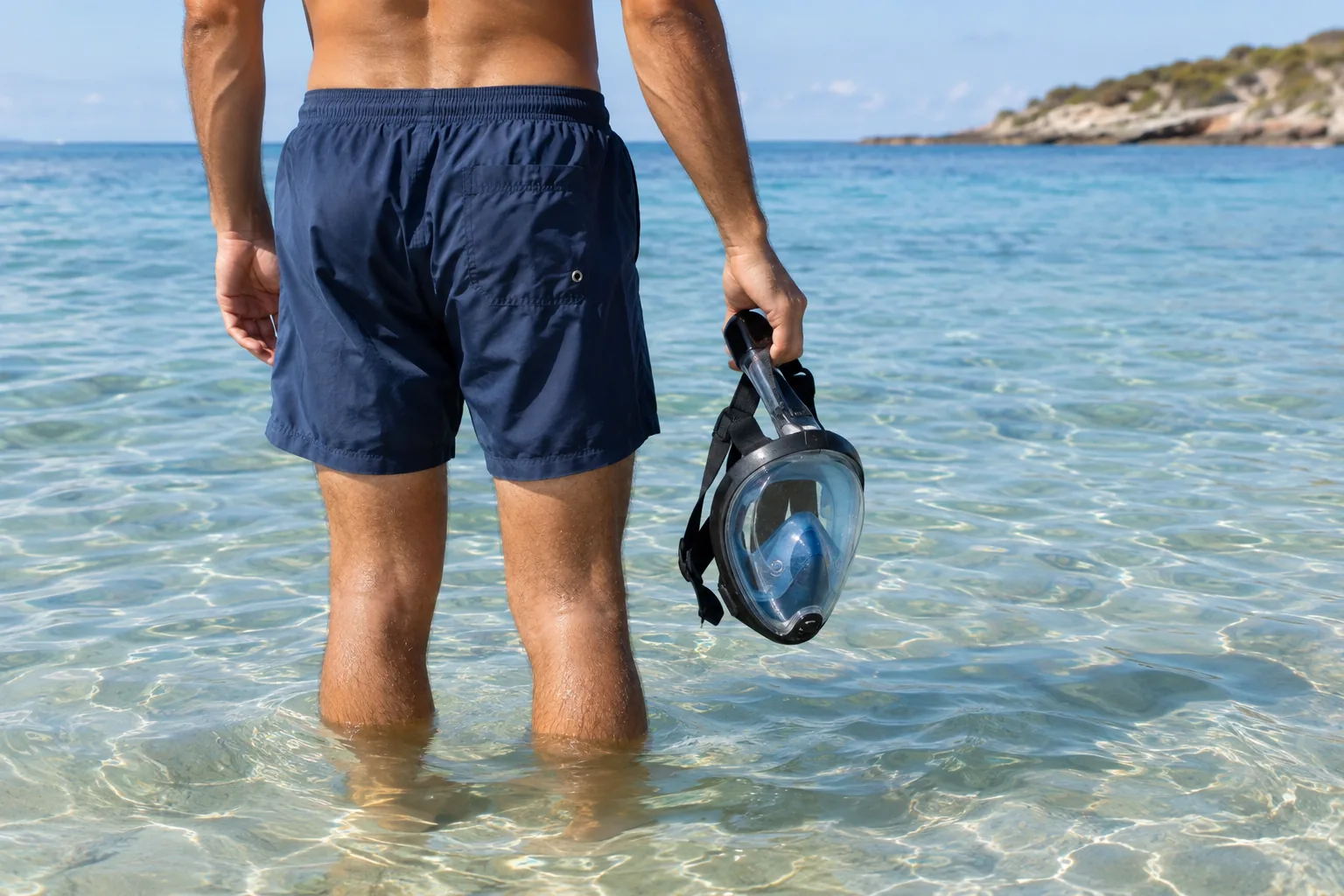
Fit: sizing and the seal
Fit decides how the mask behaves in the water. The silicone skirt should rest evenly against your forehead, cheeks and chin, with no folds. A mask that is too large or too small can leave gaps, so choose a size before the trip rather than on the beach. Some masks come in multiple sizes, so check the sizes listed on the product page or the sizing information in the manual.
Narrow and wide faces
A narrow face can leave the skirt loose at the cheeks, while a wide face can pull the skirt flat and lift it at the chin. Neither is fixed by cranking the strap. Try the next size up or down, and compare how the skirt sits at the forehead and chin before you pick. Try the mask on at home, with the strap adjusted, before you travel.
Adjusting the strap
Tighten the strap until the skirt sits snug, not crushing. Pull hair out from under the skirt, because a strand across the seal can let water in. Center the strap at the back of your head and keep it flat.
Beards and facial hair
If you wonder about a full face snorkel mask with a beard, the answer comes from the seal. Hair that runs under the skirt, along the jaw or upper lip, can leave channels for water. Trim hair along the skirt line, test the fit in shallow water, and follow what the manual says. If the mask keeps taking on water, a different mask style may suit you.
Seal check, area by area
| Check | What you want | If it is off |
|---|---|---|
| Forehead | Skirt flat, no folds | Re-seat the mask and smooth the skirt |
| Cheeks | Even contact on both sides | Center the strap and adjust it evenly |
| Chin | Skirt sits under the chin without lifting | Try another size |
| Strap | Snug and flat on the back of the head | Re-adjust, hair out of the way |
| Hair or beard | None under the skirt | Trim or tie back before the swim |
Snorkeling with full face mask: putting it on, step by step
- Loosen the strap fully and pull hair away from your face.
- Hold the mask against your face and bring the strap over the back of your head.
- Tighten the strap a little at a time on both sides until the skirt sits snug.
- Breathe normally through your nose and mouth on dry land for a few breaths. Remove the mask if breathing feels restricted.
- Find the strap release and practice taking the mask off with one hand.
- Wade in until the water is waist deep, then float face-down and breathe slowly.
Keep your breathing slow and steady. If you feel short of breath, lift your head, take the mask off and rest. If you have a breathing condition, ask a healthcare provider before using a full-face mask.
Field note
Practice removing the mask while standing in shallow water, before you float. Knowing exactly where the strap release is lets you act at once if you want to stop.
A full-face mask option
If you are choosing a mask, the AquaVista is a full-face snorkeling mask with a wide-angle lens, a silicone skirt and an adjustable quick-release strap. It has separate inhale and exhale channels, a dry-top snorkel with a float valve, and a purge valve. The lens gives a 180° panoramic view, so you can follow fish across a reef without turning your head as far as you would with a small-window mask.
It comes in multiple sizes, and the lens carries an anti-fog coating meant for warm, humid water. An integrated bracket holds an action camera for surface snorkeling, and the box includes camera mounting accessories and an illustrated user manual.
 In this guideAquaVista$99.99View
Pre-swim checklist
Run through this list each time, even with a mask you have used before.
| Step | What to check |
|---|---|
| Inspect the shell | Look for cracks, a torn skirt or a loose lens |
| Check the valves | Float valve, purge valve and snorkel top move freely and are free of sand |
| Check the strap | Release works with one hand, buckles are intact |
| Dry fit | Seal is even, breathing is slow and unobstructed |
| Water conditions | Calm surface, no strong current, boat traffic or heavy waves |
| Partner | Agree on a signal and stay within sight of each other |
| Exit plan | Know where you will get out and how far away it is |
Limits of snorkeling with full face mask gear
- Do not dive down or duck under with the mask on. The snorkel top works only while it is above the water.
- Do not swim alone. Pair up and keep each other in view.
- Do not hard-swim or race. Move slowly so exhaled air clears through the tube and your breathing stays steady.
- Do not use a mask that does not fit, or one with a cracked shell or a damaged valve.
- Do not ignore stale or stuffy air. It can mean exhaled air is building up inside the shell, so lift your head, remove the mask and breathe fresh air.
- Do not wear it in rough water or strong current. Choose calm, shallow spots.
Because the mask covers your nose and mouth, remove it at the first sign of trouble. This is why the strap release matters as much as any feature on the box.
Gear to bring with the mask
A common list of the seven basic pieces of snorkeling equipment is a mask, a snorkel, fins, a flotation device, a rash guard or wetsuit, sun cover and a gear bag. With a full-face mask the snorkel is built in, so the mask covers two of those items. Fins and a flotation device are worth adding for surface swimming, and the Diving & Snorkeling collection lists more gear. If you are packing for a longer trip, the travel camping packing checklist is a useful template for building your own list.
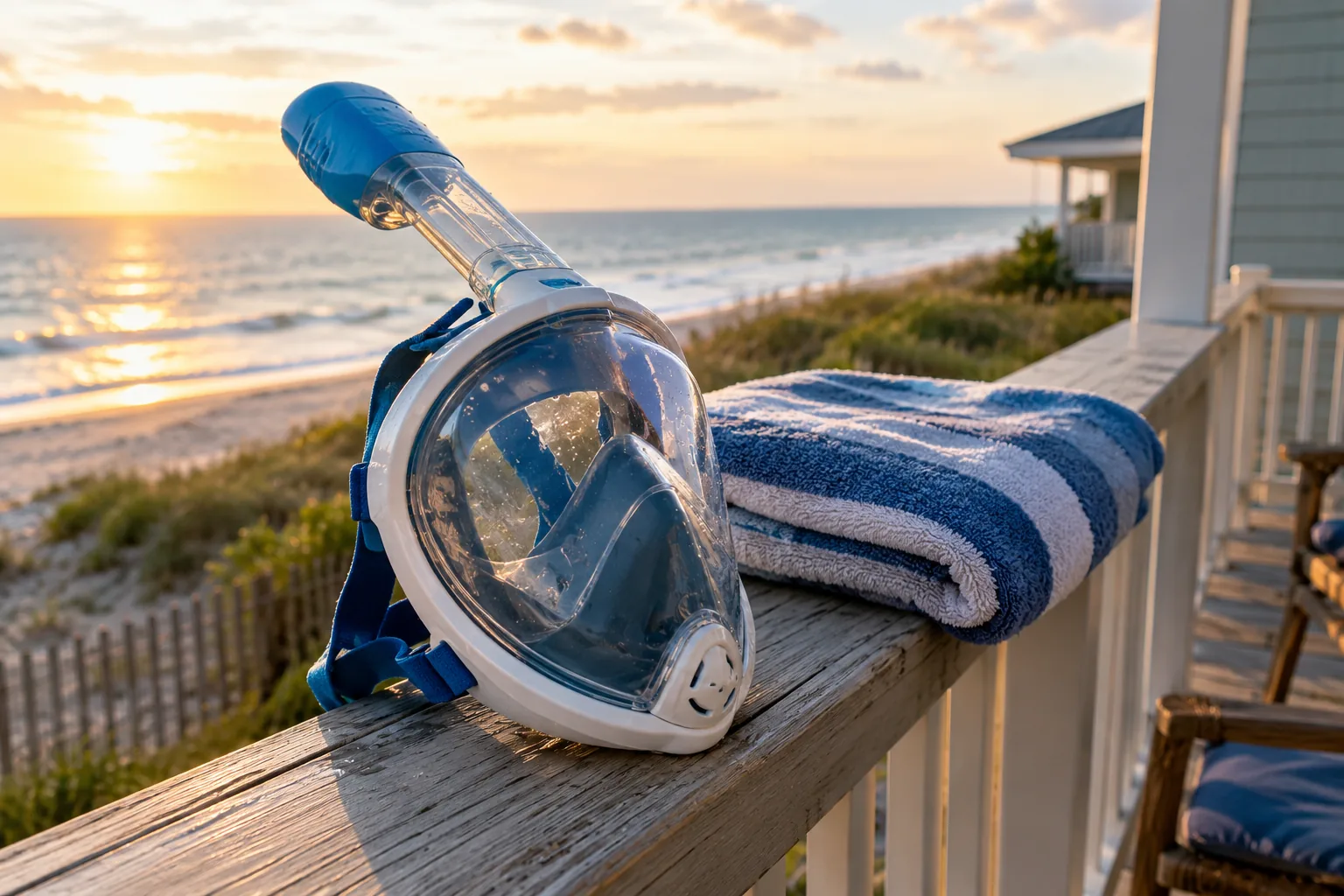
Care after the swim
Rinse the mask with fresh water after each use, including the valves and snorkel, to clear salt and sand. If your mask has an anti-fog coating, do not rub the lens; rinsing is how you look after it. Let the mask dry in the shade, then store it away from direct sunlight to preserve the lens coating and silicone seal.
Check the skirt and strap every few trips for wear. Replace anything that looks cracked, stretched or stiff, and follow the manual for cleaning steps.