Ski Poles Size Chart: How to Pick the Right Length
Find your height on the chart, then check it with the elbow test: pole upside down, hand under the basket, elbow near 90 degrees. Adjust for your skiing style.
The Kesslund Team
October 29, 2026 · 6 min read
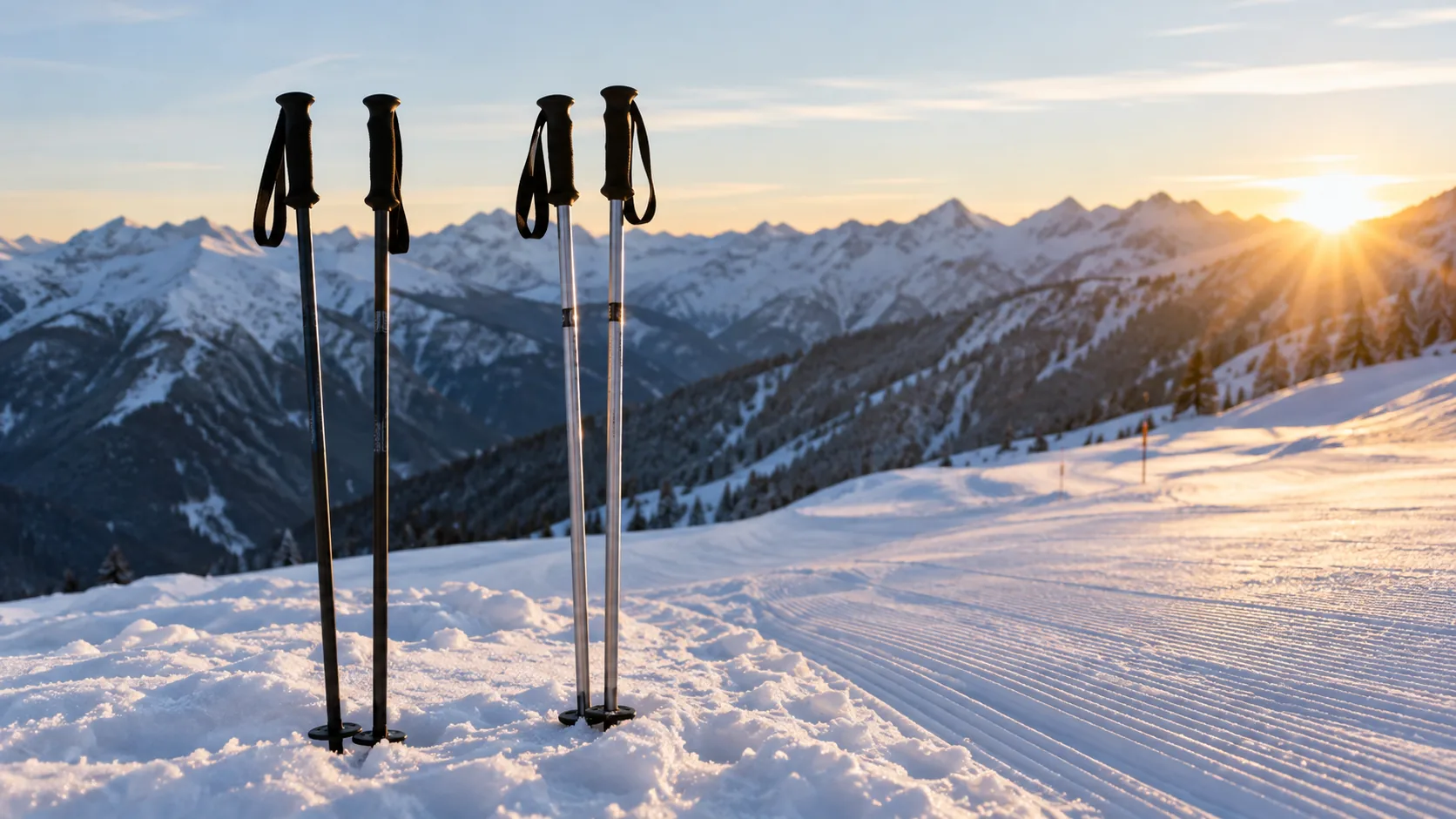
A ski poles size chart gives you a starting length from your height: a 6'0" (183 cm) adult starts near 120 cm (47 in), and in the middle of the chart each step of about 3 inches (7-8 cm) of height moves the pole about 5 cm (2 in). Confirm the number with the elbow test: grip the pole upside down just under the basket and check for a 90-degree bend at the elbow.
This guide has the chart in centimeters and inches, a kids' table, the in-store test step by step, and the changes to make for alpine, touring and cross-country skiing.
Ski poles size chart by height
Use this table as a starting point for alpine (downhill) poles. Stand in your normal posture, find your height, and read across. If you fall between two rows, the elbow test below decides which one to take.
| Your height | Pole length (cm) | Pole length (in) |
|---|---|---|
| 4'0" (122 cm) | 85 cm | 33 in |
| 4'6" (137 cm) | 95 cm | 37 in |
| 5'0" (152 cm) | 100 cm | 39 in |
| 5'3" (160 cm) | 105 cm | 41 in |
| 5'6" (168 cm) | 110 cm | 43 in |
| 5'9" (175 cm) | 115 cm | 45 in |
| 6'0" (183 cm) | 120 cm | 47 in |
| 6'3" (190 cm) | 125 cm | 49 in |
| 6'5" (196 cm) | 130 cm | 51 in |
Reading the ski poles length chart
Pole length is measured from the top of the grip to the tip, so the same size chart for ski poles applies whatever pole you choose. Fixed-length poles come in 5 cm steps, so pick the closest size. That also answers the question about 120 cm poles: they fit a skier around 6'0" (183 cm).
Kids' pole lengths
Children follow the same logic at smaller sizes. These rows are general starting points, and the 4'0" row matches the main chart.
| Child's height | Pole length (cm) | Pole length (in) |
|---|---|---|
| 3'0" (91 cm) | 65 cm | 26 in |
| 3'6" (107 cm) | 75 cm | 30 in |
| 4'0" (122 cm) | 85 cm | 33 in |
Let the child try the elbow test in ski boots, since boot height changes the result. If you are unsure, go a size shorter and move up as they grow.
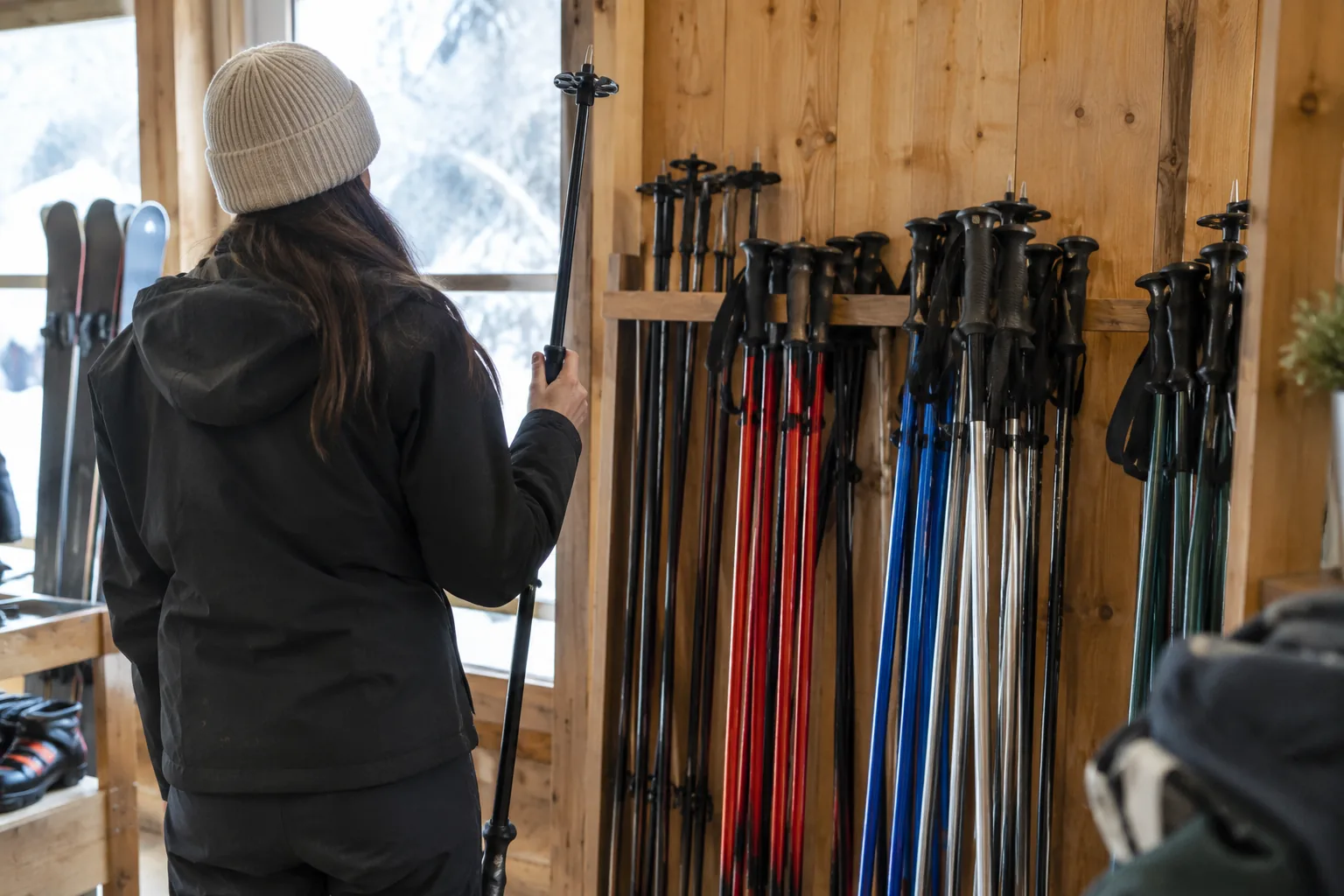
The elbow test for ski pole length
The elbow test works with any pole, in a shop or at home. Do it in your ski boots, because boot height adds to your standing height.
- Stand on a flat, hard floor in your ski boots with your feet shoulder-width apart.
- Turn the pole upside down so the grip is on the floor and the basket is on top.
- Grip the shaft just under the basket, with your upper arm against your side.
- Check your elbow. A bend close to 90 degrees means the length fits.
- If your forearm points up, the pole is too long. If it points down, the pole is too short.
If the numbers disagree, go with the test. Your torso and arm length matter as much as your height, so two skiers of the same height can need different poles.
Field note
Do the test with the basket on and your hand off the strap, so the strap does not change where you grip the shaft. Add the strap only after the length is settled.
Poles and skis are sized separately
Ski length is its own choice, based on your height, weight and ability, and it follows the maker's ski chart. Poles are sized by your height and the elbow position above, so a ski size does not tell you a pole size, and the reverse is also true.
Adjust length for your skiing style
The 90-degree elbow is the baseline. Small changes help the poles suit the way you ski, and a telescopic pole lets you make them on the hill.
| Style or terrain | Adjustment from baseline | Why |
|---|---|---|
| Groomed alpine runs | Baseline length | Elbow near 90 degrees |
| Park and moguls | 5 cm (2 in) shorter | Hands stay low and compact |
| Deep snow | Baseline, with large baskets | Larger baskets sit higher in soft snow |
| Ski touring, uphill | 5 to 10 cm (2 to 4 in) longer | Extra reach on steep slopes |
| Ski touring, downhill | Baseline or slightly shorter | Matches an alpine stance |
| Beginner | Baseline or slightly shorter | Less forward reach to plant the pole |
Make small changes. Move the length by one notch or about 5 cm (2 in), ski a run, then decide whether to go further.
Advanced skiers and steeper terrain
An advanced skier on steeper pitches may prefer poles a touch shorter, so the hands stay quiet on a pole plant. On long flat traverses or uphill sections, a longer setting gives more reach.
Cross-country poles
Cross-country poles are longer than alpine poles. Classic poles generally reach about the armpit when you stand in shoes, and skate poles reach about the chin. Check the maker's chart for your discipline, since the numbers differ from the alpine table above.
Pole features that affect fit
Length is one part of the choice. These parts decide how the pole handles once you have the number.
Strap, grip and basket
The wrist strap lets you slip your hand through and rest it on the grip. Baskets sit near the tip: small baskets suit hard-packed ground and rock, while large powder baskets suit snow and soft ground.
Material and adjustment
Shafts are made from aluminum or carbon. Aluminum is a metal alloy, while carbon is a fiber composite. Fixed poles have one length. Adjustable poles use a locking collar so you can change length for the day or the terrain.
If you want one pair to cover several heights or activities, the ApexTrek is a pair of adjustable ski and trekking poles. The cam-lever flip-lock collar adjusts from 95 to 135 cm (37 to 53 in), which covers the chart rows from 95 cm to 130 cm. The shafts are 6061 aluminum alloy with an EVA grip and tungsten carbide tips, and both small and large powder baskets are in the box.
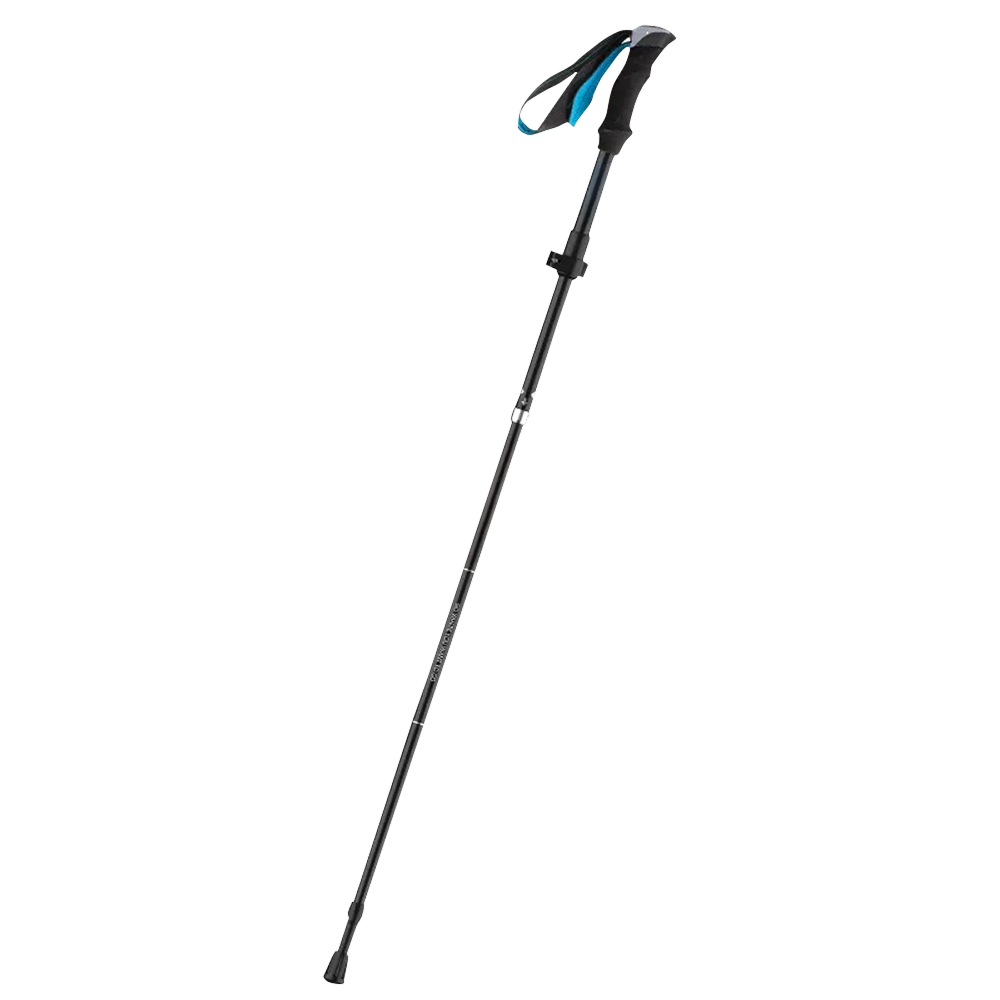 In this guideApexTrek$99.99View
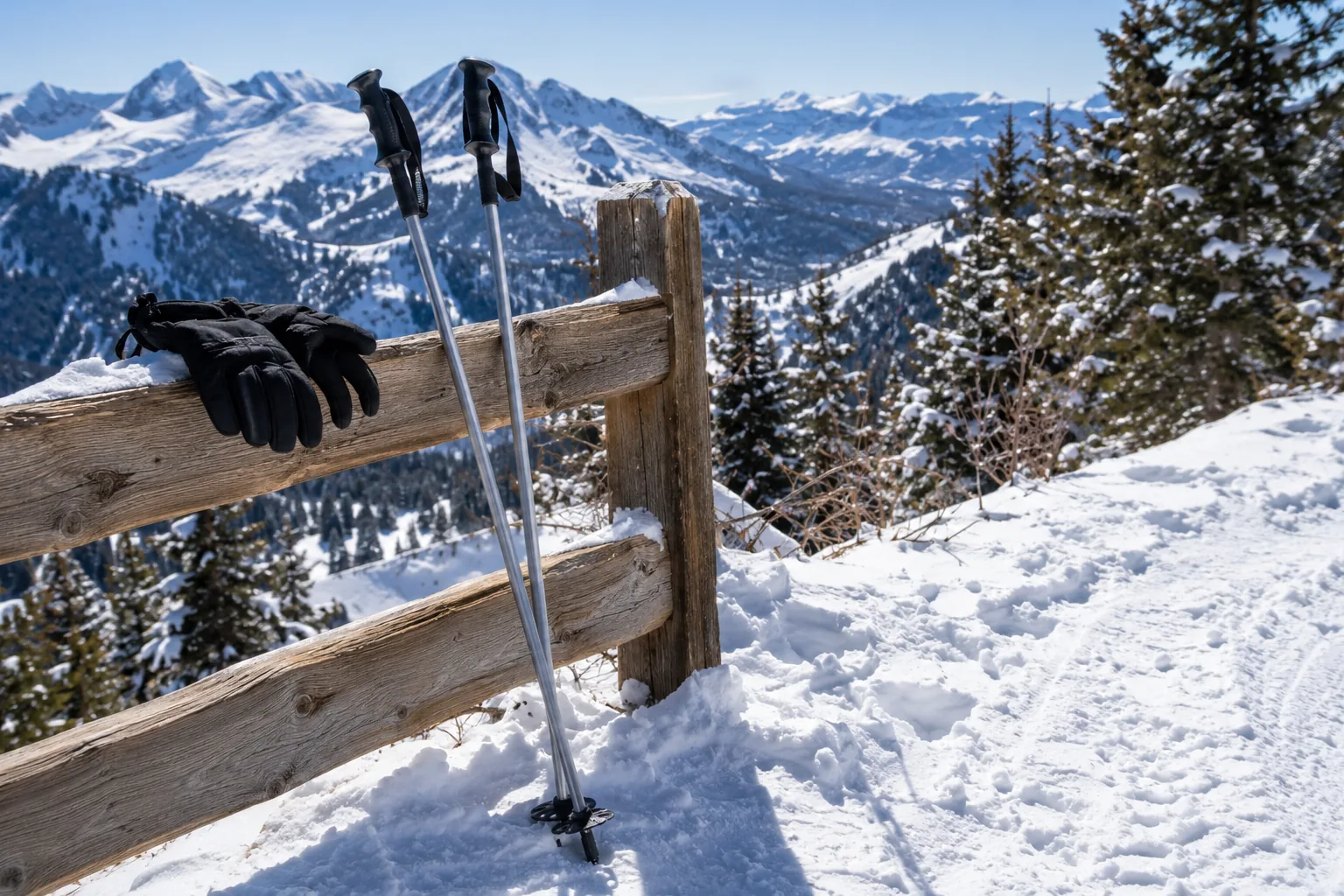
Setting an adjustable pole
With the ApexTrek, flip open the lever collar, slide the shaft to your height within the 95–135 cm (37–53 in) range, and flip the lever shut. The lever works with one thumb and over gloves, and you need no tools. Follow the manual, and check that the collar is closed before you put weight on the pole.
- Find your row in the chart and set the pole to that length.
- Do the elbow test in your ski boots.
- Move the collar a notch up or down to match your style.
- Fit the basket to the snow: small for hard ground, large for powder.
- Walk a few steps and plant the pole to check that the length holds.
You can browse more gear in the Climbing & Winter Sports collection.
Common sizing mistakes
- Measuring in socks or street shoes instead of ski boots.
- Holding the pole above the basket instead of just under it.
- Choosing by height alone when your arms are long or short.
- Going longer for extra reach on groomed runs, which lifts the shoulders.
- Leaving a collar half closed after adjusting.
- Using small baskets in soft snow, where the pole sinks.
What ski poles are for
Ski poles help you balance, set your rhythm and time your turns. They also help you push along flats and walk on traverses or uphill sections. The right length keeps your hands in front of you and your shoulders level, which is why the elbow test matters.