What Are Strides in Running? How to Do Them and When
Strides are short, relaxed accelerations run after an easy jog. Here are the distance, reps, rest and weekly placement, with a simple timing setup.
The Kesslund Team
November 20, 2026 · 6 min read

What are strides in running? Strides are short, controlled accelerations, about twenty seconds each, run at a fast but relaxed pace with a full walk or jog back between them. A typical set is four to eight reps, added to an easy run two or three days a week. This guide gives you the distance, reps, rest and weekly placement, plus a simple timing setup.
What are strides in running, and what are they not?
A stride is a short controlled acceleration. You start from a jog, build speed over the first few steps, hold a smooth fast pace through the middle, then ease off. The goal is quick, light, tall running form, not a maximum effort.
Strides are not intervals and not sprints. They are short enough that you finish ready to keep running, and they sit beside your normal runs instead of replacing them. Many plans use them to add turnover practice to easy days without turning the day into a workout.
Strides vs sprints
The two look alike on a track, but the intent differs. Use this table to keep them apart.
| Feature | Strides | Sprints |
|---|---|---|
| Effort | Fast but relaxed, controlled | Close to all-out |
| Length | Around twenty seconds, or 80 to 100 meters (about 90 to 110 yards) | Set by the workout |
| Rest between reps | Walk or jog back until you feel ready | Full rest, set by the workout |
| Where in the week | End of an easy run, two or three days | Its own session |
| Focus | Form, rhythm, turnover | Top speed |
Is a stride 1 step or 2?
In gait terms, a step is one foot landing, and a stride is two steps: left then right, one full cycle. In training talk, strides means the short accelerations described here, so the word covers a whole repeat, not a single step.
Distance, time and reps for each stride
Pick either time or distance and stay consistent. If you prefer distance, mark 80 to 100 meters (about 90 to 110 yards) with a lamppost, cones or the straight of a track. If you prefer time, use the table.
| Level | Time per stride | Reps | Walk or jog back |
|---|---|---|---|
| Beginner | Fifteen seconds | 4 | About a minute, until you feel ready |
| Building | Twenty seconds | 5 to 6 | About a minute, until you feel ready |
| Experienced | Twenty to thirty seconds | 6 to 8 | About a minute, until you feel ready |
For running strides for beginners, start at the first row for a few weeks and add one rep at a time. A twenty-second stride is simply a stride timed for twenty seconds: a few seconds to build speed, a middle stretch at a quick relaxed pace, and a few seconds to ease off.
Keep the effort at a level where your form stays tall and loose. If your shoulders rise or your steps turn choppy, shorten the next rep.
A timing setup for strides
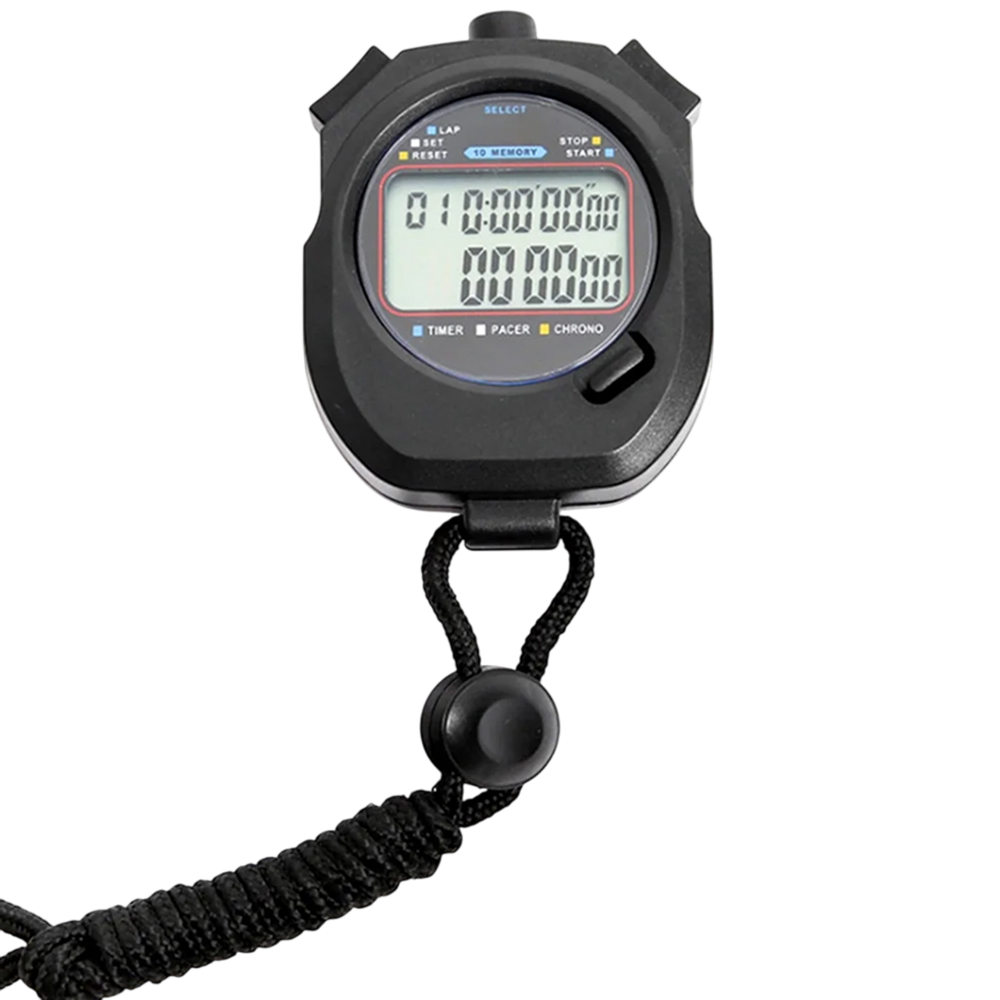
Guessing the length tends to drift, so time both the stride and the rest. A handheld stopwatch with countdown mode, stopwatch mode and pacer mode covers it without a phone.
- Jog easy to warm up, then stand at your start line.
- Set the countdown to your stride length, such as twenty seconds, and press start as you begin to accelerate.
- Ease off when the countdown ends, then walk or jog back.
- Switch to stopwatch mode and let the walk back run for about a minute.
- Start the next rep when that time is up and you feel ready.
- Stop after your planned reps, then jog easy to cool down.
TempoGuard has stopwatch, countdown and pacer modes on one device, and a single tap switches between them. Its oversized, high-contrast display lets you read times from where you stand, and the secure lanyard keeps your hands free.
 In this guideTempoGuard$49.99View

Field note
Run the first rep at about half of your fast pace. Raise the effort a little on each rep and keep the last one close to the one before it.
Where strides fit in your week
Strides go on days when the main run is easy, or before a harder session as a primer. Two or three days a week is a sensible start. Skip them on the day of a long, hard workout.
This table shows where they fit among nine run types that plans commonly name.
| Run type | Strides? |
|---|---|
| Easy run | Yes, at the end |
| Very easy jog | Optional, keep them short |
| Long run | Optional, only if you feel fresh |
| Progression run | Not needed, the run builds pace itself |
| Tempo run | Yes, before the workout |
| Interval session | Yes, as part of the warm-up |
| Hill repeats | Optional, the hills add similar work |
| Fartlek | Optional, the pickups cover it |
| Race day | Yes, a few after the warm-up jog |
A sample week: an easy run with strides on Tuesday, a workout day on Thursday with strides in the warm-up, and an easy run with strides on Saturday. Leave the other days for rest or plain easy running.
How to do strides at the end of a run
Finish the easy miles first, then walk for a minute and breathe. Choose a flat stretch that is straight and clear, then run your strides. Finish with a short jog or walk.
Strides on a treadmill
The same pattern works indoors. Raise the speed over the first few steps, hold your fast pace, and lower it again, keeping one hand near the controls. Step to the side rails for the rest, or slow to a walk. Follow the manual for your machine, and see our walking pad vs treadmill comparison if you are choosing equipment for speed work.
Evening strides
Short days push some sessions to dusk. Pick a lit, familiar stretch and keep your headlamp beam pointed ahead. The headlamp setup guide covers beam angle, fit and battery.
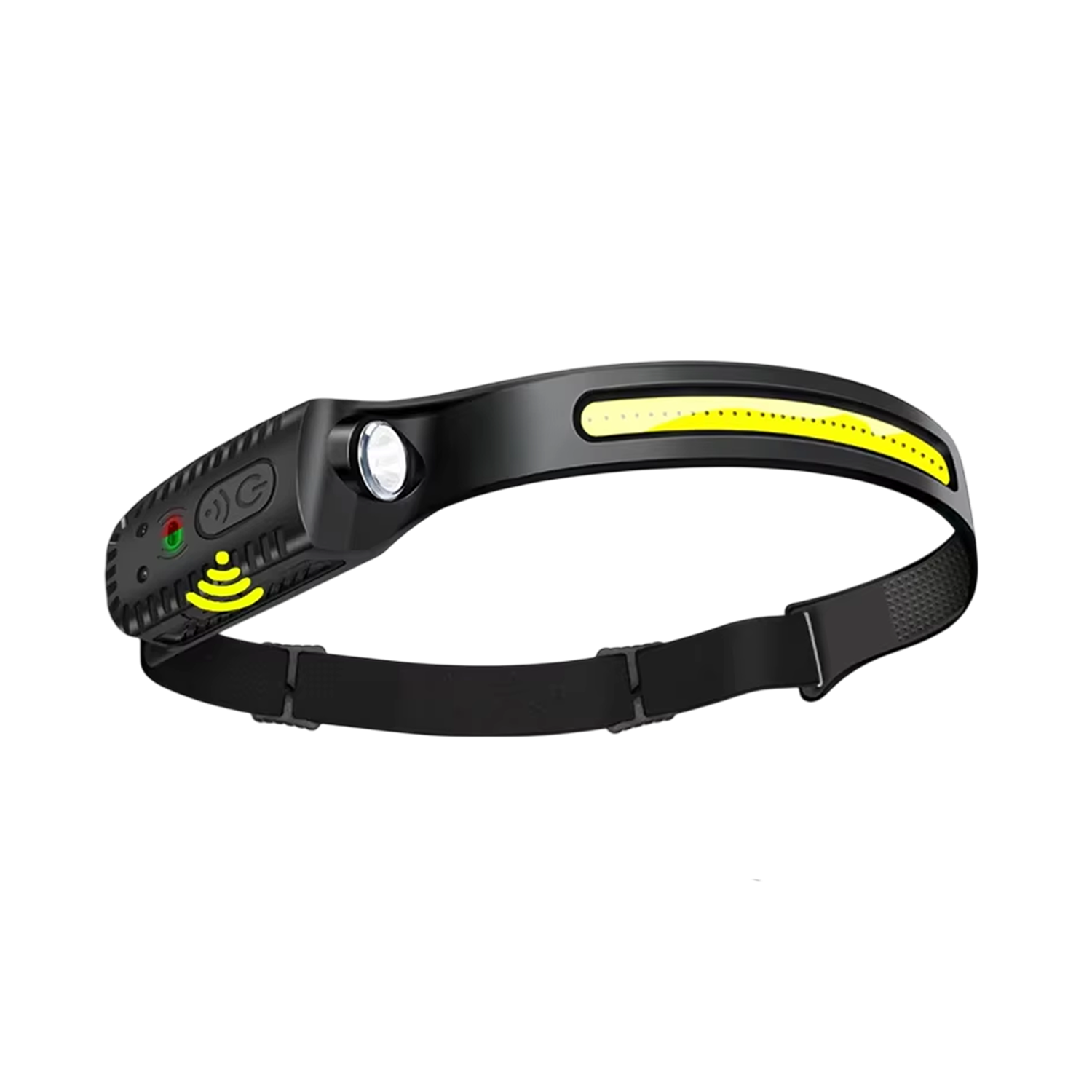
BeamStride is a running headlamp on an adjustable head strap. A hand sensor steps through its five lighting modes, so you can change modes while moving, and the built-in battery charges over Type-C.
 In this guideBeamStride$69.99View

Common mistakes with strides
- Running every rep at all-out effort, which turns strides into sprints.
- Starting hard from a standstill instead of building speed from a jog.
- Cutting the walk back short, so later reps get sloppy.
- Adding strides to a day that is already a hard workout.
- Running them on uneven ground, wet leaves or a crowded path.
- Stretching the length each week instead of adding reps first.
If you are new to fast running, ask a qualified coach before adding them. For home sessions, browse the Home & Trail Fitness collection.
Quick checklist before you start
Warm up with an easy jog, pick a flat stretch, set your timer, and plan the reps before you begin. Keep the pace fast but relaxed, walk back fully, and stop at the number you planned. That is what strides in running look like in practice: short, repeatable and controlled, added to the end of your easy runs a few days a week.