Ankle Weights Weight: How to Choose Pounds, Fit and Style
Start with 1 to 2 lb per ankle, move up in small steps, and match the style and strap fit to how you plan to move. Here are the decision steps.
The Kesslund Team
November 14, 2026 · 6 min read
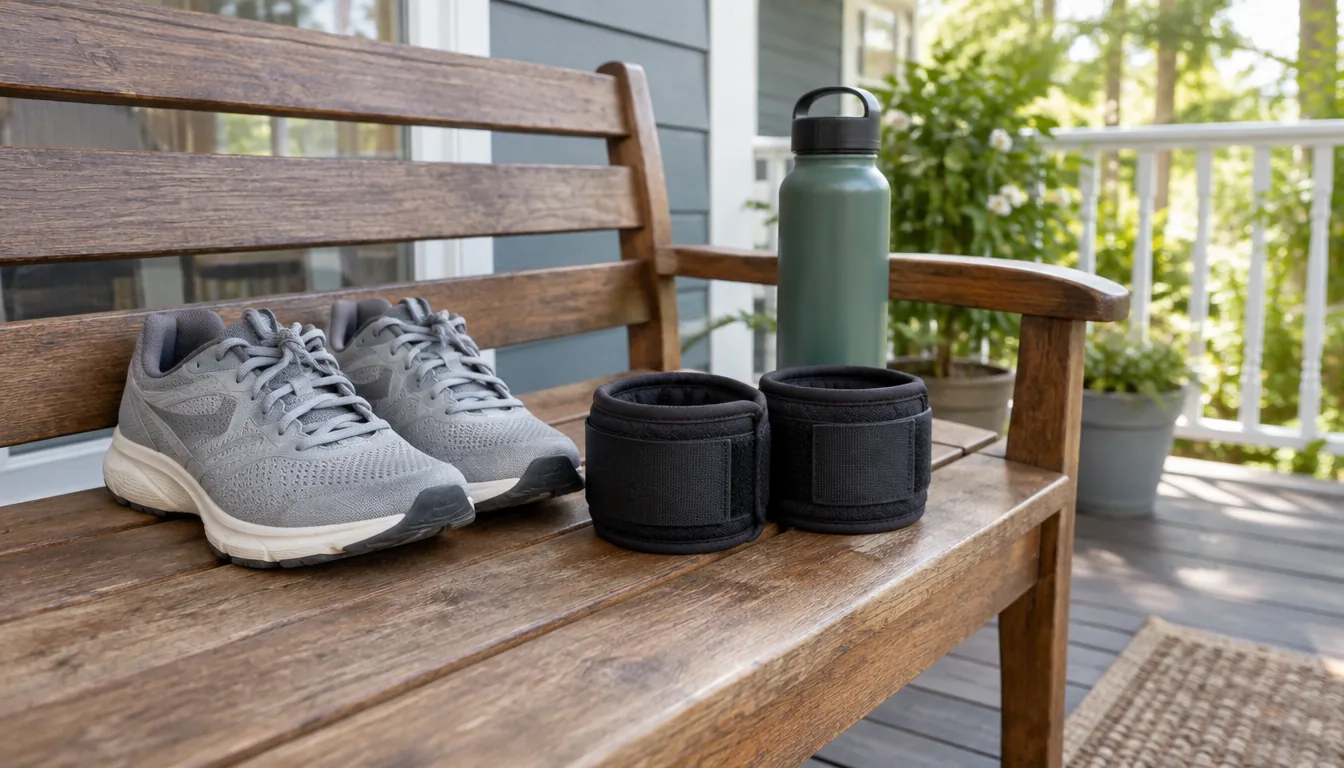
The right ankle weights weight is a light load you can wear while your stride or movement form stays the same. For a first week, start at 1 to 2 lb per ankle, then add small steps only when form holds through the whole session. This guide walks you through the decisions in order: load, fixed or adjustable, ankle or wrist, strap fit and how to use them.
We keep this to gear choice and setup. For questions about what added load does for your body, or if you have a joint or health concern, ask a physical therapist before you start.
How to pick your ankle weights weight
Weights are sold per pair or per single cuff, so check the label. A listed 2 lb pair is 1 lb per ankle, while a 2 lb cuff is 2 lb on each leg. This mix-up is the first reason a load feels off.
Pick the weight for the way you plan to move, not for the heaviest number you can strap on. Slow, controlled movements tolerate more load than a long walk, because a walking stride swings the weight on every step.
| Use | Starting load per ankle | Step up when |
|---|---|---|
| Walking | 1 lb | Your stride length and arm swing look the same as without weights |
| Floor and standing leg exercises | 1 to 2 lb | You finish every set without swinging or leaning |
| Stretching and mobility routines | 1 lb or lighter | The weight does not change your range of motion |
| Wrist use | 0.5 to 1 lb | Your elbows and shoulders stay relaxed |
These are conservative starting points, not targets. Add load in steps of about half a pound to 1 lb, and stay on a new weight for a full week before the next step.
Is 2 lb or 3 lb too much?
A 2 lb ankle weight is a modest load that suits floor exercises and slow walks. A 3 lb weight can be fine too, but add it after 2 lb feels uneventful and your form is steady. If your foot drags, your hip hikes or your gait changes, go back down a step.
What about 5 kg and heavier weights?
A 5 kg (about 11 lb) weight on each ankle is a different category from the loads above. Very heavy ankle weights change how the leg swings and are not a place to begin. If you want a heavier load, build up through the steps in the table and talk to a physical therapist first.
Step 1: Fixed or adjustable weights
Fixed weights have one set load. Adjustable ankle weights use removable bars or pouches so you can change the load, often between roughly 1 and 5 lb per cuff, though the range varies by product.
| Type | What it is | Choose it when |
|---|---|---|
| Fixed | One set load, often a single sealed fill | You know your load and want fewer parts |
| Adjustable | Removable weights in pockets | You plan to move up in small steps or share the set |
With adjustable styles, load both cuffs equally and check that each pocket is closed before you move. A loose insert shifts and swings. With fixed styles, buy the lighter option if you are unsure, since you can always add a second pair later.
Step 2: Ankle, wrist or both
A wrist and ankle weight set uses the same cuff style on different limbs. Wrist and ankle cuffs differ in length: an ankle cuff wraps a thicker area, while a wrist cuff needs a shorter wrap. Some cuffs are sized to wrap an ankle, wrist or arm, so check the product page for what the strap covers.
- Choose ankle use for walking and leg exercises such as leg lifts and hamstring curls.
- Choose wrist use for arm swings and upper-body movements, at a lighter load than the ankle.
- Choose a multi-use pair if your routine changes from week to week, so you carry one set of gear.
If you use an ankle and wrist weight in the same session, keep the wrist load lower than the ankle load and change one limb at a time.
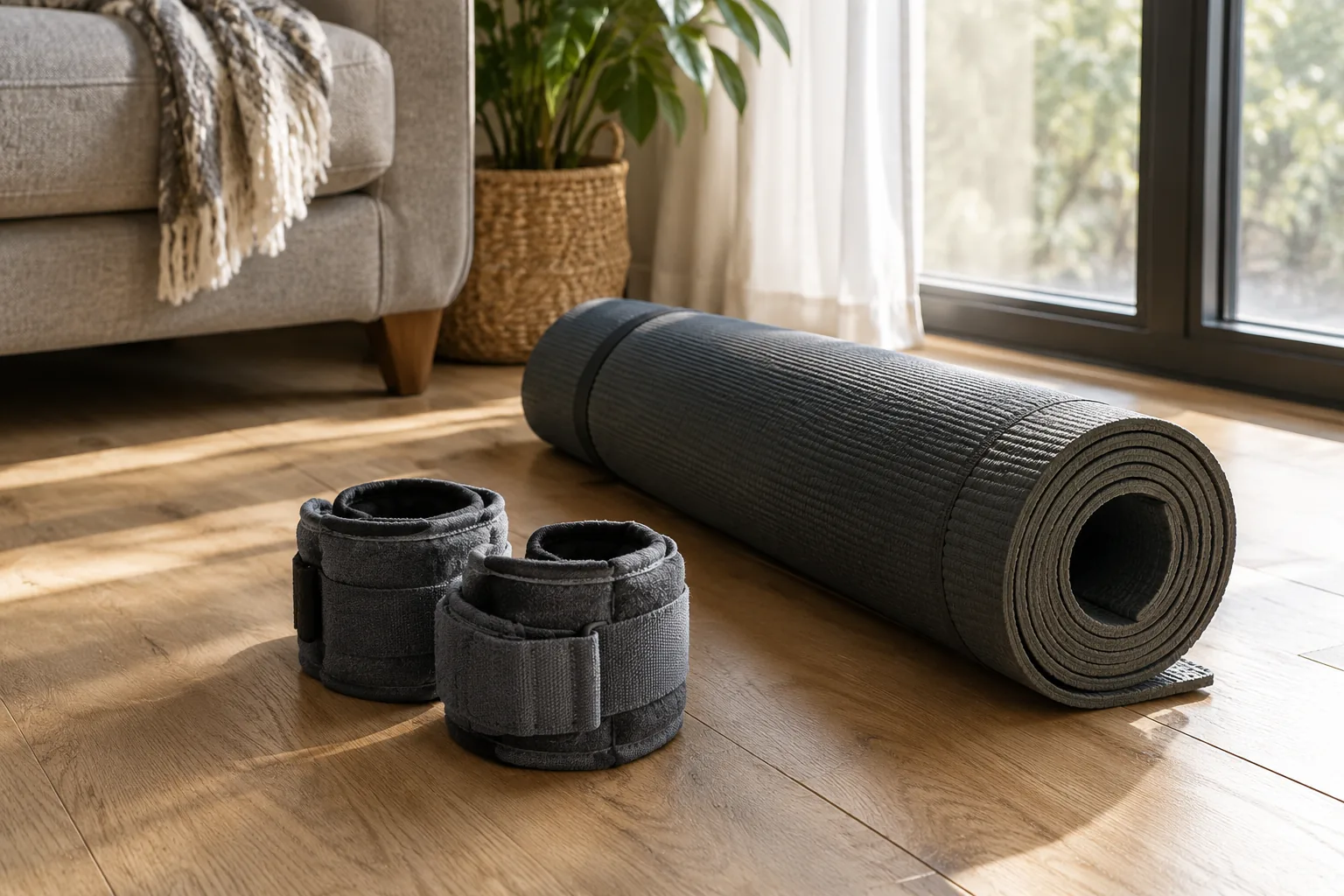
A multi-use pair to consider
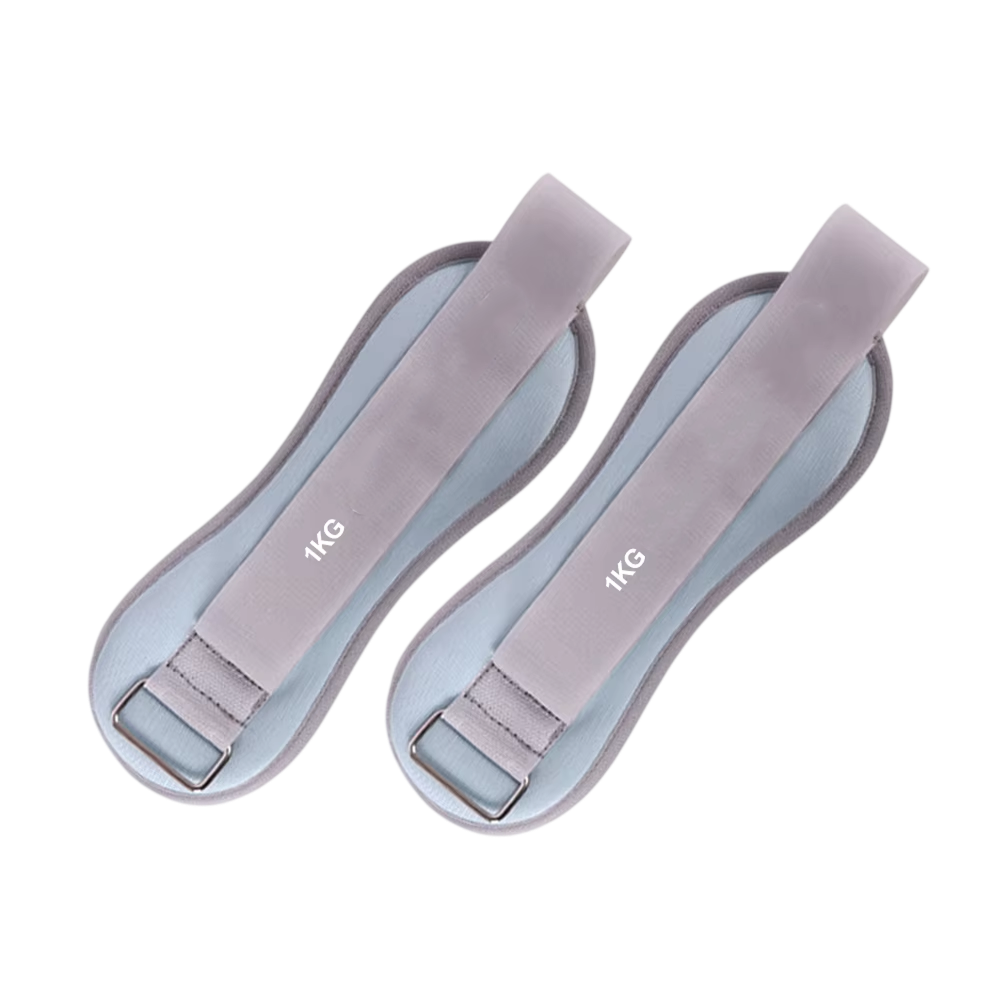
Ballastiq is a pair of wearable weights filled with fine iron shot and covered in mercerized cotton. The hook and loop strap wraps around an ankle, wrist or arm, so one pair covers walking, jogging, aerobics and stretching routines. The fine iron shot spreads the load around the wrap, and the edges are double-stitched. Check the product page for the weight before you order, and use the starting loads above to decide if it fits your plan.
 In this guideBallastiq$39.99View
Step 3: Check the strap fit
Strap fit decides whether a correct load feels steady or annoying. Run through this checklist each time you put the weights on:
- Place the cuff above the ankle bone, not over the joint or the top of the foot.
- Wrap it flat with no twists, and pull the strap snug.
- Press the hook and loop closure firmly along its full length.
- Check that the weight sits evenly around the limb instead of in one lump.
- March in place for a few steps. If the cuff slides, rewrap it before you go on.
- Fit the second cuff the same way and at the same height.
A cotton cover sits against your skin, so wear it over a sock or sleeve if you want a layer between the cuff and your skin, and wash the cover as the care label says.
Ankle weight for walking
Walking with ankle weight changes your stride, because the load swings forward with each step. Keep the load at the low end, keep your pace easy and watch your walking mechanics. If your steps shorten or your hips tilt, take the weights off.
- Begin with 1 lb per ankle on a flat, familiar route.
- Walk at an easy pace first. Our guide to brisk walking pace and cadence helps you find a steady rhythm before you add load.
- Keep the walk short at first and take the weights off when you finish.
For poles and a full-body rhythm, Nordic walking technique is a separate approach, and it is worth reading before you combine it with wearable load.

Ankle weight exercise and the benefit question
Some people use ankle weights for leg lifts, hamstring curls, side-lying hip movements and glute bridges. The weight adds external load to the leg during the movement. Whether that suits your goal depends on the exercise, your form and your health history.
Are ankle weights actually effective? We make no claims about results here. Ankle weight benefits depend on the person and the routine, so ask a physical therapist if you want a plan for a goal. What we can say is that the load only helps your routine if you can control it, which is why the starting loads above stay light.
Simple setup for floor exercises
- Use a mat and a clear space.
- Move slowly through the full motion with no swinging.
- Stop and remove the weights if a movement feels wrong.
- Keep sessions short at first and build up over weeks.
Field note
Write down your weight, per-ankle load and route or exercise after each session. A short log shows when it is time to step up by half a pound to 1 lb, and when to step back.
Common mistakes
- Buying by the largest number on the package instead of a starting load.
- Reading a pair weight as a per-ankle weight.
- Jogging or sprinting with a load you only tried while standing.
- Wearing the cuffs over the joint, so they slip or press on the bone.
- Leaving the weights on after the session ends.
- Raising the load before your form holds.
Care and storage
Check the care label on your weights. Wipe the cover and let it dry fully before you store it. Keep the hook and loop closure free of lint and threads so it holds. Store the pair flat or hung, away from damp. For more gear to round out a home or trail routine, browse the Home & Trail Fitness collection.