Fishing With Polarized Sunglasses: Lens Colors by Water
Fishing with polarized sunglasses starts with matching lens color to the water and the light. Use the table below for offshore, inshore and freshwater days.
The Kesslund Team
October 27, 2026 · 6 min read
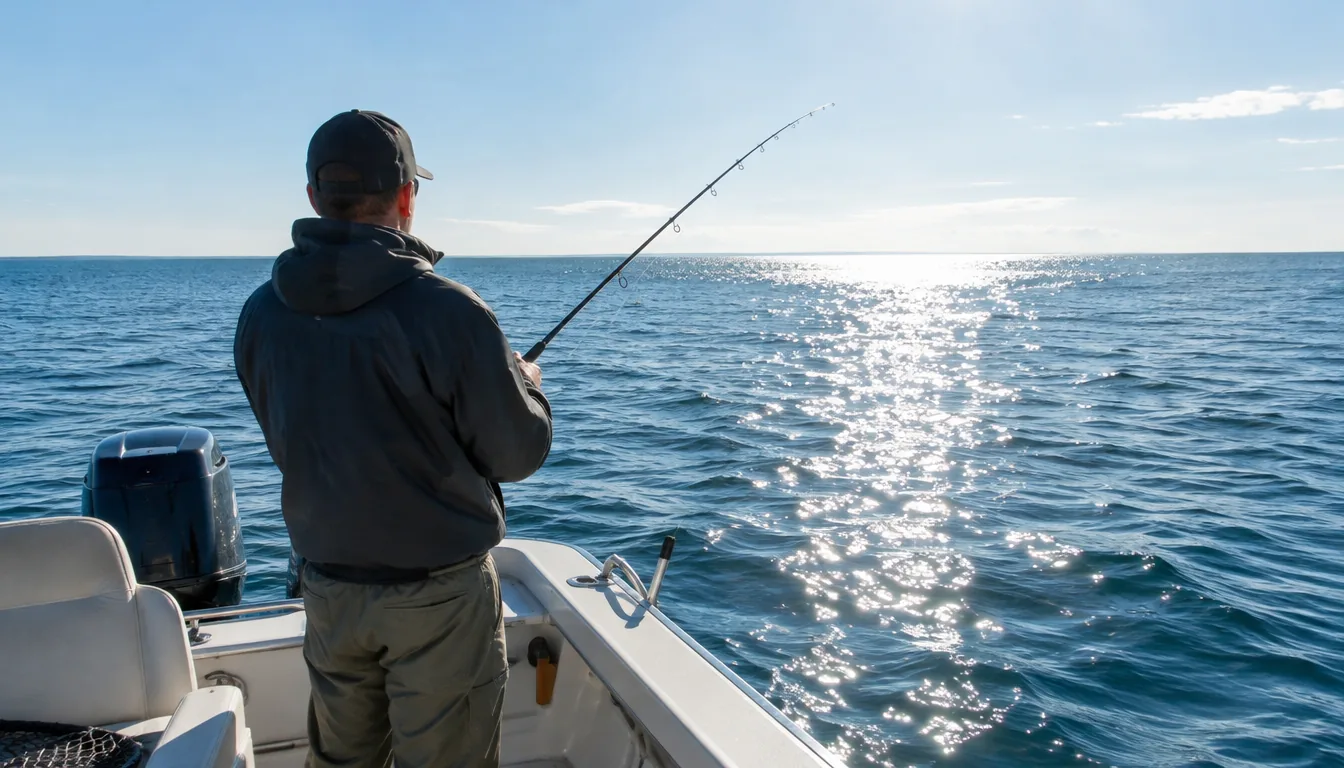
Fishing with polarized sunglasses means choosing a lens color for the water you fish and the light you fish in. Gray and blue or silver mirror lenses suit bright, open blue water, while copper and amber tints suit shallow water, sight fishing and lower light. Polarization reduces surface glare; the tint decides how the scene looks.
This guide gives a lens-color table for offshore, inshore and freshwater conditions, then covers fit, common mistakes and care.
What polarized lenses do on the water
Light that bounces off a flat water surface is mostly horizontal, and it arrives as surface glare. A polarized filter blocks much of that horizontal light, so you see into the water instead of at the reflection. If you want the physics, a hands-on light science activity on polarized sunglasses shows it with two lenses.
Polarization and tint are separate features. Polarization handles glare. The tint, and any mirror coating on the outside of the lens, changes how much light reaches your eyes and which colors stand out. That is why two polarized pairs can look very different on the same lake.
Lens colors for offshore, inshore and freshwater
Start with the water, then adjust for the light. The table gives a starting point; your own eyes and the day's conditions decide the rest.
| Water | Light | Lens to try | Why it fits |
|---|---|---|---|
| Offshore, deep blue | Bright sun | Blue mirror or gray | Dark base tint and mirror coating cut glare off open water while keeping colors close to natural |
| Offshore, overcast | Low light | Amber or yellow | A light lens is a common choice when the sun is behind cloud |
| Inshore flats, clear | Bright sun | Copper or amber, silver mirror | Warm tints are a common pick for sight fishing over sand, grass and structure |
| Inshore, green or tannic water | Mixed | Green mirror or copper | Suits green backgrounds and stained water |
| Freshwater lake, clear | Bright sun | Copper, amber or gray | Useful for reading weed edges, rocks and drop-offs |
| Freshwater river or pond, shaded | Low light | Yellow or light amber | A light lens suits shade under trees and the hours around dawn |
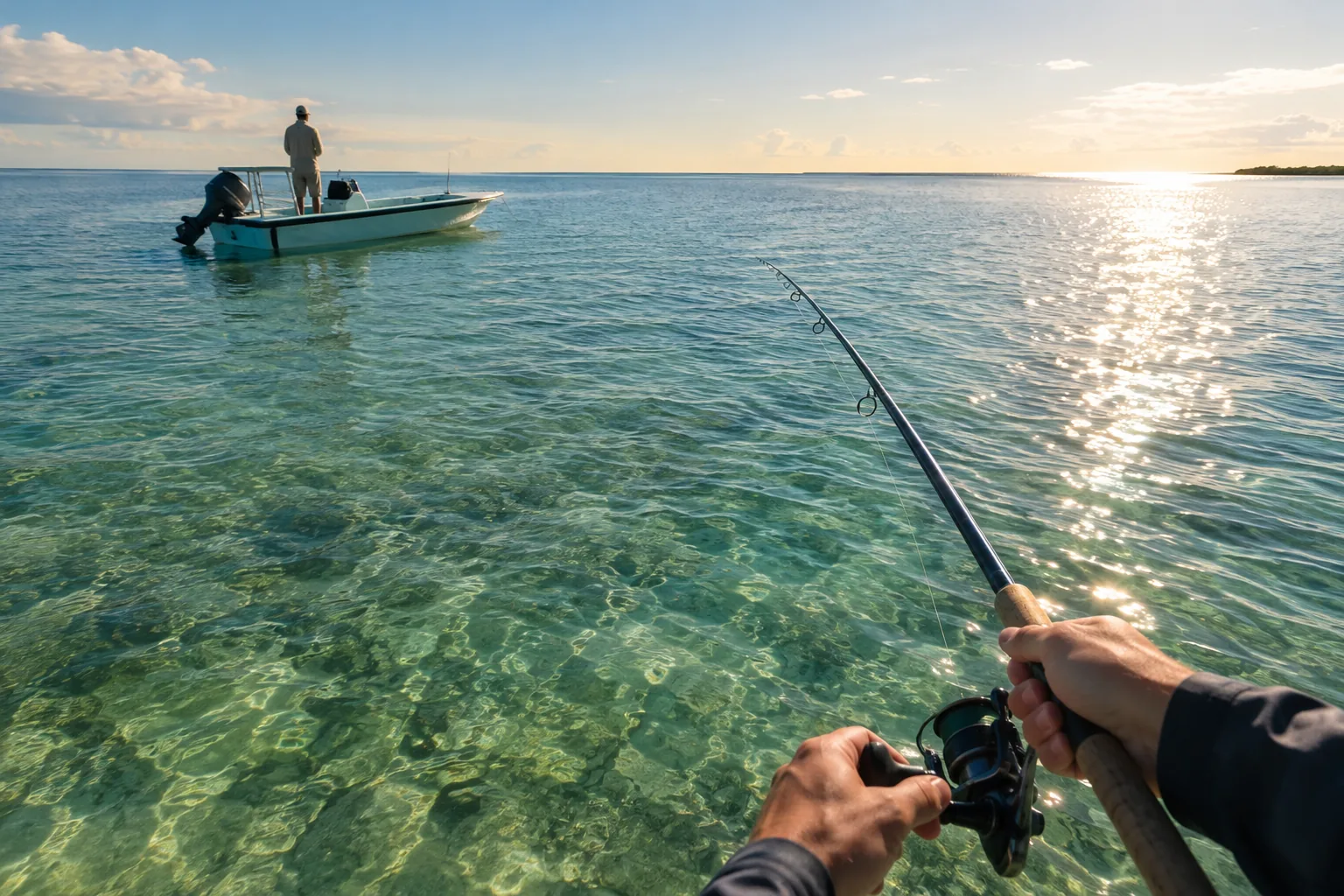
Match the tint to the job
Blue and silver mirror, gray: bright open water
Offshore, you are looking across large areas of blue water under strong sun. A mirror coating reflects part of the light before it enters the lens, and gray keeps colors close to natural. These lenses suit long, bright days on a boat deck.
Copper and amber: sight fishing and shallow water
Warm tints change contrast, which matters when you are looking for a fish, a weed line or a rock shelf. Try them on inshore flats and clear lakes. In flat light, copper and amber also keep the view from going dull.
Green mirror: green and stained water
Where the water and the shoreline are green, a green mirror lens keeps that palette natural. Try it in bays, estuaries and backwater creeks.
Yellow or light amber: dawn, dusk and heavy cloud
Yellow or light amber lenses are a common choice for low light. Try them when the sun is down or behind cover, and carry a darker pair for midday. One pair rarely covers every condition from first light to evening.
Mirror or plain tint: kayak and boat anglers
On a kayak you sit low, close to the water, and the surface reflects light into your eyes from every direction. A mirror coating on a darker tint is one option for that glare. A plain tint without mirror is another, and the choice comes down to the light you meet most often. From a larger boat you stand higher and look farther out, so sun angle and deck reflections matter as much as the tint.
Boat versus bank
From the bank, your view of the water is often at a shallow angle, and glare can be strong when the sun is low and in front of you. A brimmed cap helps block light from above. On a boat, spray and wind add salt and moisture to the lenses, so keep the cloth within reach.
Fit and frame checklist
A lens only works if it sits right on your face. Check these points before you commit to a pair:
- A wrap shape that blocks light from the sides.
- Nose and grip pads that hold the frame while you cast and look down.
- A corrosion-resistant frame material if you fish salt water.
- A hard case and a cleaning cloth in the box.
- A strap or retainer if you fish from a kayak or small boat.
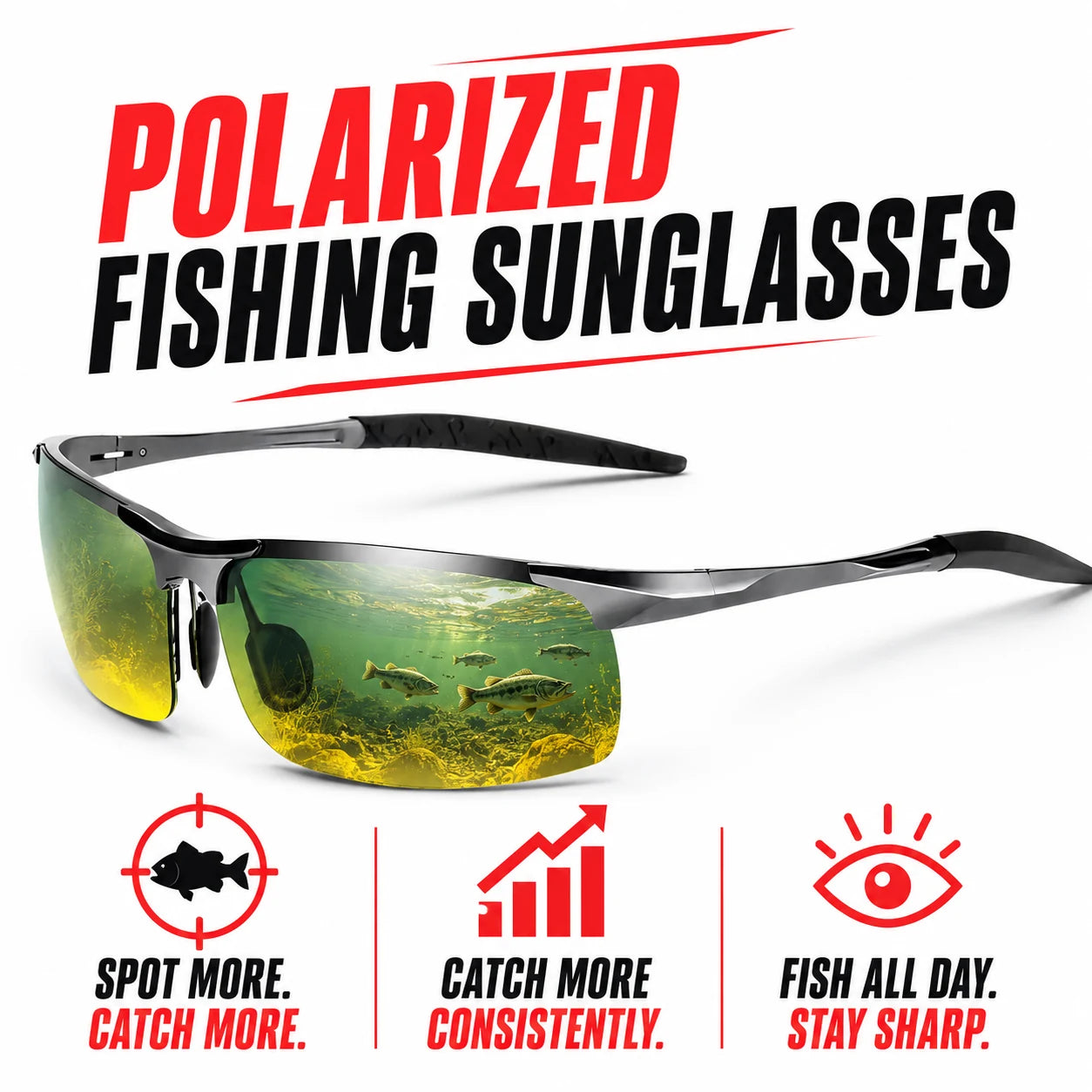
The PolarStrike polarized fishing sunglasses match several of these points. They have polarized TAC lenses with a lens coating and tints that filter yellow light, in a wrap-shape aluminum-magnesium alloy frame with silicone nose and grip pads. The alloy is corrosion-resistant, and it is denser than water, so the glasses sink if dropped. A hard case and microfiber cloth come in the box.
 In this guidePolarStrike$89.99View
Common mistakes when fishing with polarized sunglasses
- Buying one dark lens for every condition, then struggling at dawn or under cloud.
- Expecting polarization to show every fish. It reduces glare; it does not clear murky water.
- Skipping a screen check. Some polarized lenses can dim certain displays when you tilt your head, so look at your fish finder before you leave the dock. Our fish finder guide covers sonar reading.
- Leaving the glasses loose in a tackle bag where hooks and pliers can scratch the coating.
- Wiping dry salt crust with a dry cloth, which drags grit across the lens.
Field note
Before a trip, look at the water through the lenses and tilt your head side to side. If the glare changes, the polarization is working. Pack a second, lighter pair for early and late hours.
Care schedule for polarized lenses
Clean lenses and frames on a routine, and follow the product page and the information card for specifics.
| When | Step |
|---|---|
| During the trip | Rinse off salt or sand with fresh water before wiping; use the microfiber cloth |
| After every trip | Rinse, dab dry, store in the hard case |
| Weekly in season | Check the nose and grip pads for dirt and the frame for loose screws or bends |
| End of season | Clean fully, inspect lenses for scratches, store in a cool dry place |
Keep the case in your tackle bag, not on a dashboard in summer, since heat can damage coatings and frames.
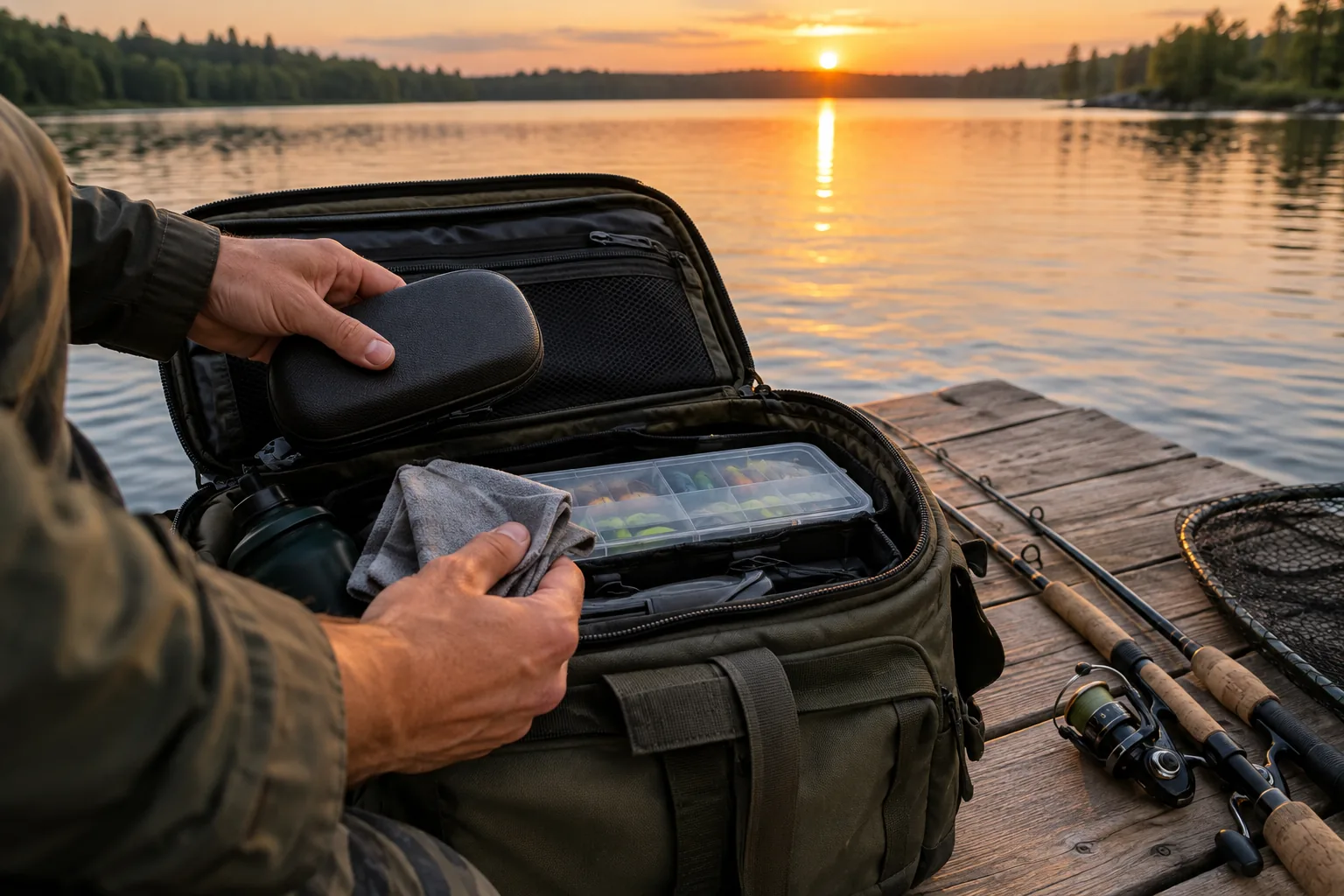
Build the rest of your day-on-the-water kit
Eyewear is one piece of the kit. If you are still choosing tackle, read how spinning, baitcasting and spincast reels differ, then browse the Fishing Gear collection for the rest.
For questions about glare or vision, ask an eye care professional. For general background on polarized glare, see a health publication's explainer on polarized glare.
Decision steps
- Name your water: offshore blue, inshore flats, or freshwater.
- Name your light: bright, mixed or low.
- Pick the tint from the table.
- Check wrap, pads and frame material.
- Pack a cloth and hard case.