How Do Photochromic Sunglasses Work? Pros, Limits and Uses
Photochromic lenses darken when UV light reaches them and lighten in shade. This guide covers the chemistry, the limits, polarized vs photochromic, and who should pick them.
The Kesslund Team
October 22, 2026 · 7 min read

How do photochromic sunglasses work? The lenses contain light-sensitive molecules that change structure when UV light hits them, which turns the lens from clear toward a dark tint. When the UV drops, for example in shade or indoors, the molecules relax and the lens lightens again. There are no buttons, batteries or switches involved.
This guide explains the process, where the technology has limits, how it compares with polarized lenses, and how to pick a pair for riding, hiking, fishing or driving.
What are photochromic sunglasses?
Photochromic sunglasses, also called light-adaptive or variable tint lenses, are glasses whose lenses change shade with the light around you. Some call them photochromatic lenses or reactive lenses. They are a different idea from a fixed tint, which stays the same shade whatever the sky is doing.
The practical appeal is a single pair for changing light conditions. A trail that runs from open ridgeline into dense timber is a typical case, because a fixed dark lens can feel too dim under the trees.
How do photochromic sunglasses work?
The lens material or its coating holds photochromic molecules. In low UV they sit in a form that lets visible light through, so the lens looks clear or lightly tinted. UV light triggers a chemical reaction that reshapes the molecules so they absorb visible light, and the lens darkens. For a plain-language explanation, see the Reversible Sunglasses page from Penn State's materials research center.
The change is reversible. Remove the UV and the molecules return to their original form, so the lenses lighten. This is why the tint follows UV levels rather than how bright the scene looks to your eye.
Step by step
- You step outside and UV light reaches the lens.
- The photochromic molecules change shape and absorb more visible light.
- The lens settles at a shade that matches the UV level.
- You move into shade or indoors, UV drops, and the lens lightens.
For a closer look at how photochromic lenses differ in their optical properties, see this paper. Expect differences between pairs, and check the maker's manual.

Pros of photochromic lenses
The main benefit is one pair for several light conditions. You do not swap lenses or carry a second pair for the shady part of a route.
- No controls to operate: the lens reacts to UV on its own.
- Useful on mixed days, such as dawn rides, forest hikes or a day on a lake that starts overcast.
- One pair covers sun and shade in your pack.
- Some pairs use impact-resistant polycarbonate, a plastic often found in sport eyewear.
Photochromic lenses also work as everyday sunglasses outdoors, because the dark state is what you wear in bright light. Whether the dark state is dark enough for you depends on the model and the conditions.
Tint colors
Photochromic lenses come in several tint colors, such as gray, brown and green. The choice is personal preference, so look at the dark state of each color before you decide.
Limits and downsides to know first
The same UV trigger that makes the lenses useful also creates their limits. Knowing them helps you decide whether a pair fits your routine.
Windshields and driving
Car windshields filter much of the UV that photochromic lenses depend on. Behind the wheel the lenses may stay lighter than they do outdoors. If you drive often in bright sun, check how a pair behaves in your own car, and consider a polarized option for glare.
Cold and heat
Temperature affects the reaction. Photochromic lenses can darken more in cold air and less in strong heat, so the shade on a winter ski day will not match a summer beach day. Treat the tint as a range, not a fixed value.
Speed of change
Lenses do not switch at the flick of a light. Going dark and clearing both take time, and the two steps may not take the same time. Speed varies by product, so we do not quote a figure here. If you go from bright sun into a tunnel, expect a short lag.
Other points
- Tint depends on UV, not on how bright it feels, so heavy cloud can still bring a darker lens than you expect.
- Clear and dark states differ from model to model, and some do not reach the darkness of a fixed sunglass tint.
- Lenses are less useful if you mostly stay indoors or drive at night.
Photochromic vs polarized: what each does
These are two separate features that answer different questions. Photochromic changes how dark the lens gets. Polarized changes which light waves pass through. A polarized lens carries a filter that blocks horizontal light waves, the kind that bounce off wet roads, car hoods and open water.
So the choice is not one or the other by default. Pick by what bothers you most on your typical day.
| Feature | Photochromic | Polarized | Fixed tint |
|---|---|---|---|
| What it does | Changes shade with UV | Blocks horizontal glare | Stays one shade |
| Helps with | Shifting light, shade to sun | Water, wet road, hood reflections | Steady bright conditions |
| Watch for | Windshields, cold, lag | Some screens can look different | Too dark in shade |
| Fits | Trails, rides, mixed days | Fishing, boating, driving | Beach, open terrain |
Combined lenses exist, with both a UV-reactive tint and a glare filter. They suit people who move between road, trail and water in one day.
Photochromic lenses vs sunglasses: how to choose
When comparing photochromic lenses vs sunglasses with a fixed tint, start with your day, not the spec sheet. Ask where you spend the most time and what the light does there.
- Ride or hike that crosses shade and sun: photochromic.
- Mostly driving: check windshield behavior and consider polarized.
- Fishing, boating or paddling: polarized, with photochromic if the sky changes.
- Long days at a steady bright location: a fixed tint may be enough.
- Cold-weather outings: remember the tint can run darker.
If you wear corrective lenses, ask an optician which photochromic options exist for your eyewear. This guide covers non-corrective pairs only.
Two pairs from our shop
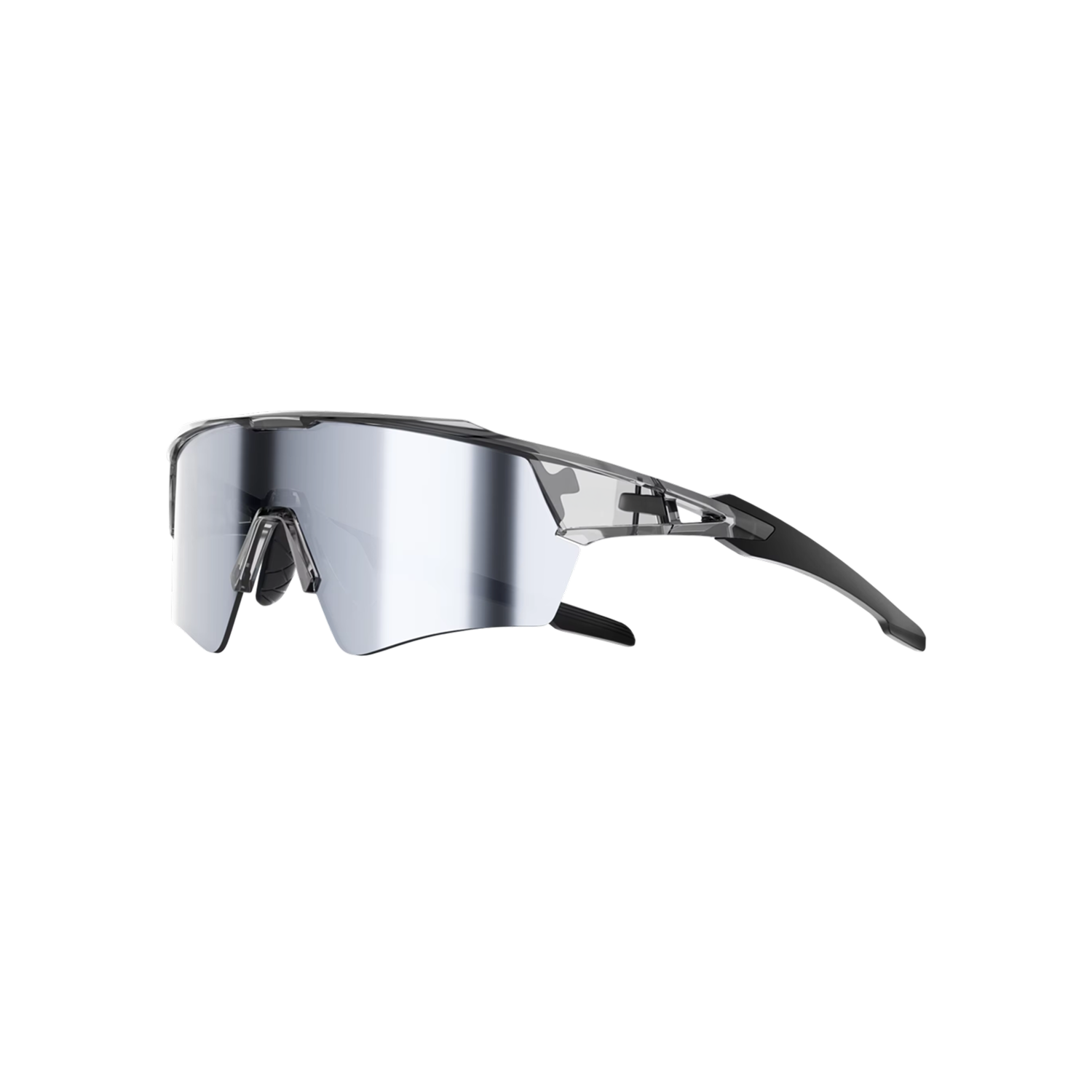
If you want a straightforward photochromic pair for outdoor sport, LucidRim Pro uses polycarbonate lenses that shift between clear and dark gray with UV light. Put them on, adjust the nose pad, and the tint changes on its own as you move between sun and shade.
 In this guideLucidRim Pro$119.99View
The lens has a hardened coating, a multi-layer coating bonded to the polycarbonate surface that adds a harder outer layer for the times the glasses go in and out of a pack. A hydrophobic, oil-repellent coating makes water drops and sweat bead on the lens, and a soft cloth clears smudges. The silicone temple grips are anti-slip, and a carrying bag is in the box.
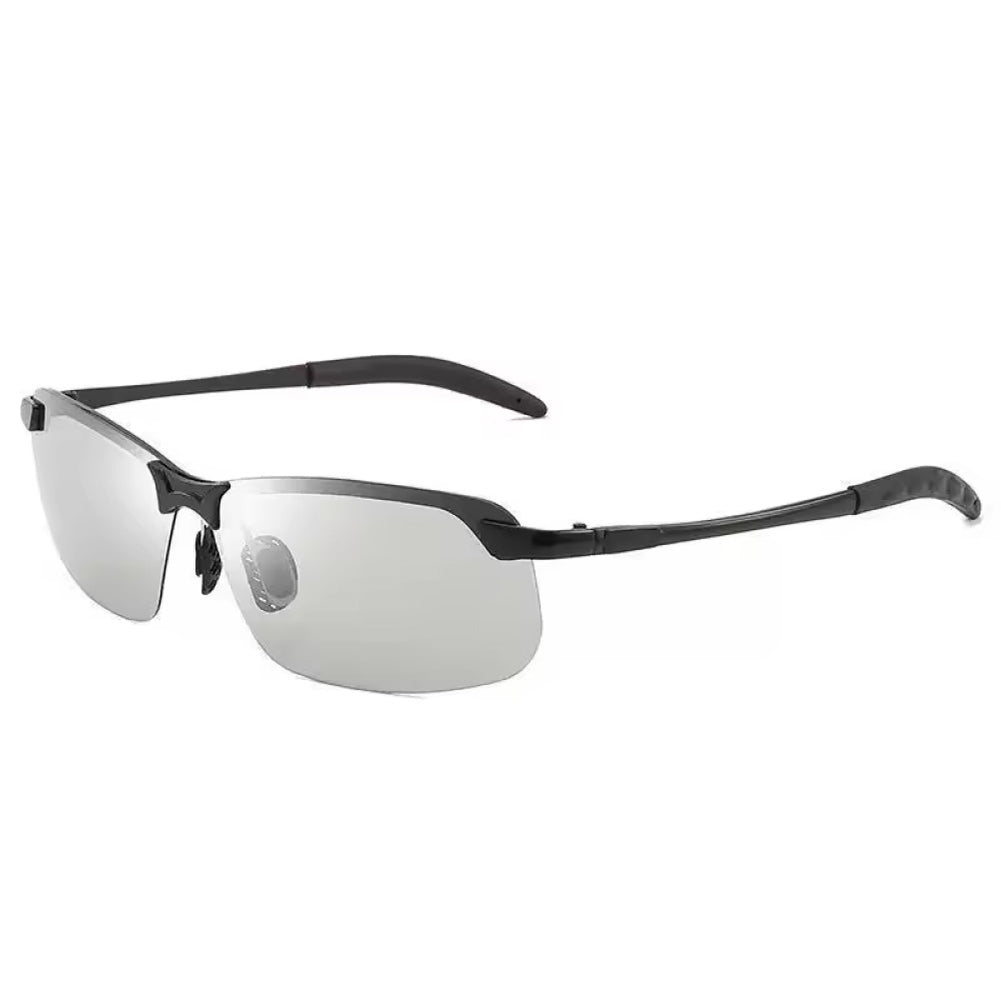
If glare is part of your day, LumiShift combines both features. Its photochromic lenses respond to UV, and a vertical filter in each lens blocks horizontal glare from wet roads, car hoods and open water.
 In this guideLumiShift$89.99View
The frame is an aluminum-magnesium alloy that weighs 27g (about 1 oz), with spring-hinged temples that flex outward as you put the glasses on. It ships with a hard carrying case, a microfiber cleaning cloth and a user guide. It suits driving, trail days and time on the water. If you are packing for a first trip on the water, our fishing gear checklist for your first season covers the rest of the kit.
Care and use checklist
Simple habits keep any photochromic pair in working order.
- Wipe the lenses with a soft microfiber cloth, not your shirt or paper towels.
- Rinse grit off with clean water before wiping.
- Store the glasses in a case or bag when they are not on your face.
- Keep them out of a hot dashboard or sealed car in summer.
- Read the user manual for cleaning products the maker allows.
- Give the lenses a moment to adjust before you judge the tint.
For sun gear beyond eyewear, browse our Portable Laundry & Sun Protection collection.
Field note
Before a long drive, wear your photochromic glasses behind the windshield while parked in daylight and see how dark they get. If they stay light, pair them with a polarized option or keep a second fixed-tint pair in the car.