How to Clean a Grill: Grates, Flat Tops and After-Cook Routine
Scrape warm, soak or scrub stubborn residue, wipe, then oil. This guide splits the routine for grates and flat tops and adds a camp-side version.
The Kesslund Team
November 5, 2026 · 6 min read
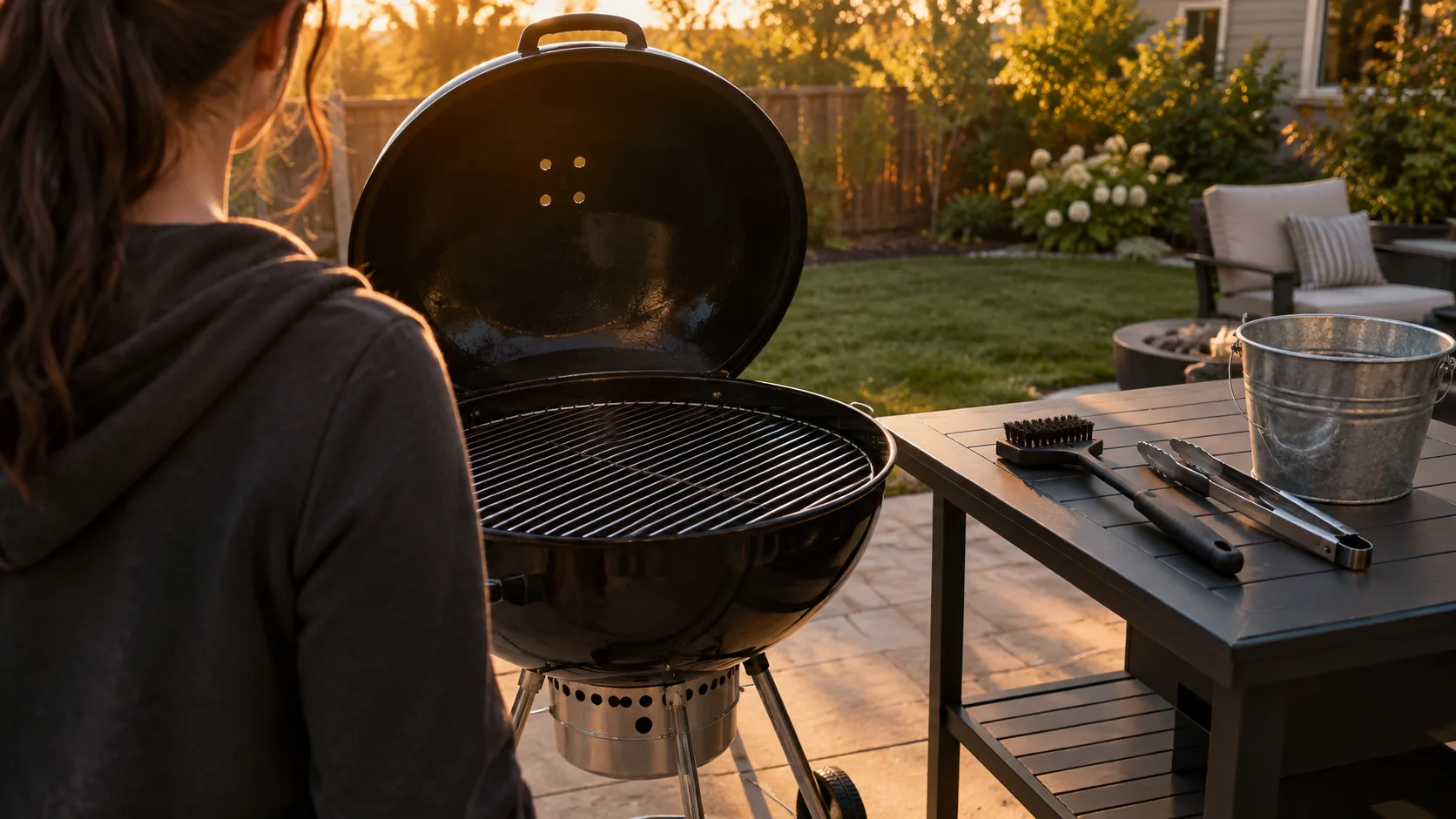
Here is how to clean a grill: heat it, scrape off loose food while the surface is warm, then scrub the cooking surface with a brush or soaked pad and wipe it down. Grates need a scrub and a rinse, while a flat top needs a scrape, a water wipe and a thin coat of oil. Let everything cool and unplug or shut off fuel before any deep cleaning, and follow your grill's manual.
The steps below cover charcoal, gas and portable grills, with a separate routine for grates and for flat tops, plus a camp-side version for when you have no sink.
How to clean a grill: tools to gather first
The job takes a short list of items. Keep them together in a bin so the cleanup does not stall while you hunt for a scraper.
- A grill brush or a stiff scraper that suits your surface
- Tongs and a ball of crumpled aluminum foil
- A bucket of warm water with a few drops of dish soap
- A non-scratch pad or sponge, and paper towels or a clean cloth
- Cooking oil with a high smoke point, for wiping the surface
- Heat-resistant gloves and a metal container for cooled ash
If you use a wire brush, look over the grates afterward for loose bristles and wipe them off before you cook again.
How to clean grill grates, step by step
Grates hold on to sugars, fat and burnt bits, so the routine has two parts: a light pass after each cook and a deeper wash on a schedule.
After every cook
- Leave the grates in place while they are still warm, with the fire or burners off per your manual.
- Scrape across the bars with a brush or scraper to push loose food off.
- Wipe the grates with an oiled paper towel held in tongs.
Deep clean
- Let the grill cool fully, then lift the grates out.
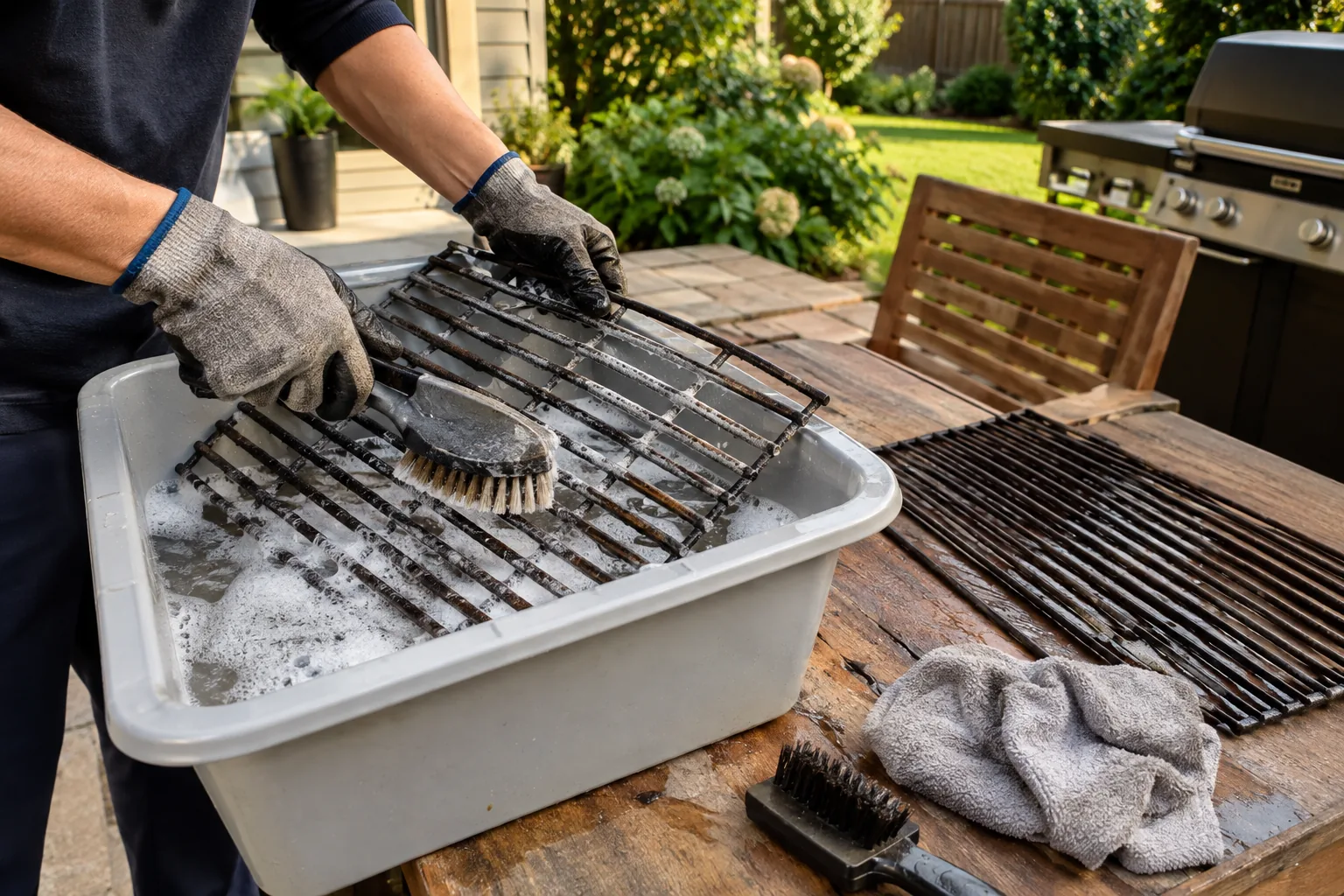
- Soak them in warm soapy water in a tub or bucket so baked-on residue softens.
- Scrub with a brush or non-scratch pad, rinse and dry them completely.
- Brush a thin coat of oil over bare iron or steel grates to coat them against rust.
For a general overview of cleaning habits, an extension guide to grill cleaning is a useful read.
Household tricks: foil, onion, lemon, vinegar
Several kitchen items can help when you have no brush on hand. Each works on warm, not blazing hot, grates, and none replaces a wash now and then.
| Method | How to use it | Use it for |
|---|---|---|
| Aluminum foil | Crumple into a ball, hold with tongs and rub along the warm bars | Light residue when the brush is missing |
| Halved onion | Spear on a fork and rub across warm, oiled grates | Between cooks, as a light wipe |
| Lemon | Rub a cut half over warm grates, then wipe | Light residue |
| Vinegar and baking soda | Spray vinegar, sprinkle baking soda, let it sit, then scrub and rinse | Cooled grates with baked-on film |
Yes, you can use aluminum foil on grates. It acts as a disposable scrubber, so replace the ball once it shreds or clogs. Do not press it onto nonstick or coated surfaces, since it can scratch them.
Some cooks rub a halved onion across the grates because its moisture turns to steam on warm metal, which loosens residue, and the cut surface works as a scrubber. A guide to natural grill cleaners covers more of these options.
How to clean a flat top grill
A flat top is a solid plate, so food does not fall through and the surface is the whole cooking area. That changes the routine: you scrape, wipe and oil rather than soak and scrub.
- Cook, then scrape the plate while it is still warm, pushing crumbs and grease toward a catch area or into a bin.
- Wipe with water and a cloth or paper towel. Use tongs and gloves around the warm surface.
- Dry the plate fully so no standing water remains.
- Wipe on a very thin coat of oil across the steel.
Skip heavy soap on a seasoned plate, since it can strip the oil layer you are building. For stuck-on spots, pour a little water on the warm plate, let it lift the residue, then scrape again.
 In this guideFlareDeck$89.99View
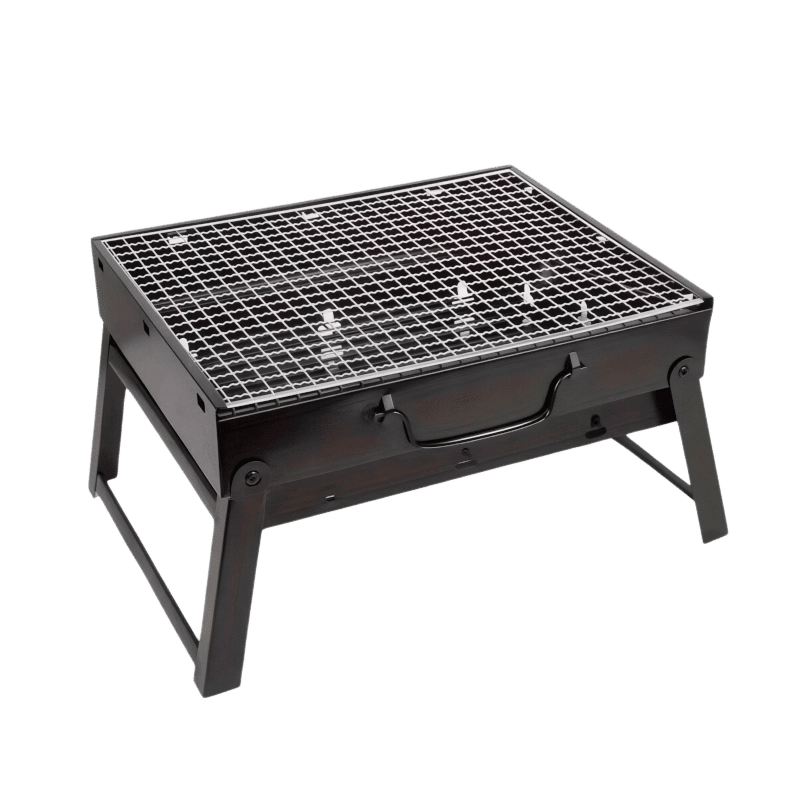
The FlareDeck is a charcoal flat top grill with a heavy steel cooking plate. Its care routine matches the steps above: you scrape the surface while it is warm and wipe it down with water. The steel surface is rust-resistant, and an oil wipe fits a standard care routine. Fold-out legs lock in place, so let the plate cool before you collapse it.
Re-seasoning a flat top or bare steel grate
Seasoning is a baked-on layer of oil that coats steel against moisture. Re-season whenever the plate looks dull, patchy or gray, or after a harsh scrub.
- Clean and dry the surface completely.
- Apply a very thin layer of high smoke point oil with a folded paper towel held in tongs.
- Heat the surface per your grill's manual until the oil darkens.
- Let it cool, wipe off any pooled oil and repeat once or twice if the surface still looks bare.
Thin coats matter. A thick layer turns tacky and flakes into your food.
Field note
Keep a small squeeze bottle of water and a metal scraper in your grill kit. Steam from a splash of water on a warm plate loosens residue so you scrape instead of scrub.
Charcoal grills and smokers: ash and interior
Charcoal adds cold ash to deal with, which holds moisture and can speed up rust if it sits. Once coals are completely cold, scoop the ash into a metal container and wipe the bowl and vents. Check that none of the vents are clogged.
Gas grills need the burner area checked for grease buildup and the drip tray emptied, following the manual. Pellet smokers vary, so read yours before cleaning inside.
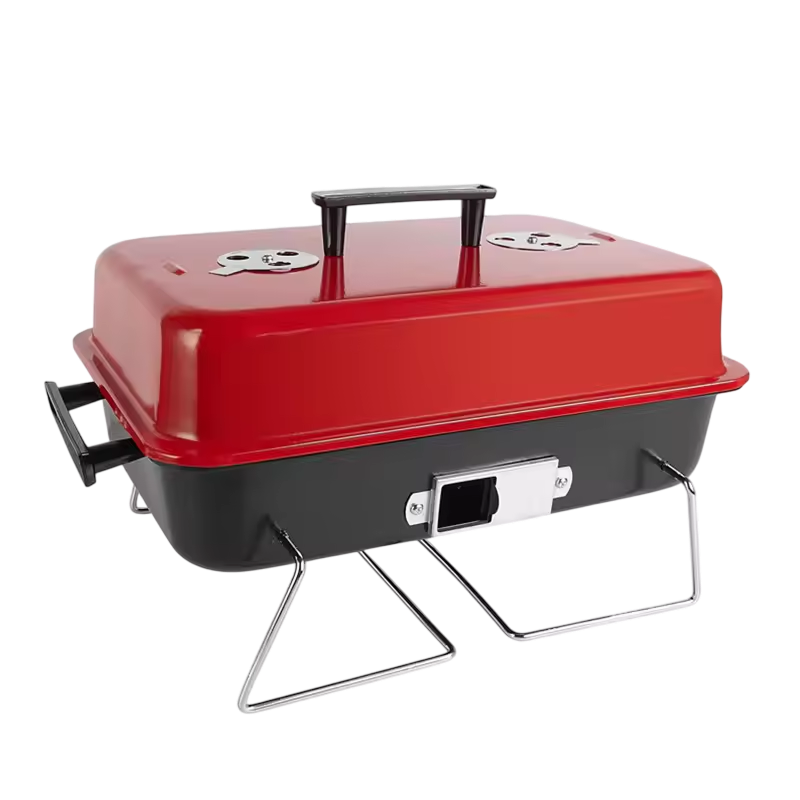
The EmberRidge has no auger, hopper or electronics, so cleaning centers on the frame and vents. Its cold rolled steel surfaces and a baking net make post-trip care straightforward: let the unit cool, then wipe the steel down before you fold the frame and pack it.
 In this guideEmberRidge$199.99View
Camp-side cleanup with no sink
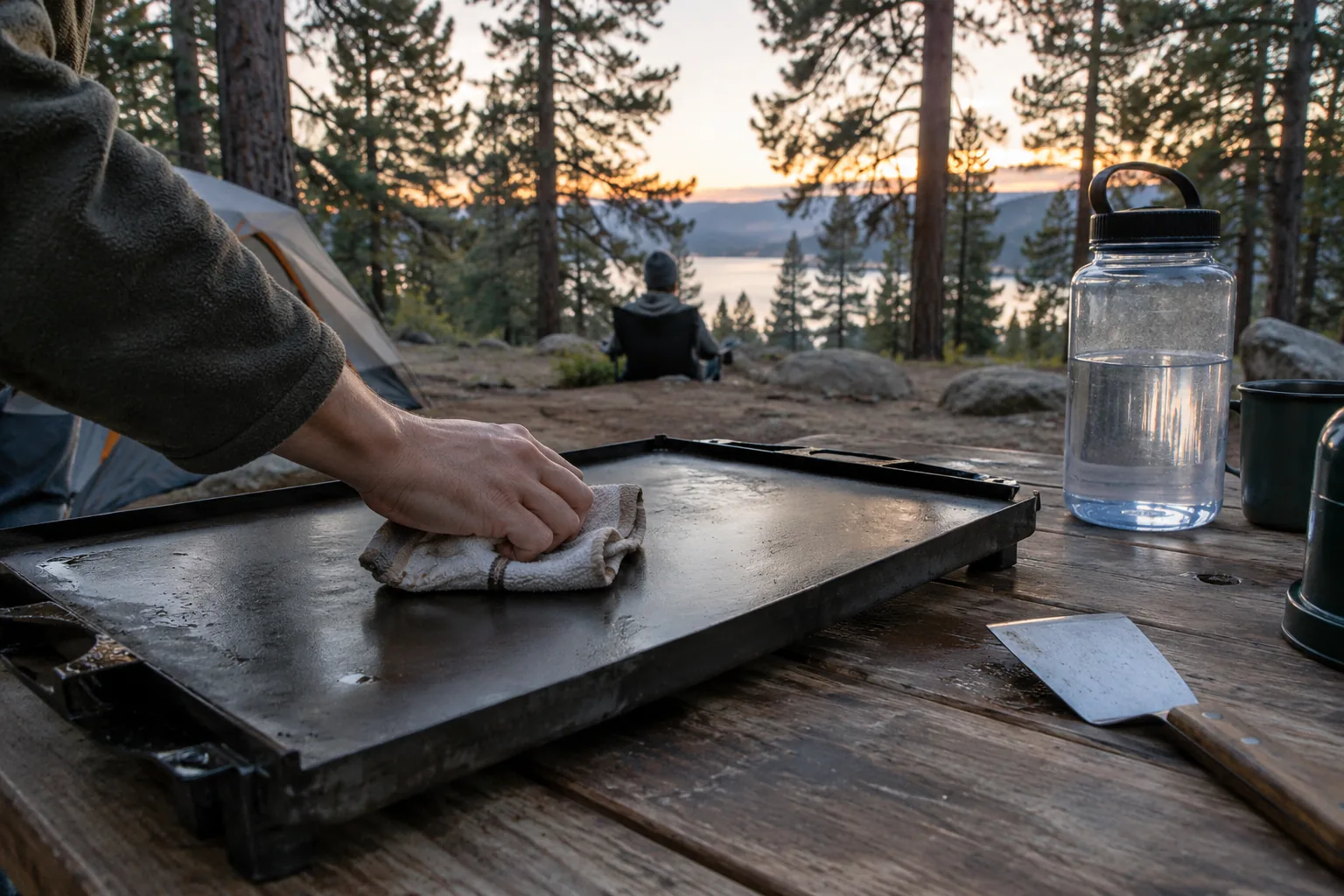
At a campsite you may only have a jug of water and a few rags. The aim is to scrape, wipe and pack up without leaving food residue that attracts animals. Check campground rules on where to dump wash water, and read how to hand wash clothes at camp for a low-water washing setup you can reuse for gear.
- Scrape the surface while it is warm, into a trash bag.
- Wipe with a damp cloth, then a dry one.
- Rub on a thin film of oil.
- Let the grill cool, empty cold ash into a metal container, and pack grease-stained rags in a sealed bag.
Common mistakes and a care schedule
When you learn how to clean a grill, the usual trouble comes from skipping the warm scrape or from soaking steel and leaving it wet. Avoid these slips:
- Leaving food on the surface overnight
- Using harsh cleaners or oven cleaner on cooking surfaces
- Putting steel away damp
- Spraying cleaner on a hot surface
- Leaving warm ash in a bag or box
| When | Grates | Flat top |
|---|---|---|
| Before use | Warm up, scrape, wipe with oil | Wipe off dust, add a thin oil film |
| After each cook | Scrape and wipe | Scrape warm, wipe with water, oil |
| Every few cooks | Brush and rinse | Check for bare patches |
| Seasonal or before storage | Soak, scrub, dry, oil | Clean, re-season, store dry |
For more camp gear, browse the Camp Kitchen & Fire collection.