Men's Padded Cycling Shorts: Chamois, Fit and Length Guide
Match chamois density, inseam and cut (shorts or bibs) to your ride, then check the fit in the saddle position. This guide adds notes for women's fits and a care routine.
The Kesslund Team
November 16, 2026 · 8 min read

Men's padded cycling shorts work when three things match your riding: the chamois density, the inseam length and the cut (shorts or bibs). Choose a thin, flat pad for short rides, a denser multi-layer pad for long days, and an inseam that ends just above the knee so the hem does not bunch at the pedal stroke. Then check the fit by sitting in your riding position, because the pad should sit under your sit bones, not forward of them.
This guide gives you a fit checklist, a chamois comparison, a shorts-versus-bibs table, notes for women's fits and a care routine. Use it before you spend money on any pair.
Men's padded cycling shorts: the fit checklist
Run through this list in order. Each line takes one decision off the table before you look at a single listing.
| Check | What to look for |
|---|---|
| Riding type | Road, spin class, commute, gravel or mountain bike. This sets pad thickness and cut. |
| Ride length | Short loops need a thin pad. Long rides call for a denser, shaped pad. |
| Chamois position | The pad sits at the seat, under your sit bones, with no folds when you sit tall or lean forward. |
| Inseam | Hem ends above the knee and does not ride up when you pedal. |
| Leg opening | The hem holds in place without cutting into the thigh. |
| Waist or straps | Waistband stays flat, or bib straps sit flat over the shoulders. |
| Fabric | Stretch and venting for warm days; a compression fit holds the pad in place. |
| Seams | Flat seams near the pad. Check by sitting on a firm chair. |
A compression fit is snug on purpose. It keeps the pad from shifting, so a pair that feels loose in the standing position may be the wrong size. If the shorts squeeze at the waist while you stand, try the next size and compare again in the saddle position.
Chamois density: how thick should the pad be?
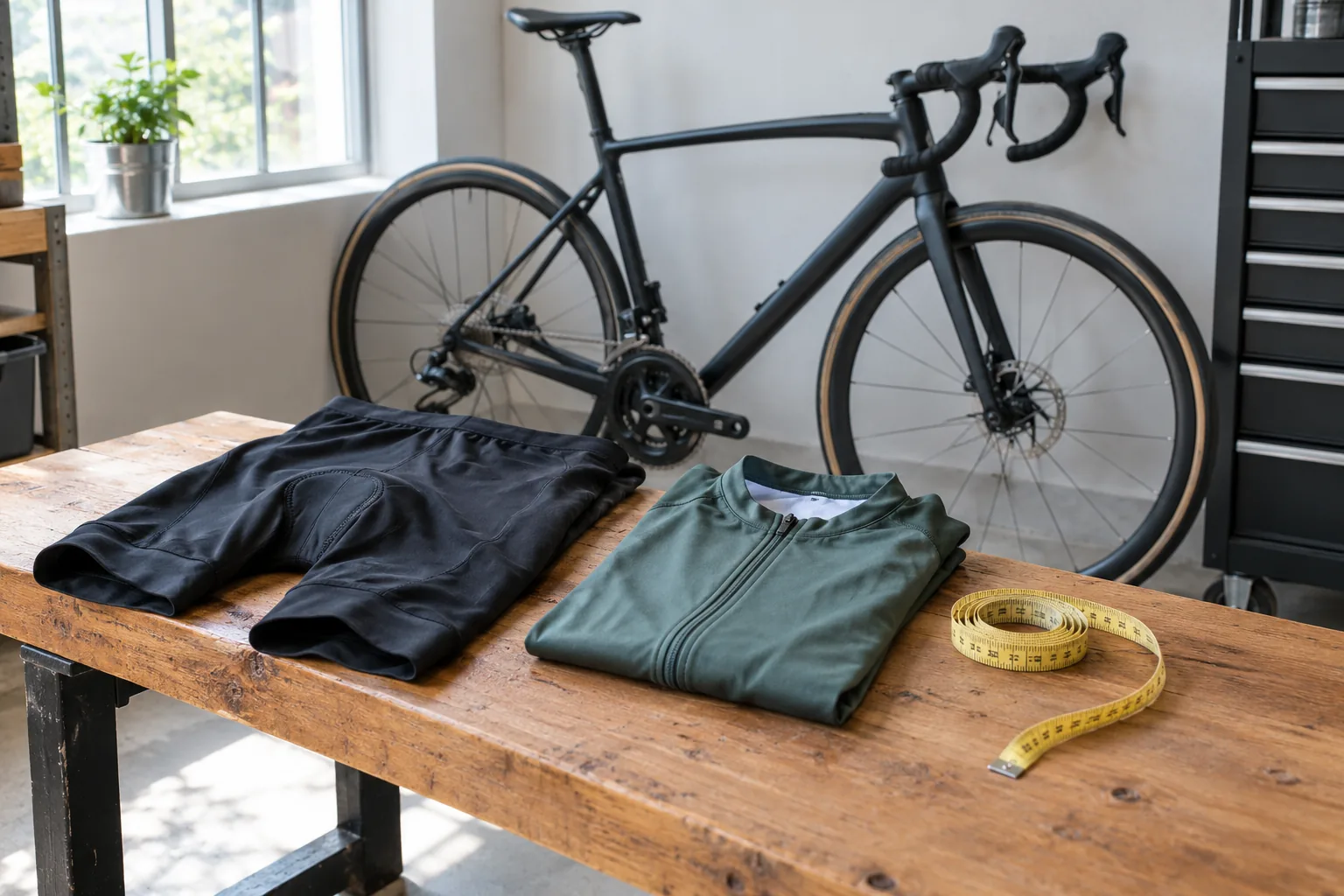
The chamois is the seat pad sewn into the shorts. Modern pads are made from foam, gel or a mix, and they differ in thickness, shape and how many layers they use. Density is not a ranking; it is a match to the ride.
| Pad type | Suits | Trade-off |
|---|---|---|
| Thin, single-density foam | Spin classes, short commutes, casual loops | Low bulk, less cushioning on long saddle hours |
| Multi-density foam | Road rides and longer days | More shaping, more bulk between the legs |
| Gel and foam | Long saddle hours, rough road surfaces | Warmer if there is no venting |
| Minimal liner pad | Under baggy shorts on trails | Needs the outer shorts for pockets and coverage |
What the pad layers do
In gel-and-foam designs, the gel layer sits where you meet the saddle, and the foam under it spreads contact across the pad. Perforations and mesh panels add airflow so the fabric is not a solid layer against your skin. These are construction details, so read the product page for the exact layers before you buy.
Match the pad to your saddle
A narrow, firm saddle and a wide, padded saddle ask different things of the chamois. If your saddle is already well padded, a thinner chamois can be enough. If you ride a thin racing saddle, a denser pad gives a shaped base to sit on.
Inseam length and leg opening
Inseam is the measurement from the crotch seam to the hem. For road-style shorts, a longer inseam keeps the hem anchored over the thigh, while a short inseam can slide up as you pedal. Road cuts often fall between 8 and 11 inches, and baggy trail shorts run longer.
- Short inseam (about 5 to 7 inches): spin classes and hot-weather rides, with a hem that needs a firm grip.
- Mid inseam (about 8 to 10 inches): general road and commuting use.
- Long inseam (11 inches and up): layering under pants or covering the thigh on a gravel ride.
Look at the leg opening as well. Double-layered hems hold the leg opening in place, which matters as much as the number of inches if you have muscular thighs. Pedal in front of a mirror, or on a trainer, and watch the hem for rolling or riding up.
Shorts vs bibs: which cut to choose
Shorts have a waistband. Bib shorts replace it with straps over the shoulders, so there is no band at the waist. Bibs suit longer rides and a lowered riding position. Shorts go on and come off without removing the jersey, and they work for casual rides and spin classes.
| Feature | Shorts | Bib shorts |
|---|---|---|
| Support | Waistband holds the shorts | Bib straps hold the pad in place |
| Waist | Band sits at the waist | Flat, with no band |
| Layering | Fits under pants or baggy shorts | Straps sit under the jersey |
| Changing | Take off without removing the jersey | Requires removing the jersey first |
| Fit risk | Band may roll when you lean over | Torso length matters, since straps cannot stretch past your build |
If you are new to cycling, start with shorts. Move to bibs when you ride long enough that waistband position starts to bother you. Check torso length against the size chart before you buy bibs.
Layering padded shorts for commutes and mountain bike rides
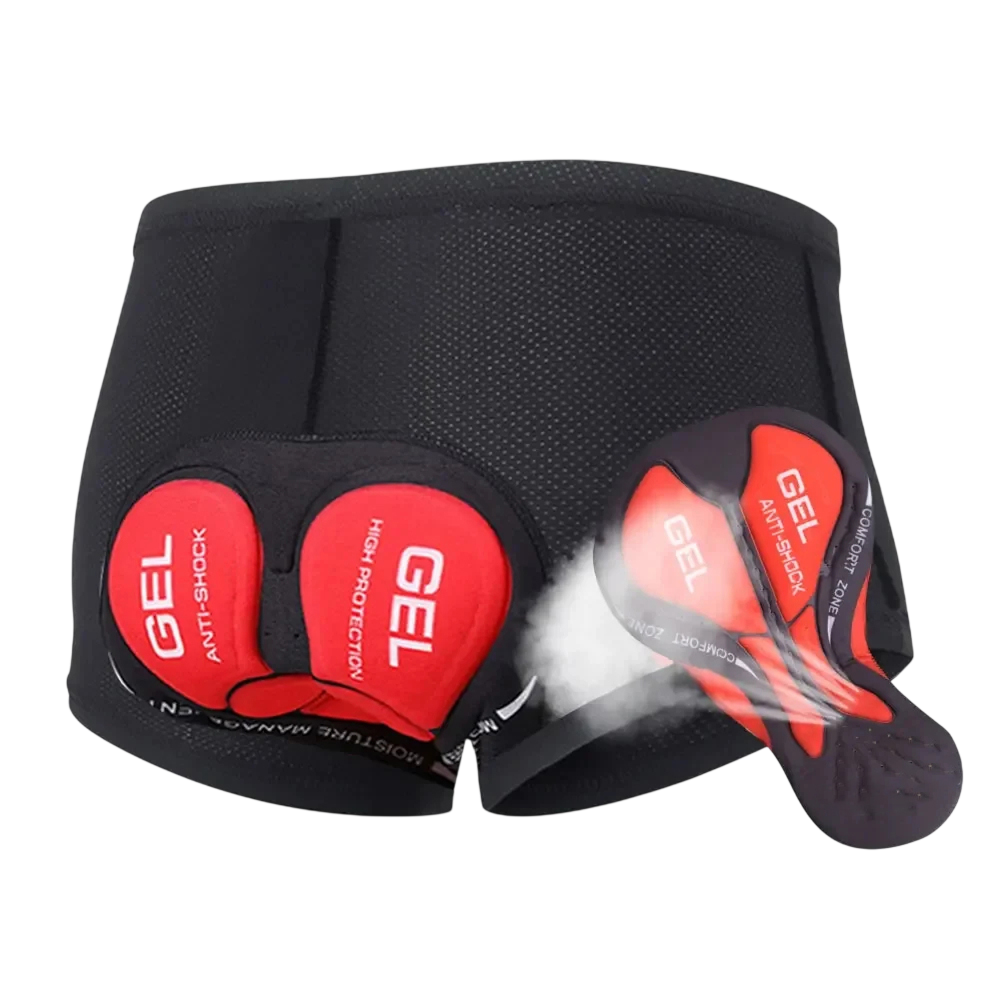
A padded short does not have to be the outer layer. Wear it as a base layer under baggy shorts, tights or pants, with the pad sitting at the seat. This is how the PadFlex cycling shorts are used: put them on before a ride, workout or commute, alone or under other clothing.
For baggy mountain bike shorts, a liner or padded undershort holds the chamois in place while the outer layer adds pockets and coverage. For padded cycling shorts for mtb riding, pair a lighter pad with a loose outer short. Choose a pad that is not too bulky, since you move around the saddle more on trails.
 In this guidePadFlex$29.99View
On the product page, PadFlex lists a gel and foam pad at the seat, perforated venting and four-way stretch fabric that moves with your pedal stroke. It is described for road rides, spin classes and daily commutes, so it suits the base-layer approach above.
Women's padded cycling shorts: what changes
The checklist above holds for every rider, but women's padded cycling shorts are cut differently. Look for a chamois shaped for a wider sit-bone spacing, a waistband or bib cut shaped for hips and waist, and a leg opening that suits the thigh. For padded shorts for cycling women's riding long distances, the pad shape and bib design matter as much as the number of inches.
- Pad shape: confirm the pad is labeled for women's fits and sits under your sit bones.
- Rise and waist: a higher rise holds the waistband in place; check it when you lean forward.
- Bib design: some women's bibs have a pull-down feature for stops, so read the product page.
- Inseam: the same ranges apply; pick by where the hem stays put.
Sizing charts for padded bike shorts differ between makers. Measure your waist, hips and inseam, then compare each chart rather than assuming a size.
Pair the shorts with the right saddle
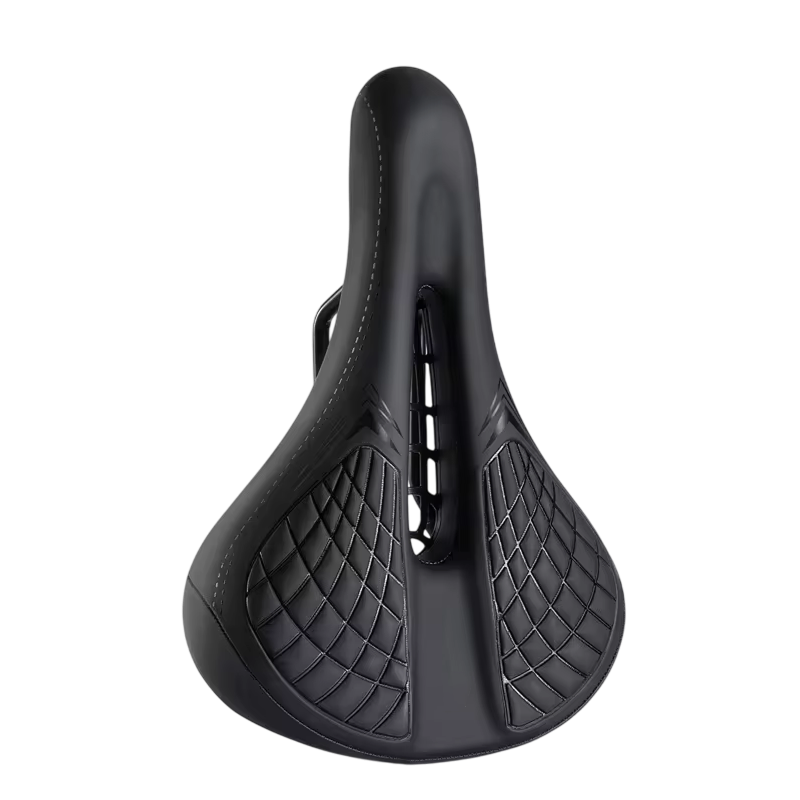
Padding in the shorts and padding in the saddle work together. On gravel or rough roads, a saddle with its own give changes how much cushioning you need from the chamois. The TerraSaddle is a gravel saddle with molded foam padding, a curved shape and a spring-loaded base beneath the shell. It mounts to a seatpost with a universal clamp and has a built-in mount for a taillight.
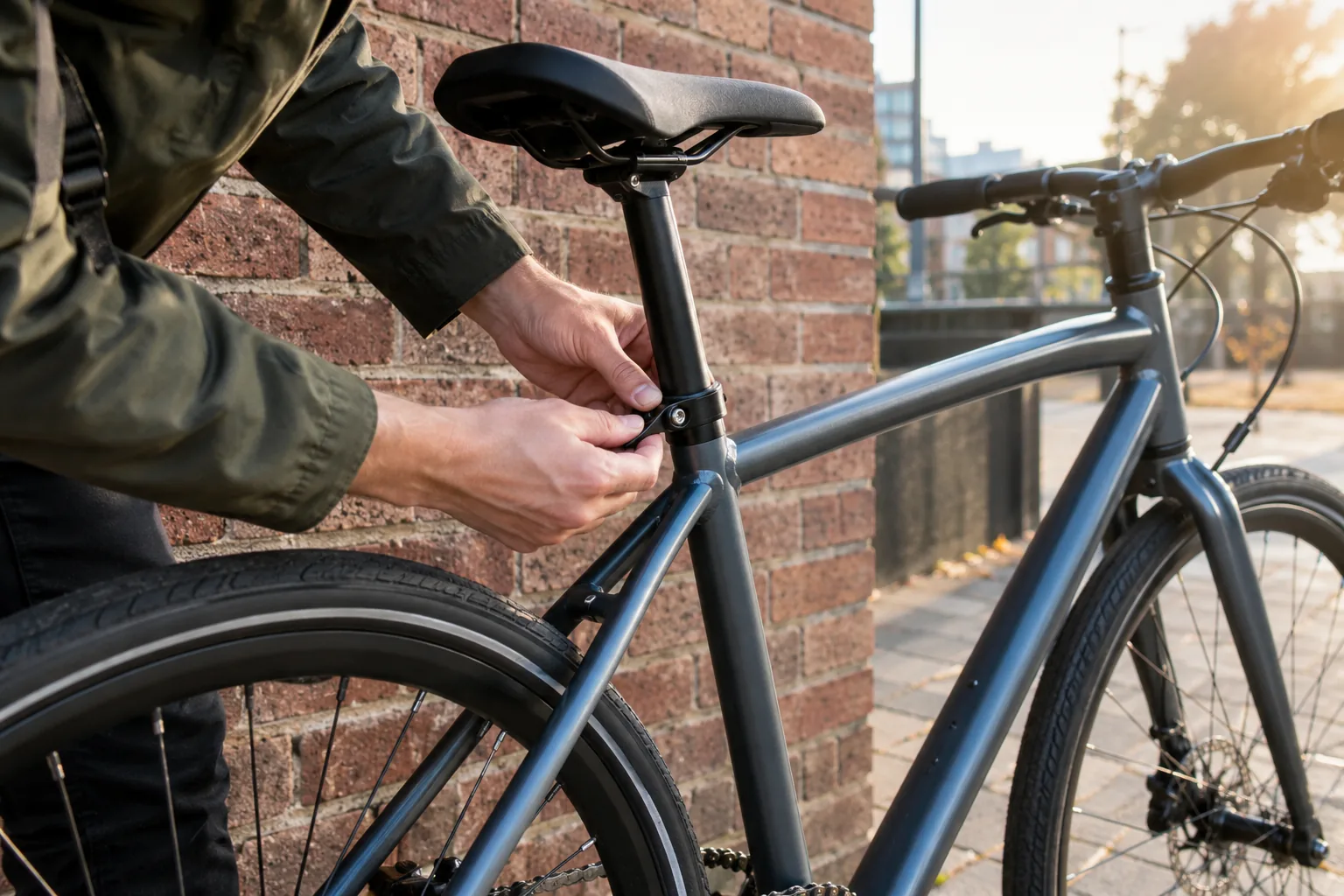
When you set up a saddle, level the tilt so the contour sits under your sit bones rather than pointing up at the nose. Then ride in your new shorts and see where the pad lands.
 In this guideTerraSaddle$89.99View
Field note
Sit on your bike on a trainer or against a wall and look for folds in the chamois. Folds mean the size or the saddle tilt needs another look.
Common mistakes and a care schedule
Mistakes to avoid
- Buying a loose size. A compression fit exists to hold the pad still.
- Wearing underwear under the pad. Seams add bulk where the chamois needs to sit flat.
- Choosing the thickest pad for every ride. Match density to ride length.
- Ignoring the hem. Check that it stays put while pedaling.
- Skipping a ride-position fit check. Standing in a mirror does not show how the shorts sit in the saddle.
Care schedule
- After each ride: take the shorts off and wash them rather than leaving them in a bag.
- Washing: wash cold on a gentle cycle or by hand, as the PadFlex page describes.
- Drying: air dry. Check the care label of any other pair for heat limits.
- Between wears: hang the shorts so the pad can dry fully.
Rotate two or three pairs if you ride on consecutive days, and read the care label of each pair.
Quick decision steps
- Name your main ride: road, spin class, commute, gravel or trail.
- Pick a pad density that matches ride length, using the table above.
- Choose shorts if you want simple layering, or bibs for long rides and a waistband-free fit.
- Select an inseam that keeps the hem in place while pedaling.
- Confirm the size using the chart, then check for folds in the saddle position.
- Browse the Bike Comfort & Components collection for saddles and related parts.
If you are new to the saddle itself, How to Ride a Bike: A Step-by-Step Plan for Adult Beginners covers the basics of position and pedaling. If you are fitting new pedals alongside new shorts, How to Change Bike Pedals: Thread Direction, Tools and Torque walks through the swap.