What Is a Running Belt? How to Choose and Wear One
A running belt is a stretch band worn at the waist to carry a phone, keys, gels or bottles. Pick the type by run length, then use the fit checklist below.
The Kesslund Team
November 15, 2026 · 8 min read

What is a running belt? It is a stretch band that sits at your waist or just above the hips and holds a phone, keys, cards, gels or small bottles so your hands stay free. Choose the type by run length: a slim pouch for short runs, a belt with bottle holders for longer ones, and a race-bib belt for events. Fit decides whether it stays put, so most of this guide is about sizing and setup.
Below you will find the three types, a table that matches each to a run length, a bounce-free fit checklist, and the mistakes that make a belt ride up or swing.
What is a running belt made of?
Most running belts share the same few parts, and knowing them makes any product page easier to read. The base is a band of stretch fabric, either a closed loop you step into or an open strap with a buckle or clip. On top of that sit one or more pockets, and sometimes bottle holders, bib toggles or a port for wired headphones.
- Band: elastic or stretch fabric that wraps the waist. A wider band spreads the load; a thin one suits only a key and a card.
- Pocket: a zippered pocket closes around a phone, while an open sleeve is fine for a gel or a card.
- Bottle holders: loops or sleeves on the sides that carry a soft flask or a small water bottle.
- Reflective trim: strips on the front and sides for low light.
- Bib loops: small toggles or elastic cords for pinning or tying on a race number.
A running belt is not the same as a running vest. A vest sits on the shoulders and chest and holds more; a belt sits lower and carries less. If you only need a phone and keys, a belt is enough.
Types of running belt by run length
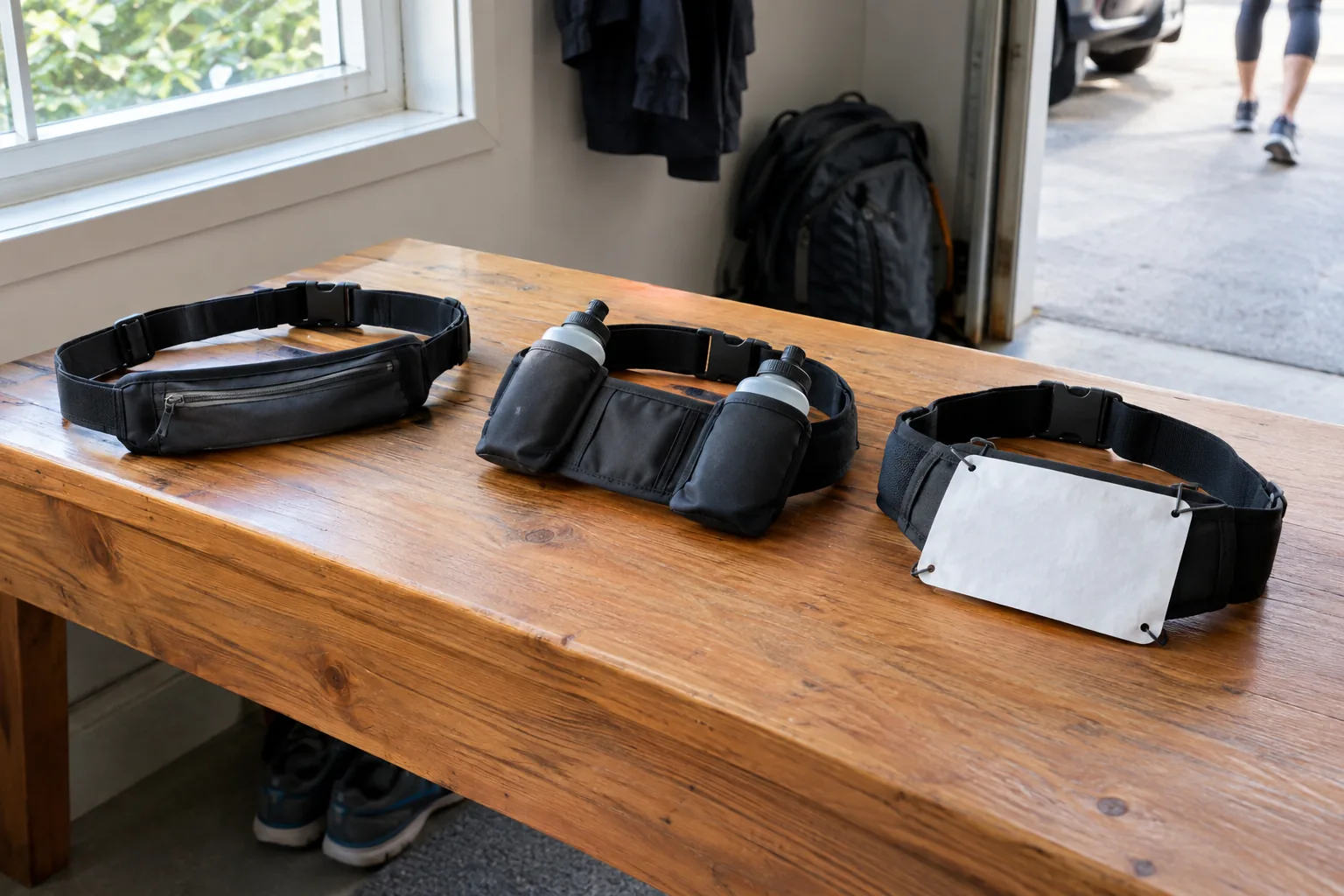
Instead of ranking belts, start with how long you will be out. The run length tells you how much you need to carry, and that points to one of three types.
| Type | Run length | What it carries | Watch for |
|---|---|---|---|
| Slim pouch belt | Short runs, errands, walks | Phone, keys, a card | Pocket depth for your phone size |
| Bottle (hydration) belt | Longer runs, trail runs | Water bottles, phone, gels, cards | Weight balance between both hips |
| Race bib belt | Races and group events | Bib number, a few gels | Secure bib attachment points |
Slim pouch belt
This is the minimal option for short runs. The pocket lies flat against the lower back or stomach, and the whole belt is light. If your phone and house key are all you carry, this type is enough.
Bottle or hydration belt
Once a run goes past what you want to do without water, you need to carry some. A belt with side bottle holders puts the weight on both hips instead of in one hand. This is the type to look at for trail runs and longer road runs where there is no fountain.
Race bib belt
A bib belt has loops or toggles so you can attach a number without pinning it to a shirt. That is useful if you change layers mid-race. Some also have a small pocket for gels, which you may want on a marathon course.
How to choose a running belt in five steps
- List what you carry on your usual run: phone, keys, card, gels, water. Add anything you want for the longest run of the month.
- Check your phone against the pocket. A zippered pocket should close fully with the phone inside, and the opening should suit the way you pull the phone out.
- Decide how much water you need. If you drink on every run, look for bottle holders rather than relying on a pocket.
- Measure your waist or hips where you will wear the belt, and compare the number with the belt's stated stretch range.
- Look at the extras that match your routes: reflective strips for early or late runs, a headphone port if you use wired earbuds, bib loops for races.
Skip features you will not use. Every extra pocket is another place for items to shift, so match the belt to your actual load.
Sizing: measure before you buy
Wear the belt where it will sit during the run, then measure there. Some belts come in a few fixed lengths, which makes sizing a matter of picking the nearest one. Others use a wide stretch band that adjusts across a range, so one belt can fit several waist sizes. Always compare your measurement to the range on the product page, and remember that a belt loaded with a phone and bottles pulls the band out a little.
A hydration belt option for longer runs
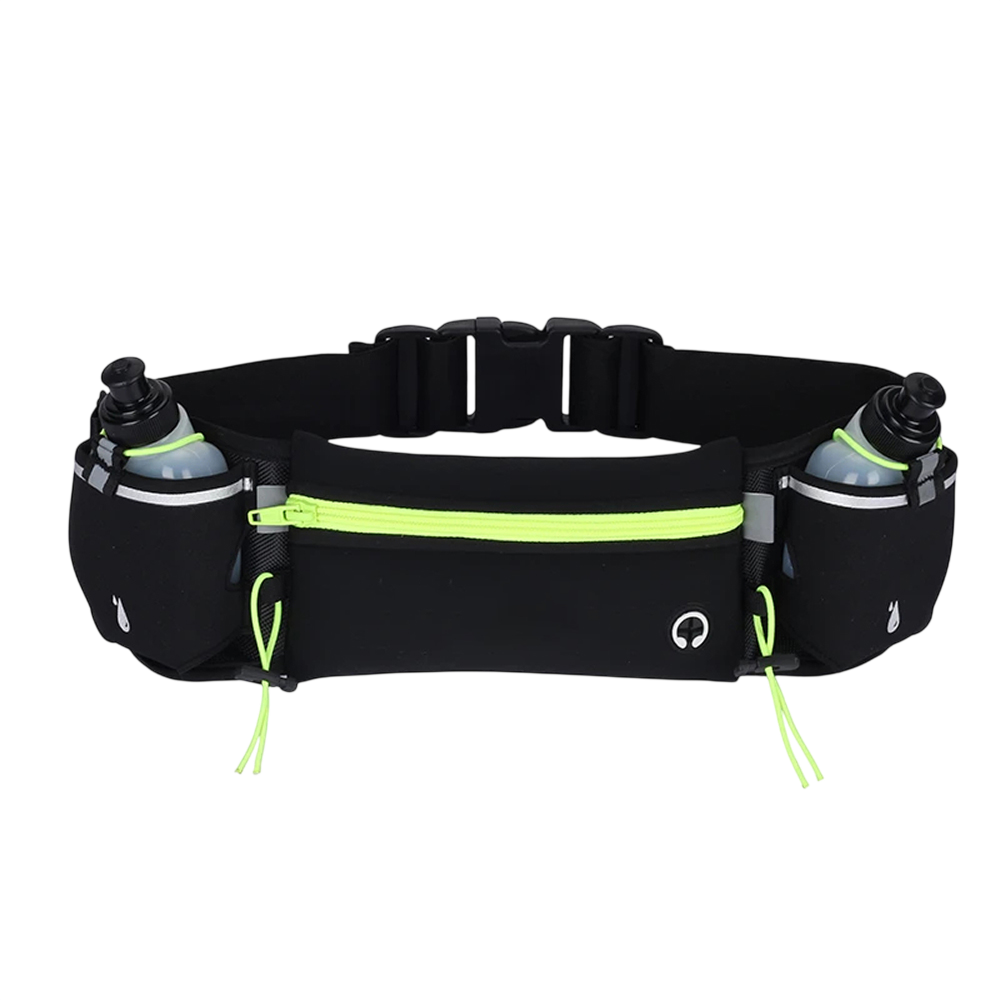
If your runs call for water, the StrideCanteen is the kind of belt described above. It is a running belt made of stretch Lycra with two side bottle holders and a zippered main pouch. You can split water between both hips, instead of pulling your arm to one side with a single handheld bottle.
The elastic band stretches from 70 to 150 cm (about 27.5 to 59 inches), so one belt covers a wide range of waist sizes. A textured interior backing grips the fabric against your waist, giving the belt a surface to hold onto on climbs and intervals. Reflective strips sit on the front and sides for low-light runs, and an earphone port lets you pass wired headphones through if you run with music.
 In this guideStrideCanteen$49.99View
Bounce-free fit checklist for running with a belt
Running with a belt works when the belt moves with your body instead of against it. Go through this checklist at home before the first run, then adjust after a short test loop.
| Check | What to do | Sign it is right |
|---|---|---|
| Position | Place the belt at the natural waist or just above the hip bones | It does not slide onto the hips when you jog in place |
| Tension | Pull the band snug, with room to breathe | You can slide one finger under it, but it does not twist |
| Pocket placement | Rotate the pocket to the lower back, or the front if you carry little | Nothing presses on the stomach as you bend |
| Load balance | Put equal weight on both sides | The belt sits level when you stop |
| Packing | Close zippers and keep items from rattling | Nothing shifts when you jump |
| Layers | Wear the belt over or under a shirt consistently | The shirt does not ride up around it |
Test it before the long run
Load the belt as you plan to run, then jog in place, take a few high knees, and do a short loop around the block. If it creeps upward, tighten it one notch and check that the weight is even. If it still moves, remove an item and test again.
Pack for stability
Put the heaviest item, usually the phone, flat against your body, not at the outside edge of the pocket. Fold gels flat and use small bottles that fit the holder snugly. Loose items bounce, so fill empty space with a folded card or leave less in the pocket.
Field note
Do the jump test at home: load the belt, close every zipper, and jump ten times. If anything rattles or the belt climbs, fix it before you leave the driveway.
What to carry, and where
A belt is for essentials. Think about what you would need if the run went differently than planned, and leave out the rest.
| Item | Where to put it | Note |
|---|---|---|
| Phone | Zippered main pouch, screen facing your body | Check that it fits fully before zipping |
| Keys | Inside a small pocket or sleeve | Keep them flat and away from the phone screen |
| Cards and ID | With the phone or in a separate sleeve | Useful if you carry no wallet |
| Gels or chews | Open sleeve or bib-belt pocket | Flatten the packet to reduce movement |
| Water | Side bottle holders, one per hip | Split the volume to balance the belt |
| Wired headphones | Through the earphone port, if the belt has one | Keep the cord short and clipped close |
If you carry water, a belt with holders on each side can split the load. If you want more capacity than a belt offers, such as a bladder, look at the Backpacks & Hydration collection, or read Water Bladder Packs: How to Choose, Clean and Dry Them for how those packs work.
Common mistakes with running belts
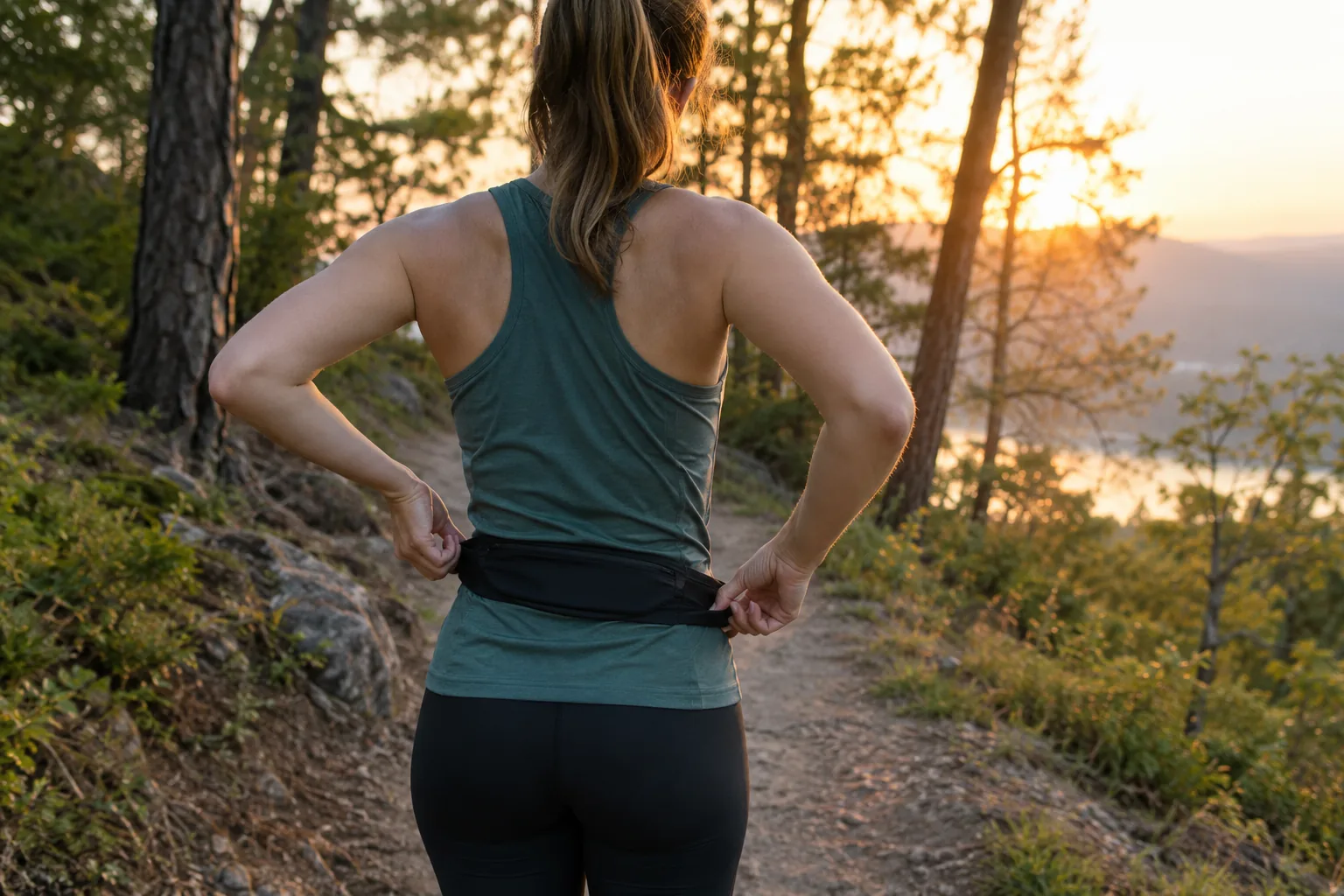
- Wearing the belt too low. On the hips it swings; at the natural waist it has a steady spot.
- Overloading one side. A heavy phone on one side and nothing on the other twists the band over time.
- Choosing a pocket that is too small. If the zipper strains, the phone will shift.
- Skipping the test run. Fit problems show up in the first mile, so check on a short loop before race day.
- Carrying too much. If you need more than a phone, keys and a few gels, consider a hydration option with more capacity.
- Ignoring the weather. Sweat and rain soak the contents, so keep a phone in a zippered pocket and check the manual for the care of the belt.
Belt, vest or handheld?
A belt suits light loads and runs where you can balance weight at the waist. A vest suits longer, self-supported runs where you need more space. A handheld bottle suits a runner who wants nothing at the waist. For hikes and long days out, a pack covers more ground; see Day Hiking Backpack: How to Choose Size, Fit and Features for sizing.
Care and storage
Follow the care label or the manual that came with your belt. In general, empty the pockets after every run, wipe the inside of the bottle holders, and let the belt air dry before you store it. Rinse bottles and let them dry with the caps off. Check the zipper and the elastic from time to time, since a stretched-out band or a failing zipper is a sign the fit will change.
Store the belt flat or hung up, away from direct heat. A belt that is kept clean and dry is ready for the next run, and you will notice when it needs replacing.
A short setup routine before each run
- Empty the belt and check that the pockets are clean.
- Load the phone, keys and cards, then close every zipper.
- Fill the bottles and seat them in the holders.
- Put the belt on at the waist, snug the band, and rotate the pocket to where you want it.
- Jog in place for a short stretch, then adjust once more.