Monoculars vs Binoculars: Which Fits Hiking, Travel and Birding
Monoculars vs binoculars: pick a monocular for a one-hand pocket carry and binoculars for long two-eye viewing. Compare both in one table, then follow the decision steps.
The Kesslund Team
November 21, 2026 · 7 min read
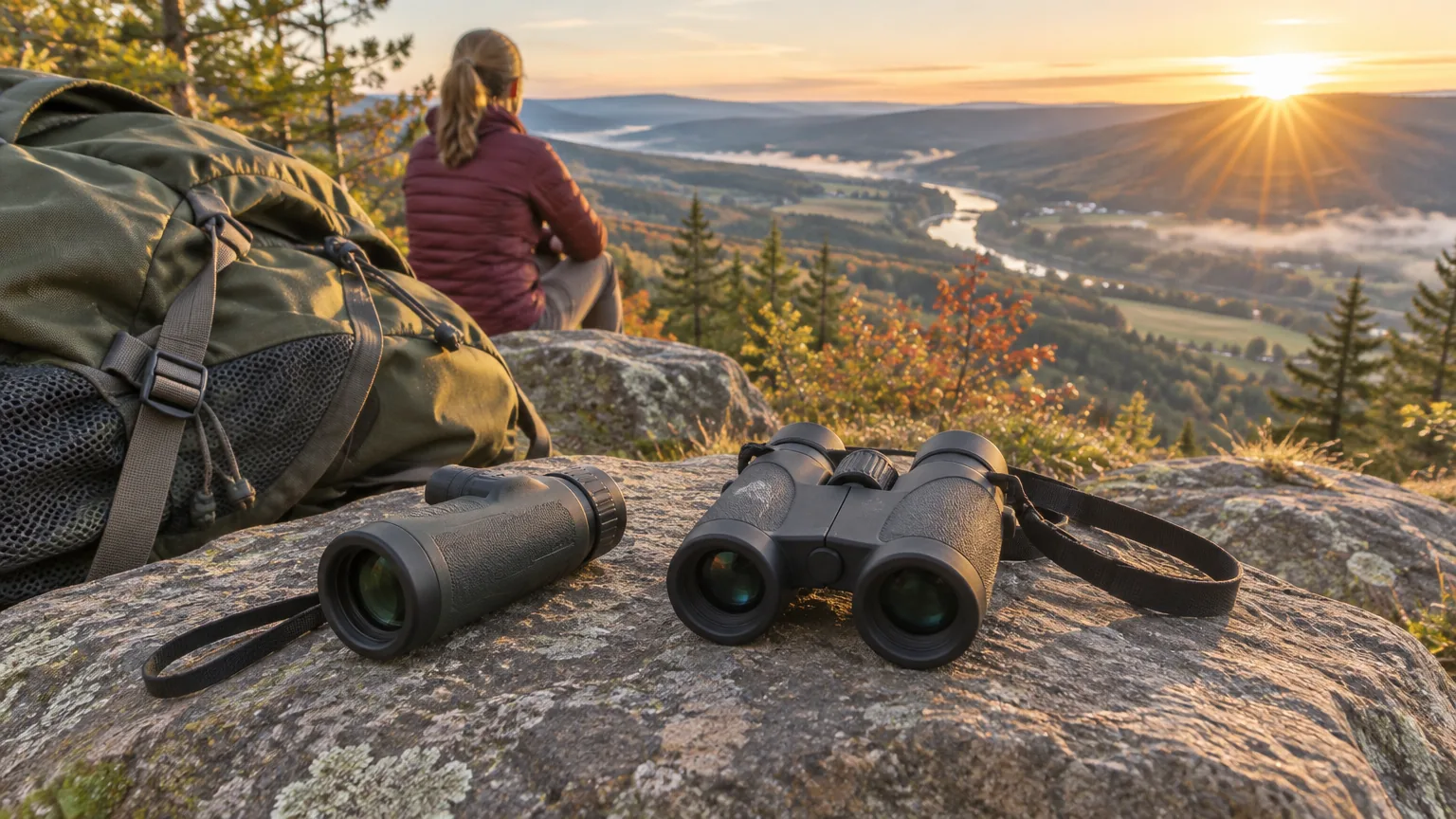
Monoculars vs binoculars comes down to how you carry and how you look: choose a monocular for a single tube you hold in one hand, and choose binoculars when you want to watch with both eyes for longer stretches. For hiking and travel, the pocketable single tube is easy to stow. For birding, a pair of binoculars or a zoom monocular both work, depending on how long you stay on each bird.
This guide compares weight, field of view, steadiness, eye strain and cost in one table, then walks you through decision steps for hiking, travel and birding. It also explains 10x42 and 12x50 numbers, how a monocular differs from a scope, and how to use a monocular correctly.
Monoculars vs binoculars: side-by-side comparison
A monocular is one optical tube with one eyepiece. Binoculars are two matched tubes joined by a hinge, so each eye gets its own view. That single difference drives most of the table below.
| Factor | Monocular | Binoculars |
|---|---|---|
| Weight and size | One tube, carried in one hand or a pocket | Two tubes and a hinge, carried on a neck strap or in a pouch |
| Field of view | Depends on the model; high zoom settings narrow the view | Depends on the model; compact pairs list a degree figure on the product page |
| Steadiness | One hand on the tube; brace your wrist and rest a knuckle on your cheekbone | Two hands share the load, and the strap adds a third point of contact |
| Eye strain | One eye looks through the tube; keep the other eye open or covered, and switch between looks | Both eyes look through the tubes, which matches natural two-eye viewing |
| Depth perception | Single view, so distance cues come from one eye | Two views, so the scene keeps its depth |
| Cost | Varies with glass, coatings and body; compare like for like | Varies with glass, coatings and body; two tubes mean two sets of optics |
| Phone photos | Adapter clips hold a smartphone to the eyepiece on some models | Possible with a separate adapter; check the manual |
Use the table as a starting point, then match it to where you will actually use the optics.
Which fits hiking, travel and birding
Hiking
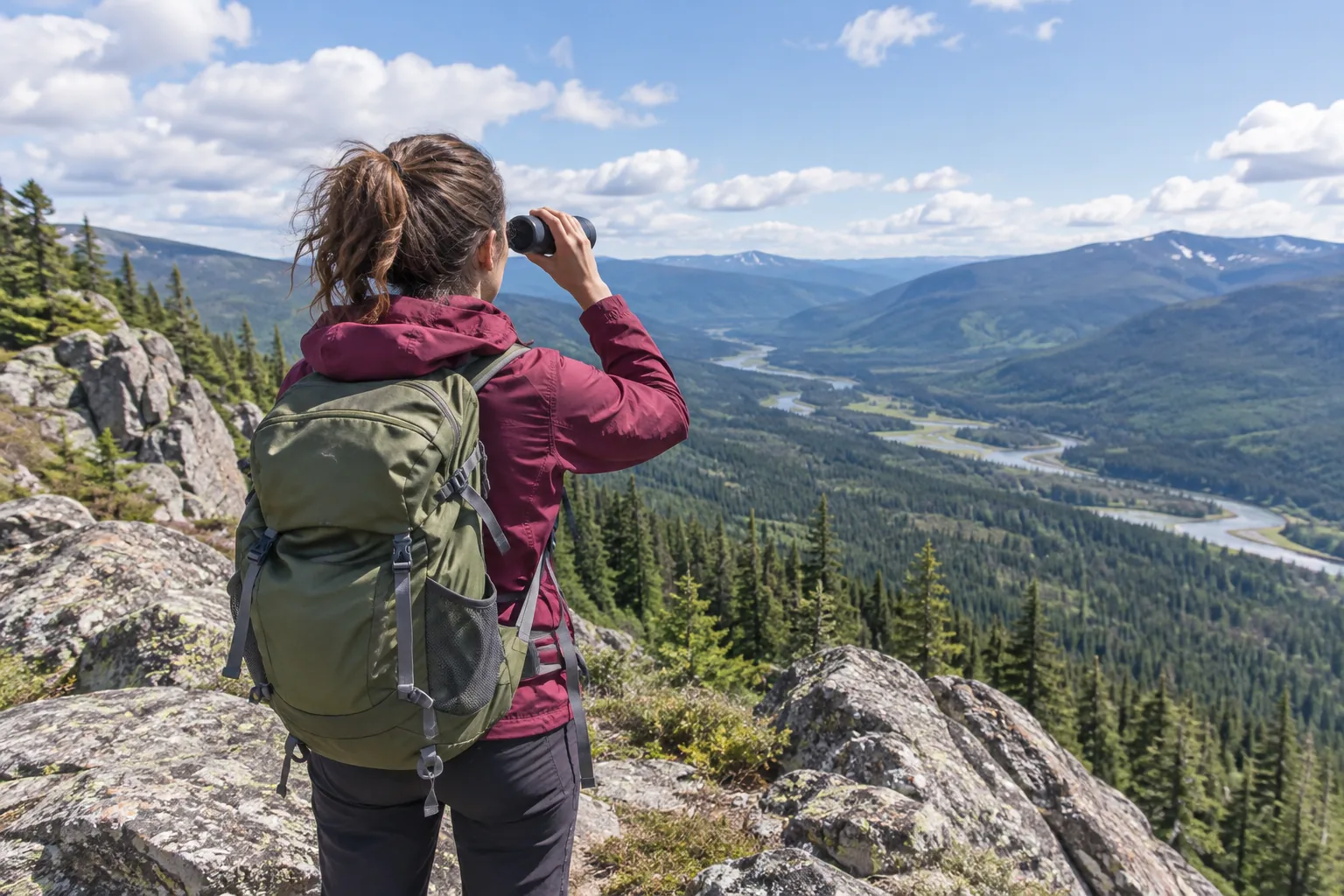
On a trail, every item rides on your pack or belt. A monocular is a single tube that fits a hip pocket, and you can raise it with the hand that is not holding a trekking pole. Compact binoculars sit on a neck strap or in a pouch and need both hands, but they give you two-eye viewing when you stop at a summit.
Travel
For city walks, museums and scenic overlooks, size and bag space matter. A monocular slides into a jacket pocket. A pocket-size pair of binoculars also works for concerts, sports stands and sightseeing, and the view reads as a natural scene rather than a tube.
Birding
Birding means scanning, finding the bird, then following it. A wide field of view helps you find a moving bird, and two-eye viewing suits long watching sessions. A zoom monocular is useful when you want to change magnification on the spot, such as scanning wide and then closing in on a feather pattern. Both approaches work; the question is whether you value a long sit-and-watch or a light carry.
Decision steps: binoculars or monoculars
If you are choosing between binoculars or monoculars, work through these steps in order.
- Decide how you carry. If the optic must live in a pocket, lean toward a monocular. If it can hang on a strap, binoculars fit.
- Decide how long you look. For short looks at a sign, a ridge or a trail marker, a monocular works. For watching a bird or a stage for long stretches, binoculars use both eyes.
- Check your hands. Trekking poles, a camera or a child's hand may leave only one hand free.
- Check the field of view. Wide views help you find moving subjects. If a zoom monocular is your choice, remember that the higher settings narrow what you see.
- Check your glasses. If you wear them, look for a diopter adjustment on the optic and read the manual for eyecup use.
- Check photo needs. If you want to record what you see, look for an adapter clip in the box.
Field note
Try the grip before you buy: raise the optic to your eyes and hold it for a full minute in a shop or at home. If your wrist wavers, a binocular's two-hand hold or a tripod will suit you.
A zoom monocular for hiking and wildlife
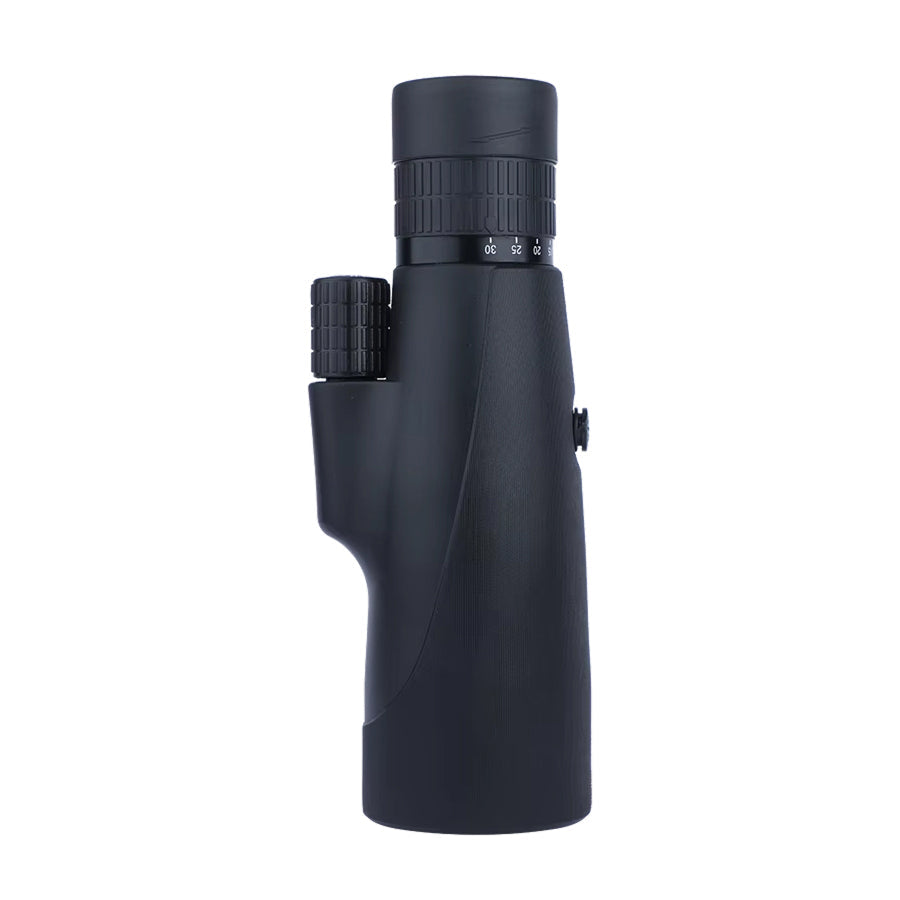
OptiVance is a handheld monocular with a variable zoom range listed on its product page. It uses BAK4 prisms with FMC multi-layer coatings, a damping focus wheel and a magnesium alloy chassis with nitrogen-purged sealing. At lower settings the view is wider for scanning, and at higher settings you brace your wrist for steadiness.
An adapter clip is included, so you can attach a smartphone to the eyepiece and photograph or record what you observe. The box also holds a tabletop tripod, a carrying case, a cleaning cloth, lens and eyepiece caps and a hand strap lanyard.
 In this guideOptiVance$99.99View
A compact pair for trails, concerts and birds
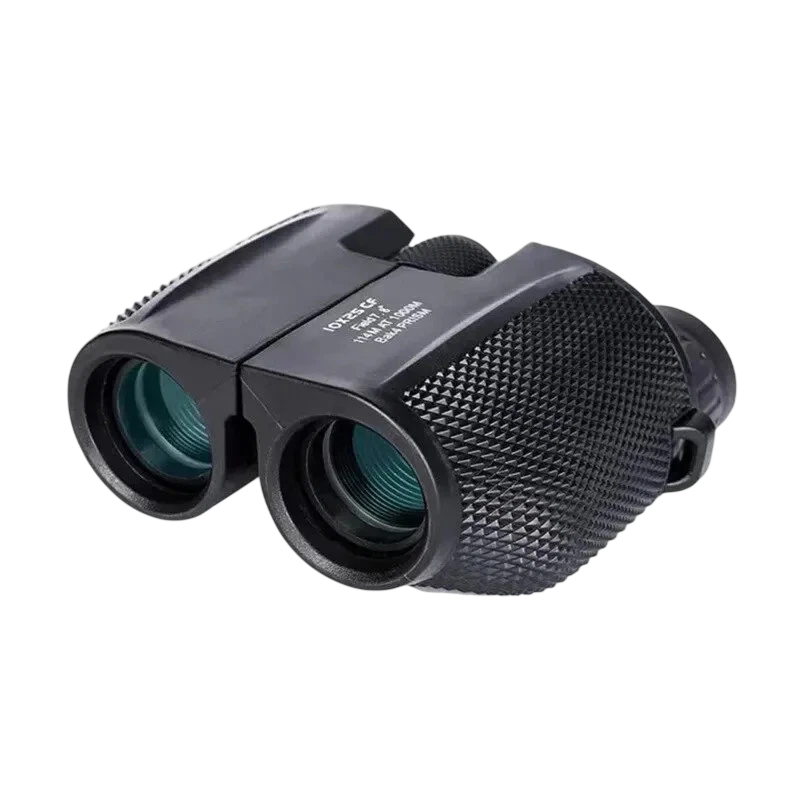
FieldOcula is a pair of compact binoculars sized for a jacket pocket or daypack. It has multi-coated BAK4 prisms and a 7.8° field of view, which takes in a wide slice of the scene so you reposition less often when following a bird or a performer.
A center focus knob adjusts for the subject, and the diopter adjustment lets you set the pair for your eyes, including if you wear glasses. The nonslip, shock-resistant shell gives you a firm grip, and the box includes a neck strap, a carrying pouch and a lens cleaning cloth.
 In this guideFieldOcula$79.99View
How to use a monocular correctly
A monocular rewards a steady hold and a few setup steps. Follow the manual for your model, and these basics apply to most.
- Hold the monocular in your dominant hand and support your wrist with the other hand.
- Rest a knuckle lightly against your cheekbone so the tube has a second point of contact.
- Keep the other eye open or covered, whichever you find easier to maintain, and switch eyes between looks.
- Set the magnification. On a zoom model such as OptiVance, start at the lowest setting to find the subject, then move toward higher settings.
- Turn the focus wheel until the view is sharp.
- To photograph, clip your smartphone into the adapter so the camera lines up with the eyepiece.
After wet weather, wipe the exterior dry and put the caps back on the lenses. Use a soft cloth on glass rather than your sleeve.
What 10x42 and 12x50 mean
Two numbers describe most binoculars. The first is magnification: the higher it is, the closer a subject looks. The second is the objective lens diameter in millimeters, so 42 mm (about 1.7 inches) and 50 mm (about 2 inches) describe how large the front lens is.
| Spec | 10x42 | 12x50 |
|---|---|---|
| First number | Magnification of the 10x42 pair | Higher magnification |
| Objective lens | 42 mm (about 1.7 in) | 50 mm (about 2 in) |
| Size of the pair | Fits a daypack or chest harness | Larger front lenses add bulk |
| Hold | Hand movement shows in the view | Higher magnification shows more hand movement, so a rest or tripod may help |
Neither is right for everyone. Pick by how you carry and where you look. For a deeper comparison aimed at the field, read Hunting Binoculars: 10x42 vs 12x50 and How to Choose.
Monoculars, scopes and night vision
A spotting scope is a larger single-tube optic made to sit on a tripod, and it suits long, fixed observation from one spot. A monocular is a handheld version of the same idea, built to be carried and raised in a moment. If your viewing is from a parking lot or a blind, a scope and tripod suit you. If you walk, a monocular or compact binoculars fit.
Night vision is a separate category with its own electronics. Daytime monoculars and binoculars gather light through glass and coatings only. If you are weighing night-use devices, start with Night Vision Monoculars: How to Choose for Hunting and Camping. You can also browse the Binoculars, Scopes & Night Vision collection.
Binocular and monocular vision
The words also describe how eyes work. Binocular vision means both eyes work together, which gives depth. Monocular vision means one eye provides the image. Binoculars are built around the first, and a monocular around the second.
Common mistakes when choosing
- Buying the highest magnification. Higher settings narrow the view and show your hand movement, so use a lower setting to hold the view.
- Ignoring the field of view. If you cannot find a bird, the view may be too narrow.
- Skipping the diopter. Set it once for your eyes, then use the focus control as the subject moves.
- Forgetting the strap. A strap or lanyard keeps the optic on you when your hands are busy.
- Leaving the caps off in the pack. Put the objective and eyepiece caps on when you stow it.
In the end, monoculars vs binoculars is a question of carry, grip and how long you look. Match those three to your trips and the choice settles itself.